Ministry of Jal Shakti
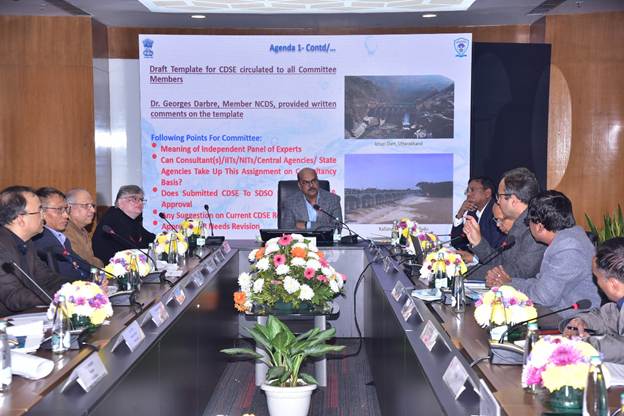
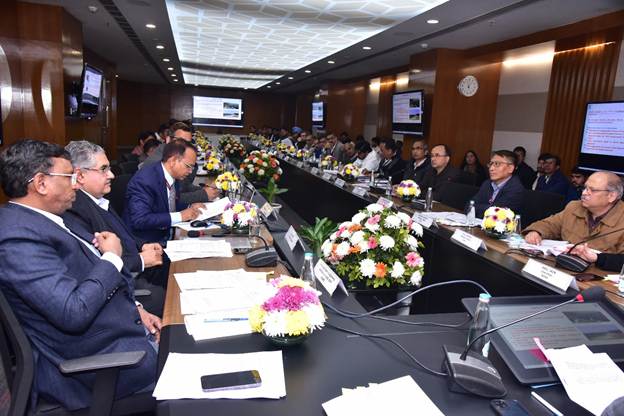
11th Meeting of the National Committee on Dam Safety (NCDS) held in New Delhi
Posted On:
20 JAN 2026 6:40PM by PIB Delhi
The 11th Meeting of the National Committee on Dam Safety (NCDS) was held on January 20, 2026, at Dr Ambedkar International Centre, Janpath, New Delhi. The meeting was attended by representatives from the Department of Water Resources, River Development & Ganga Rejuvenation; Central Water Commission (CWC); National Disaster Management Authority (NDMA); Central Electricity Authority (CEA); Ministry of Environment, Forest & Climate Change (MoEF&CC); India Meteorological Department (IMD); Geological Survey of India (GSI); National Remote Sensing Centre (NRSC); and the National Dam Safety Authority (NDSA). Officials from seven States—Assam, Karnataka, Maharashtra, Mizoram, Odisha, Punjab, and Uttar Pradesh—also participated in the meeting. The deliberations were further enriched by the presence of eminent dam safety experts, including Shri S. K. Sibal, Former Member, Central Water Commission, and Dr Yogendra Singh, Professor, IIT Roorkee. Heads of twenty-eight (28) State Dam Safety Organisations and representatives from three (3) Union Territories were also present. The meeting was chaired by Shri Anupam Prasad, Chairman, Central Water Commission, and Chairman, National Committee on Dam Safety.
The National Committee on Dam Safety (NCDS) is constituted under Section 5 of the Dam Safety Act, 2021. The functions of the Committee are laid down in the First Schedule of the Act. The NCDS functions as a policy think tank for the National Dam Safety Authority (NDSA) and is responsible for deliberating on dam safety–related policies and recommending such regulations as may be necessary to ensure uniform standards of dam safety and to prevent disasters arising from dam failures.
In his opening remarks, the Chairman, NCDS highlighted the achievements of the NDSA over the past four years. He drew attention to emerging challenges in the domain of dam safety, the extensive statutory responsibilities placed upon dam owners under the Dam Safety Act, 2021, and the existing gaps in in-house capacity building among dam-owning agencies. He also outlined various initiatives undertaken by the NDSA to address these challenges. The Chairman emphasized that the successful implementation of the Dam Safety Act hinges on effective cooperation among stakeholders, technical excellence, and sustained collective commitment.
Major key Agenda were deliberated during the meeting, which included
- Discussion & Suggestions on Standard Operating Procedure for carrying out Comprehensive Dam Safety Evaluation (CDSE) under Section (38) to Section (40),
- Discussion & Suggestions on Standard Operating Procedure for Pre-Initial Filling Plan under Section (27),
- Financial Remuneration of Various Dam Safety National and International Experts,
- Framework Finalization for Level 2 (SQRA) & Level 3 (QRA) Risk Assessment under Section 35(2),
- Clarification in definition of Under Construction Dam/ Barrage Projects, (vi) Approval of Construction of New Dam Projects & Rehabilitation of Existing Dam Projects under Section (26),
- Mechanism for Appraisal and Approval of Various Non-Structural Documents,
- Discussion on optimisation of seismic instruments and
- Safety issue of Chandraprabha dam of Uttar Pradesh.
These Agenda related to CDSE, SQRA and QRA are new elements in dam safety for Indian dam owners.
The Committee deliberated in detail on the various proposed agenda items and offered valuable suggestions. NDSA was advised to revise and update the proposed draft frameworks for the CDSE Report to make them more comprehensive and pragmatic. The Committee further recommended that the Pre-Initial Filling Reservoir Plan be strengthened through incorporation of quantified parameters related to reservoir filling.
With regard to the finalisation of the SQRA framework, the Committee decided that, considering its national importance, an expert committee should be constituted for the purpose. On the matter of approval for construction of new dams and rehabilitation of existing dams, the Committee advised NDSA to deliberate extensively with all dam owners, incorporate their valuable inputs, and place the matter for discussion in the next meeting.
The mechanism for appraisal and approval of various non-structural documents was recommended to be undertaken by the respective State Dam Safety Organisations through the constitution of Expert Committees. The Committee also deliberated on the proposal to further optimise the number of seismic instruments prescribed in the regulations and decided to continue with the existing regulations notified by NDSA.
The Committee appreciated the efforts of the Government of Uttar Pradesh towards arresting seepage in the Chandraprabha Dam.
The Committee reiterated the need for close and effective coordination between the Centre and the States, with greater emphasis on the formulation and implementation of a comprehensive capacity-building action plan to ensure statutory compliance with the various dam safety obligations prescribed under the Act. The meeting concluded with a resolve to further strengthen the institutional framework, expedite the implementation of the Dam Safety Act, and ensure the long-term safety and sustainability of dams, thereby supporting water security, irrigation, power generation, and flood moderation objectives.
***
ND
(Release ID: 2216524)
Visitor Counter : 1990