Ministry of Jal Shakti
DDWS organises Second Edition of multilingual Sujal Gram Samvad with 8 GP-headquartering villages across 8 States in their local language
Union Minister Shri C. R. Patil interacts in Gujarati with Zahirpura village, Mehsana district, Gujarat
Minister of State Shri V. Somanna engages in Kannada with Kodi village, Udupi district, Karnataka
Interaction in local language with village communities strengthen ‘Jan Bhagidari’ and community-led water governance
Posted On:
19 DEC 2025 4:56PM by PIB Delhi
The Department of Drinking Water & Sanitation (DDWS), Ministry of Jal Shakti, successfully organised the Second Edition of ‘Sujal Gram Samvad’ today, reinforcing the Government of India’s commitment to participatory water governance and community-led implementation of Jal Jeevan Mission (JJM).
The virtual interaction brought together Gram Panchayat representatives, Village Water and Sanitation Committee members, community participants, women SHGs, and frontline functionaries, along with District Collectors/Deputy Commissioners, CEOs of Zila Panchayats, DWSM officials, and senior officers from States and Union Territories.
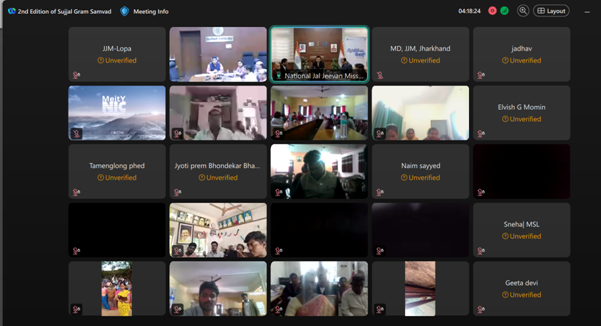
The second edition of Sujal Gram Samvad recorded participation of over 8,000 participants, reflecting strong engagement from communities and officials alike. In addition, villagers joined the interactions in large groups at the Gram Panchayat level, including women, children, youth, and elderly community members, whose collective participation extended well beyond the registered count.
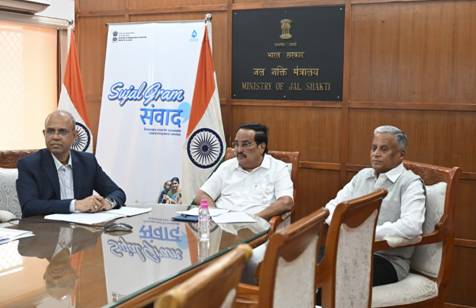
Village-level interactions were held with 8 Gram Panchayat headquartering villages. The Union Minister interacted in Gujarati with the villagers of Zahirpura, Mehsana district, Gujarat, while Minister of State Shri V. Somanna interacted in Kannada with the community of Kodi village, Udupi district, Karnataka.

Voices from the Ground
- Zahirpura, Mehsana, Gujarat
The Union Minister for Jal Shakti, Shri C. R. Patil, warmly greeted the villagers with a cheerful “Kem Cho” before engaging with them in Gujarati, instantly setting a comfortable tone for the interaction.
Villagers shared how access to clean and safe drinking water has led to a reduction in water-borne illnesses, resulting in savings on medical expenses, which families are now able to invest in the education of their children. They also highlighted the relief from the daily burden of fetching water, regular water quality testing, prompt repair of pipelines, and availability of clean drinking water throughout the year. They also stated that the active Pani Samiti plays a key role in system management, including collection of user charges of ₹700 per household, ensuring timely operation and maintenance. The interaction reflected why the Gujarat model of community-managed drinking water supply is widely recognised across the country.

2. Kodi, Udupi, Karnataka
In Kodi Gram Panchayat of Udupi district, Karnataka, the interaction focused on the village’s achievement of 24×7 drinking water supply, which has emerged as a benchmark within the district.
The interaction began with a warm “Namaskaram” by the Minister of State for Jal Shakti, Shri V. Somanna, setting an open tone for dialogue in Kannada. Community members spoke about regular FTK-based water quality testing, discussions held during DISHA meetings, and transparent decision-making at the Gram Panchayat level.
The village highlighted the crucial role played by Nal Jal Mitras in day-to-day operation and maintenance, water quality monitoring, and tariff collection. The community explained how regular user charges and strong institutional mechanisms have ensured financial sustainability and uninterrupted service delivery.
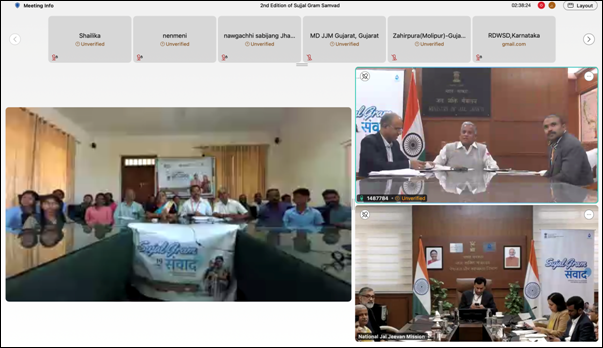
- Pacheykhani, Pakyong, Sikkim
In Pacheykhani village of Pakyong district, interactions were held with VWSC members, school children, and community representatives, who highlighted the role of a robust WASH ecosystem in improving village and school sanitation outcomes. The village shared experiences of an effective grievance redressal system and strong community participation in operation and maintenance of water supply schemes.
Smt. Aishvarya Singh, Joint Secretary and Mission Director – Swachh Bharat Mission Grameen, interacted with the community in Nepali, discussing the local water situation, source sustainability measures, user charge collection, and O&M practices. Special focus was placed on WASH activities in schools, including awareness programmes for children and the importance of inclusion of WASH elements in school education. The interaction underscored how early sensitisation and community ownership contribute to long-term sustainability.

- Awneera, Shopian, Jammu & Kashmir
The community members spoke in Urdu and Hindi and shared the significant changes brought about by Jal Jeevan Mission. They recalled that prior to JJM, villagers, especially women, had to walk several kilometres to chashmas and rivers to fetch water, which was often muddy and unsafe. Today, the village is served by a water purification plant, and households receive clean drinking water, with regular water quality testing through laboratories.
The community highlighted that schools and anganwadi centres now have assured water supply, which was not the case earlier. Villagers also shared that efforts are being made towards source conservation, contamination prevention, and long-term sustainability.
Senior officials emphasised that while schemes have been designed keeping people’s needs at the centre, sustained focus on operation and maintenance is essential. It was shared that water supply schemes worth approximately ₹6.7 crore have benefited over 5,000 people in the area.
Looking ahead, the village shared future plans for grey water management structures in schools, convergence with MGNREGA, with an expected funding of ₹84 lakh, along with annual asset-wise audits.
The village also spoke about pipeline augmentation from 8 km to 32 km to ensure last-mile connectivity, with springs as the main source. Spring-shed development with NABARD support, community-led shramdaan, social fencing, recharge structures, and capacity-building programmes are being undertaken. Agriculture in the area, largely apple-based, is being aligned with water availability, with villagers actively monitoring water levels and usage.

- Dakin Porbotia, Jorhat, Assam
In Assam, the discussion in Assamese focused on ensuring the functionality and sustainability of water supply schemes. The district shared that 221 schemes have been handed over, with 182 schemes recording regular and 100% user tariff collection, placing the district first in the State in terms of collection.
Regular monitoring is carried out through the JJM Brain App, including daily flow meter readings, with Jal Mitras promptly addressing minor disruptions. Institutional mechanisms such as fortnightly DWSM meetings, monthly Jal Baithaks, and utility-shifting committees were highlighted for preventing damage during development works and resolving grievances in a timely manner. Reports are uploaded on the IMIS portal, and villagers expressed satisfaction with the responsiveness of the system and the strong community involvement in scheme management.

- Kaluwala, Dehradun, Uttarakhand
In Kaluwala village of Dehradun district, villagers, in Pahadi/Dogri language, shared that trained women regularly conduct water quality testing twice a year, before and after the monsoon, and additional tests whenever required. Any concerns identified through testing are promptly escalated to the district authorities for corrective action. Minor repairs and leakages are addressed at the village level by the Pani Samiti, with support from local plumbers, ensuring uninterrupted water supply.
The district administration highlighted its strong focus on source augmentation and long-term sustainability, with convergence under MGNREGA and rural development programmes. Jal Sakhis and women SHG members are actively involved in scheme monitoring, timely reporting of issues, and collection of user charges, a model currently piloted in three villages and proposed for district-wide scale-up.
Community members, including elderly residents and school children, expressed gratitude for reliable access to clean water. Schools reported improved availability of safe drinking water, regular testing, and clean sanitation facilities, benefiting over 200 school-going girls. The district shared that over 91% villages have achieved Har Ghar Jal status, with regular monthly DWSM meetings, use of dashboard-based monitoring, and preparations underway for social audits starting January, further strengthening transparency and accountability.

- Aarani, Simdega, Jharkhand
In their local language - Sadri, community members shared that water quality testing is conducted every month, with results reported through mobile phones on the Water Quality Management Information System (WQMIS). Women from Self Help Groups and Jal Sahiyas play an active role in testing, reporting, and awareness generation.
Villagers explained that the time saved from fetching water is now being productively used for grocery management, agriculture, and goat rearing. A school-going girl from Class 8 shared that regular attendance has improved, as clean drinking water has been available in schools for the past two years. Anganwadi workers and Jal Sahiyas also spoke about user charge collection, regular awareness sessions, and convergence for operation and maintenance.
Being a hilly and ST-dominated district (around 70% ST population), Aarani faces seasonal source challenges, with sources drying up during lean periods. To address this, source sustainability and water conservation measures, including soak pits and recharge structures, are being promoted with the active involvement of Jal Sahiyas. Jan Bhagidari is evident through the strong engagement of Jal Sahiyas, Anganwadi workers, and the community.
It was shared that all 399 households in the village are paying user charges, and more than 4,000 Single Village Schemes (SVSs) have been handed over to Panchayats across the district. A total of 93 Panchayats have been trained, with regular monitoring and convergence with MGNREGA to strengthen sustainability.

- Lohara, Chandrapur, Maharashtra
Community members in Marathi, shared that the success of the scheme stemmed from strong planning right from the design stage through execution, with active involvement of the VWSC and the community.
Villagers highlighted timely collection of water tariffs, strong ownership, and regular follow-up by the district administration. Peer learning and experience sharing have helped improve implementation, while regular water quality testing has ensured safe and potable water in households, schools, and Anganwadi centres.
A monthly water tariff of ₹90 per household has been fixed, with QR-code-based payments enabling residents to pay conveniently from home. Jal Surakshaks and Gram Panchayat staff undertake door-to-door visits to ensure awareness and timely collection. Regular Gram Sabha meetings explain expenditure details related to repairs, electricity, bleaching powder, and maintenance, ensuring transparency.

Earlier, while setting the context, Secretary, DDWS, Shri Ashok K. K. Meena emphasised that the Sujal Gram Samvad platform was designed to listen to villagers in their own languages, enabling a deeper understanding of how communities are managing the operation and maintenance of water supply schemes and other issues. He highlighted that the interactions would capture how the provision of tap water connections has transformed daily life, particularly for women, and would bring forward stories of positive change, community-led innovations, and local initiatives undertaken to ensure sustainability and improved service delivery.
In his concluding remarks, Shri Kamal Kishore Soan, Additional Secretary & Mission Director, National Jal Jeevan Mission, emphasised the need to institutionalise regular District Water and Sanitation Mission (DWSM) meetings to closely review functionality, water quality, and sustainability of schemes. He underlined that all Gram Panchayats should be actively onboarded onto Panchayat Dashboards, with Panchayat Secretaries oriented to use the e-Gram Swaraj portal and JJM dashboards for real-time reporting and two-way communication on ground-level issues.
He also stressed strict compliance with the recently issued commissioning guidelines, including the mandatory 15-day trial run before handover, to ensure system readiness and accountability. Highlighting the importance of water quality awareness, he called for schools to be sensitised on drinking water quality, testing practices, and safe water behaviour, so that children become informed stakeholders in sustaining safe water systems.
The programme concluded with a vote of thanks by Shri Y. K. Singh, Director, NJJM, bringing the Second Edition of Sujal Gram Samvad to a successful close.
Way Forward
The Sujal Gram Samvad platform plays a critical role in advancing the objectives of the Jal Jeevan Mission, as it enables direct, two-way communication between policymakers and grassroots institutions responsible for last-mile delivery of rural water supply.
The second edition of Sujal Gram Samvad further strengthened the feedback loop between the Centre and grassroots institutions, reaffirming the Government’s resolve to make rural water supply systems sustainable, people-centric, and future-ready.
It may be recalled that the inaugural Sujal Gram Samvad was held on 18 November 2025, the details of which are available at:
https://www.pib.gov.in/PressReleasePage.aspx?PRID=2191357®=3&lang=2
The full interaction of the Second Edition can be viewed at:
https://webcast.gov.in/events/Mjg2MQ--/session/NjQ0NQ--
***
AMK
(Release ID: 2206597)
Visitor Counter : 786