Posted On:
03 DEC 2025 5:46PM by PIB Delhi
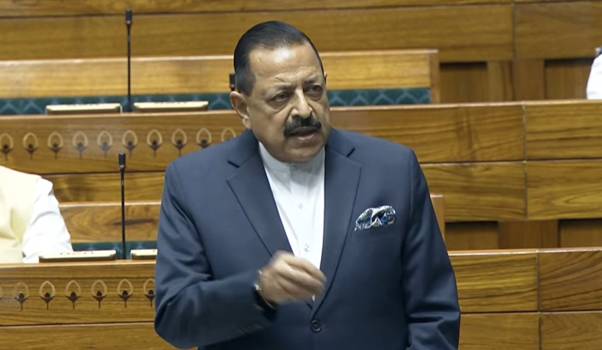
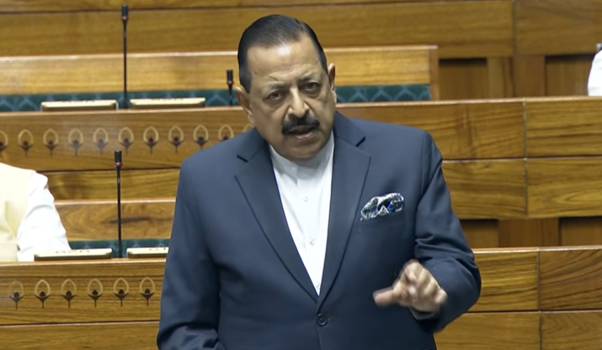
Union Minister of State for Science & Technology; MoS PMO, Department of Space, Dr Jitendra Singh today informed Parliament that the recent Integrated Main Parachute Airdrop Test (IMAT), successfully conducted by ISRO, has marked a crucial step in strengthening the mission-readiness roadmap for India’s first human spaceflight programme, Gaganyaan. Responding to queries in the Lok Sabha, Dr. Jitendra Singh, stated that the IMAT is a crucial component of the ongoing qualification campaign for the Crew Module’s parachute-based deceleration system, one of the most critical human-rating elements of the mission.
Dr. Singh explained that the latest IMAT simulated one of the most extreme descent conditions: a deliberate delay in the disreefing sequence between the two main parachutes. This high-stress scenario was successfully demonstrated, validating both the structural integrity and the load-bearing performance of the system under asymmetric forces. The Minister noted that this successful test significantly advances the human-rating process and supports the Government’s target of launching the first crewed Gaganyaan mission by the first quarter of 2027.
Addressing questions on third-party validation and technical oversight in parliament during question hour, Dr. Singh stated that ISRO regularly subjects the Crew Module parachute system and all associated test results to independent and rigorous review mechanisms. These include the Design Review Team (DRT), the Independent Assessment Committee, and the National Advisory Panel (NAP) for Human Rating & Certification, comprising eminent experts from across the country. He emphasised that these institutionalised forums ensure thorough scrutiny of all human-rating elements.
Responding to concerns regarding transparency, the Minister said that ISRO has been consistently and periodically disseminating major test outcomes, including those of the recent IMAT, and will continue to keep the public informed as the programme progresses.
On matters relating to crew preparedness, Dr. Singh reaffirmed that crew safety remains the foremost priority for the Gaganyaan mission. All systems undergo intensive testing and expert review, and lessons from every qualification test are carefully analysed, incorporated into system improvements, and subsequently revalidated. He further highlighted that astronaut training includes comprehensive simulations of emergency scenarios, survival procedures for off-nominal landings, operation of emergency survival kits, and continued psychological support to ensure holistic readiness of the Gaganyatris.
The Minister also informed the House that ISRO has institutionalised a robust risk-assessment and mitigation framework aligned with established global standards. Bodies such as the Human Rating Certification Board and the National Advisory Panel oversee these processes to ensure that the overall mission risk remains within acceptable limits.
Dr. Jitendra Singh reiterated that each test, including the recent IMAT milestone, not only validates critical systems but also contributes to the iterative improvement of crew training, ground recovery preparations, and safe execution of India’s historic human spaceflight mission.
*****
NKR/AK