Ministry of Health and Family Welfare
Union Health Secretary Calls for Strengthening State-Level Regulatory Capacity to Ensure Safer Food and Quality Medicines
Smt. Punya Salila Srivastava delivers keynote address at National-Level Conference on Food Safety and Drug Administration in Bengaluru; emphasises risk-based inspections, robust surveillance, digital solutions and stronger Centre-State coordination
Conference deliberates on strengthening food safety enforcement, drug quality oversight, laboratory infrastructure, digital traceability and consumer awareness
प्रविष्टि तिथि:
26 NOV 2026 5:22PM by PIB Delhi
A National-Level Conference on Food Safety and Drug Administration was held today in Bengaluru, Karnataka, under the theme “Safer Food, Safer Medicine, Healthier Nation”, with a focus on strengthening food and drug regulatory systems through coordinated action, effective enforcement and enhanced institutional capacity.
The Conference brought together senior representatives of the Government of India, State and Union Territory Governments, regulatory authorities, public health institutions and enforcement agencies to deliberate on key challenges and identify measures to further strengthen food and drug safety across the country.
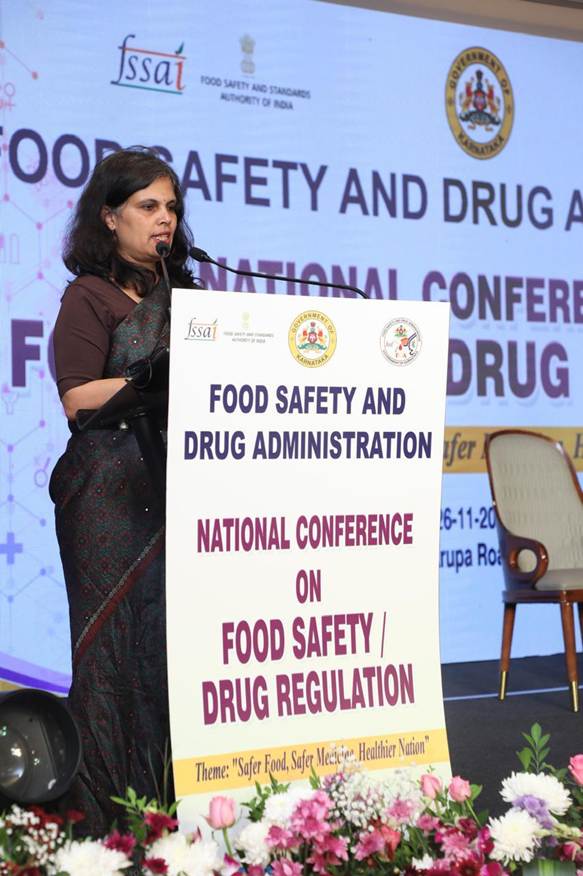
Addressing the Conference, Union Health Secretary Smt. Punya Salila Srivastava described food and drug regulatory authorities as the vanguards of public health, entrusted with the responsibility of safeguarding the health and well-being of every citizen. She emphasised that regulators must discharge their responsibilities effectively, efficiently and with integrity, while maintaining a balance between public health protection and ease of doing business.
Highlighting that regulatory decisions have a direct bearing on public health as well as on food business operators, manufacturers and retailers, she stressed the need to focus on essential regulatory requirements and strengthen coordination between Central and State authorities.
On food safety, the Union Health Secretary emphasised that regulatory efforts must go beyond preventing food adulteration and the sale of unsafe food to also promote healthy eating and better nutrition. She underlined the importance of capacity-building and the wider adoption of safe food-handling practices.
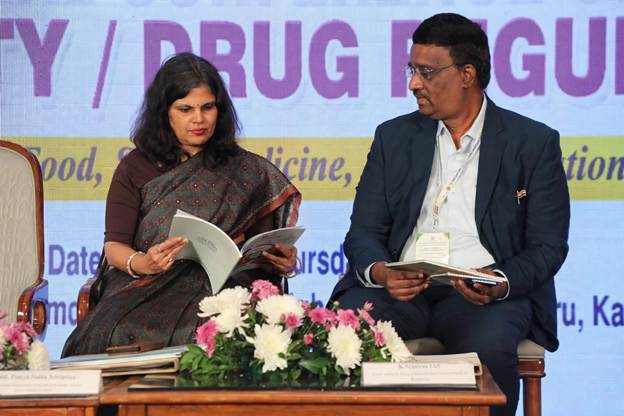
Referring to the perpetual validity of food safety licences, she noted that this places greater responsibility on regulatory authorities to ensure effective monitoring and robust, risk-based inspections. She also invited States to share their feedback on the risk-based inspection mechanism of the Food Safety and Standards Authority of India (FSSAI).
On drug regulation, Smt. Srivastava emphasised the need to strengthen State-level regulatory capacity through improved inspection mechanisms and greater adoption of technology. She highlighted the proposal for a sub-national assessment framework, aligned with World Health Organization (WHO) maturity-level parameters, to assess the capacity and performance of State drug regulatory systems.
She encouraged States to review SHRESHT (State Health Regulatory Excellence Index), the virtual assessment tool, and share their feedback to help strengthen the framework. Underscoring the importance of State participation in the conceptualisation of the Digital Drug Regulatory System (DDRS), she called upon States to contribute their practical experience and suggestions to inform its development.
She also stressed the need to strengthen transparency and accountability in clinical trials, including in the functioning of Contract Research Organisations (CROs).
Conference deliberates on strengthening regulatory frameworks, surveillance and enforcement
The Conference provided a platform for detailed deliberations on strengthening food and drug regulatory frameworks, improving surveillance and enforcement, augmenting institutional and laboratory capacities, and promoting coordinated action between Central and State authorities. The discussions reaffirmed that access to safe food and safe, effective and quality-assured medicines is fundamental to protecting public health, preventing avoidable illness and maintaining consumer confidence.
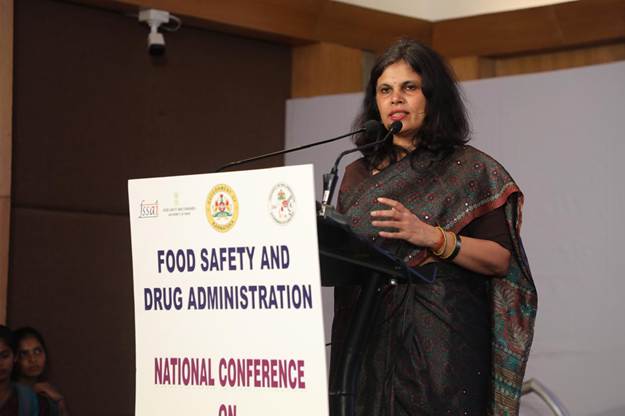
The food safety sessions reviewed the implementation of the Food Safety and Standards Act, 2006, with particular emphasis on risk-based inspections, surveillance, enforcement, food testing and evidence-based regulatory action. The discussions also covered good practices adopted by States in implementing food safety regulations, along with emerging challenges relating to e-commerce, novel foods and consumer trust.
The drug safety sessions focused on measures to combat spurious and adulterated medicines and address issues relating to narcotic drugs and psychotropic substances through strengthened inter-State coordination in investigation and enforcement. Other key areas included greater uniformity in licensing and regulatory practices, risk-based inspections and surveillance, and adherence to good manufacturing and distribution practices under the Drugs and Cosmetics Act, 1940, and the Rules thereunder.
The deliberations also addressed emerging challenges in the pharmaceutical sector, strategies to sustain India's position as the “Pharmacy of the World”, and the role of next-generation cellular and molecular platforms in accelerating discovery and therapeutic applications.
*****
SR
HFW/Union Health Secretary delivers keynote address at the National-Level Conference on Food Safety and Drug Administration/26th November 2026/3
(रिलीज़ आईडी: 2342029)
आगंतुक पटल : 128