Ministry of Housing & Urban Affairs
National Urban Conclave 2026 inaugurated in Bhubaneswar, Odisha
Three things must be looked at: systems that plan and govern our cities, the solutions we apply on the ground, and the way services are finally delivered to citizens :Shri Tokhan Sahu,MoS MoHUA
Odisha is moving towards a new era of planned urbanisation, modern infrastructure and sustainable mobility, guided by the vision of Samruddha Odisha and Viksit Bharat 2047 : Shri Mohan Charan Majhi
Day-one deliberations focused on seven thematic areas
प्रविष्टि तिथि:
24 OCT 2026 7:17PM by PIB Delhi
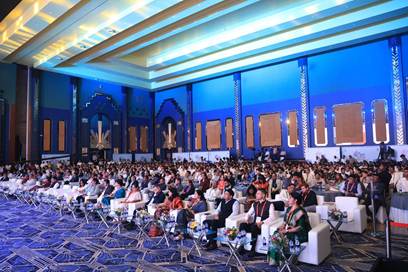
The second edition of the National Urban Conclave was inaugurated by Shri Tokhan Sahu, Hon’ble Union Minister of State, Ministry of Housing and Urban Affairs, in Bhubaneswar, Odisha. The Conclave, being held on 24-25 October 2026, is organised by the Ministry of Housing and Urban Affairs and supported by State Government of Odisha. National Institute of Urban Affairs is the knowledge partner with Housing and Urban Development Corporation Limited, National Buildings Construction Corporation Limited, as the principal sponsors.
Organised under the theme ‘Urban Rising - Rethinking Urban Systems, Solutions and Delivery’, it brings together over 1,200 participants at the venue including urban development Ministers, Mayors, and representatives from urban local bodies (ULB), urban development authorities, academia, industry, civil society, and the wider urban development ecosystem. The conclave focuses on reimagining systems, institutions, and implementation mechanisms that shape how cities function.
Inauguration of the Conclave
Lighting the ceremonial lamp during the inaugural session, Shri Tokhan Sahu, the Hon’ble Union Minister of State, Ministry of Housing and Urban Affairs, emphasised India’s ongoing urban transformation, wherein urban population had grown from approximately 377 million in 2011 to around 500 million, and is expected to reach 600 million by 2036. By the centenary of India’s independence, nearly one in every two Indians would live in a city. He noted that national programmes, including PMAY, AMRUT, Swachh Bharat Mission, PM SVANidhi, DAY-NULM and the Smart Cities Mission, had laid a strong foundation for the next phase of urban development.
Gracing the occasion, Shri Mohan Charan Majhi, Hon’ble Chief Minister of Odisha shared the state’s ambition to become a key growth engine in India’s journey towards Viksit Bharat 2047. “Odisha is moving towards a new era of planned urbanisation, modern infrastructure and sustainable mobility, guided by the vision of Samruddha Odisha and Viksit Bharat 2047. As we work towards building a $500 billion economy by 2036, our focus is on creating inclusive, technology-enabled and people-centric cities. The expansion of Ama Bus services, the introduction of electric buses and the development of the Bhubaneswar-Kataka-Puri-Paradip Economic Region reflect our commitment to cleaner mobility, better urban infrastructure and improved quality of life for our citizens. We are building cities that are not only engines of economic growth but also safer, more accessible and more liveable for everyone”, he said.
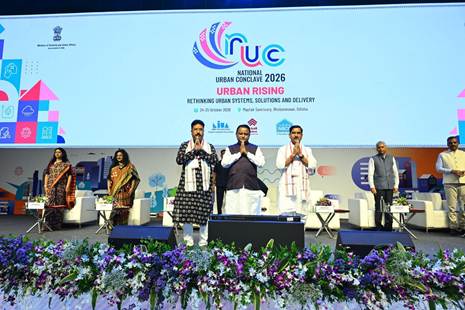
Speaking on the occasion Smt. Anu Garg, Chief Secretary of Odisha stated “Urban mobility is about much more than roads, buses and infrastructure; it is about people, their dignity and their everyday experiences. Urban development must begin with the basic needs of citizens—access to safe drinking water, efficient public transport, clean surroundings and well-planned public spaces. Odisha’s expansion of the Drink from Tap initiative to 11 cities, along with piped drinking water coverage across 114 urban areas, reflects our commitment to reliable and citizen-centric urban services. As our cities grow, we must ensure that infrastructure and public services keep pace with urbanisation, while recognising the frontline workers who play a vital role in keeping our cities moving. Through coordinated planning, institutional strengthening and effective implementation, we must translate urban reforms into tangible improvements in the everyday lives of our citizens.”
Shri Satendra Singh, Secretary, Department of Urban Development, highlighted the opportunity to rethink urban systems, co-create innovative solutions, and strengthen delivery mechanisms to make cities more liveable, inclusive, resilient, and future-ready. He highlighted the role of flagship initiatives, including Swachh Bharat Mission, AMRUT, Housing for All, metro rail, PM-eBus Sewa and PM SVANidhi, in improving service delivery, encouraging citizen participation and strengthening urban resilience. He also outlined recent initiatives and reforms, including the Urban Challenge Fund of ₹1 lakh crore, the ₹5,000 crore Credit Repayment Guarantee Scheme, the ₹10,000 crore Urbanisation Premium Grant recommended by the Sixteenth Finance Commission, and reforms under the SASCI Scheme.
Shri Anurag Jain, Chief Executive Officer, NITI Aayog, in his keynote address stated the importance of institutionalising dialogue and sustaining engagement with state governments to advance India’s urban development agenda. He noted that the vision of Viksit Bharat 2047 emerged through extensive participation and consultation, highlighting cities' role in driving societal and economic development. With nearly 50 per cent of India’s population expected to be urban by 2047, contributing around 75 per cent of GDP, he stressed the need for well-planned and coordinated urbanisation, supported by three pillars: investment, institutional response and capacity building.
Smt Usha Padhee, Additional Chief Secretary, Government of Odisha, delivered the vote of thanks, expressing appreciation for the opportunity to host the National Urban Conclave and showcase Odisha’s initiatives and experiences in urban development. She noted that the Conclave gave urban practitioners and stakeholders an opportunity to gain insights and learn from the state’s efforts. She extended her gratitude to the Hon’ble Minister of State, Hon’ble Chief Minister of Odisha, senior officials, state commissioners, and all those who contributed to the organisation of the conclave.
Launches and Releases
The inaugural programme launched several initiatives and publications
Urban Invest Window (UiWIN) Journal
HUDCO's Urban Invest Window (UiWIN), supports states and ULBs through project development, capacity building and the preparation of investment-ready projects. Strong project preparation and innovative financing are essential for converting urban aspirations into implementable projects that create tangible benefits for citizens.
Samarthya Platform for CPHEEO
Integrated portal for knowledge management and capacity building in solid waste / used water/water sector.
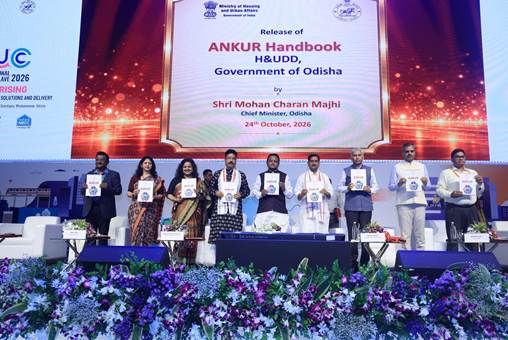
ANKUR Handbook
The ANKUR Handbook: 2025–26 Key Achievements and 2026–27 Reform Priorities, presents the progress and outcomes of Atal Network for Knowledge, Urbanisation and Reform (ANKUR). The handbook highlights work across urban planning, municipal finance, institutional capacity building and digital governance through SUJOG.
Odisha Town Planning Handbooks
Developed by the Directorate of Town Planning, Housing & Urban Development Department, Government of Odisha, in collaboration with NIUA, the handbooks aim to simplify urban planning procedures and regulations, and offer citizens guidance on building plan and layout plan approvals.
Framework on Government and Privately Owned Public Spaces for Odisha
The proposed Government-Owned Public Spaces (GOPS) and Privately-Owned Public Spaces (POPS) Policy seeks to expand access to inclusive, accessible and well-maintained public spaces. GOPS focuses on activating underutilised government and institutional land, while POPS integrates publicly accessible plazas, landscaped areas and community spaces into private developments through planning regulations and incentives.
E-Book: Mera Ghar Mera Abhimaan
A compendium celebrating the voices and experiences of beneficiaries of the Pradhan Mantri Awaas Yojana-Urban. (PMAY-U)
E-Launch of PMAY-U 2.0 Mobile Application
The application is an updated version of the existing mobile application.
Standard Operating Procedure for PMAY-U Awards 2027
The SOP will establish the parameters and framework against which States' performance will be assessed, further encouraging and strengthening implementation of urban housing interventions.
Advisory on C & D Waste Management
This advisory for ULBs outlines how to implement the Construction and Demolition Waste Management Rules 2025, which supersede the 2016 rules with a circular economy approach built on Extended Producer Responsibility, mandatory waste management and utilisation plans, recycling targets, and an online compliance portal.
Outcome Report on ‘Adequate Housing for All’
The Outcome Report collates the deliberations and recommendations of the technical sessions held on World Habitat Day, 2026, which examined how the potential of rental housing can be unlocked, what regulatory interventions can help bridge the gap between housing demand and supply, and how local and indigenous technologies can help scale up resilient, affordable housing.
The ‘Guidance Document on Compliance of Bulk Waste Generators’ was also launched.
Technical Deliberations
The first day of the Conclave featured seven thematic deliberations.
The session on ‘Right to Walk’ addressed an everyday concern in our cities: how to make streets safer and more accessible through continuous footpaths, safe school zones, better pedestrian crossings and improved last-mile connectivity.
Under ‘Water, Waste and Resource Efficiency’, the emphasis was on moving beyond infrastructure creation to improving service efficiency, reducing water losses, promoting treated-water reuse and recovering value from waste.
The session on ‘Affordable Housing’ brought attention to the growing need for rental accommodation, simpler regulatory approvals, better access to land and finance, and wider adoption of affordable, climate-resilient construction technologies.
Through ‘Integrated Urban Development and Infrastructure Delivery’, the session examined how better coordination between agencies, integrated utility planning and GIS-based systems can reduce duplication and improve the planning and execution of urban infrastructure.
A key question under the session on ‘New Paradigms for Urban Service Delivery’ was how municipalities can deliver better services through clearer institutional responsibilities, stronger finances, procurement reforms, technical capacity and partnerships with the private sector.
The session on ‘Model Building Bye-Laws’ focussed on how the existing regulatory framework can be revised to simplify building approvals, strengthen safety and accessibility, and respond to climate resilience and emerging construction technologies.
Finally, ‘Model Municipal Law’ examined the legislative reforms needed to strengthen municipal autonomy, clarify the powers of elected representatives and executive authorities, and improve institutional capacity and accountability in urban governance.
*****
SK
(रिलीज़ आईडी: 2328052)
आगंतुक पटल : 133