Ministry of Environment, Forest and Climate Change
India reaffirms Commitment to Ozone Layer Protection and Climate Action at 32nd World Ozone Day Celebration in Mumbai
The Country has exceeded its Montreal Protocol commitments without compromising Development: MoS (EFCC) Shri Kirti Vardhan Singh
Maharashtra working towards Prime Minister's vision of Viksit Bharat by 2047 through Sustainable Development: State Environment Minister Smt. Pankaja Munde
India’s Net Zero Portal and NAPCC Dashboard launched on World Ozone Day 2026
248 ITIs adopted by 12 Refrigeration and Airconditioning (RAC) Manufacturers; To align Training of next generation of Technicians with Industry Standards
प्रविष्टि तिथि:
16 SEP 2026 3:11PM by PIB Delhi
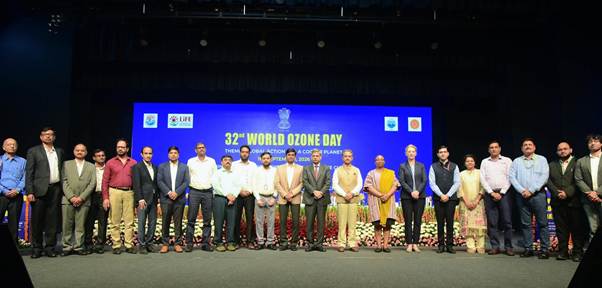
The Union Ministry of Environment, Forest and Climate Change today organised the national celebration of the 32nd World Ozone Day in Mumbai, with the theme ‘Global Action for a Cooler Planet’. The event was presided over by Union Minister of State for Environment, Forest and Climate Change (EFCC), Shri Kirti Vardhan Singh, along with Maharashtra State Minister for Environment and Climate Change, Smt. Pankaja Munde.
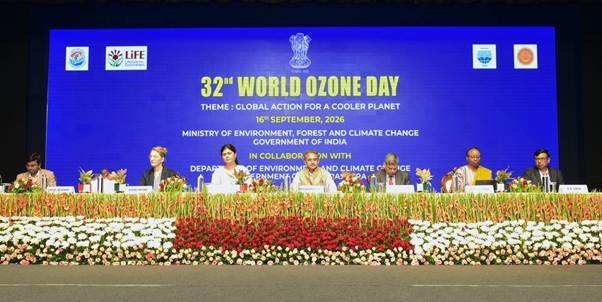
The event was also graced by the presence of Secretary (EFCC), Shri Tanmay Kumar; Ms. Angela Lusigi, Country Head (UNDP); Ms. Ulrike Ebeling, Country Director and Head (GIZ India), besides senior officials from Governments of India and Maharashtra, besides representatives of international organisations, industry representatives, academic experts and school children to highlight India’s efforts towards protection of the ozone layer and a cooler and more sustainable planet.
On the occasion, the dignitaries launched India's Net Zero Portal and the National Action Plan on Climate Change (NAPCC) Dashboard. The Net Zero portal will serve as a central repository to track, coordinate and showcase India’s climate commitments and enable industries, organisations and government bodies to voluntarily register and display their progress towards net-zero emissions. Further, the NAPCC Portal was also launched as a centralised digital gateway showcasing India’s overarching National Action Plan on Climate Change, with tracking and insights across national missions. (Press Release: https://www.pib.gov.in/PressReleasePage.aspx?PRID=2310737®=48&lang=2)
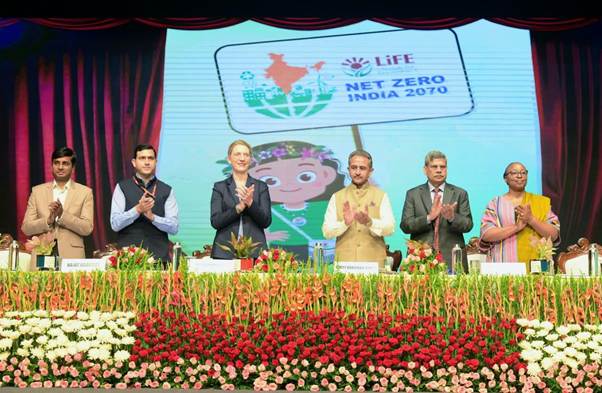
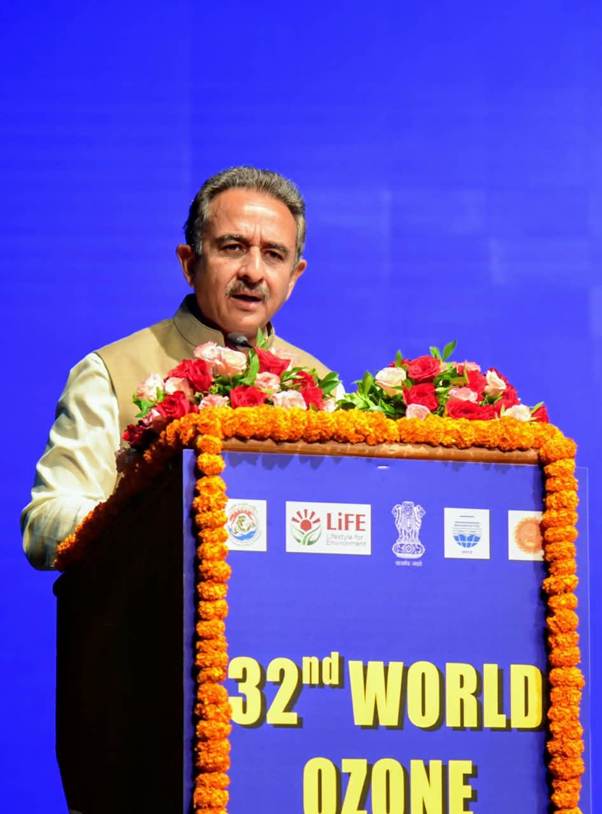
Union MoS (EFCC), Shri Kirti Vardhan Singh said India has demonstrated that economic growth and environmental protection can go hand in hand. The Minister said India has shown proactive leadership in conservation and has met its commitments under the Montreal Protocol without compromising development. He emphasised that collective action involving governments, scientists, industry, officers and citizens is essential to address environmental challenges.
Shri Singh highlighted Mission LiFE (Lifestyle for Environment) as a framework for translating environmental protection into simple, everyday actions. The Minister said mindful utilisation of natural resources, instead of wasteful consumption, can enable citizens to contribute to environmental conservation. He urged citizens to adopt three measures for sustainable cooling: get air-conditioners serviced by certified and skilled technicians who handle refrigerants safely; set AC temperatures at a comfortable level, preferably around 24 degrees Celsius, to save electricity and reduce carbon emissions; and choose high star-rated, energy-efficient appliances using climate-friendly refrigerants.
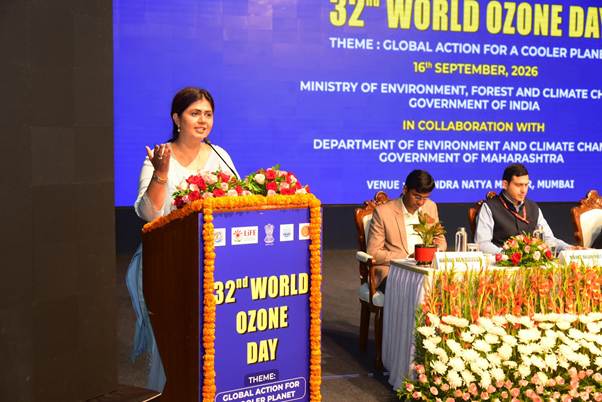
Smt. Munde said Maharashtra is working towards Prime Minister Shri Narendra Modi’s vision for a developed India by 2047, with a focus on decarbonisation, sustainable development and environment-friendly growth. She said Maharashtra is preparing roadmaps and action plans to integrate ozone-layer protection and climate action, while also advancing energy-efficient and climate-responsive cooling systems and buildings, particularly in view of the State’s rapid urbanisation and rising temperatures.
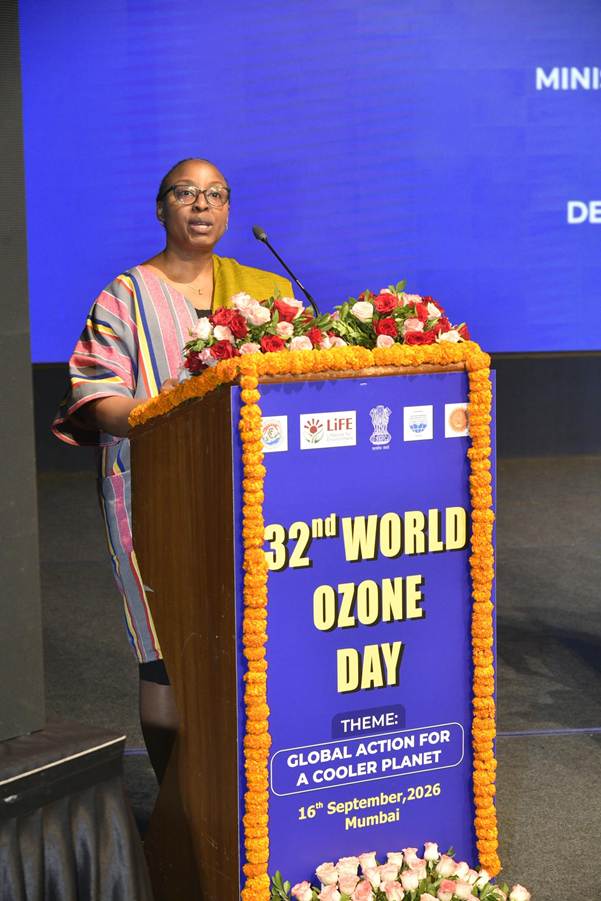
UNDP Country Head Ms. Angela Lusigi said India’s implementation of the Montreal Protocol demonstrates that economic growth and environmental protection can advance together. Highlighting India’s progress in phasing out ozone-depleting substances, she said the country’s targets have often been achieved ahead of schedule, while promoting low-impact technologies, strengthening small and medium enterprises and training technicians in new refrigerants, creating opportunities for green jobs.
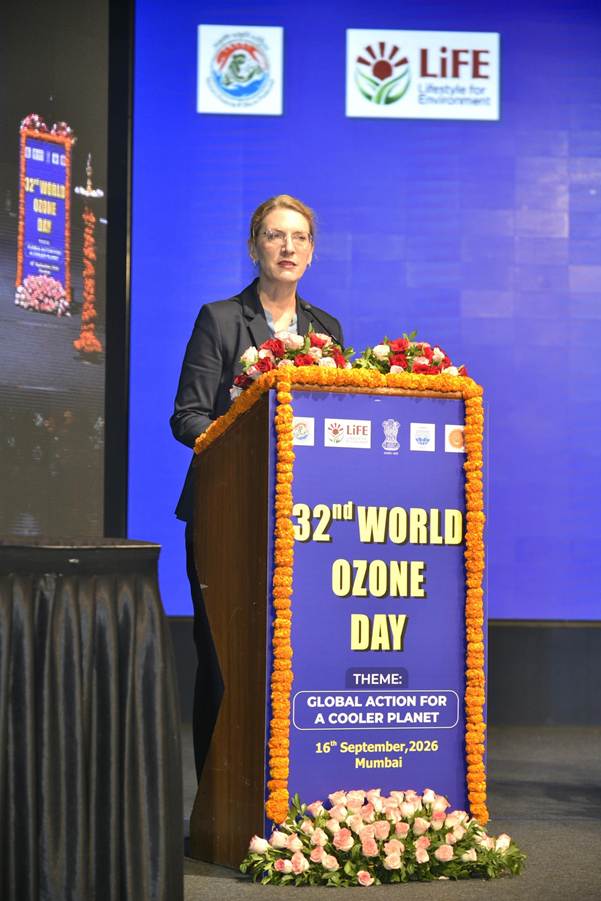
GIZ Country Director and Head Ms. Ulrike Ebeling said that India and Germany are working together to advance climate-friendly cooling solutions and support implementation of the HCFC Phase-out Management Plan Stage III (2025–2030), with a focus on the refrigeration and air-conditioning servicing sector. She highlighted efforts to establish a nationally recognised certification system for air-conditioning technicians, with a target to train 25,000 technicians by 2030, besides strengthening training capacity in the cooling sector.
The event also witnessed the announcement of the adoption of 248 Industrial Training Institutions by 12 Refrigeration and Airconditioning (RAC) manufacturers through a 4-Party Memorandum of Agreement comprising RAC manufacturers, Ozone Cell, Regional Directorate, Directorate General of Training (DGT) and State Directorate, DGT. The initiative is aimed at strengthening training infrastructure for the next generation of technicians. The institutional partnership aims to align classroom learning with industry standards. This synergy will build a workforce skilled in eco-friendly, low-global-warming-potential (GWP) technologies, directly supporting India’s commitments under the Montreal Protocol and the India Cooling Action Plan (ICAP).
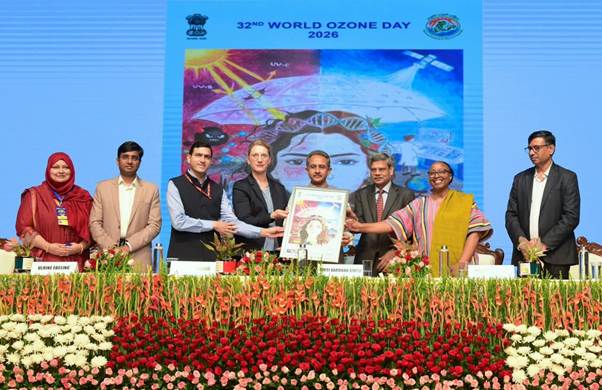
Publications based on studies conducted by the Ozone Cell, MoEF&CC were released on the occasion. The event also featured the announcement of winners of a national school-level poster and slogan writing competitions, as well as winners of a national online quiz competition. A video film showcasing India’s proactive industrial transformation and pioneering strides towards a cooler, more sustainable planet was also screened.
India has been a Party to the Vienna Convention for the Protection of the Ozone Layer and the Montreal Protocol on Substances that Deplete the Ozone Layer and all its amendments since 1992. The country has met all its commitments under the Montreal Protocol schedule for different ozone-depleting substances. Chlorofluorocarbons (CFCs), Carbon tetrachloride (CTC) and Halons have already been phased out for controlled applications, while India is currently phasing out Hydrochlorofluorocarbons (HCFCs) as per the accelerated phase-out schedule of the Montreal Protocol. India has already met the 2015, 2020 and 2025 phase-out targets for HCFCs.
India ratified the Kigali Amendment to the Montreal Protocol in September 2021. The Kigali Amendment came into force for India on 26 December 2021. As per the agreed phase-down schedule, India will complete the phase-down of HFC production and consumption in four steps from 2032 onwards, with reductions of 10 per cent in 2032, 20 per cent in 2037, 30 per cent in 2042 and 85 per cent in 2047, against the baseline.
*****
VM/GS
(रिलीज़ आईडी: 2310817)
आगंतुक पटल : 188
इस विज्ञप्ति को इन भाषाओं में पढ़ें:
Urdu