Ministry of Health and Family Welfare
Union Ministry of Health and Family Welfare Convenes National Workshop on “SUMAN Roadmap 2030 – Accelerating the Continuum of Care”
Registration of Newly Married Couples Can Help Prevent Unintended Pregnancies and Enable Healthy, Planned Pregnancies: Shri Brajesh Pathak, Deputy Chief Minister, Government of Uttar Pradesh.
SUMAN Roadmap 2030 to Strengthen Continuum of Maternal and Newborn Care, with Focus on Vulnerable and Underserved Areas: Smt. Aradhana Patnaik, Additional Secretary & Mission Director, NHM
Workshop Focused on Translating SUMAN Roadmap 2030 from Vision to Action towards Zero Preventable Maternal and Newborn Deaths.
SUMAN Roadmap 2030 Focuses on 13 High-Focus States and 130 Districts with Targeted Strategies to Reduce Maternal and Newborn Deaths
प्रविष्टि तिथि:
03 SEP 2026 11:12PM by PIB Delhi
Union Ministry of Health and Family Welfare (MoHFW) convened a two-day National Workshop on “SUMAN Roadmap 2030 – Accelerating the Continuum of Care” on September 2–3, 2026 at Lucknow, Uttar Pradesh.
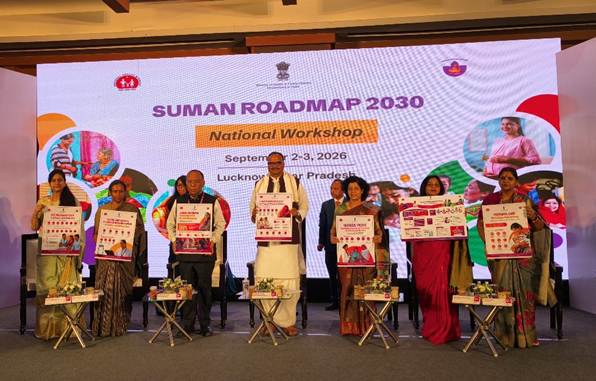
The workshop was held under the chairpersonship of Smt. Aradhana Patnaik, Additional Secretary & Mission Director, National Health Mission (NHM), Ministry of Health and Family Welfare, Government of India. The inaugural session was attended by Shri Brajesh Pathak, Deputy Chief Minister and Minister of Medical Education, Medical Health, Family Welfare, Mother & Child Welfare, Government of Uttar Pradesh.
Addressing the inaugural session, Shri Brajesh Pathak highlighted the importance of registration of newly married couples as an important step towards preventing unintended pregnancies and enabling timely preparation for healthy and planned pregnancies. He reaffirmed the commitment of the Government of Uttar Pradesh towards effective implementation of the SUMAN Roadmap 2030 across the State, with a focus on ensuring safe, respectful and quality maternal and newborn healthcare for every woman and newborn.
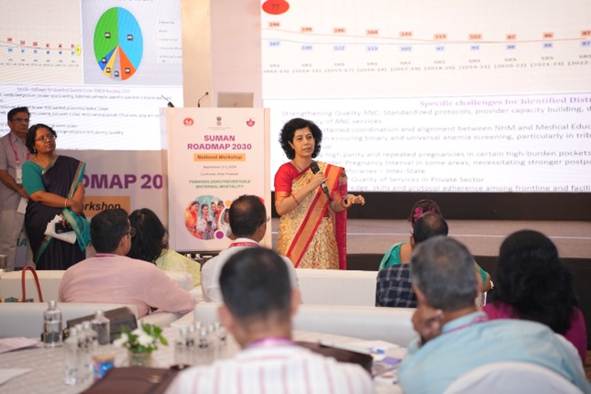
Delivering the keynote address, Smt. Aradhana Patnaik, Additional Secretary & Mission Director, NHM, Ministry of Health and Family Welfare, highlighted that, “India has made substantial progress in reducing maternal mortality and that sustained and targeted efforts are being undertaken to accelerate further gains, particularly in high-MMR States and vulnerable and hard-to-reach areas”.
She also emphasised that maternal health lies at the core of the health system’s efforts for women and families. Underscoring that pregnancy is a physiological process associated with joy and hope for families, she stressed the importance of ensuring that every woman experience pregnancy and childbirth with safety, dignity and access to quality care.
Smt. Patnaik highlighted that the SUMAN Roadmap 2030 adopts a life-course and continuum-of-care approach, integrating interventions across the entire maternal health journey—from pre-pregnancy care and antenatal care to intrapartum and postnatal care. The roadmap provides a focused and multidimensional framework to address critical gaps, strengthen existing health systems and ensure timely, equitable and quality maternal and newborn healthcare, with particular attention to vulnerable populations and underserved geographies.
During the inaugural session, the Guidelines on Birth Waiting Home (BWH), IEC material on SUMAN Roadmap 2030 and a video on SUMAN Roadmap 2030 were also launched, further strengthening the resources available for effective implementation of the roadmap at the State and field levels.
The workshop brought together more than 200 participants from across the country, including Mission Directors and senior officials from States and Union Territories, representatives from Central and State Governments, technical experts, academic institutions, professional bodies and development partners. The diverse participation facilitated cross-learning, exchange of field experiences and focused deliberations on State-specific priorities for accelerating progress under the SUMAN Roadmap 2030.
The SUMAN Roadmap 2030 adopts a two-part approach to address the specific needs of States and districts while ensuring sustained progress across the country. Section A focuses on targeted strategies for 13 High-Focus States and 130 districts that account for a disproportionate share of maternal and newborn deaths. Section B outlines strategies for all States and Union Territories to achieve and sustain progress towards the Sustainable Development Goal targets.
Building on this framework, the technical sessions focused on critical interventions across the continuum of maternal and newborn care. Discussions covered Pre-Pregnancy Care; High-Risk Pregnancy and management of Post-Partum Haemorrhage (PPH); community-level focused interventions; optimisation of Caesarean Section services; the role of the private sector in strengthening maternal health services; digital health initiatives; SUMAN Call Centre and grievance redressal mechanism; operationalisation of Birth Waiting Homes; and the impact of climate change on maternal health.
A key component of the workshop was the presentation by the 13 High-Focus States, which shared their respective priorities, key implementation gaps and proposed actions under the SUMAN Roadmap 2030. The session enabled States to learn from one another’s experiences and identify context-specific and actionable strategies to accelerate improvements in maternal and newborn health outcomes.
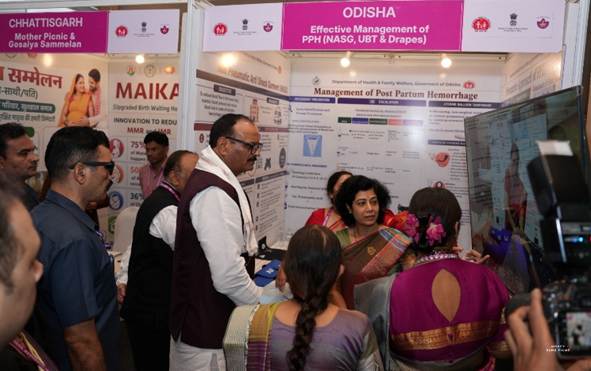
The workshop also provided a platform for showcasing promising State-level innovations and field experiences through a Gallery Walk. The initiatives showcased included effective management of PPH using NASG, UBT and drapes by Odisha; SUMAN Panchayat and SUMAN Sakhi Chatbot by Madhya Pradesh; Mothers’ Picnic and Gosaiya Sammelan by Chhattisgarh; State Maternal Health War Room by Uttarakhand; Vatsalya Initiative by Maharashtra; Mission Zero Preventable Maternal Deaths by Karnataka; and digital innovation initiatives by Uttar Pradesh.
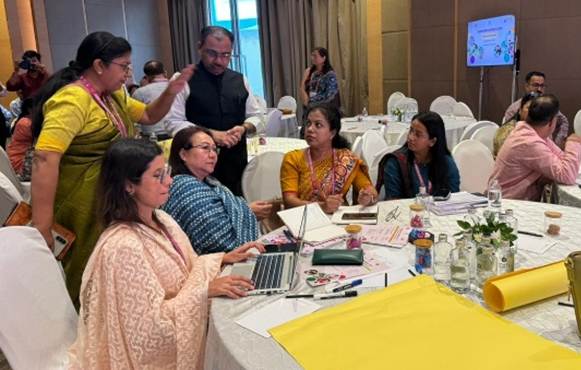
Recognising the importance of partnerships in advancing maternal and newborn health, representatives from WHO, UNFPA, UNICEF, Gates Foundation, Jhpiego, FOGSI, C3 and CIFF participated in the deliberations and reaffirmed their commitment to supporting the implementation of the SUMAN Roadmap 2030. Discussions underscored the need for coordinated action, continued technical support and sustained collaboration with development and technical partners to translate the roadmap’s priorities into effective interventions at the field level.
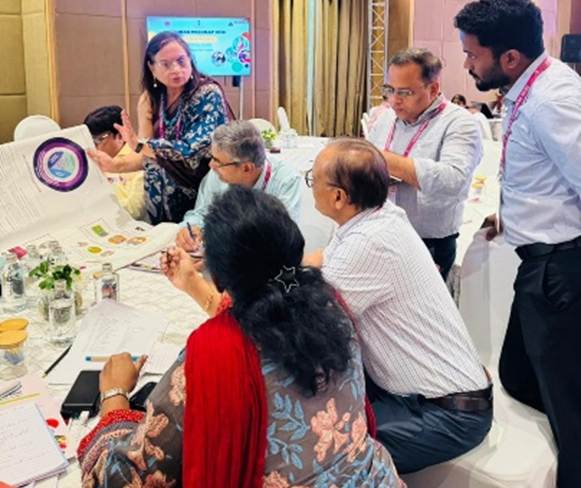
The workshop further adopted an interactive and solution-oriented approach through group exercises on four priority areas—Effective High-Risk Pregnancy Management: Issues and Challenges; Pre-Pregnancy Care: Strategies for Effective Implementation; PPH Management and addressing delays through effective referral transport; and Optimising Caesarean Section Services: Field Experiences. The exercises enabled participants to share practical experiences, identify implementation bottlenecks and develop field-level solutions for strengthening maternal healthcare delivery across States.
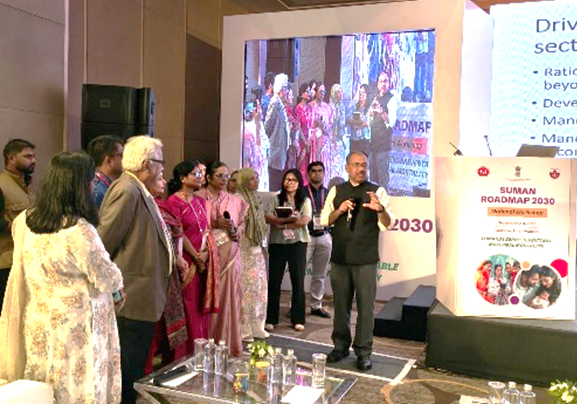
The two-day deliberations thus provided a common platform for States, technical experts, academic institutions, professional bodies and development partners to align priorities, share innovations and identify actionable strategies for accelerating the implementation of the SUMAN Roadmap 2030 and advancing the national commitment towards zero preventable maternal and newborn deaths by 2030.
SUMAN Roadmap 2030
The SUMAN Roadmap 2030 provides a strategic framework for accelerating the country’s journey towards zero preventable maternal and newborn deaths by 2030 through high-impact interventions while sustaining progress towards the Sustainable Development Goal targets.
The two-day workshop brought together deliberations across the continuum of maternal health, with focus on Pre-Pregnancy Care, High-Risk Pregnancy, PPH management, third-trimester community-level interventions, optimisation of Caesarean Sections, digital health initiatives, Birth Waiting Homes, climate impact on maternal health, State priorities and partner engagement.
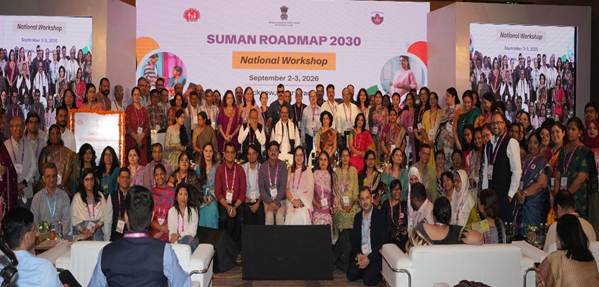
The deliberations reaffirmed the shared national resolve that no woman or newborn should lose their life to a preventable cause. The Ministry reiterated its commitment to working closely with State Governments, technical institutions and development partners to translate the SUMAN Roadmap 2030 into measurable and sustained improvements in maternal and newborn health outcomes, bringing the country closer to the goal of zero preventable maternal and newborn deaths by 2030.
***
SR
HFW/ National Workshop on ‘SUMAN Roadmap 2030’/3 September 2026/2
(रिलीज़ आईडी: 2306613)
आगंतुक पटल : 1881