PIB Backgrounder
Jal Sanchay Jan Bhagidari: From Local Action to Water Security
प्रविष्टि तिथि:
03 SEP 2026 3:22PM by PIB Delhi
For centuries, communities across India developed ways to capture, store and share water according to local needs. Stepwells, tanks, ponds, johads and traditional irrigation systems reflected a simple understanding: water security was a shared responsibility.
Growing populations, expanding agriculture and rapid urbanisation have made water management increasingly complex. New technologies, infrastructure and institutional mechanisms have become necessary. Yet, community participation remains central to sustainable water management.
This tradition of collective actions found a new expression in Jal Sanchay Jan Bhagidari (JSJB). Launched on 6 September 2024, the initiative has placed community partnership and ownership at the heart of water conservation. The initiative focuses on constructing low-cost groundwater recharge and water storage structures and reviving defunct borewells. It also promotes scientifically designed, locally appropriate solutions through a Whole-of-Government and Whole-of-Society approach. JSJB is guided by the 3Cs — Community, Corporate Social Responsibility (CSR) and Cost.
Building on this approach, more than 27 lakh structures were constructed across the country under JSJB 1.0 by May 2025 to capture rainwater and replenish groundwater. Further, under JSJB 2.0, launched in June 2025, more than 1.5 crore groundwater recharge structures were constructed by May 2026. In June 2026, the scope of the Jal Sanchay Jan Bhagidari (JSJB) initiative was expanded. JSJB was integrated with the Jal Shakti Abhiyan: Catch the Rain (JSA: CTR) campaign as Jal Sanchay Jan Bhagidari: Catch the Rain (JSJB: CTR). As of 3 September 2026, more than 1.58 crore artificial groundwater recharge structures have been constructed.
|
A National Focus on Water Conservation and Collaboration
The Ministry of Jal Shakti's Departmental Summit was held in New Delhi on 1–2 September 2026. It was the first in a series of Departmental Summits aimed at strengthening cooperative federalism and closer Centre–State collaboration. Jal Sanchay Jan Bhagidari: Catch the Rain was among the Summit's four key thematic pillars, alongside water infrastructure projects, source sustainability of drinking water systems, and rural water supply under Jal Jeevan Mission 2.0.
Emphasising Jan Bhagidari (Public Participation), Prime Minister Narendra Modi suggested promoting “Jal Utsav” to create greater public awareness. The Prime Minister further called for strengthening knowledge and capacity on water management and governance in universities and higher educational institutions. He suggested structured inter-State study visits involving public representatives, officials and farmers to facilitate practical learning and replication of successful interventions. He also called for robust water data governance, with water-sector data brought together, systematically managed, analysed and effectively utilised.
The Summit brought together discussions on key aspects of water governance, marking a step towards realising the vision of a Water Secure India and Viksit Bharat 2047.
|
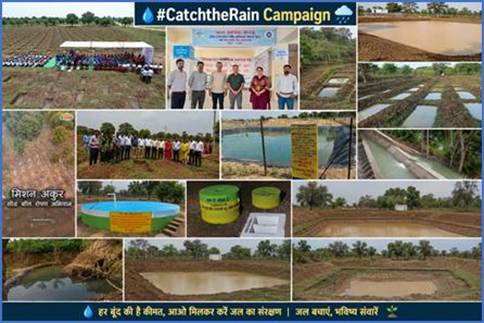
Across the country, these principles are being translated into local action, with communities and institutions adapting water conservation measures to native conditions.
Chhattisgarh: When Farmers Made Space for Water
In Chhattisgarh’s Korea district, farmers have set aside part of their own agricultural land for water conservation. Under the Aawa Paani Jhoki movement, farmers voluntarily dedicated 5 percent of their agricultural land for recharge ponds and terraced pits. The model shows that sustainable water management does not require large-scale displacement or heavy capital investment. It requires collective will.
More than 1,260 farmers adopted the model, while more than 2,000 soak pits were created across the district. In many villages, groundwater levels rose by 3 to 4 metres, while springs were revived in 17 remote tribal hamlets. The government supported the effort through micro-watershed mapping, hydrogeological assessments and technical guidance. Farmer ownership remained central to the initiative.
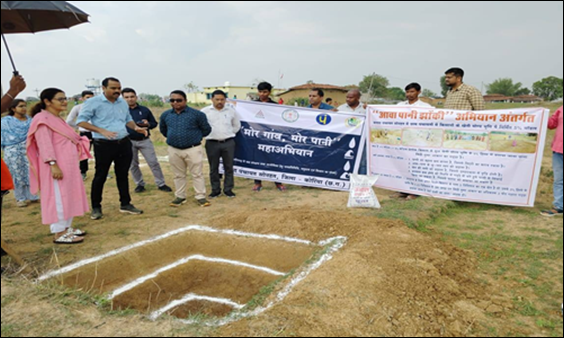
Korea district, Chhattisgarh
Andhra Pradesh: Villages Take Charge of Their Water
In Prakasam district of Andhra Pradesh, villages such as Murugummi, Marella and Thangella, once faced erratic rainfall, declining groundwater levels and borewell failures. These challenges affected agriculture and livelihoods.
Under the JSJB initiative, the response began at the local level. Gram Sabhas, door-to-door campaigns, Kalajathas (traditional folk-theatre performances), and workshops were organised to raise awareness. These efforts brought farmers, women, youth and local institutions together to plan measures such as water budgeting, crop planning and groundwater sharing.
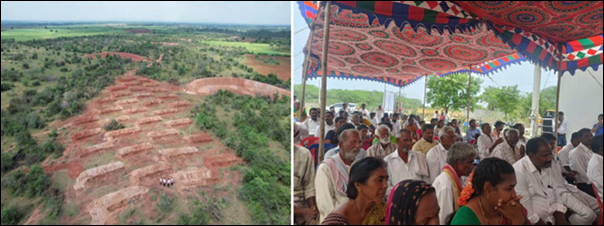
Prakasam District, Andhra Pradesh
Adopting a ridge-to-valley approach, the villages implemented measures to capture, store, and recharge rainwater. The ridge-to-valley approach involves managing rainwater as it flows from higher ridge areas towards the valley, strengthening soil and water conservation downstream.
In Murugummi, 71 water conservation structures provided about 8.11 lakh cubic metres of cumulative storage capacity. They support protective irrigation across 264.5 hectares of agricultural land.
Marella had 53 structures with about 10.04 lakh cubic metres of cumulative storage capacity. Additionally, the renovation of community ponds and tanks contributed nearly 5.95 lakh cubic metres of additional storage capacity.
Thangella had 71 structures with around 5.89 lakh cubic metres of cumulative storage capacity. The revival of traditional water bodies further enhanced the storage capacity by approximately 3.98 lakh cubic metres.
Together, these efforts improved groundwater availability for about 5,900 people, strengthening agricultural and dairy livelihoods, restoring soil moisture and helping reduce distress migration.
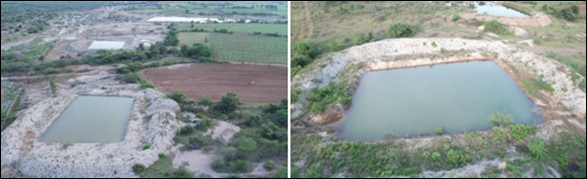
Prakasam District, Andhra Pradesh
Odisha: From Rooftops and Ponds to Aquifers
In Odisha, the JSJB initiative brings together schools, colleges, government offices and other institutions. They are capturing rainwater where it falls, facilitating its recharge into underground aquifers. Through the CHHATA Scheme, rainwater is captured from rooftops, while the ARUA Scheme facilitates recharge from water bodies into underground aquifers. Together, these interventions connect public infrastructure, local water bodies and community participation to strengthen groundwater conservation and water security.
In Jajpur district, 117 recharge shafts were constructed under the ARUA Scheme and 114 rooftop rainwater harvesting systems were installed under the CHHATA Scheme between 2022–23 and 2025–26. These developments across government institutions and educational campuses cover high-priority blocks including Korei, Binjharpur, Bari, Rasulpur, Dasarathpur and Jajpur. The effort has contributed to steadier water supplies, greater agricultural resilience and less time spent by households, particularly women, fetching water.
The approach extends beyond Jajpur.
In Cuttack district, 57 rooftop rainwater harvesting systems were established under the CHHATA Scheme across government offices, educational institutions and public facilities. 35 recharge shafts were constructed under ARUA in ponds and water bodies to facilitate deep aquifer recharge. These efforts were supported by street plays, seminars and workshops involving self-help groups, students and Panchayati Raj Institutions.
Similarly, in Digapahandi, Ganjam district, groundwater levels fell by 1–3 metres between 2020 and 2022. Rooftop harvesting systems in government offices and schools channel rainwater into recharge borewells. Assessments show better post-monsoon recovery around intervention sites.
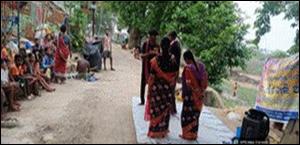
Digapahandi, Ganjam District, Odisha
A Growing Movement for Water Security
The government’s approach is not merely about creating structures for water conservation. It is also about fostering a culture of responsibility around water. JSJB places Jan Bhagidari—people’s participation—at the centre of water management. It brings together communities, Panchayats, institutions and other stakeholders on locally appropriate solutions. Its larger significance lies in connecting traditional knowledge with scientific planning, local ownership with institutional support, and individual action with collective outcomes. Every conserved drop becomes part of a larger effort to build resilient communities and strengthen India’s long-term water security.
References
Prime Minister’s Office
https://www.pib.gov.in/PressReleasePage.aspx?PRID=2052494®=3&lang=2#:~:text=To%20further%20the%20Prime%20Minister's,whole%2Dof%2Dgovernment%20approach®=3&lang=2
https://www.pib.gov.in/PressReleaseDetail.aspx?PRID=2306122®=48&lang=1
Ministry of Jal Shakti
https://www.pib.gov.in/PressReleasePage.aspx?PRID=2271660&lang=1®=48
https://www.pib.gov.in/PressReleasePage.aspx?PRID=2250425®=48&lang=2
https://jsjb.mowr.gov.in/
https://www.pib.gov.in/PressReleasePage.aspx?PRID=2235468®=48&lang=2
https://www.pib.gov.in/PressReleasePage.aspx?PRID=2292604®=48&lang=1
PIB Backgrounder
https://www.pib.gov.in/PressReleasePage.aspx?PRID=2286237®=22&lang=1
https://www.pib.gov.in/PressNoteDetails.aspx?ModuleId=3&NoteId=152136®=3&lang=2
Click to see pdf
***
PIB Research
(रिलीज़ आईडी: 2306312)
आगंतुक पटल : 2638