Ministry of Jal Shakti
Department of Drinking Water and Sanitation hosted the 9th edition of Sujal Gram Samvad
Multilingual dialogue held with 8 Gram Panchayats emphasising GP driven community-led Long-Term water security
प्रविष्टि तिथि:
24 JUL 2026 6:47PM by PIB Delhi
The Department of Drinking Water & Sanitation (DDWS), Ministry of Jal Shakti, successfully organised the ninth edition of the multilingual ‘Sujal Gram Samvad’ today, reinforcing the government’s commitment to community-led water governance under the Jal Jeevan Mission 2.0.
The virtual Samvad witnessed a diverse range of participants including Gram Panchayat (GP) representatives, members of Village Water and Sanitation Committees (VWSCs), community participants, Jal Sahiyas, Jal Bahinis, Jal Sakhis, Anganwadi workers, students, teachers, and frontline functionaries from the GPs, along with JJM State Mission Directors, District Collectors/District Magistrates/Deputy Commissioners, DWSM officials, and senior officers from the States.
The Samvad was chaired by Shri Ashok K.K. Meena, Secretary, DDWS, in the presence of Shri Kamal Kishore Soan, AS&MD, NJJM, Shri D Senthil Pandiyan, Joint Secretary, NJJM, along with Senior officers from the Department of Drinking Water and Sanitation.
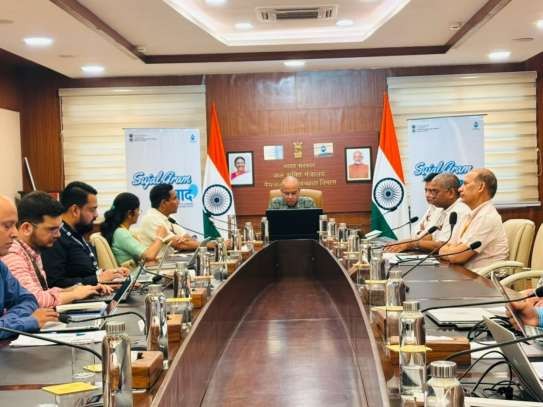
In his opening remarks, Secretary, DDWS, Shri Ashok K.K. Meena, emphasised Sujal Gram Samvad as a platform to learn from Gram Panchayat’s experiences and challenges. He said the best practices shared during the interaction can help other Gram Panchayats strengthen their own systems.
Shri Ashok K. K Meena underlined that drinking water and sanitation are subjects entrusted to Panchayati Raj Institutions under the 73rd Constitutional Amendment and stressed the need for effective devolution of Funds, Functions and Functionaries (3Fs) to Gram Panchayats for sustainable management of rural water supply systems.
He further emphasized that active community ownership through Village Water & Sanitation Committees (VWSCs), particularly with participation of women, youth and ex-servicemen, is essential for ensuring long-term sustainability of rural drinking water infrastructure.
Voices from the Gram Panchayats
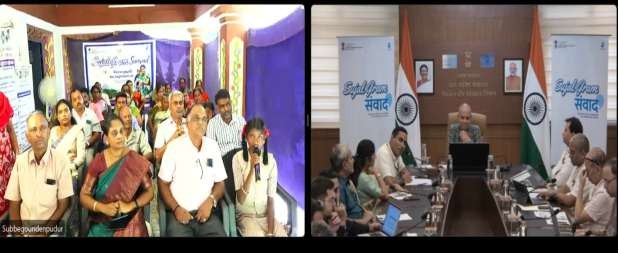
GP- Subbegoundenpudur, District- Coimbatore, Tamil Nadu: During the interaction from representatives of GP Subbegoundenpudur in Tamil, they shared that the GP has achieved 100% Har Ghar Jal coverage across villages and habitations, supplying 55 LPCD through surface water drawn from the Bhavani and Aliyar rivers. Community members highlighted the active involvement of Self-Help Groups in water quality testing through Field Test Kits (FTKs) and regular awareness campaigns on safe water use. The GP collects ₹50 per month i.e ₹600 per annum as user charges.
Further, the officials from the District and State informed that the district was declared Har Ghar Jal on 29th June 2024. They are focusing on strengthening Jal Seva Aankalan, source sustainability measures and standard operating procedures for new household tap connections to ensure sustainable service delivery. A dedicated District Source Sustainability Committee has been constituted to protect drinking water sources and ensure long-term sustainability. Around 80,000 PVTG households have been covered under the Mission.
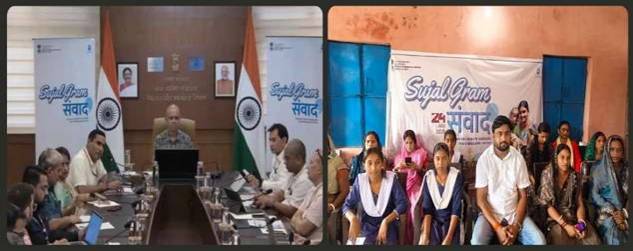
GP- Bariyarpur, District- Lakhisaria, Bihar: The village representatives shared their experiences in Angika language, highlighting water woes prior to JJM and said, many habitations relied on hand pumps and scattered local sources for drinking water. Household tap connections have significantly reduced the burden on women and improved access to safe
drinking water. The interaction also highlighted the district's focus on extending piped water supply to remote tribal habitations and strengthening community participation in O&M.
District officials informed that surveys have been completed in uncovered tribal hamlets and piped water supply schemes are being implemented in a phased manner. They also highlighted regular DWSM meetings and the gradual transfer of completed schemes to Gram Panchayats for sustainable management.
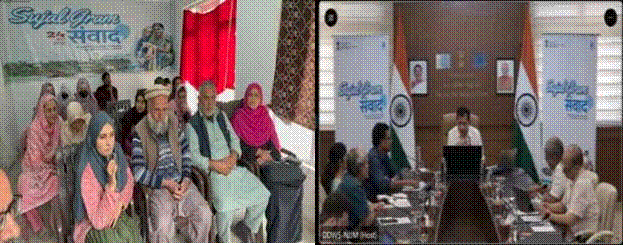
GP- Sonamarg B, District- Ganderbal, Jammu & Kashmir: During the interaction with the village representatives of GP Sonamarg in Hindi, it was informed that the Gram Panchayat receives drinking water through gravity-based spring water supply schemes, which have substantially improved drinking water availability in the mountainous region. They informed that the community actively participates in protection and rejuvenation of natural springs, while youth groups support environmental conservation and cleanliness around tourist areas. The villagers also highlighted that community ownership has strengthened operation and maintenance of the schemes. Being Himalayan region earlier they used to rely on stream water but under JJM even in harsh winter they are getting uninterrupted water because of the insulated pipe water supply technology.
District officials informed that the district has undertaken rejuvenation of nearly 30 springs, prepared District Improvement Plans (DIP) for sustainable water security and continues to prioritise source sustainability, gravity-fed systems and convergence with other programmes and local institutions.
GP- Lallen, District-Mamit, Mizoram: Interaction with the village members of Mamit was carried out in Mizo language. The beneficiaries reported that the VWSC has established an effective community-led operation and maintenance system. Leakages are reported immediately through WhatsApp groups, while locally engaged plumbers and pump operators attend complaints promptly. Community members highlighted regular awareness campaigns on water conservation and responsible water use.
The District Collector informed that DWSM meetings are being held regularly and proceedings are uploaded. Convergence with the Forest Department, Rural Development and Watershed programmes is being strengthened to improve source sustainability, particularly in hilly areas where natural water sources are gradually drying up.
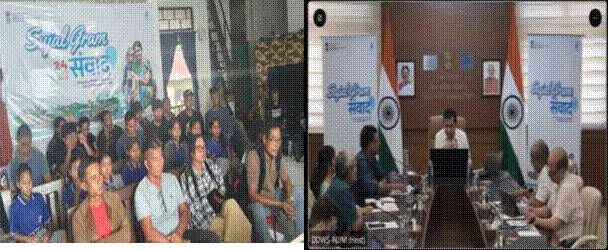
GP- Etori, District- Shahjahanpur, Uttar Pradesh: The village representatives shared their experiences in Hindi. Household tap water connections under JJM have significantly improved access to safe drinking water, reducing the drudgery of fetching water and improving the health and well-being of the community. They highlighted that the GP regularly discusses O&M of the water supply system in Gram Sabha meetings, promotes responsible water use and water conservation, and encourages community participation in ensuring the long-term sustainability of the scheme. Village representatives also shared that awareness campaigns are being organised, and the GP is promoting timely reporting and resolution of water supply-related issues.
Further District Administration informed that special efforts are being undertaken to provide safe drinking water to Koda and Kora tribal habitations, ensuring that even the most remote and vulnerable communities receive safe drinking water through household tap water connections. They also highlighted regular DWSM meetings, Jan Chaupal programmes for community awareness, and focused orientation of Gram Panchayats on the Jal Sarthi App.
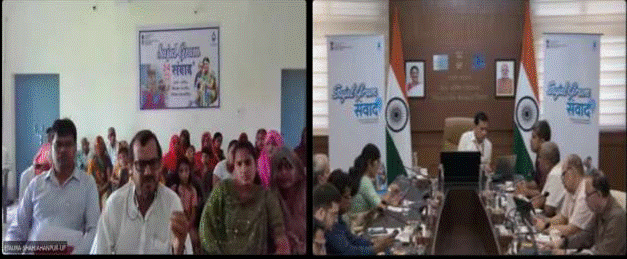
GP- Faridpur, District- Panipat, Haryana: The village representatives shared their experiences in Haryanvi language and said that the GP has developed a strong community-led O&M model. A monthly user charge is collected from households and utilised for routine repairs, while locally appointed pump operators and plumbers ensure immediate rectification of leakages and other faults. Monthly ₹13,000 total revenue is collected towards user charge. Self-Help Group women regularly undertake water quality testing through FTKs, while school children, ASHA workers and Anganwadi workers conduct awareness campaigns on water conservation and safe water practices. The GP also uses WhatsApp groups and monthly community meetings for grievance redressal and timely maintenance.
District and State officials highlighted Haryana's efforts to implement the State Water Policy by onboarding SHG women for user charge collection, water quality monitoring and grievance redressal, thereby strengthening community ownership of rural water supply schemes. Faridpur GP is the pioneer in implementing the O&M policy.
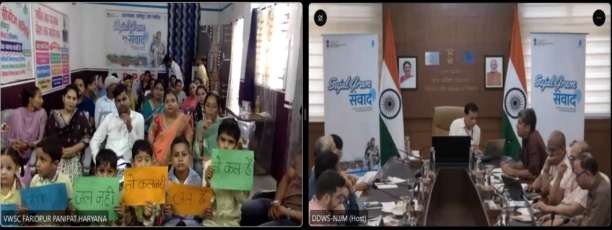
GP- Husir, District- Khunti, Jharkhand: The village representatives shared their experiences in Sadri language and informed that JJM has brought a significant transformation in the predominantly tribal Gram Panchayat by providing household tap water connections, eliminating the need to fetch water from distant streams and improving health. Gram Sabha plays an active role in planning and overseeing the O&M of scheme. A local pump operator has been engaged to ensure regular water supply, while the GP has adopted a community-led user charge mechanism, collecting ₹30 per month per household, with economically weaker families being exempted. The Panchayat collects around ₹9,400 every month, which is utilised for payment of the pump operator, plumber, carrying out routine repairs and addressing pipeline leakages, thereby ensuring uninterrupted water supply and strengthening community ownership of the scheme.
District officials informed that a structured monitoring mechanism has been instituted under which district and block-level officers have been assigned villages for regular field visits, with every 4th Saturday marked for reviewing implementation of JJM and resolving field-level issues. They further shared that the district is working to expand community ownership beyond the VWSC by partnering with Large Area Multi-Purpose Cooperative Societies (LAMPS), Primary Agricultural Credit Societies (PACS) and Self-Help Groups (SHGs) to strengthen operation and maintenance, user charge collection and long-term sustainability of rural drinking water systems.
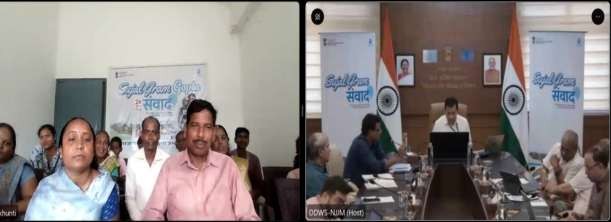
GP- Kotdhi, District- Balrampur, Chhattisgarh: The village representatives shared their experiences in Hindi and highlighted that JJM has significantly improved access to safe drinking water while reducing the burden of fetching water from distant sources. They informed that drinking water quality is monitored every fortnight using FTKs by trained community members. The test results are promptly shared with villagers through a dedicated WhatsApp group, ensuring transparency and enhancing community awareness regarding water quality. They further shared that soak pits have been constructed for the safe disposal of greywater, contributing to improved sanitation and environmental sustainability. Regular awareness campaigns are also conducted to promote responsible water use and encourage community participation in the maintenance of village water supply assets. The GPs are leveraging 15th FC grants to support the O&M of rural water supply schemes.
District and State officials highlighted the initiatives being undertaken for water conservation through convergence with VB-GRAM G and other programmes. They also shared various local development interventions aimed at strengthening source sustainability and ensuring the long-term sustainability of rural drinking water infrastructure.
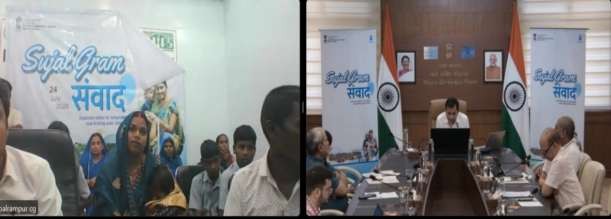
AS & MD, NJJM, Shri Kamal Kishore Soan, expressed appreciation to the active support of District Collectors and Gram Panchayats for their commitment towards JJM.
He urged for effective utilisation the 16th FC grants for which guidelines will be share soon. He emphasised the need for regular DWSM meetings to review the functionality of schemes, address implementation challenges and monitor service delivery. Stressing that source sustainability, he called upon all stakeholders to undertake sustained efforts for protecting and rejuvenating drinking water sources so that future generations continue to receive uninterrupted piped water supply.
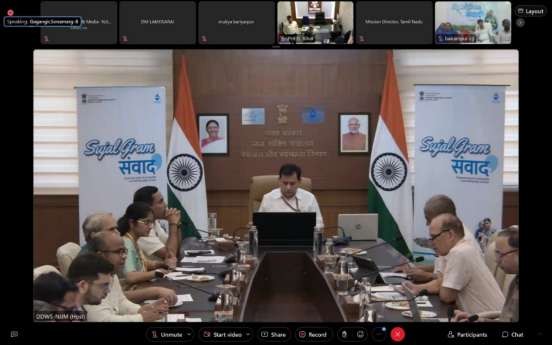
He further urged District Collectors and District Magistrates to actively participate in Jal Arpan programmes and ensure that all prescribed protocols are followed, thereby promoting community ownership and accountability.
Addressing the Gram Pradhans, Shri Soan encouraged them to regularly review the status of their village water supply schemes on the e-Gram Swaraj Portal, use the information for informed decision-making, and proactively share the status with the community through Gram Sabha meetings to strengthen transparency, community participation and collective responsibility for sustainable rural drinking water services.
The Samvad started by setting the context and sharing objective by Shri Y K Singh, Director, NJJM. He said that the Samvad aims to listen village communities, understand their experiences and learn local practices on O&M, and source sustenance.
***
PS/AK
(रिलीज़ आईडी: 2289090)
आगंतुक पटल : 983