Ministry of Fisheries, Animal Husbandry & Dairying
National Workshop on Compartmentalization and Zoning for Foot & Mouth Disease (FMD) inaugurated at Bhubaneswar
Union Minister Shri Rajiv Ranjan Singh, Ministry of Fisheries, animal husbandry and Dairying, GoI launched the Rate My Laboratory App, Dairy Vikas Portal, Vidyapeeth Portal and SOP on Prevention & Control of Mastitis in Dairy Animals
प्रविष्टि तिथि:
08 JUL 2026 10:16PM by PIB Delhi
The Department of Animal Husbandry & Dairying (DAHD), Ministry of Fisheries, Animal Husbandry & Dairying, Government of India, Hosted the National Workshop on Compartmentalization and Zoning for Foot & Mouth Disease (FMD) on 8 July 2026 at Bhubaneswar, Odisha. The two-day workshop aims to deliberate on strategies for implementing compartmentalization and zoning in accordance with international standards to strengthen India's animal health system, accelerate Foot & Mouth Disease (FMD) control and eradication efforts, facilitate safe domestic and international trade in livestock and livestock products, and support the national objective of achieving FMD-free status by 2030.
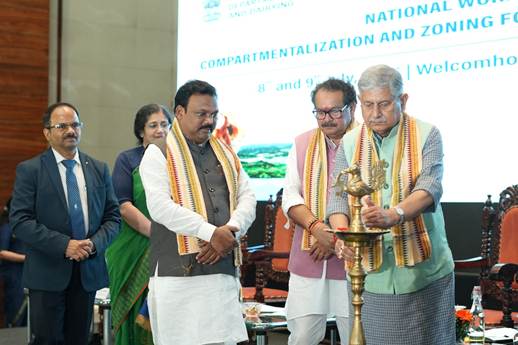
The event commenced with the ceremonial lighting of the lamp by the Chief Guest, Shri Rajiv Ranjan Singh alias Lalan Singh, Hon'ble Union Minister of Fisheries, Animal Husbandry & Dairying, along with Prof. S. P. Singh Baghel, Hon'ble Minister of State for Fisheries, Animal Husbandry & Dairying, Government of India; Shri Gokulananda Mallik, Hon'ble Minister, Fisheries & Animal Resources Development (FARD), Government of Odisha; Shri Naresh Pal Gangwar, Secretary, DAHD; Ms. Varsha Joshi, Additional Secretary (C&DD), DAHD; Shri Rama Shankar Sinha, Additional Secretary (Livestock Health), DAHD and Dr. Naveena B. Maheswarappa, Animal Husbandry Commissioner, DAHD.
A major highlight of the inaugural session was the launch of several digital initiatives aimed at strengthening service delivery, digital governance, and capacity building in the livestock and dairy sectors. The Hon'ble Union Minister launched the Rate My Laboratory App under the Pandemic Fund, the Dairy Vikas Portal, and the Vidyapeeth Portal. He also released the Folder and Video on the Standard Operating Procedure (SOP) for Prevention and Control of Mastitis in Dairy Animals.
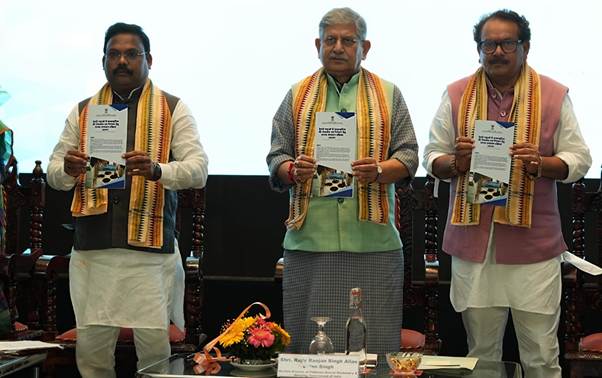
The Rate My Laboratory App has been developed to strengthen veterinary diagnostic services through real-time user feedback, promoting transparency, accountability, and continuous quality improvement in laboratories.
The Dairy Vikas Portal is a centralized digital platform for real-time monitoring of milk collection infrastructure, including Bulk Milk Coolers (BMCs), Milk Collection Centres (MCCs), milk procurement, and infrastructure utilization, enabling evidence-based planning and informed decision-making.
The Vidyapeeth Portal is a comprehensive digital platform for accredited Artificial Insemination Training Institutes, providing end-to-end management of trainee records, institute operations, QR-based digital certification, and MIS-based monitoring to enhance transparency, efficiency, and capacity building.
The SOP on Prevention and Control of Mastitis in Dairy Animals has been developed to promote scientific dairy management, improve milk quality, strengthen mastitis prevention and control, and enhance dairy productivity.
Shri Rajiv Ranjan Singh, Hon'ble Union Minister for Fisheries, Animal Husbandry & Dairying and Panchayati Raj, highlighted that the livestock sector contributes around 31% to the Agricultural Gross Value Added (GVA) and nearly 5.5% to India's overall GVA. Emphasizing the goal of achieving an FMD-free India by 2030 under the vision of Viksit Bharat @2047, he said that sustained vaccination campaigns, supported by tracking through ear-tagging and geo-tagged photographs, have significantly strengthened FMD control efforts. He underscored the importance of creating FMD-free zones and compartments through a decentralized approach and informed that nine States have been identified as priority States for this initiative. He further noted that NSP positivity has declined from 16.6% in 2022 to 7.8% in 2026, over 1.4 billion FMD vaccine doses have been administered under one of the world's largest animal disease control programmes, no Asia-1 serotype case has been reported in the last three years, and India currently has an annual production capacity of 116 crore FMD vaccine doses.
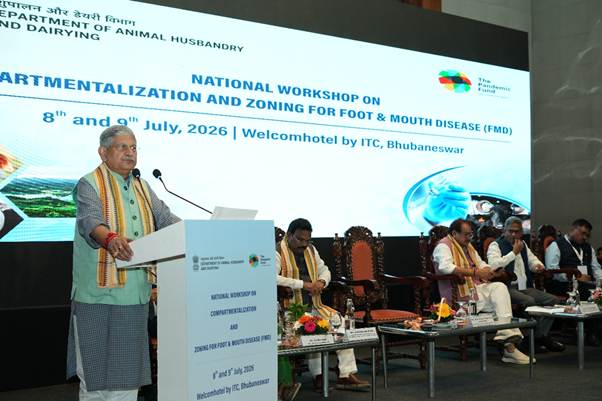
Addressing the National Workshop, Prof. S. P. Singh Baghel, Hon'ble Minister of State for Fisheries, Animal Husbandry & Dairying and Panchayati Raj, highlighted the livestock sector's vital contribution to the economy, noting that it accounts for 31% of the GVA of agriculture and allied sectors and 5.5% of the country's total GVA, while supporting the livelihoods of over 8 crore rural families, particularly women. He further stated that the National Animal Disease Control Programme (NADCP), the world's largest livestock vaccination programme, has achieved significant milestones.
Shri Gokulananda Mallik, Hon'ble Minister, Fisheries & Animal Resources Development (FARD), Government of Odisha, in his address, underscored the vital role of the livestock sector in strengthening rural livelihoods. He emphasized that sustained vaccination, robust surveillance, enhanced biosecurity, and strengthened veterinary infrastructure are critical to achieving the national goal of an internationally recognized FMD-free India by 2030.
Shri Naresh Pal Gangwar, Secretary, Department of Animal Husbandry & Dairying (DAHD), Government of India, addressed the National Workshop on Compartmentalization and Zoning for Foot & Mouth Disease (FMD) . Secretary, Department of Animal Husbandry & Dairying, emphasized the importance of compartmentalization and zoning in strengthening India's Foot & Mouth Disease (FMD) control efforts.
Following the inaugural session, Technical Session I featured deliberations on WOAH Standards and Criteria for Establishing FMD-Free Zones and Compartments, implementation of the Support to States/UTs for Capital Investment (SASCI) Scheme, and a comprehensive review of the scheme across States and Union Territories. The discussions focused on strengthening animal health infrastructure, enhancing disease surveillance, and accelerating FMD control efforts.
Addressing the Technical Session, Ms. Varsha Joshi, Additional Secretary (C&DD), Department of Animal Husbandry & Dairying (DAHD), highlighted the importance of strengthening preparedness for the potential impact of El Niño on fodder availability and livestock health. She emphasized the need for ensuring year-round fodder and feed security through climate-resilient planning, promotion of silage, and effective implementation of fodder resource development plans. She also urged States and Union Territories to operationalize Fodder Task Forces, prepare district-wise fodder action plans, and strengthen contingency measures to effectively address fodder shortages during deficient rainfall conditions.
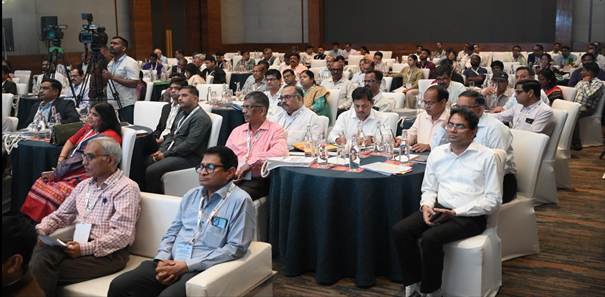
On 9 July 2026, the workshop will continue with Technical Session II, which will focus on differential FMD control strategies for States and Union Territories, the implementation roadmap for FMD-free compartments and zones, Negative Marker Vaccines for Foot-and-Mouth Disease (FMD), emerging threats posed by SAT serotypes, and an Open House Discussion on strengthening disease control measures through coordinated planning and stakeholder collaboration.
The workshop is expected to facilitate knowledge exchange, strengthen Centre–State coordination, and provide a roadmap for the effective implementation of compartmentalization and zoning. The deliberations will further strengthen India's animal disease control framework, safeguard livestock health, improve farmers' livelihoods, facilitate safe trade in livestock and livestock products, and advance the country's goal of achieving FMD-free status by 2030.
••••••••••••••••••
JP
(रिलीज़ आईडी: 2282663)
आगंतुक पटल : 1493