Posted On:
25 NOV 2026 6:54PM by PIB Delhi
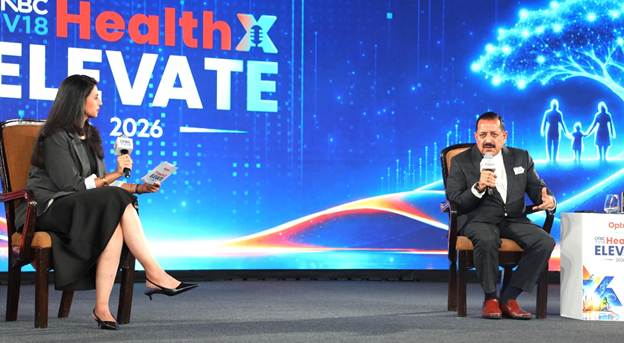
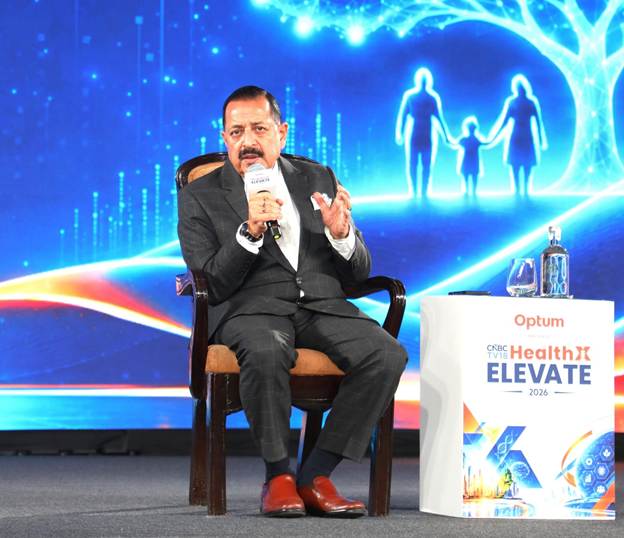
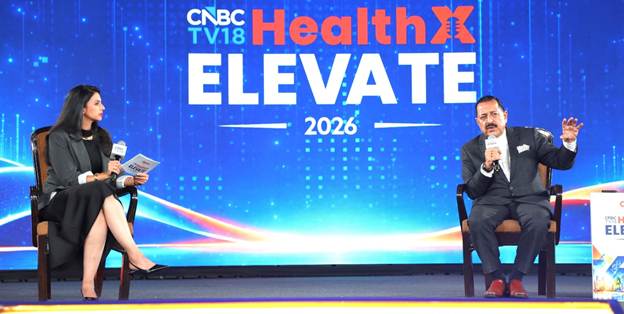
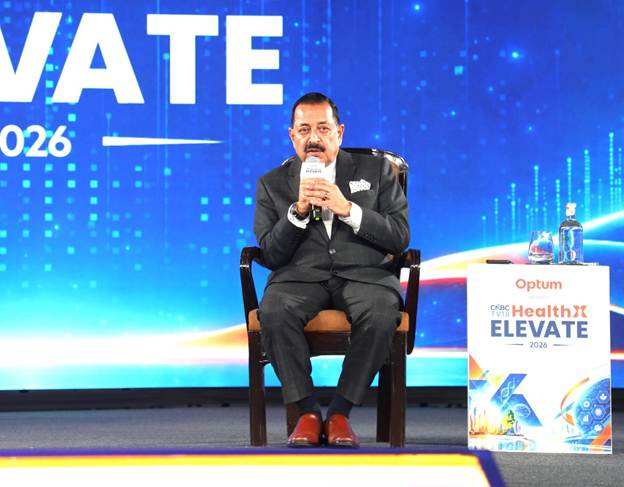
Union Minister of State (Independent Charge) for Science and Technology Dr. Jitendra Singh today highlighted India’s expanding StartUp ecosystem, growing capabilities in biotechnology and healthcare innovation, and the increasing role of artificial intelligence (AI), genomics and precision medicine in transforming healthcare, while addressing HealthX Elevate 2026.
The Minister noted that India has emerged as the world’s third-largest start-up ecosystem, with more than 60 per cent of StartUps coming from Tier-II and Tier-III cities and smaller towns.
The event, themed around healthcare start-ups and innovation, brought together healthcare leaders, entrepreneurs, investors and experts to discuss the evolving landscape of healthcare innovation in India.
Speaking during a Fire Chat session, Dr. Jitendra Singh said that India’s start-up ecosystem has undergone a remarkable transformation, expanding from around 350 start-ups in 2014 to more than 2.5 lakh today. He noted that India has emerged as the world’s third-largest start-up ecosystem, with more than 60 per cent of start-ups coming from Tier-II and Tier-III cities.
The Minister said that the growth of start-ups is no longer confined to major metropolitan hubs such as Bengaluru, Delhi and Mumbai. Digital access and an enabling ecosystem have made information, resources and opportunities available to aspiring entrepreneurs across the country, allowing talent from smaller cities and towns to participate in the start-up movement.
Dr. Jitendra Singh also highlighted the emergence of entrepreneurship beyond conventional technology and science-led fields. Referring to the growth of agri-based start-ups, he said that entrepreneurial success does not necessarily require a highly advanced academic qualification, but calls for passion, focus and the ability to use technology effectively. He added that the Government is extending technological and financial support to encourage entrepreneurship.
The Minister highlighted the significant expansion of India’s biotechnology start-up ecosystem, which, he said, has grown from around 50–60 start-ups in 2014 to nearly 10,000 today. He said that India is increasingly developing solutions not only for diseases prevalent in tropical regions, but also for conditions that were earlier primarily associated with other parts of the world.
Dr. Jitendra Singh said that India’s progress in vaccines has transformed the way the country’s healthcare capabilities are viewed globally. He referred to the development of the country’s DNA vaccine for COVID-19 and its supply to around 30 countries. He also highlighted advances in genetic and therapeutic research, including a successful trial of a genetic therapy for haemophilia, the findings of which were published in the New England Journal of Medicine.
Referring to developments in nuclear medicine, the Minister said that Indian researchers are working on cost-effective solutions for diseases, including acute lymphoblastic leukaemia. He noted that India is moving beyond addressing diseases traditionally associated with the country and is developing affordable therapeutic and diagnostic solutions with wider global relevance.
Dr. Jitendra Singh emphasised the need for greater private-sector participation in biotechnology, healthcare research and innovation. He said that the Government is encouraging private partners to contribute to research and development, and expressed hope that India would produce a globally recognised blockbuster drug in the coming decade.
The Minister also highlighted India’s unique advantage in healthcare research due to its diverse population and genetic resources. He said that a comprehensive understanding of genetic data could help researchers generate insights relevant not only to India but also to the global scientific community.
On the role of artificial intelligence in healthcare, Dr. Jitendra Singh said that AI should be viewed as an enabling tool across disciplines rather than as a separate domain. He highlighted its potential in diagnosis, data collection and analysis, noting that processes which earlier took hours or days could now be completed in minutes with AI support.
Referring to the Genome India initiative, the Minister said that AI is facilitating the analysis of genetic information and supporting the study of diverse population groups. He noted that the Government had completed gene sequencing of 10,000 individuals, with the data covering 80 different population groups.
The Minister said that India is entering an era of individualised and precision medicine, in which treatment may be tailored to the genetic profile, lifestyle, environment and molecular characteristics of each patient. He noted that advances in research could enable doctors to move towards more personalised prescriptions, even for patients presenting with similar disease or investigation profiles.
He also underscored the growing importance of preventive healthcare, early detection and research into biomarkers that may help identify the likelihood of diseases before they develop. Referring to research on diabetes-related pregnancy, he said that scientists are working on biomarkers that could help assess the risk of diabetes in women at the time of delivery, enabling more targeted follow-up and preventive care.
During the interaction, Dr. Jitendra Singh said that India is witnessing a gradual shift towards deep-tech and science-led enterprises, including biotechnology, quantum technology, artificial intelligence and space. He noted that the opening of new sectors to private participation is creating opportunities for entrepreneurs and said that the emergence of successful businesses in these areas would encourage further industry investment.
Responding to a question on the challenges faced by deep-tech start-ups in securing their first major customer, the Minister said that the Government is working towards creating a more enabling environment. He referred to changes made to allow greater risk-taking in the support extended to start-ups, including the removal of a requirement under a CSIR provision that a start-up must have been in existence for at least three years before it could receive funding.
Dr. Jitendra Singh also highlighted the importance of collaboration between government, industry, researchers and healthcare professionals. He said that the era of working in silos is over and that pooling expertise, resources and investment can help accelerate innovation and bring research closer to practical application.
Concluding his remarks, the Minister emphasised that the goal of healthcare innovation must be to ensure affordable and accessible healthcare for all. He said that this would require an integrated, whole-of-nation approach, with the government, industry and medical professionals working together, alongside a stronger culture of philanthropy to support research and innovation.
****
NKR/AK