Posted On:
10 NOV 2026 6:15PM by PIB Thiruvananthpuram
Kochi: Organic waste generated in households, markets and other sectors could emerge as an important resource for India's growing aquaculture industry, said Dr Devika Pillai, Assistant Director General of Indian Council of Agricultural Research (ICAR). This could be used as an alternative source of protein for fish feed, leading to easing pressure on wild fish stocks used for fishmeal, she said.
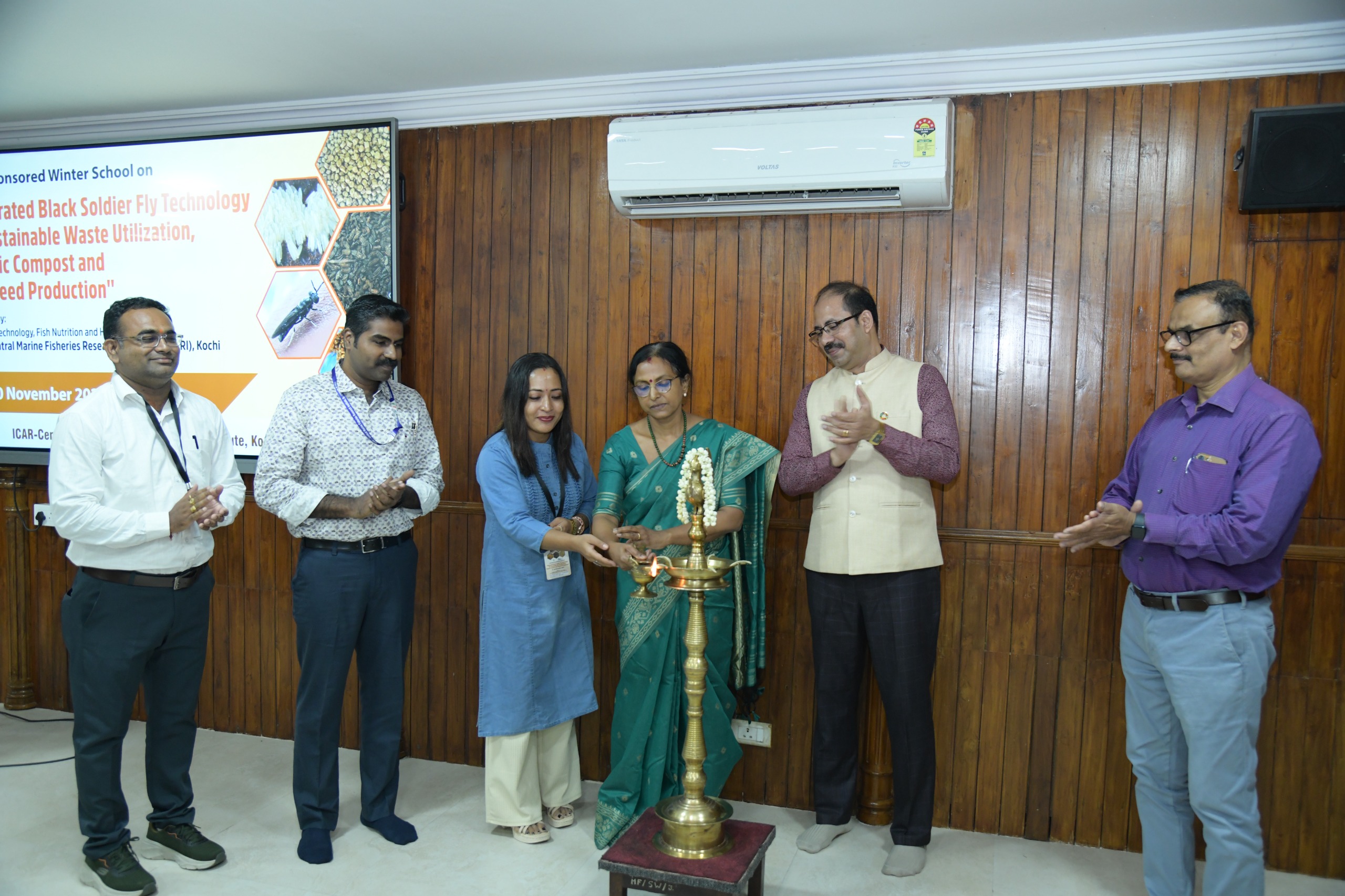
She was speaking at the inaugural function of the winter school on integrated black soldier fly-based feed technology at ICAR-Central Marine Fisheries Research Institute (CMFRI) on Tuesday. Waste-to-protein technology would help address the twin challenges of rising production costs and mounting waste disposal concerns, Dr Pillai added.
Highlighting the potential of Black Soldier Fly (BSF) larvae, she said they could convert biodegradable organic waste into protein-rich biomass offering a sustainable alternative ingredient in aquaculture feed.
“Aquaculture sector faces increasing pressure from the limited availability and escalating prices of conventional feed ingredients, particularly fishmeal”, ICAR ADG said.
India generates an estimated 171,000 to 190,000 tonnes of municipal solid waste every day, of which biodegradable organic waste accounts for 50–60 per cent. Converting this waste into valuable protein through insect-based technologies could open up new possibilities for a circular bioeconomy, linking waste management with sustainable food production, Dr Pillai said.
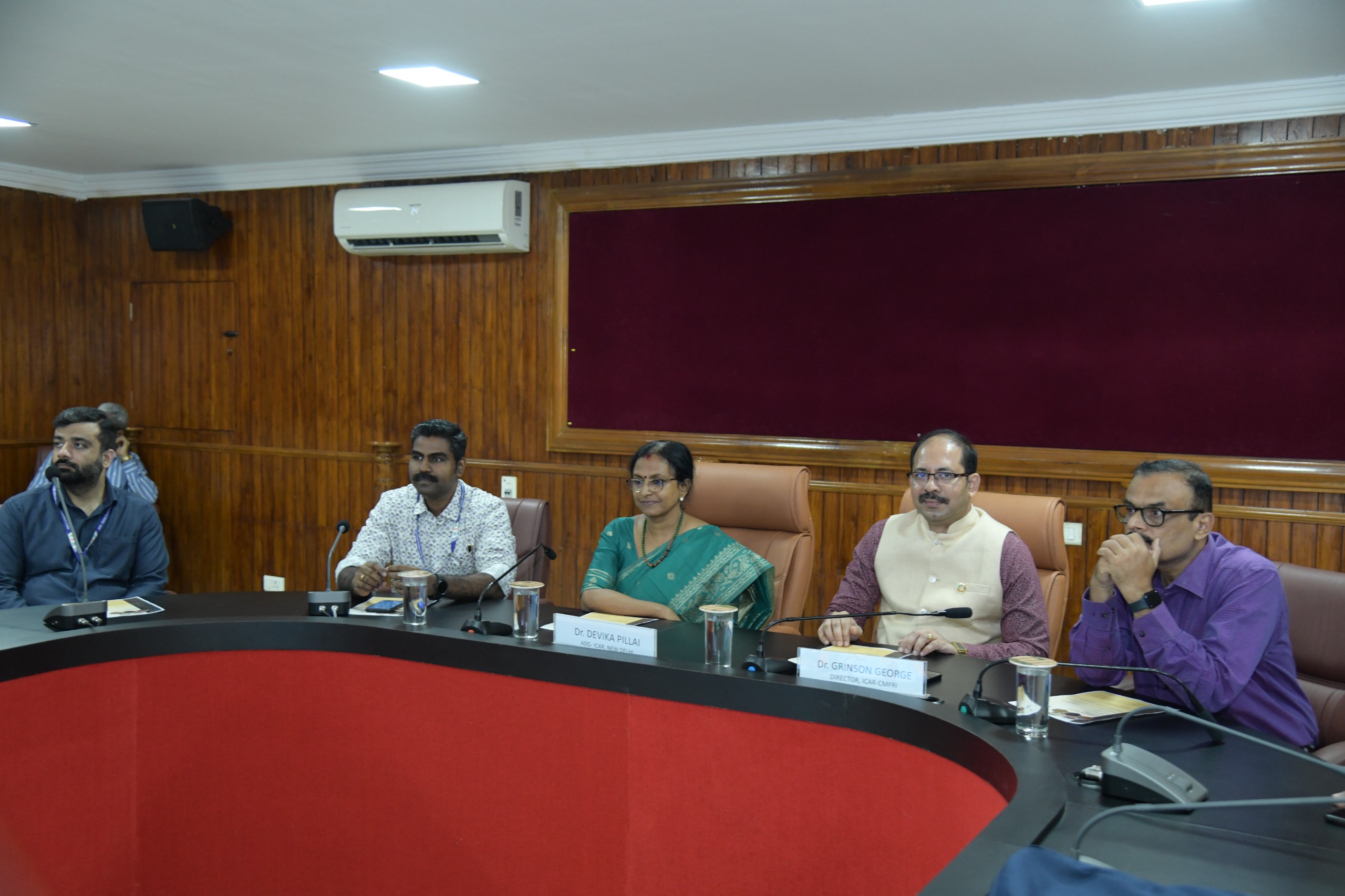
She also emphasised the significance of developing alternative feed ingredients from locally available resources, including insects, microalgae, seaweeds, aquatic plants, fermented products and fruit and vegetable processing residues.
CMFRI’s patented technology on BSF larvae offers a sustainable approach to converting organic residues into nutrient-rich biomass rich in protein and fat. Large-scale commercial production of fish feed is being undertaken by four start-ups using CMFRI’s technology.
“With global demand for aquatic food on the rise, the winter school aims to strengthen technical expertise and promote innovations in feed formulation using BSF technology to enhance fish production and support sustainable aquaculture”, said CMFRI Director Dr Grinson George in his presidential address.
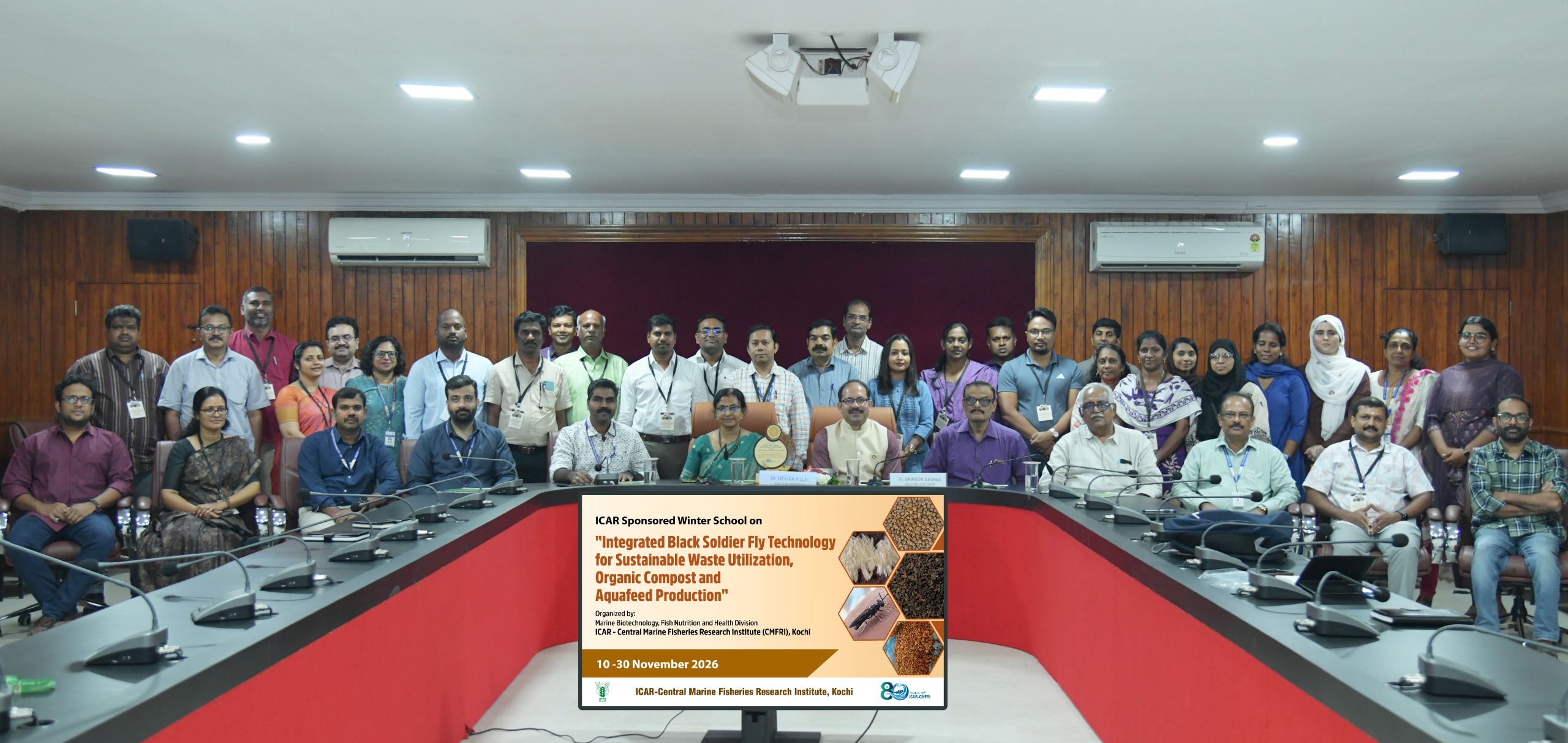
The 21-day ICAR-sponsored winter school is organised by the Marine Biotechnology, Fish Nutrition & Health division of the institute.
Head of the division Dr Krupesha Sharma, Course Director Dr Sanal Ebeneezar and Dr Adnan H Gora spoke at the function.
***