Posted On:
28 OCT 2026 4:42PM by PIB Delhi
The Department of Drinking Water & Sanitation (DDWS), Ministry of Jal Shakti, organised the 12th edition of the multilingual ‘Sujal Gram Samvad’ today, providing a platform for direct interaction with Gram Panchayat representatives and local communities on operation and maintenance (O&M) of rural drinking water systems. This reinforces the government’s commitment to community-led water governance under the Jal Jeevan Mission 2.0.
The Samvad was chaired by Shri Ashok K.K. Meena, Secretary, DDWS, in the presence of Shri Kamal Kishore Soan, AS&MD, NJJM, along with Senior officers from the department.
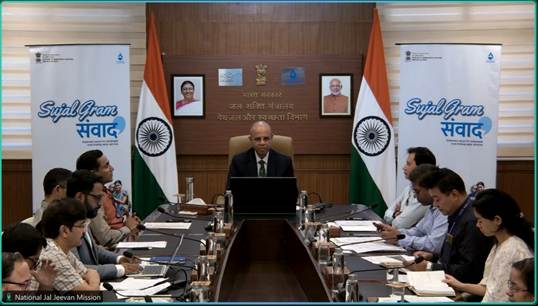
In his opening address, Secretary, DDWS, Shri Ashok K.K. Meena, emphasised the critical role of Gram Panchayats in managing local drinking water and sanitation services in line with the vision of the 73rd Constitutional Amendment. He highlighted the importance of strengthening Gram Panchayats to undertake O&M responsibilities, undertake regular assessments through Jal Seva Aankalan and Swachh Seva Aankalan, identify service gaps and prepare action plans for improving service delivery.
He encouraged Panchayats to make effective use of 16th Finance Commission grants and promote user-charge collection mechanisms to ensure the long-term sustainability of village water supply systems. He also underlined the significance of conducting the Samvad in local languages to facilitate meaningful dialogue and peer learning among rural communities.
The 12th edition of Samvad featured grassroots interactions across 5 Gram Panchayat (GP) headquartered villages. The virtual Samvad witnessed a diverse range of participants including GP representatives, members of VWSCs, community participants, Jal Sahiyas, Anganwadi workers, students, SHGs, and frontline functionaries from the GPs, along with JJM State Mission Directors, District Collectors/District Magistrates/Deputy Commissioners, DWSM officials, and senior officers from the States. The multilingual Samvad focused on key aspects of sustainable rural water service delivery, including uninterrupted operation of water supply schemes, skilling of local operators, water quality and disinfection, community participation in O&M, financial sustainability through user charges and convergence, protection of drinking water sources, Jal Arpan and the wider impact of reliable drinking water services on health, education, women’s empowerment and local livelihoods.
Voices from the Gram Panchayats
GP: Ghalian, District: Kangra, Himachal Pradesh
During the interaction, representatives of GP Ghalian interacted in Hindi and shared that prior to the implementation of Jal Jeevan Mission, villagers largely depended on borewells and water tankers to meet their drinking water needs. Today, all six villages under the Gram Panchayat have access to regular drinking water supply despite difficult hilly terrain and varying elevations. Community members informed that women trained in water quality monitoring undertake testing twice every month using Field Testing Kits (FTKs), covering parameters such as pH, turbidity, TDS, hardness and chlorine.
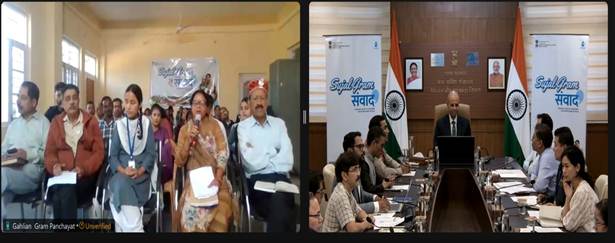
Shri Hemraj Bairwa, Dpty. Commissioner, Kangra and State Water and Sanitation Mission (SWSM), Himachal Pradesh, highlighted the State's achievement of universal drinking water coverage and shared efforts being undertaken to strengthen women's participation in water quality surveillance and implementation of Jal Seva Aankalan.
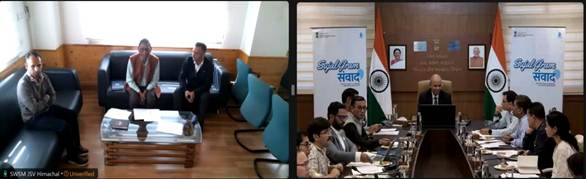
Secretary, DDWS, stressed that while service delivery was functioning satisfactorily, greater responsibility for O&M should gradually be transferred to Gram Panchayats through phased capacity-building and institutional strengthening. He emphasised the importance of establishing systems for user-charge collection, local financial management and community ownership of rural water assets.
GP: Itore, District: West Singhbhum, Jharkhand
During the interaction the GP representatives and community interacted in both Hindi and Ho language said that before Jal Jeevan Mission, women and girls spent considerable time fetching water from hand pumps, wells, streams and other traditional sources. With household tap water connections now available, the drudgery associated with collecting drinking water has significantly reduced. The Gram Panchayat informed that a user charge of ₹62 per month is being collected, with Jal Sahiyas and VWSC members encouraging greater participation among households yet to contribute.
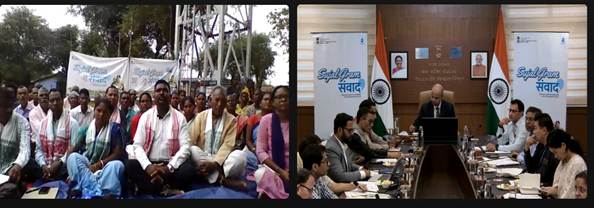
Shri Manish Kumar, Dpty. Commissioner, West Singhbhum highlighted that all schools and Anganwadi centres have been connected with tap water and that water quality testing is undertaken regularly. The Deputy Commissioner informed that the aspirational district is leveraging District Mineral Foundation (DMF) resources to strengthen drinking water services and has introduced initiatives such as incentives for Jal Sahiyas, Sakhi Samvad programmes and a dedicated grievance redressal mechanism.
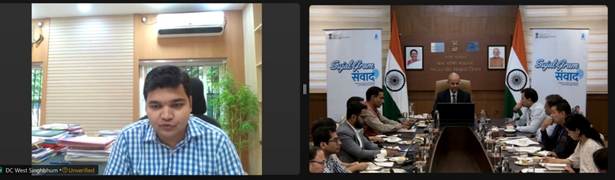
Appreciating these efforts, Secretary, DDWS emphasised that all eligible villages should first be covered through Single Village Schemes and that special attention should be given to uncovered tribal habitations through initiatives such as PM-JANMAN and DAJGUA. He also suggested exploring CSR partnerships and undertaking impact assessments in vulnerable areas affected by water-borne diseases.
GP: Athal, District: Dadar Nagar Haveli, DNH and D&D
During the interaction with village representatives in Hindi, GP representatives highlighted the positive impact of piped water supply on public health and quality of life. Community members shared that improved access to safe drinking water has contributed to a reduction in diarrhoeal diseases. Women associated with Self Help Groups have been trained in water quality testing using FTKs, while students reported improved drinking water facilities in schools.
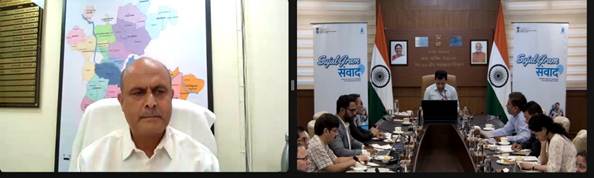
Shri Pankaj Singh Parmar, District Panchayat Officer informed that digital monitoring systems, including SCADA-based arrangements, are being used to improve oversight of rural water supply services. All the households, schools, AWCs and public institutions are connected and the UT has declared Har Ghar Jal.
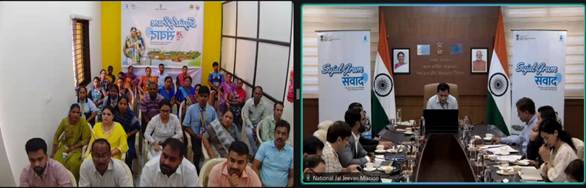
AS&MD, NJJM encouraged the district administration to promote Jal Arpan for formal transfer of assets to Gram Panchayats and to leverage platforms such as e-Gram Swaraj for strengthening local planning and management of drinking water infrastructure.
GP: Sialhawk, District: Khawzawl, Mizoram
During the interaction, village representatives shared in Mizo, that prior to Jal Jeevan Mission, villagers depended on springs and streams for their daily drinking water needs. With household tap connections now available, access to safe drinking water has substantially improved. The village informed that every household contributes ₹150 per month as a user charge, with strong community participation ensuring regular collection and utilisation for O&M activities.
Village representatives highlighted that the community takes primary responsibility for operation and maintenance of the water supply system, while the department provides technical support whenever required.
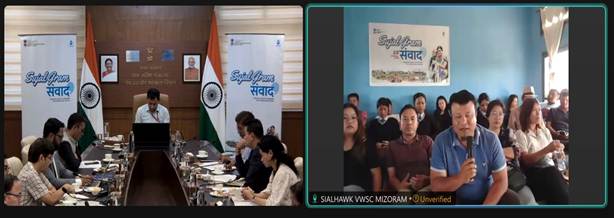
AS&MD, NJJM appreciated the work and emphasised that drinking water infrastructure and water sources are valuable community assets and that their protection must remain a collective responsibility. District authorities were encouraged to promote source conservation, user-charge collection and community-led O&M practices across all villages.
GP: Natha New Village, District: Zunheboto, Nagaland
During the interaction, village representatives shared in Angami, that the village has achieved 100% household tap connection coverage under Jal Jeevan Mission through a gravity-based water supply scheme. Community members acknowledged the support provided by Central and State agencies in strengthening access to safe drinking water. While highlighting the benefits of the scheme, villagers also discussed challenges associated with pumping systems, electricity supply disruptions and maintenance of equipment in remote areas. The discussion highlighted active involvement of the Village Council and community institutions in identifying infrastructure requirements and planning improvements to the water supply system. Community members also stressed the importance of regular water quality monitoring and continuity in local water testing arrangements.
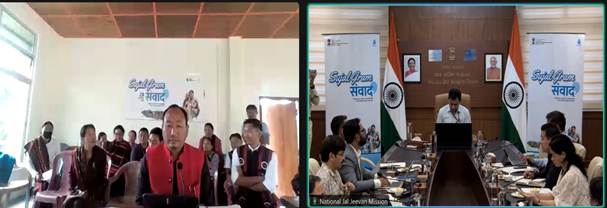
B. Henok Buchem, District Collector, Zunheboto mentioned that the WATSAN committee is proactive all initiatives are taken by the community itself, they had taken massive afforestation in the catchment areas as measure to source sustainability. He further noted that the collective efforts of the community in protecting and rejuvenating water sources have significantly strengthened water security and enhanced the resilience of village water supply systems.
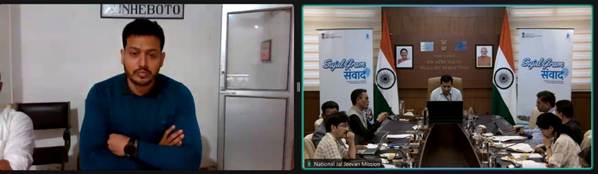
Appreciating the village's efforts, AS&MD, NJJM emphasised that infrastructure created under JJM must be supported by strong source sustainability measures to ensure reliable water supply for the next 25-30 years. District administrations were encouraged to integrate source protection and conservation activities into Gram Panchayat Development Plans (GPDPs) and converge available resources for water source rejuvenation and preservation.
In his concluding address Shri Kamal Kishore Soan, AS&MD, NJJM, reiterated that empowering Gram Panchayats is central to the long-term success of Jal Jeevan Mission 2.0. He stressed that investments in water supply infrastructure must be accompanied by equal attention to source sustainability, local planning, convergence of departmental schemes and effective utilisation of available financial resources.
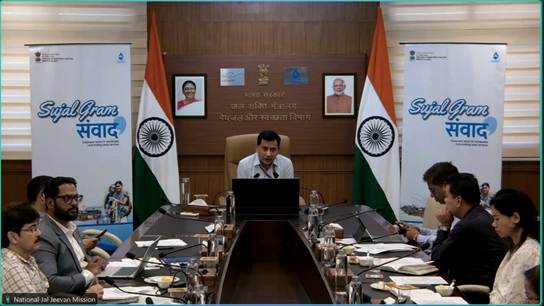
He emphasised that Gram Panchayats and district administrations should prepare integrated plans by converging resources available under VB-G RAM G, Finance Commission grants, State-funded programmes and other relevant schemes. Such convergence, he noted, can support source strengthening, water conservation, rejuvenation of traditional water bodies, operation and maintenance of village water supply systems, and sanitation service delivery. He urged States and districts to ensure that these resources are utilised in a coordinated manner through GPDPs to maximise impact and avoid duplication of efforts.
Highlighting the importance of safeguarding drinking water sources for future generations, he urged States, districts and Gram Panchayats to prioritise water source conservation, institutionalise user-charge collection mechanisms, strengthen community participation and promote sustainable O&M practices. He underscored that even the best infrastructure can deliver long-term benefits only when water sources are protected and managed sustainably. He also appreciated the participation of the Gram Panchayats, DWSM, State officials and community members whose experiences continue to guide the evolution of community-led rural water governance.
*****
PS/AK