Ministry of Consumer Affairs, Food & Public Distribution
Posted On:
25 OCT 2026 1:52PM by PIB Ahmedabad
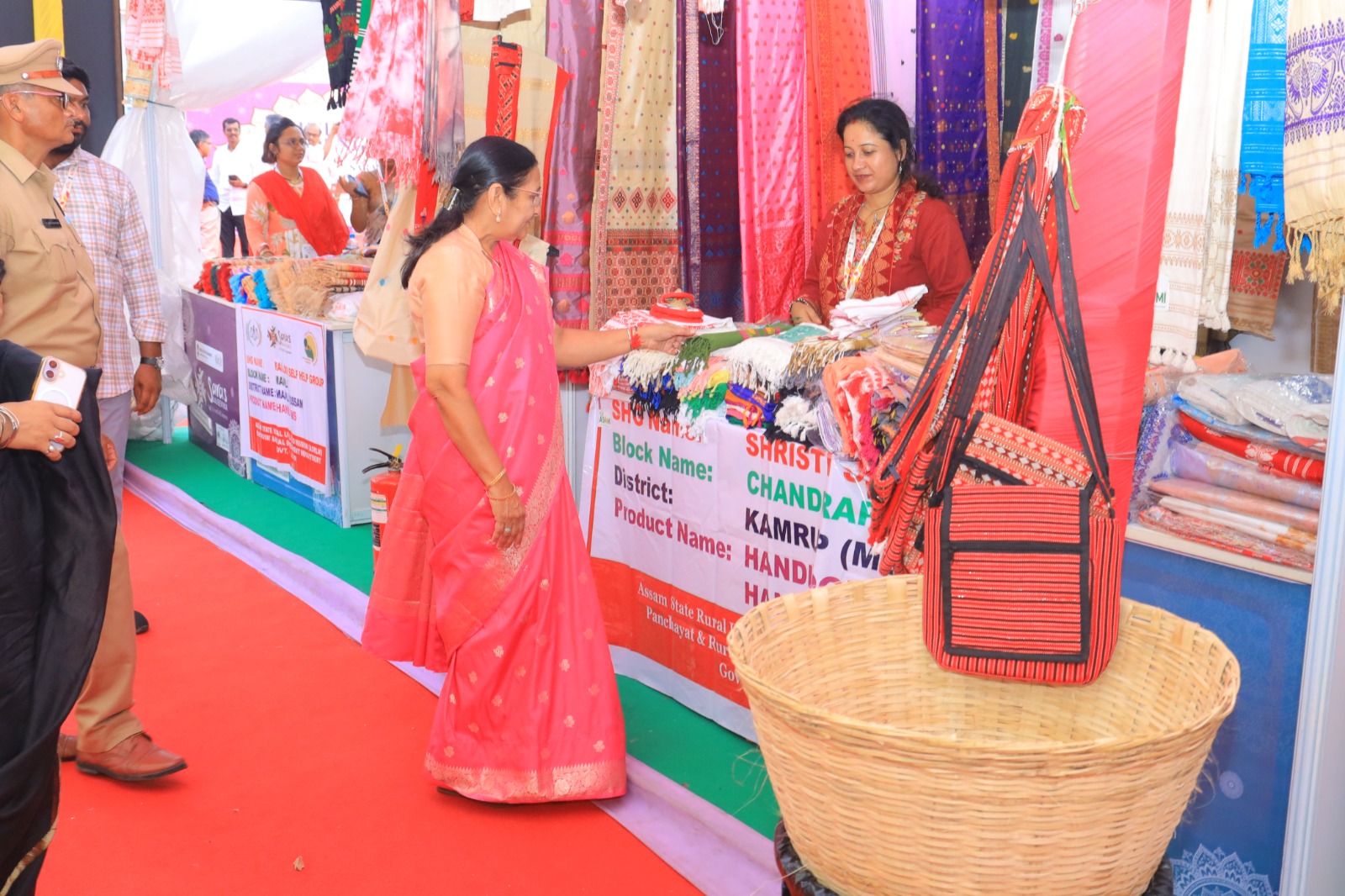
Smt. Nimuben Jayantibhai Bambhaniya, Hon’ble Minister of State for the Ministry of Consumer Affairs, Food and Public Distribution, Government of India, visited the National SARAS Mela at Vijayawada, Andhra Pradesh, and interacted with 50 Self-Help Group (SHG) women entrepreneurs and Lakhpati Didis representing 30 States and Union Territories. During her visit, the Minister toured stalls operated by SHG women, explored their diverse products and appreciated their efforts in transforming traditional skills and locally available resources into sustainable livelihood opportunities.
The interaction highlighted the remarkable transformation of rural women from homemakers to successful entrepreneurs, income earners and community leaders through collective action and livelihood promotion initiatives under the Deendayal Antyodaya Yojana–National Rural Livelihoods Mission (DAY-NRLM).
During the interaction, the Minister appreciated the determination, hard work and entrepreneurial spirit of women who have overcome economic hardships to establish their own businesses, support their families and create livelihood opportunities for others.
“Under the visionary leadership of Hon’ble Prime Minister Shri Narendra Modi and the guidance of Hon’ble Union Minister Shri Shivraj Singh Chouhan, SARAS Melas have emerged as a robust platform for empowering women-led Self-Help Groups, promoting rural entrepreneurship and expanding market access for women entrepreneurs across the country,” said Union Minister of State Smt. Nimuben Jayantibhai Bambhaniya.
National SARAS Mela: Expanding Market Opportunities for Rural Women
Organised by the Ministry of Rural Development, Government of India, under DAY-NRLM, the National SARAS Mela is a flagship market-access initiative that provides rural women entrepreneurs with opportunities to showcase and sell their products, connect directly with customers and strengthen their businesses. The Ministry has been organising SARAS Melas at national, regional, state and district levels for nearly three decades, with annual sales exceeding ₹200 crore across these platforms.
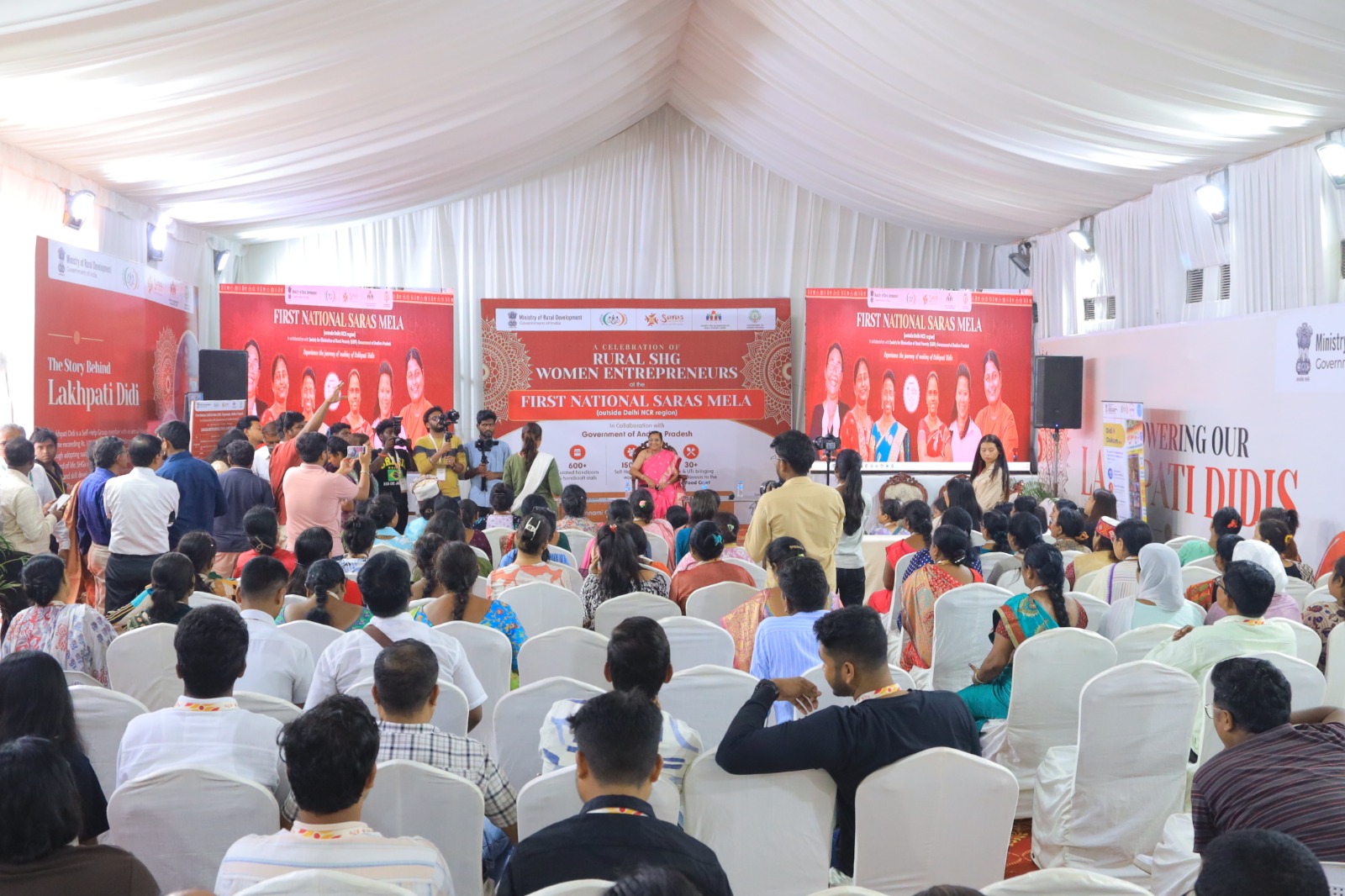
The National SARAS Mela, being held in Vijayawada from 13 to 31 October 2026, marks a significant milestone as the first National SARAS Mela organised outside the Delhi-NCR region. The mela brings together approximately 1,500 women SHG entrepreneurs and Lakhpati Didis from 34 States and Union Territories, showcasing a diverse range of products through more than 650 stalls. These include handloom, handicrafts, processed foods, natural products and other traditional products reflecting India's rich cultural heritage.
The platform aims to bring national-level marketing opportunities closer to rural producers, expand access to new consumer markets and strengthen sustainable business linkages. It also advances the vision of Vocal for Local, Atmanirbhar Bharat and inclusive rural development.
Women Building Their Own Identity Through Entrepreneurship
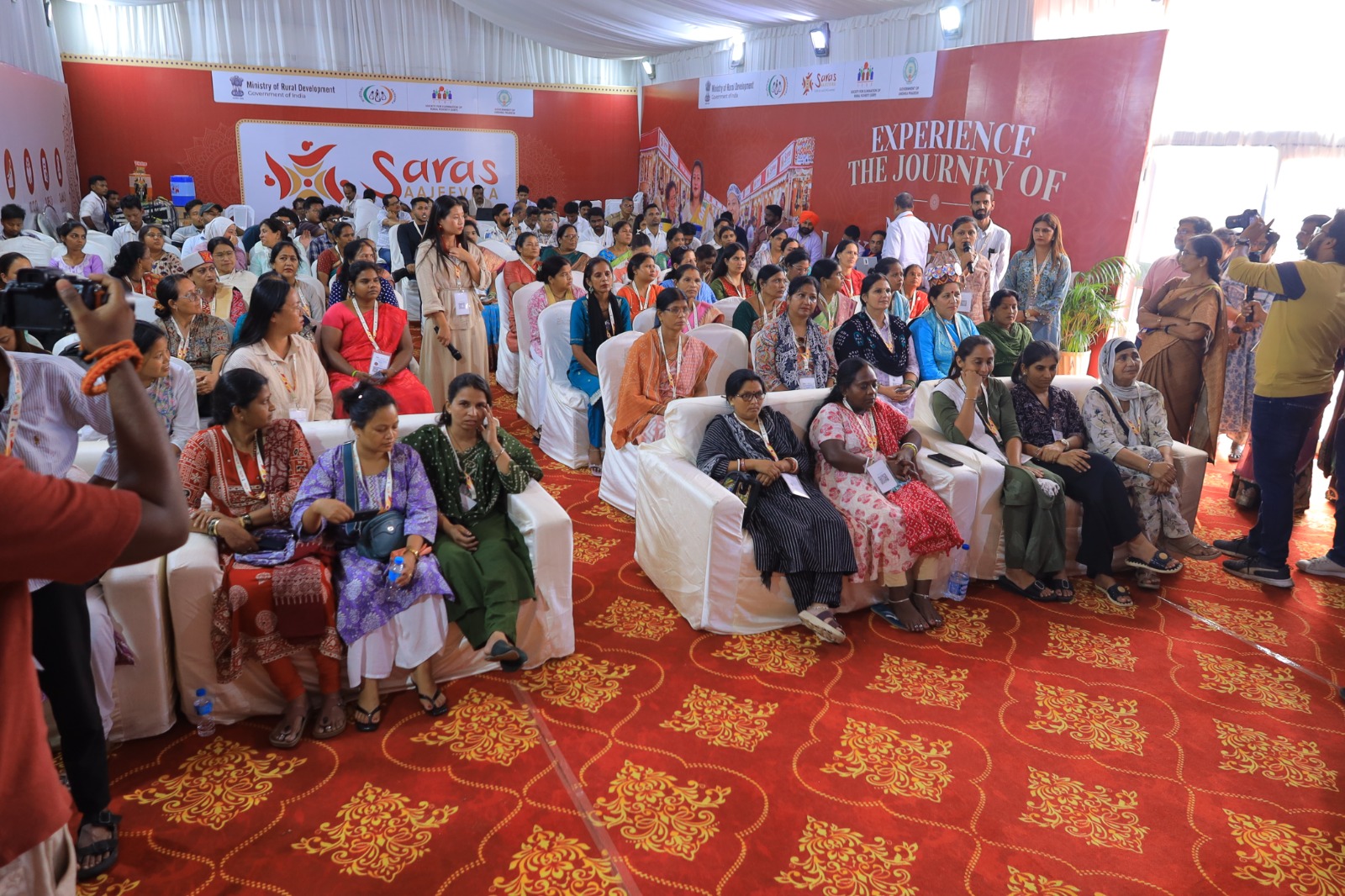
A significant highlight of the interaction was the social transformation experienced by SHG women. The women shared how, earlier, they were often identified by their husbands' names, whereas today, they are recognised by their own names and achievements as entrepreneurs, business owners and community leaders.
Their journeys demonstrate how participation in SHGs, access to livelihood opportunities and capacity-building support have strengthened women's financial independence, confidence and social recognition. The Minister appreciated their achievements and encouraged them to continue expanding their enterprises and inspiring other rural women to pursue economic independence.
The interaction also highlighted that SHG women are not only managing their own businesses but are creating employment and livelihood opportunities for other community members. Their enterprises are helping families improve their financial circumstances, support children's education and contribute to local economic development.
Minister Visits SHG Stalls and Appreciates Diverse Products
During her visit, the Minister toured stalls operated by SHG women entrepreneurs and viewed a wide variety of products developed through their enterprises. She interacted with women showcasing handmade products, traditional handloom textiles, natural and food products, and other locally produced goods. The stall visits provided an opportunity to learn about their entrepreneurial journeys, production activities and experiences in marketing their products.
The Minister appreciated the creativity, craftsmanship and commitment of SHG women in preserving traditional skills while developing market-oriented products. Their enterprises demonstrate how locally available resources and traditional knowledge can be transformed into income-generating activities, strengthening rural livelihoods and promoting indigenous products.
SHG Women Showcase Diverse Products and Entrepreneurial Success Stories
The 50 SHG women interacted with the Minister and shared their experiences of developing enterprises based on traditional skills, local resources and innovative livelihood activities.
Niranjana Akhand, a Lakhpati Didi from Bhavnagar, Gujarat, shared her entrepreneurial journey with the Minister. Her experience reflected the growing role of SHGs in enabling rural women to strengthen their livelihoods and establish independent identities through enterprise development.
Prashanna from Meghalaya highlighted handmade products developed through SHG enterprises. The Minister also appreciated the efforts of SHG women engaged in manufacturing customised cotton-based bags as an eco-friendly alternative to single-use plastic bags. Such initiatives contribute to the vision of Plastic Mukt Bharat while generating sustainable livelihood opportunities.
SHG women from Kerala showcased natural products and food items, highlighting the importance of quality, hygiene and locally produced goods. Women entrepreneurs from Bihar shared their experiences in handloom production, demonstrating how traditional skills can be transformed into viable livelihood opportunities.
Gangadevi from Dhan Nirankar, Himachal Pradesh, highlighted how traditional handloom products, including shawls, stoles and woollen garments, help preserve local craftsmanship and cultural heritage while creating income-generating opportunities for rural women.
Shobha Rani from Swati SHG, Telangana, showcased traditional handloom products reflecting the region's rich weaving heritage, intricate designs and skilled craftsmanship. Her experience highlighted how SHG-led handloom enterprises can preserve traditional art forms, promote indigenous textiles and strengthen women's livelihoods.
An SHG woman entrepreneur from Jharkhand shared how income generated through her business has helped her support her family and contribute to her children's education. An SHG representative from Uttarakhand emphasised the importance of training and capacity building in improving product quality, marketing skills and enterprise growth.
The interaction showcased the diversity of women-led enterprises across States and demonstrated how traditional knowledge, locally available resources and collective efforts can be transformed into sustainable business opportunities.
DAY-NRLM Strengthens Capacity Building and Livelihood Opportunities
The interaction highlighted the contribution of DAY-NRLM in empowering rural women through SHGs, community institutions, financial inclusion, skill development and livelihood promotion. Through these institutions, women gain information about various government schemes and support mechanisms and are encouraged to access eligible benefits and strengthen their economic activities.
Training and capacity-building initiatives help SHG women improve production techniques, develop value-added products, manage enterprises and strengthen their marketing capabilities. Support from community-based organisations and non-governmental organisations further contributes to developing entrepreneurial skills and promoting sustainable livelihoods.
The formation of Farmer Producer Organisations (FPOs) and other collective enterprises involving SHG members also supports aggregation, value addition, collective marketing and improved market access for rural producers.
The interaction further highlighted the potential of millet-based enterprises, including ragi-based food products, in diversifying rural livelihoods. By processing locally available agricultural produce into value-added products, SHG women are creating additional income opportunities, strengthening local value chains and promoting traditional food products.

National SARAS Mela Strengthens Market Linkages and Women's Leadership
The participating SHG women expressed satisfaction with the response received from customers at the National SARAS Mela. They shared that the exhibition was helping them showcase their handmade products, interact directly with consumers, understand market preferences and increase sales.
The mela provides a valuable platform for women entrepreneurs to market their products beyond their local areas, gain exposure to new customers and develop practical experience in product presentation, pricing, customer engagement and sales management. It also enables them to exchange experiences, learn from other entrepreneurs and identify opportunities to expand their businesses.
The interaction reaffirmed that women's empowerment extends beyond income generation. Rural women who once had limited livelihood opportunities are now managing enterprises, supporting their families, contributing to household decision-making and creating employment for others. Their growing confidence and leadership demonstrate the transformative impact of collective action, institutional support, training and market access.
The visit of the Hon’ble Minister underscored the importance of the National SARAS Mela and DAY-NRLM in promoting women-led entrepreneurship, strengthening rural livelihoods and advancing the vision of Lakhpati Didi, Vocal for Local and Atmanirbhar Bharat.