Posted On:
23 OCT 2026 8:04PM by PIB Delhi
The Department of Drinking Water & Sanitation (DDWS), Ministry of Jal Shakti, organised a National-level Training of Trainers (ToT) programme for State-Level Trainers under Jal Jeevan Mission (JJM) 2.0 today at India Habitat Centre, New Delhi. The programme brought together representatives from State Institutes of Rural Development (SIRDs), Public Health Engineering Departments (PHEDs), Rural Development institutions and other key stakeholders from State/UTs to strengthen capacities for large-scale community training and institutional development aimed at sustaining rural drinking water services across the country.
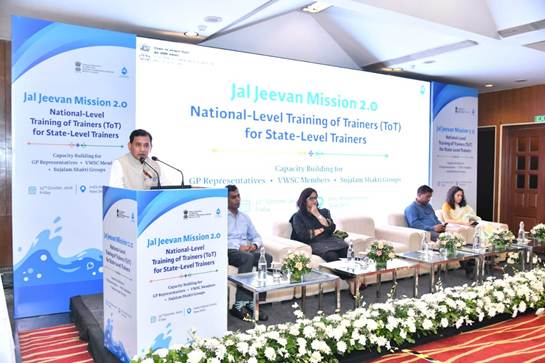
The training programme focused on the newly developed Jal Jeevan Mission 2.0 Capacity Building Package comprising of 8 Modules titled “The Story of Panipur: A Story-Based self-learning Handbook on Rural Drinking Water Supply Management” and a “Trainer’s Facilitation Manual”. The package has been designed to build the capacities of Gram Panchayat representatives, Village Water and Sanitation Committees (VWSCs), Sujalam Shakti Groups and other grassroots institutions involved in the management and sustainability of rural drinking water services.
Delivering the keynote address, Shri Kamal Kishore Soan, Additional Secretary & Mission Director, National Jal Jeevan Mission, stressed that the long-term sustainability of rural drinking water systems depends fundamentally on community ownership and institutional responsibility. The drinking water infrastructure being created today is intended to serve rural communities for the next several decades and therefore requires active participation of GPs, VWSCs and community groups from the very beginning.
He emphasised that achieving the vision of Viksit Bharat 2047 would require not only creation of infrastructure but also sustained efforts to ensure its effective operation and maintenance through strong local institutions.
Referring to emerging examples of improved service delivery in several States, Shri Soan highlighted the need to prepare village institutions for progressively higher service standards and sustainable management of water supply systems. He urged participants to instil a strong sense of ownership among Panchayat representatives and community institutions so that drinking water infrastructure is viewed as a community asset that must be preserved and maintained collectively.
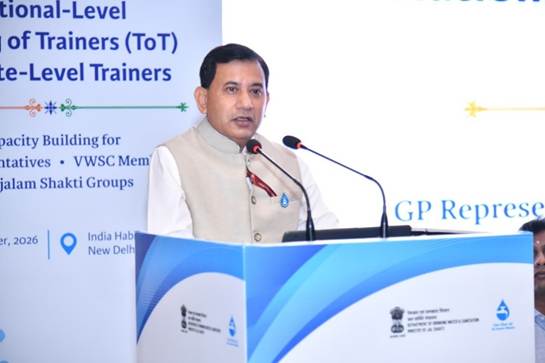
A key focus of his address was the convergence of JJM with Gram Panchayat Development Plans (GPDPs), Panchayati Raj Institutions, Rashtriya Gram Swaraj Abhiyan (RGSA) and dovetail from 16th Finance Commission tied grants and VB-G RAM G. He urged States to ensure that Panchayat representatives understand the financial resources and planning instruments available to them so that water source sustainability, operation and maintenance requirements and local drinking water priorities are adequately incorporated into development plans.
Shri Soan further highlighted the importance of user-charge collection, financial sustainability, source protection and community monitoring for ensuring the long-term functionality of rural water supply systems.
Calling for institutionalisation of the training programme, he urged States to integrate the capacity-building modules into existing Rural Development and Panchayati Raj training systems so that learning and capacity building continue beyond the Mission period and become part of a sustained support mechanism for rural drinking water service delivery.
Smt. Swati Meena Naik, Joint Secretary, Department of Drinking Water & Sanitation, emphasised the critical importance of capacity building in ensuring the long-term success of the Mission. She observed that while significant investments are being made in creating rural drinking water infrastructure, the sustainability of these assets depends on informed communities and capable local institutions that can effectively operate, maintain and manage drinking water systems over time. Emphasising on the purpose of the training she said, it is not merely to impart technical knowledge but to enable trainers to communicate complex concepts in a simple, practical and relatable manner to village communities. She noted that the newly developed modules employ storytelling, folk communication methods, role plays, community interactions and gamification techniques to make learning more engaging and effective.
She highlighted that the ultimate objective of the initiative is to strengthen community-led management of rural drinking water systems by building the capacities. Village-level institutions are expected to play an increasingly important role in water distribution, operation and maintenance, user-charge management, grievance redressal, functionality monitoring and service improvement planning.
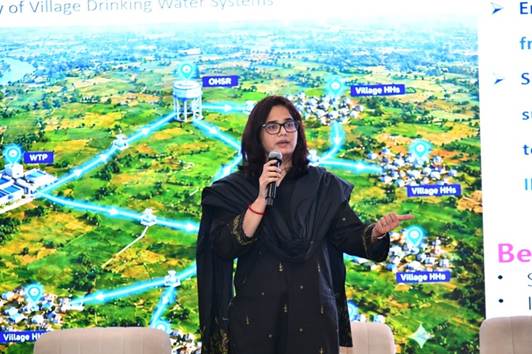
Smt. Naik also emphasised the importance of transparency and equitable access to information through digital platforms and dashboards, enabling citizens, Gram Panchayats and higher administrative levels to access programme information uniformly and participate more effectively in rural water governance. Noting that nearly 54 lakh stakeholders are proposed to be covered under the broader training programme, she urged State/UTs to establish robust dissemination mechanisms and training ecosystems to enable timely implementation.
Smt. Meena also highlighted the role of technology-enabled governance through initiatives such as Sujalam Bharat and layered dashboards. She emphasised that digital platforms should become tools for transparency, accountability and informed decision-making, enabling Gram Panchayats and citizens to actively monitor and improve service delivery. Emphasising the role of Sujalam Shakti Groups and noted that the initiative offers significant opportunities for women’s leadership, community mobilisation and livelihood enhancement while strengthening drinking water governance at the grassroots level.
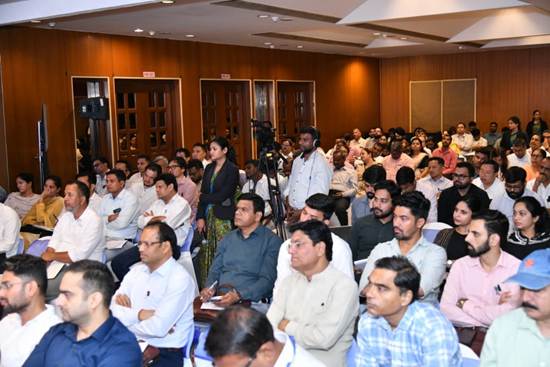
In his concluding remarks, Shri Kamal Kishore Soan, AS&MD, NJJM, emphasised that the long-term sustainability of rural drinking water services depends on community ownership, responsible water use and effective local management of water supply systems. He underlined the importance of protecting drinking water sources for future generations and called upon States to sensitise communities on water conservation, source sustainability and judicious water use as integral components of the capacity-building initiative.
Shri Soan highlighted that user charges should be viewed not merely as a financial mechanism, but as a tool for fostering responsibility and ownership among rural communities towards their drinking water systems. Stressing the distinction between water as a natural resource and drinking water service delivery, he observed that user contributions help communities appreciate the investments, operation and maintenance efforts involved in delivering safe drinking water to households and encourage greater participation in sustaining these services.
He further emphasised that while Panchayats should take a leading role in the day-to-day operation and management of village water supply systems, technical support from the concerned departments would continue to remain essential for addressing major repairs and technical challenges. Referring to the transformative impact of household tap water connections on dignity, convenience and equitable access to drinking water, he urged the participants to carry forward the key messages of community ownership, behavioural change, water conservation and institutional responsibility during the rollout of training programmes across States and Union Territories.
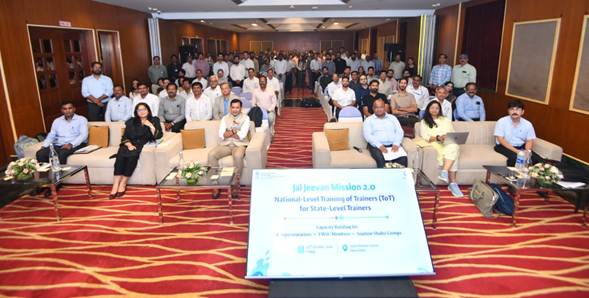
Resource persons from NJJM viz. Director, Deputy Secretary, Deputy Advisor and NPMU members introduced the story-based self-learning handbook and Trainer’s Facilitation Manual and delivered the training. The training package, built around the fictional village “Panipur”, comprises eight interconnected modules covering village water supply systems, source sustainability, water quality, institutional arrangements, operation and maintenance, digital governance, community ownership and the development of sustainable Sujal Gaons. The modules have been designed to promote participatory learning and help communities translate knowledge into practical action.
Representatives from partner organizations UNICEF and UNOPS shared their field experiences, key considerations, and practical approaches for preparing trainers and conducting effective grassroots-level training, while adhering to the prescribed module content and coordinating with SIRDs. They also assured that in their implementing states; they will support the state PHE/Rural Water Supply Department in delivering state-level and district-level trainings.
The National-level Training of Trainers marks an important step in operationalising the capacity-building architecture of Jal Jeevan Mission 2.0. By creating a strong network of State Master Trainers and equipping them with standardised training resources, the Mission seeks to strengthen Gram Panchayats, VWSCs and community institutions, deepen community ownership, and ensure the sustainability of rural drinking water infrastructure and services across the country.
******
PS/AK