Posted On:
23 OCT 2026 4:55PM by PIB Delhi
As part of the Special Campaign 6.0, the Agharkar Research Institute (ARI), Pune, is promoting scientific organic waste management, nutrient recycling and sustainable maintenance of green spaces across its campus. The Institute produces approximately 6,000 kg of compost annually from fallen leaves and garden waste and utilises it in its gardens. This initiative converts organic waste into a valuable soil amendment, promotes resource conservation and demonstrates the practical application of circular economy principles by returning organic matter and nutrients to the soil.
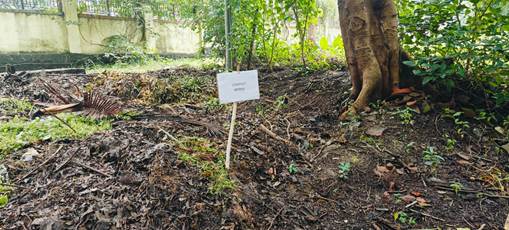
Fig 1: Fallen leaves and palm fronds decomposing on the ARI campus, returning organic matter to the soil.
At ARI, fallen leaves and other garden residues are collected, crushed into smaller pieces and placed in a designated compost pit for in-house composting. The material is mixed weekly to facilitate aeration and microbial decomposition. Mature compost is harvested after approximately three to four months and used in the Institute’s gardens. During composting, microorganisms break down complex organic materials into more stable organic matter.
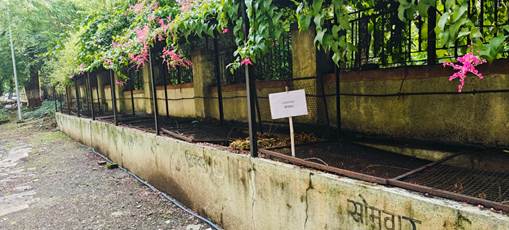
Fig 2: Compost pits at ARI, Pune, where fallen leaves and garden residues are composted in-house.
At ARI, a mixture comprising 80% compost and 20% soil is used for gardening helping improve soil structure, enhancing water-holding capacity, contributing to soil organic matter and supporting nutrient availability for plants. The annual production and on-site utilisation of compost facilitate the productive reuse of locally available organic resources and help reduce the need for externally purchased gardening inputs. It also reduces the volume of garden waste requiring disposal and supports more resource-efficient campus management. On-site composting may further reduce waste transportation and the environmental impacts associated with landfill disposal.
ARI maintains approximately two acres of gardens and green areas, contributing to plant diversity, biodiversity conservation and the environmental quality of the campus. The Garden Section maintains approximately 308 trees representing more than 100 species, 39 medicinal plant species, 2,300 ornamental plants and 800 seasonal flowering plants, along with a variety of vegetables. The Institute’s Orchidarium supports the conservation and display of orchid diversity and facilitates specialised plant conservation and educational activities. The maintenance of diverse trees, medicinal plants and ornamental vegetation strengthens the campus’s green infrastructure and promotes awareness of plant diversity and conservation.
Complementing its waste management initiatives, ARI promotes nutrition-sensitive horticulture through its 6×6 Nutrition Garden Model. Designed for a compact area of 6 × 6 metres, the model demonstrates the cultivation of 23 types of vegetables through systematic crop planning and efficient utilisation of available space. Developed with the nutritional needs of a family of five to six members in mind, the model illustrates the potential of home gardening to improve access to fresh vegetables and promote dietary diversity and household nutrition security. The planned cultivation of diverse vegetables can support more varied diets and reduce dependence on externally sourced produce, subject to seasonal conditions and actual yields. The model offers potential for replication in urban, peri-urban and rural communities, particularly where land availability is limited. It integrates scientific crop planning, sustainable horticulture and household nutrition within a compact growing area.
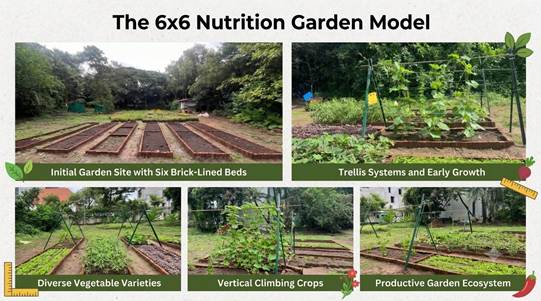
Fig 3: Nutrition Garden Model demonstrating scientific crop planning and efficient utilisation of garden space.
ARI’s initiatives demonstrate how scientific approaches to organic waste management, soil improvement, biodiversity conservation and nutrition-oriented gardening can contribute to a cleaner and greener institutional campus. By converting garden residues into compost and reusing the resulting material on-site, the Institute promotes waste minimisation, nutrient recycling and responsible resource management. These efforts reinforce the objectives of Special Campaign 6.0 by extending the concept of cleanliness beyond waste removal to include the scientific management and productive reuse of resources. ARI’s initiatives highlight the role of scientific institutions in translating environmental sustainability principles into practical campus-level action.
****
NKR/FT/AA