PIB Backgrounder
Connecting Kashmir: Building the Infrastructure for Growth
Posted On:
17 OCT 2026 11:21AM by PIB Delhi
Jammu and Kashmir's challenging terrain is steadily yielding to a new era of connectivity. The Udhampur–Srinagar–Baramulla Rail Link has connected the valley to India's rail network. Its centrepiece, the Chenab Bridge, stands as the world's highest railway arch bridge. Expanded Vande Bharat services are improving passenger mobility. New freight terminals are carrying Kashmiri apples, saffron and handicrafts to national markets, opening opportunities for farmers and businesses. On land, the Sonamarg and Zojila tunnels promise year-round passage into Ladakh. In the air, Srinagar's expanding airport is complemented by nascent hubs at Udhampur and Kishtwar. Together, these advances are drawing Kashmir's produce, trade and tourism firmly into the national mainstream.
|
A Region Reconnected
Jammu and Kashmir's mountainous terrain has long made connectivity a major infrastructure challenge. Over the years, this has been steadily changing, with a wave of infrastructure investment reshaping how the region connects with the rest of the country. The Udhampur–Srinagar–Baramulla Rail Link (USBRL) project is a major part of this expansion. It is one of the most challenging railway line projects undertaken in the country post-independence. Today it stands as one of India’s engineering marvels, linking the Kashmir Valley to the rest of the country by rail.
The USBRL project has also been accompanied by sustained expansion of roads, tunnels and airport infrastructure. The network now includes new train services such as the Vande Bharat Express. It also includes major road corridors and tunnels. Airport capacity is being expanded at Srinagar, with regional airports planned under UDAN, increasing passenger movement. Multimodal cargo terminals and enhanced freight services support goods movement across the region. These developments have progressively expanded all-weather connectivity infrastructure across Jammu and Kashmir.
Railways: Connecting Kashmir to the National Rail Network
Udhampur-Srinagar-Baramulla Rail Link (USBRL) National Project
The USBRL project was inaugurated in June 2025, improving connectivity infrastructure in the Himalayan region. Built at a cost of ₹43,780 crore, the USBRL project covers the districts of Udhampur, Reasi, Ramban, Srinagar, Anantnag, Pulwama, Budgam and Baramulla of Jammu and Kashmir.
The project stretches 272 kilometres through the rugged Himalayas; it includes 36 tunnels that span 119 kilometres and 943 bridges. Designed to overcome the region’s challenging terrain, it connects remote areas with the national rail network. It is opening new opportunities for mobility, trade and tourism. As part of the USBRL project, over 215 km (including a tunnel and 320 bridges) of roads have been constructed, which are useful for communities. Additionally, the USBRL project is fully electrified both in tunnels and in open stretches.
The USBRL project has made substantial socio-economic contributions to the region, with employment generation being a significant aspect of its impact. The project has generated more than 5 crore man-days of employment.
Vande Bharat Express
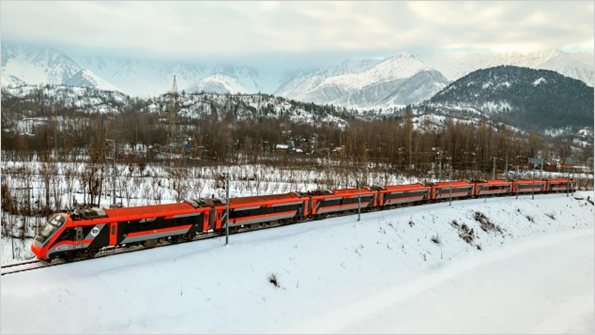
Image 1: Vande Bharat Express, Jammu and Kashmir
The Vande Bharat Express in Jammu and Kashmir first began operations in June 2025, between Katra and Srinagar. To further enhance railway connectivity, the Srinagar-Katra Vande Bharat Express service was extended to Jammu Tawi Railway Station in April 2026.
The distance from Jammu to Srinagar is now covered in less than five hours. The trains have been augmented from 8 to 20 coaches. They are specially designed to operate in extreme weather conditions. The trains are equipped with advanced operating systems and electronics suited for high-altitude conditions.
Supporting this route is a snow removal train that moves ahead to clear the tracks, ensuring year-round services. Seismic dampers have also been installed to absorb tremors, offering a safer and smoother journey in this high-risk zone.
Engineering Marvels under the USBRL Project
The USBRL project includes several major engineering achievements, including the Chenab Rail Bridge, Anji Khad Bridge and Tunnel T50.
Chenab Rail Bridge
Under the USBRL project, the world’s highest railway arch bridge has been built over the Chenab River in the Reasi district of Jammu and Kashmir. The Chenab bridge, inaugurated in June 2025, is 1,315 m long. It has an arch span of 467 metres and rises 359 metres above the riverbed, making it higher than the Eiffel Tower. The bridge is designed to withstand strong seismic and wind forces. With Vande Bharat services running over the bridge, connectivity has significantly improved between Jammu and Kashmir.
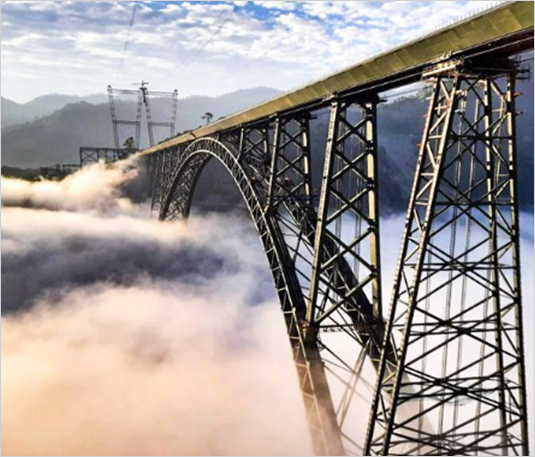
Image 2: Chenab Rail Bridge in Jammu and Kashmir
Anji Khad Bridge
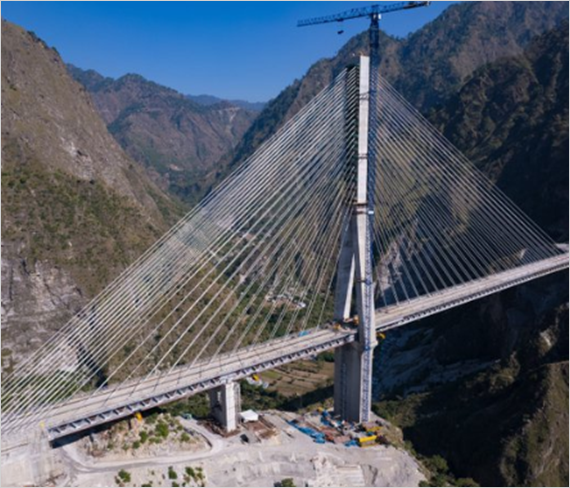
Image 3: Anji Khad Bridge in Jammu and Kashmir
The Anji Khad bridge is India’s first cable-stayed railway bridge built above the Anji River gorge, a tributary of the Chenab River. The Anji Khad bridge is part of the USBRL project and was inaugurated in June 2025.
The bridge is located in the Reasi district of Jammu and Kashmir. It is supported by a single 193-metre-high tower shaped like an inverted ‘Y’, with cables supporting the bridge. The main bridge has a total length of 473.25 metres, designed for the region’s challenging terrain and seismic conditions.
Tunnel T50
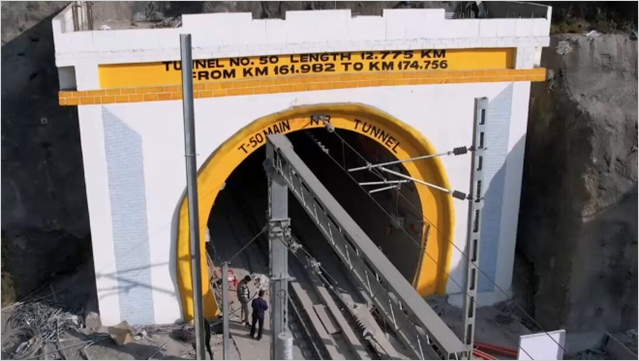
Image 4: Tunnel T50 in Jammu and Kashmir
Tunnel T50, inaugurated in 2024, is a 12.77-km rail tunnel linking Khari and Sumber in Jammu and Kashmir. It is India’s longest transportation tunnel, built under the USBRL project. The tunnel provides a vital rail link between the Kashmir Valley and the rest of India.
The New Austrian Tunnelling Method has been used to construct the tunnel through the challenging Himalayan geology. The tunnel engineering overcame the challenges of high-water ingress, landslides, shear zones, and jointed volcanic rocks. The tunnel features a main tube paired with a parallel escape tunnel, linked every 375 metres for safety. CCTV cameras are placed every 50 metres, which help monitor from a central control room.
Supporting Railway Infrastructure
Railway connectivity in Jammu and Kashmir is being strengthened through increased investment in supporting infrastructure and network development. The annual average budget of railways for Jammu and Kashmir has increased from ₹1,044 crore in 2009–14 to ₹1,086 crore in 2026–27.
Electrification
Indian Railways has pursued railway electrification in mission mode, with about 99.6% of the Broad Gauge (BG) network now electrified. In Jammu and Kashmir, the entire existing BG network is electrified. All new-line and multi-tracking projects are being sanctioned and built with electrification from the outset.
Station Redevelopment
Under the Amrit Bharat Station Scheme, 1,340 stations have been identified for redevelopment across Indian Railways. Among them, four stations are in Jammu and Kashmir. The stations are Budgam, Jammu Tawi, Martyr Captain Tushar Mahajan (Udhampur) and Shri Mata Vaishno Devi Katra station.
Other Regional Railway Initiatives
To strengthen railway connectivity in border areas and areas of strategic significance in Jammu and Kashmir, several projects are in the pipeline. These include
- A third line between Jalandhar Cantt. and Jammu Tawi (216 km).
- An additional line between Jammu and Shri Mata Vaishno Devi Katra (78 km).
- A new railway line between Jammu/Reasi and Poonch (190 km).
Roads: Strengthening Surface Connectivity
Roads as a complement to Rail
In Jammu and Kashmir, road infrastructure is expanding alongside railway infrastructure. Roads remain essential for last-mile access to places outside the railway network. In August 2026, foundation stones were laid for 110 road projects covering 598.455 km under Pradhan Mantri Gram Sadak Yojana (PMGSY)-IV. Costing more than ₹1,500 crore, the projects are expected to benefit 46,972 people across the Udhampur–Kathua–Doda–Kishtwar region. The projects also include the use of waste plastics in several road packages, supporting more sustainable road construction.
Tunnel construction has also become a key component of development in the Himalayan region to ensure all-weather connectivity, improve road safety, and enhance strategic mobility.
Sonamarg (Z-Morh) Tunnel
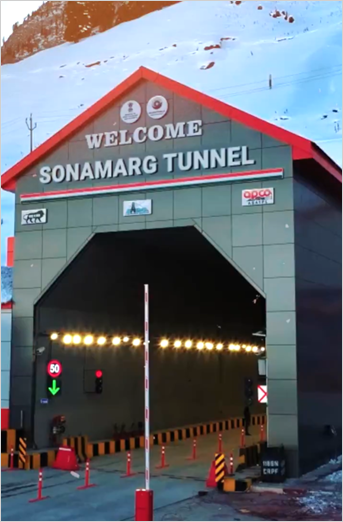
Image 5: Sonamarg Tunnel, Jammu and Kashmir
The Sonamarg tunnel project, also known as the Z-Morh, inaugurated in January 2025, is a 6.4 km bi-directional tunnel with a parallel escape tunnel of length 6.4 km and an approach road of length 5.5km. Constructed at a cost of over ₹2,700 crore, the tunnel sits at an altitude of 2634 meters above sea level. The tunnel provides all-weather connectivity between Srinagar and Sonamarg enroute to Leh. It bypasses parts of the road hit by major avalanches and landslides. It promotes tourism by transforming Sonamarg into a year-round destination, boosting winter tourism, adventure sports and local livelihoods. Along with the Zojila Tunnel, it will cut the NH-1 section of this project from 13 km to 11.98 km.
Zojila Tunnel
The Zojila Tunnel is a 13.153-kilometre-long bi-directional tunnel being constructed between Baltal and Minamarg on National Highway-1 by NHIDCL. Elevated at 2,900–3,310 metres, the ₹6,808-crore project will provide all-weather year-round road connectivity between Jammu and Kashmir and Ladakh. With construction beginning in October 2020, the main tunnel achieved breakthrough in June 2026.
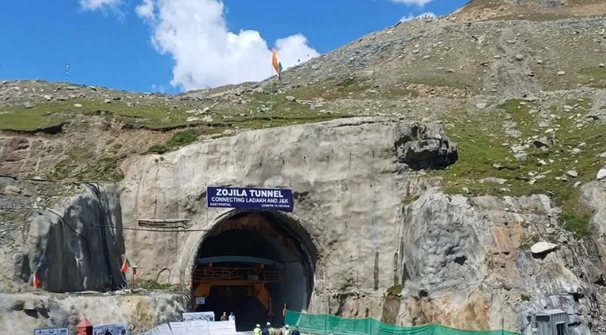
Image 6: Zojila Tunnel, Jammu and Kashmir
The tunnel will be equipped with modern ventilation systems, automatic fire detection and suppression systems, CCTV surveillance, a Variable Message Sign (VMS) system, SCADA system, and other advanced safety and traffic management systems. The project also includes two twin tube uni-directional Nilgari tunnels of total length 4.8 km, eight cut-and-cover sections with a total length of 2.350 km, four bridges with a total length of 810 m, 40 culverts, snow galleries, catch dams, deflector dams, air-blast walls, and other avalanche protection structures along the approach road of length 16.964 km.
Upon completion, the project is expected to reduce the travel time between Sonamarg and Minamarg from approximately two hours to around 30 minutes. The project will also reduce the risks of accidents and disruptions associated with the treacherous Zojila Pass, which remains vulnerable to heavy snowfall and avalanches during the winter months. The tunnel will boost tourism, trade, and access to remote and border areas. Year-round connectivity will strengthen defence logistics and strategic preparedness. It will also create employment opportunities, support economic growth, and improve livelihoods and quality of life for local communities.
Dr Syama Prasad Mookerjee Tunnel (earlier known as Chenani-Nashri Tunnel)
The 9 km tunnel, opened in 2017, is India's longest operating highway tunnel and Asia's longest bi-directional tunnel. It connects Udhampur to Ramban in Jammu and Kashmir. Built at a cost of ₹2500 crore, it reduces travel distance by 31 km and cuts the travel time by two hours, saving fuel costs.
Expanding the Highway Network
- Delhi–Amritsar–Katra Expressway: The expressway is a 667-km greenfield highway connecting Delhi with Amritsar and Katra. It is designed to provide a faster road link, reduce congestion on NH-44, and improve access to major destinations, including the Shri Mata Vaishno Devi shrine. In July 2026, key sections of the expressway were inaugurated, marking a major step towards improving connectivity between Delhi and Katra. The completed sections are expected to reduce travel time between Delhi and Katra from about 14 hours to nearly six hours. The corridor will also strengthen connectivity for pilgrims and facilitate industrial and logistics activity along the route.
- Rafiabad–Kupwara Road (NH-701): The foundation stone for the widening and strengthening of the Rafiabad–Kupwara section of NH-701 was laid in June 2025 to strengthen last-mile connectivity, particularly in border areas. The project forms part of the Rafiabad–Kupwara–Chowkibal–Tangdhar–Chamkot corridor under Project Beacon.
- Shopian Bypass (NH-444): Sanctioned in March 2024 at a cost of ₹224.44 crore, the 8.925-km Shopian bypass had its foundation stone laid in June 2025. The bypass will improve connectivity between Shopian, Pulwama and Kulgam and facilitate faster transportation of agricultural produce.
Airports: Expanding Air Connectivity
Expansion of Srinagar International Airport
A ₹1,677 crore expansion of the Civil Enclave at Srinagar International Airport was approved in February 2026. The project is operated by the Airports Authority of India within Budgam Airbase of the Indian Air Force (IAF). It will strengthen aviation connectivity in the Kashmir Valley.
Spread over 73.18 acres, the development includes a new 71,500 square metre terminal building. The terminal will handle up to 2,900 passengers during peak hours and 10 million passengers annually. The airport will also have 15 aircraft parking bays, including space for one widebody aircraft. Its existing 3,658-metre runway will continue to be operated by the Indian Air Force. A new multi-level parking facility will also provide space for 1,000 cars. The project also includes barracks for security personnel.
The new terminal will combine modern airport facilities with elements of Kashmir’s traditional architecture, including local woodwork and craftsmanship. Sustainability is a core part of the project. It includes water harvesting, greater use of natural light, and locally sourced eco-friendly materials. The project is targeted to achieve a 5-star Green Rating for Integrated Habitat Assessment (GRIHA) for sustainable building practices.
Extending Regional Air Connectivity
The Government is focusing on improving regional connectivity and providing affordable and secure travel options to residents of Jammu and Kashmir.
- Udhampur and Kishtwar reflect how regional aviation can extend access to areas beyond the region’s major urban centres. The two airports are planned under the UDAN scheme to extend regional air connectivity in Jammu and Kashmir. Greater airport capacity is expected to support tourism, create employment, encourage investment and strengthen Srinagar’s role as an economic destination.
From Connectivity to Economic Integration
Multimodal Logistics
PM Gati Shakti National Master Plan, launched in October 2021, brought railways, roads, ports, waterways, airports and logistics infrastructure onto a single, Geographic Information System (GIS) based planning platform. It spans 44 Central Ministries and 36 States and UTs. Building on this framework, the Gati Shakti Multi-Modal Cargo Terminal (GCT) policy, launched in December 2021, encourages the development of modern, rail-linked cargo terminals through private investment.
So far, 142 Gati Shakti Cargo Terminals have been commissioned in the country. In 2024, a Gati Shakti Multi-Modal Cargo Terminal (GCT) was commissioned in Samba in Jammu and Kashmir and is now fully operational. In addition, In-Principle Approvals have been granted for the development of GCTs at 310 more locations, including three at Kathua, Anantnag and Jammu districts in Jammu and Kashmir.
The GCT policy has benefited key sectors such as cement, steel, power, mining, agriculture, logistics and manufacturing. It has enabled modern multimodal cargo terminals with warehousing, silos, cold storage and other value-added logistics facilities. This has increased the competitiveness of local industries and farmers while generating employment and promoting regional economic development.
From Access to Opportunities
A region once defined by seasonal isolation is emerging as a connected part of India's economic geography. Rail, road and air projects are no longer separate initiatives; together, they now function as one integrated network. This convergence is reshaping daily life for residents, farmers, traders and tourism operators alike. The expansion is increasing the access of farmers and local businesses to markets beyond the region. Signature Kashmir products, including apples, dry fruits, pashmina shawls and handicrafts, are being sold at larger markets, promoting economic diversity. At the same time, improved connectivity is strengthening the region's strategic position, including border security and disaster response.
References
Ministry of Railways
Ministry of Road Transport & Highways
Ministry of Civil Aviation
Ministry of Science and Technology
Ministry of Home Affairs
Cabinet Committee on Economic Affairs
Ministry of Personnel, Public Grievances & Pensions
Press Information Bureau (PIB)
Ministry of Information and Broadcasting
Click here to see pdf
****
PIB Research
(Release ID: 2324629)
Visitor Counter : 579