Ministry of Health and Family Welfare
Union Health Minister Shri Jagat Prakash Nadda lays foundation stone of ICMR Centre for High Altitude Medicine and Public Health Research at Keylong
Dedicated research centre to strengthen preventive healthcare and address unique health challenges of Himalayan communities: Shri Nadda
“ICMR, Armed Forces Medical Services and AIIMS Bilaspur to join hands for high-altitude health research”
ICMR–Armed Forces collaboration to develop effective medical solutions for extreme-altitude conditions: Union MoS Shri Sanjay Seth
New research facility at Keylong to benefit Himalayan communities across India and beyond: Shri Jai Ram Thakur
High-altitude research initiative marks significant step towards better healthcare in remote Himalayan regions: Ms. Kangana Ranaut
Centre to build India’s own scientific evidence on Himalayan health; joint research to focus on soldiers and border communities
Research to explore drone-enabled medicine delivery, digital health and artificial intelligence to improve healthcare access in remote areas
Posted On:
12 OCT 2026 4:03PM by PIB Delhi
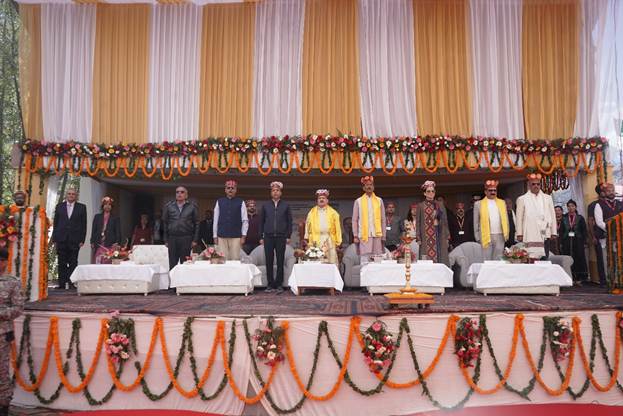
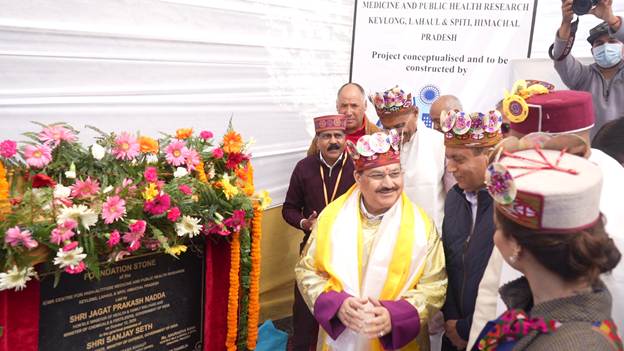
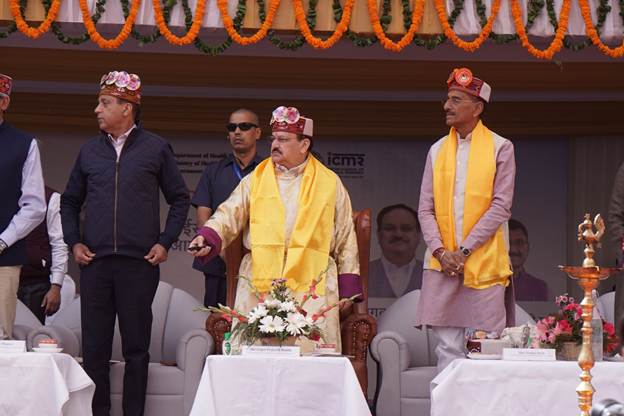
Union Minister for Health & Family Welfare and Chemicals & Fertilizers Shri Jagat Prakash Nadda today performed the Bhumi Pujan and laid the foundation stone of the ICMR Centre for High Altitude Medicine and Public Health Research at Keylong, Himachal Pradesh. He expressed confidence that the Centre would establish a strong institutional foundation for high-altitude health research and advance scientific understanding of the unique health challenges faced by people living in the Himalayan region and personnel serving in high-altitude areas.
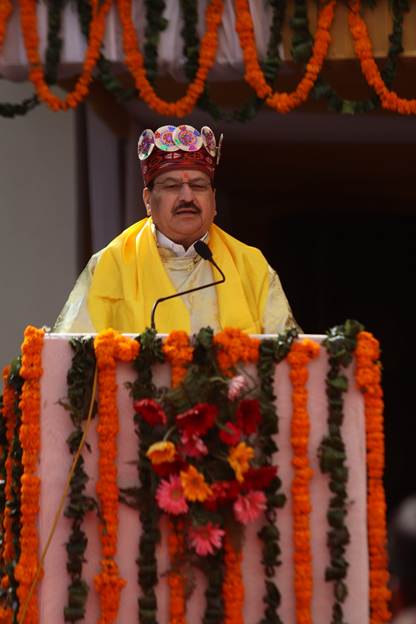
Addressing on the occasion, Union Minister Shri Nadda emphasised the importance of dedicated scientific research to understand the health implications of low oxygen levels, extreme cold, changing climatic conditions and the distinctive lifestyles of tribal communities. He highlighted the need for systematic studies of these region-specific challenges to identify health risks, develop appropriate interventions and strengthen preventive healthcare.
Referring to Prime Minister Shri Narendra Modi’s vision of strengthening healthcare infrastructure and ensuring access to quality healthcare, Shri Nadda said that the establishment of the Centre reflects the importance accorded to addressing the distinct healthcare needs of people living in remote Himalayan and border regions. He emphasised that research-based interventions would help improve health outcomes and enhance the well-being of local communities and Armed Forces personnel serving in these challenging environments.
Shri Nadda appreciated the collaboration between ICMR and the Armed Forces Medical Services in establishing the Centre. He also acknowledged the contribution of AIIMS Bilaspur, which would participate in studying the health impact of high-altitude conditions on patients visiting the region. The collaboration would bring together scientific expertise and clinical experience to deepen understanding of high-altitude health challenges and support evidence-based healthcare interventions.
Emphasising the long-term significance of the initiative, Shri Nadda said that the Centre would contribute to improving healthcare for tribal communities and Armed Forces personnel deployed in high-altitude areas. The research undertaken would support the development of appropriate preventive and promotive healthcare strategies, helping address the distinctive medical challenges associated with extreme environmental conditions and strengthening health services in the Himalayan region. Shri Nadda also appreciated ICMR’s role in developing the COVID-19 vaccine, which helped fight the pandemic not only in India but also in other countries around the world.
Union Minister of State for Defence Shri Sanjay Seth, who graced the occasion as Guest of Honour, highlighted the significance of the collaboration between the Indian Council of Medical Research (ICMR) and the Armed Forces Medical Services in establishing the High Altitude Research Centre at Keylong. Drawing on the Armed Forces’ experience of operating in high-altitude environments, he expressed confidence that the joint research initiative would help deepen scientific understanding of the health challenges associated with extreme altitudes and contribute to the development of effective medical solutions.
MoS Shri Seth emphasised the importance of combining ICMR’s scientific research capabilities with the practical experience of the Armed Forces Medical Services to address the health challenges posed by high-altitude conditions. The research undertaken at the centre is expected to support better understanding of the effects of altitude on the human body, with potential benefits for personnel serving in challenging environments as well as local communities living in the high-altitude regions of Himachal Pradesh.
Shri Jai Ram Thakur, Leader of Opposition in the Himachal Pradesh Legislative Assembly and former Chief Minister, said that the establishment of the ICMR High Altitude Research Centre in Keylong is a significant step towards understanding the unique health challenges faced by people living in high-altitude regions. He emphasised that research into the effects of extreme cold, low oxygen levels and difficult geographical conditions would help develop better healthcare solutions, benefiting not only the people of Himachal Pradesh but also high-altitude communities across India and the world.
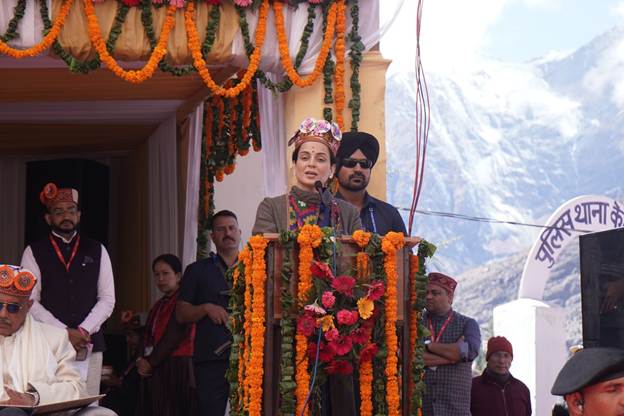
Ms. Kangana Ranaut, Member of Parliament from Mandi, said that improved connectivity has transformed life in the remote regions of Himachal Pradesh, which were once isolated for several months due to difficult geographical conditions. She highlighted that the establishment of the ICMR High Altitude Research Centre in the mountains of Keylong is a historic step that will advance scientific research, improve understanding of health challenges in high-altitude regions and contribute to the well-being of people in Himachal Pradesh and humanity at large.
Outlining the Centre's scientific vision, Dr. Rajiv Bahl, Secretary, Department of Health Research and Director General, ICMR, said, Keylong will be a place where the laboratory and the community meet, where local people are partners in research and where the goal is better health, not just research papers. He stressed on the important contribution of Armed Forces Medical Services, Himachal Pradesh Government and local community for the ICMR Centre.
Highlighting the impact of research, Air Marshal Sandeep Thareja, DGFMS said that the research undertaken at the Centre would directly strengthen medical care for soldiers deployed in some of the most demanding high-altitude terrain in the world. Combining the AFMS field experience with ICMR’s scientific expertise would help turn research findings into practical protocols for acclimatisation, early detection and treatment. He added that the knowledge generated at Keylong would benefit not only Armed Forces personnel but also the local communities who share these challenging environments.
Shri Ravi Thakur, former MLA from Lahaul & Spiti expressed confidence that research carried out at Keylong would lead to better healthcare and preventive measures for communities across these neighbouring Himalayan regions.
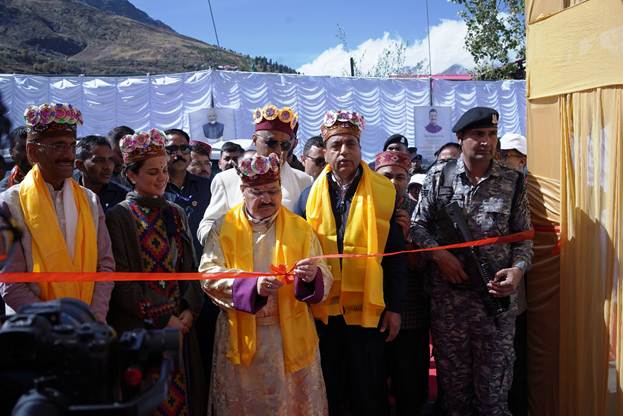
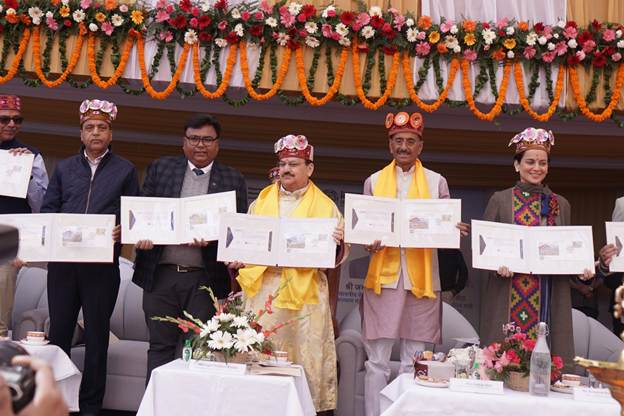
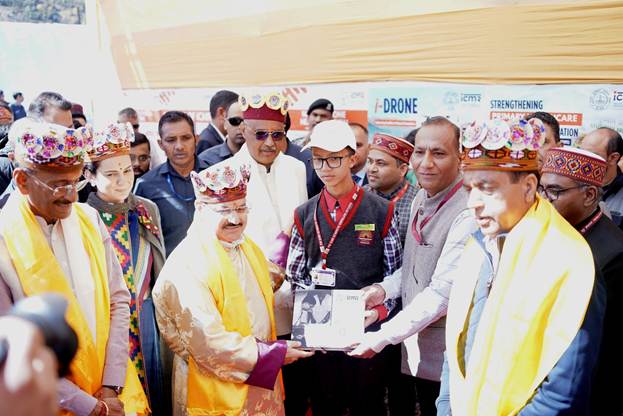
On this occasion, Union Health Minister Shri Jagat Prakash Nadda and other dignitaries planted native Himalayan saplings under the Green ICMR Campus Initiative. Shri Nadda inaugurated a scientific exhibition for school students, launched the Centre’s website and institutional video, and released a commemorative postal special cover, marking key milestones in the establishment of the ICMR Centre for High Altitude Medicine and Public Health Research at Keylong.
The Ceremony was participated by senior officers of the Armed Forces Medical Services and the Indian Air Force, scientists, Panchayati Raj representatives and local residents also attended the event.
Built on the foundation of the field station ICMR set up at Keylong nearly a decade ago, the Centre will be a permanent, year-round institution with state-of-the-art laboratories and specialised human resources. Its central mandate will be to generate evidence on the health effects of high altitude, low oxygen levels, extreme cold and changing climatic conditions. A key feature will be collaboration between ICMR, the Armed Forces Medical Services and other research institutions, bringing together expertise in biomedical research, public health and high-altitude physiology. Thus, the Centre will undertake research relevant to both the Armed Forces and civilian populations, with a focus on altitude-related health risks, acclimatisation, maternal and newborn health, child growth and nutrition, and disease patterns in Himalayan communities. It will also examine how emerging technologies, including drone-enabled medicine delivery, digital health and artificial intelligence, can improve access to healthcare in remote and difficult-to-reach areas. The resulting evidence is expected to inform healthcare practices, strengthen preventive and clinical approaches for personnel deployed at high altitude, and support better health services for communities living in India's Himalayan and border regions, including Himachal Pradesh, Ladakh, Jammu & Kashmir, Uttarakhand, Sikkim and Arunachal Pradesh.
***
SR/GS
(Release ID: 2322248)
Visitor Counter : 298