Ministry of Textiles
Textiles Committee Celebrates 62nd Foundation Day; Union Minister of Textiles Shri Giriraj Singh Calls for Zero-Defect Manufacturing, Traceability and Environmental Conformity
Textiles Committee showcases over six decades of contribution to quality standardisation, export facilitation and artisan handholding across the textile value chain
Committee highlights initiatives in GI protection, textile recovery, quality certification and global environmental compliance
प्रविष्टि तिथि:
23 AUG 2026 11:08AM by PIB Mumbai
: Mumbai, 23rd August 2026
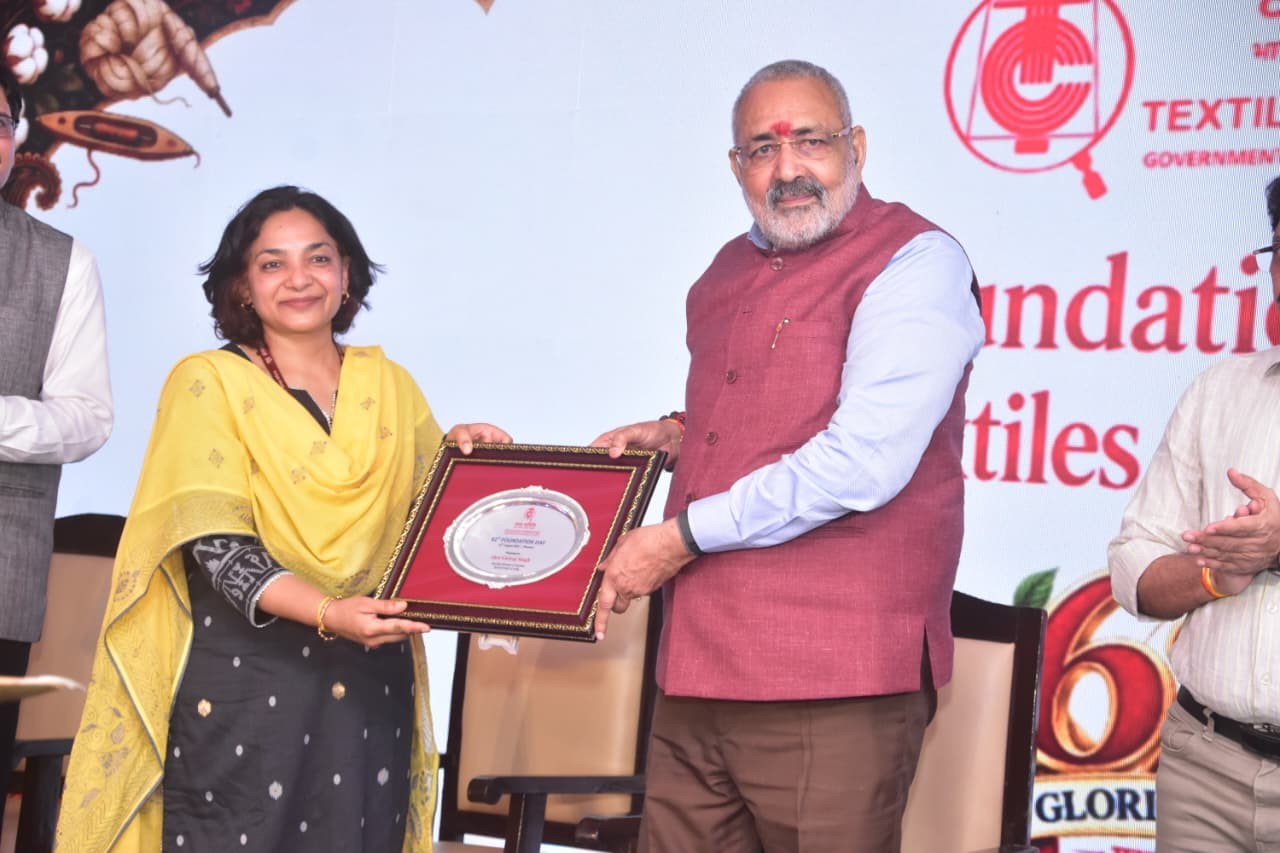
The Textiles Committee, a statutory body under the Ministry of Textiles, Government of India, commemorated its 62nd Foundation Day at its headquarters in Mumbai on 22nd August 2026. Established on 22nd August 1964 under the Textiles Committee Act, 1963, the Committee has completed 62 years of dedicated service towards ensuring quality standards in textiles and textile machinery for both domestic consumption and international markets.
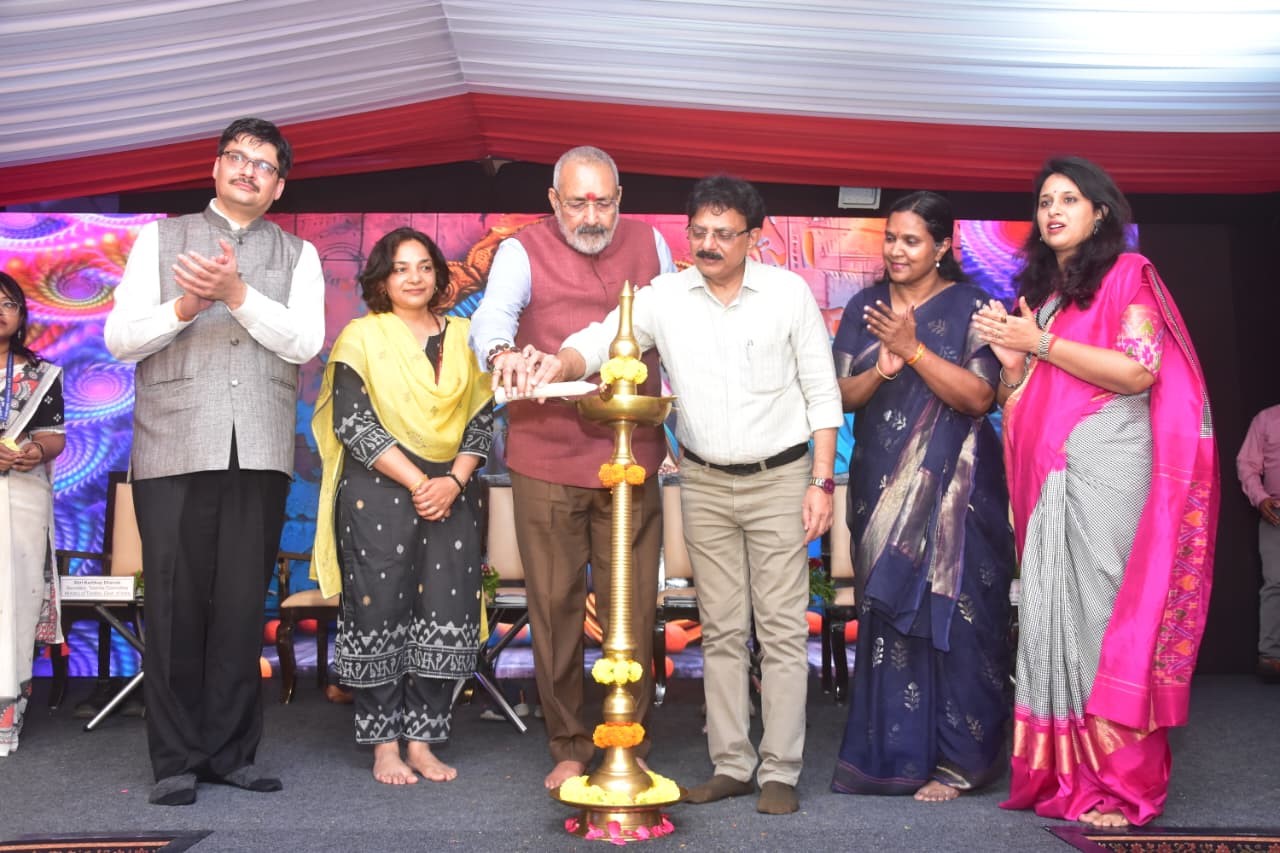
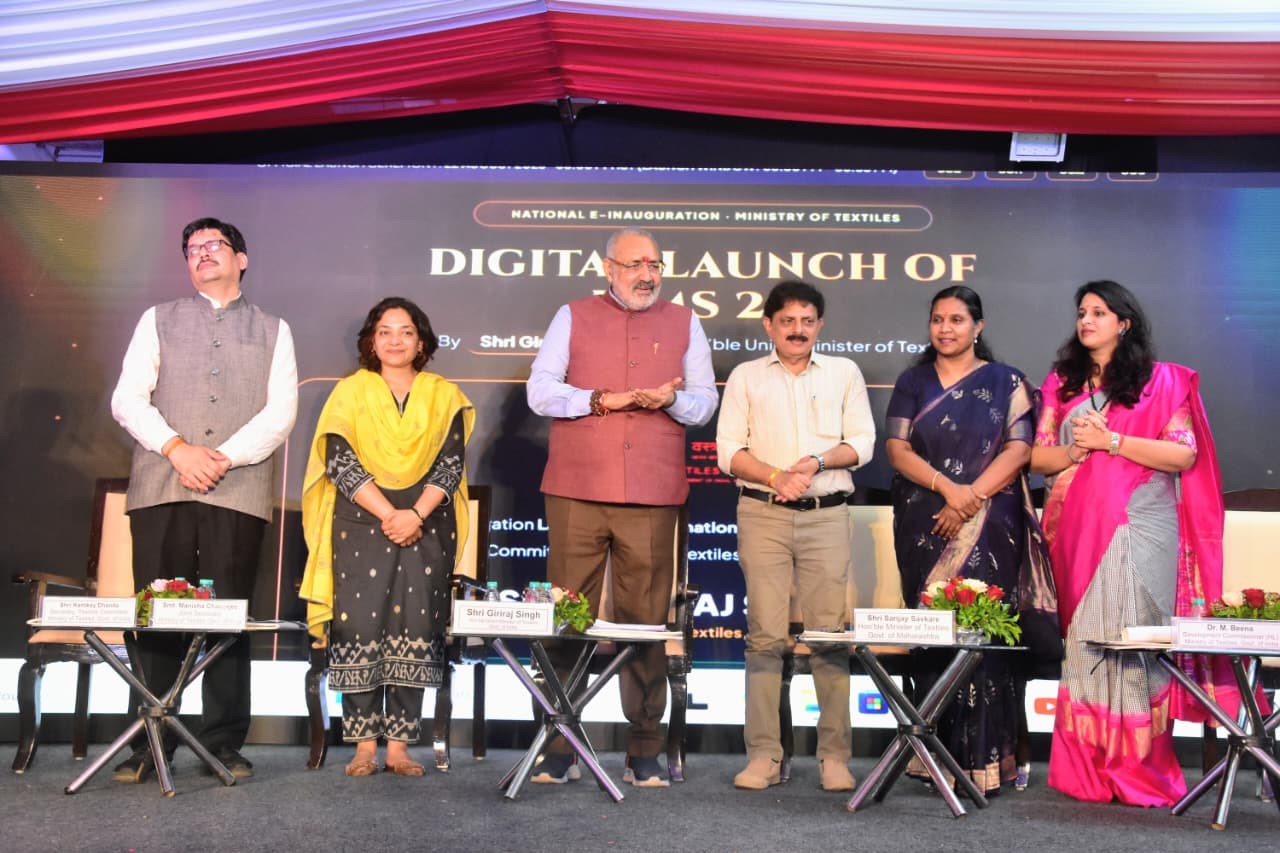
The celebratory function was graced by Shri Giriraj Singh, Union Minister of Textiles, Government of India, as the Chief Guest, while Shri Sanjay Savkare, Minister of Textiles, Government of Maharashtra, was the Guest of Honour. Smt. Vrunda Manohar Desai, Textile Commissioner and Vice Chairperson, Textiles Committee; Smt. Manisha Chatterjee, Joint Secretary, Ministry of Textiles, Government of India; Dr. M. Beena, Development Commissioner for Handlooms, Ministry of Textiles, Government of India; Shri Kartikay Dhanda, Secretary, Textiles Committee, along with senior government officials, heads of Export Promotion Councils, industry representatives, ginners and other stakeholders, were also present.
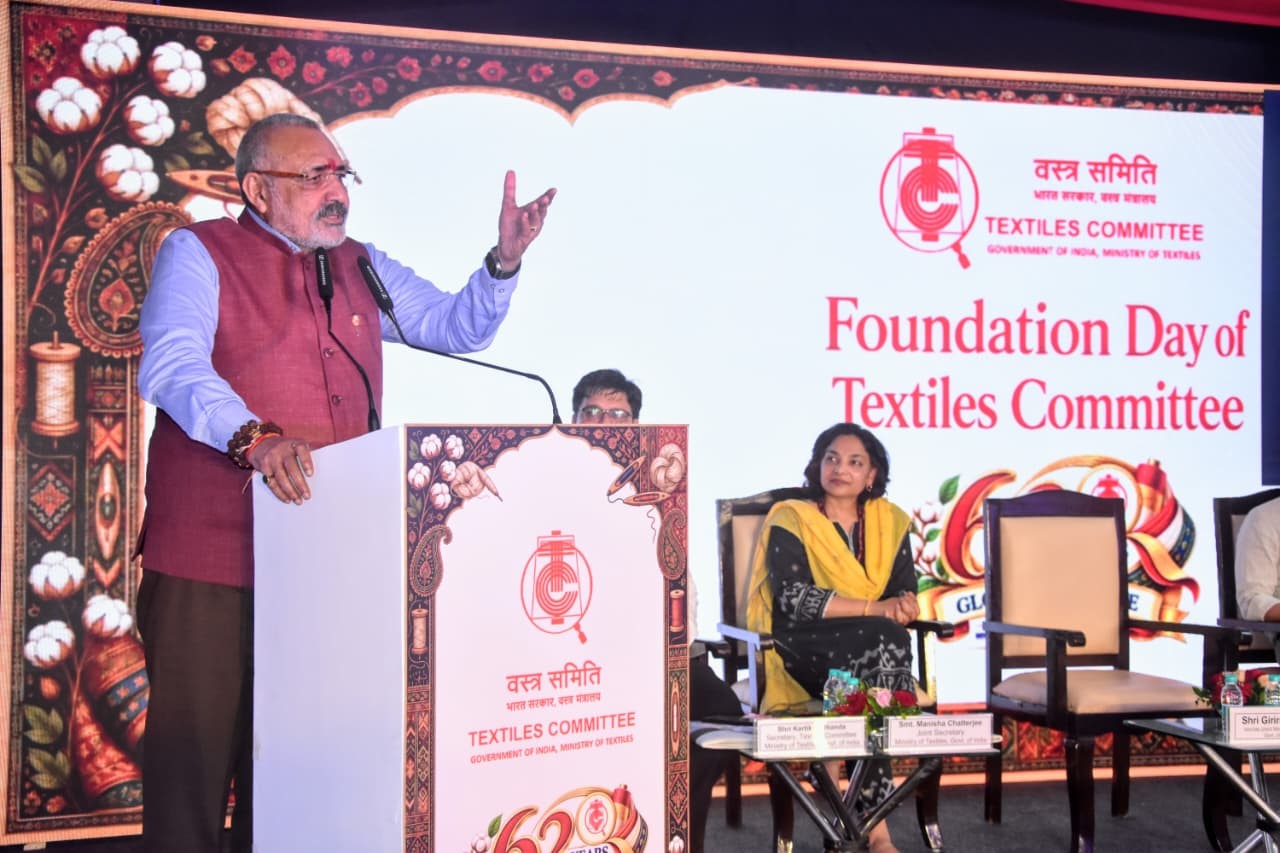
Addressing the gathering, Shri Giriraj Singh, Union Minister of Textiles, commended the Textiles Committee for evolving from a conventional pre-shipment inspection agency in the 1960s into an enabler and catalyst for modern trade, research and quality compliance. Emphasising that global competitiveness in the Viksit Bharat 2047 era requires zero-defect manufacturing, traceability and environmental conformity, the Minister reiterated the Prime Minister’s 5F Vision – Farm to Fibre, Fibre to Factory, Factory to Fashion and Fashion to Foreign. He highlighted the expansion of Textile Export Facilitation Centres (TEFCs) to simplify FTA utilisation and export clearances for MSMEs and urged the Committee to position Indian textile certification on par with the highest international accreditation benchmarks.
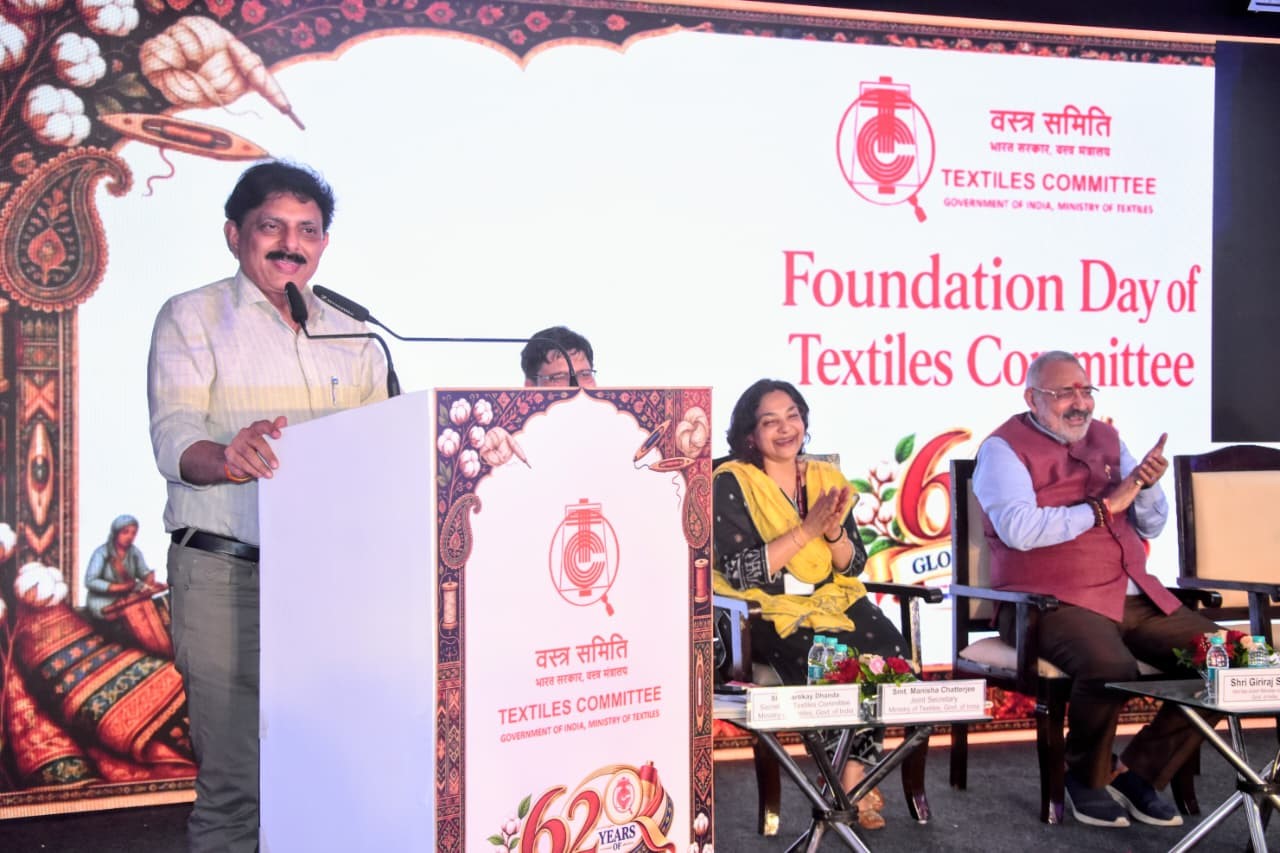
Shri Sanjay Savkare, Minister of Textiles, Government of Maharashtra, lauded the synergy between the State’s industrial powerloom hubs, including Bhiwandi, Ichalkaranji and Solapur, and the Committee’s testing infrastructure in Mumbai. He emphasised the scope for collaborative initiatives in skill development, cluster-level testing clinics and sustainable waste recovery.
Dr. M. Beena, Development Commissioner for Handlooms, emphasised the vital role played by the Committee in protecting authentic weaver craftsmanship through the India Handloom Brand (IHB) and Handloom Mark, besides protecting handloom products under the Geographical Indications Act, 1999.
Smt. Vrunda Manohar Desai, Textile Commissioner and Vice Chairperson, Textiles Committee, highlighted the organisation’s end-to-end value-chain interventions, ranging from GI tagging and post-GI handholding to the establishment of India’s first municipal-scale Textile Recovery Facility (TRF) in collaboration with the Navi Mumbai Municipal Corporation (NMMC).
Smt. Manisha Chatterjee, Joint Secretary, Ministry of Textiles, highlighted the Committee’s leadership in green chemistry through the UNIDO-GEF Project – Eliminating Hazardous Chemicals from the Textile and Fashion Supply Chain. She also highlighted the Scheme for Capacity Building in Textile Sector (SAMARTH), which was launched with a view to transforming unskilled manpower into a skilled workforce across various sectors of the textile industry.
Shri Kartikay Dhanda, Secretary, Textiles Committee, welcomed the dignitaries and elaborated on the evolution of the Textiles Committee in line with the changing requirements of the textile industry. He expressed gratitude to the Government of India, trade and industry for their continued support in enabling the Committee to meet the changing requirements of the sector.
Six Decades of Service: Adapting to Global and Domestic Demands
Since its inception in 1964, the Textiles Committee has progressively widened its technical and developmental scope in response to the changing requirements of the domestic and global textile industry. The Committee operates a nationwide network of NABL-accredited eco-testing and physical testing laboratories, offering specialised restricted substance analysis and other testing services at accessible costs, particularly for MSMEs.
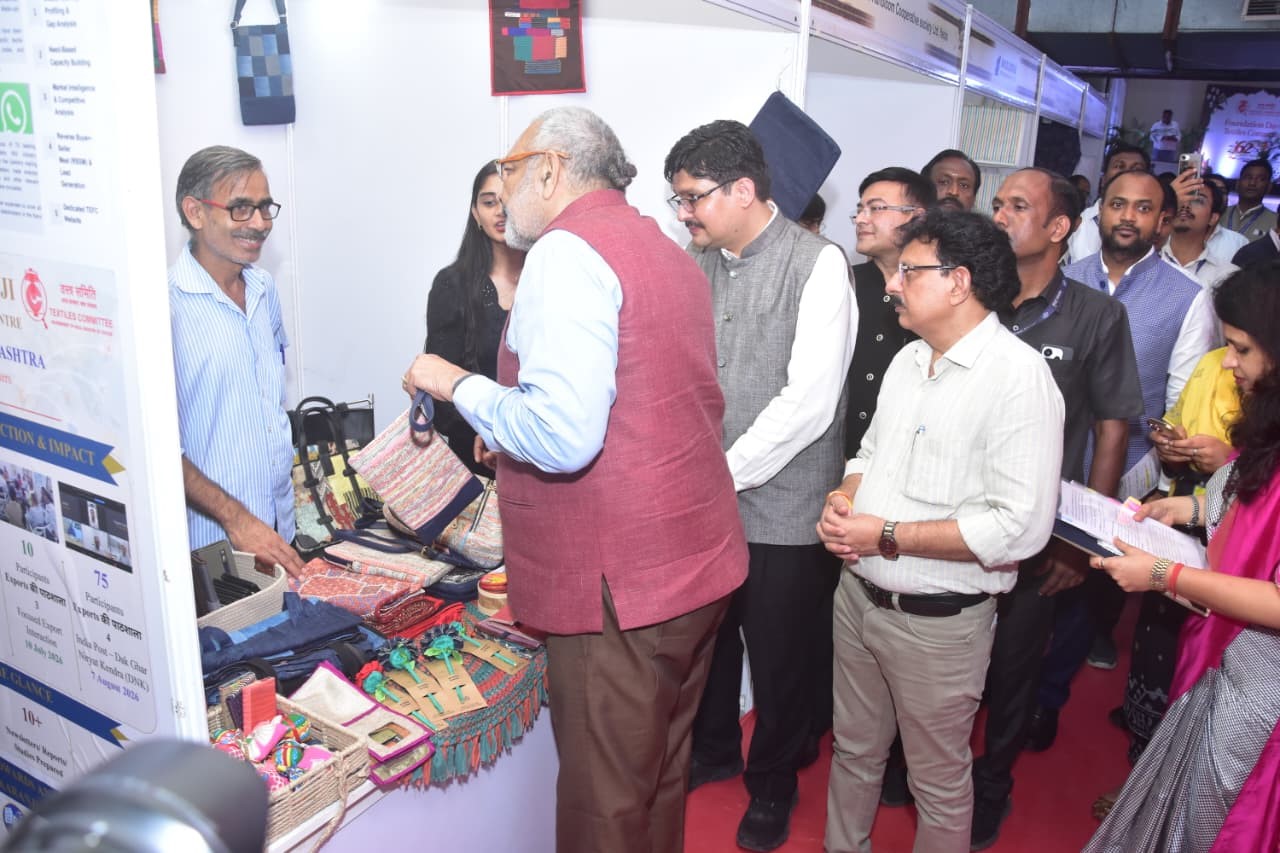
The Committee has also developed and supported a range of national branding and authenticity frameworks covering different segments of the textile value chain. Handloom Mark: Created a brand for India's handloom products and gave them a premium identity in both domestic and international markets. This collective identity serves as a symbol of authenticity for handwoven products and acts as a bridge between India’s handloom heritage and the global stage.
India Handloom Brand (IHB): By enforcing rigorous zero-defect quality benchmarks and chemical safety standards, you have provided discerning global buyers with certified, eco-friendly luxury while guaranteeing fair returns to our handloom weavers.
Jute Mark India (JMI): You have given India's golden fibre a contemporary, standardized identity, accelerating our transition toward biodegradable packaging and diversified lifestyle products.
Bharat Wool Mark: By creating objective grading and quality standards for indigenous wool, you are empowering pastoral communities across Rajasthan, Gujarat, Himachal, and Uttarakhand, bridging the gap between pastoralists and modern apparel mills.
Pashmina Mark: Through state-of-the-art DNA testing, microscopic scanning electron microscopy, and secure digital tracking, the Committee has safeguarded the sacred Cashmere heritage of Ladakh and Jammu & Kashmir against synthetic blends and counterfeit products.
The Textiles Committee has also undertaken initiatives to strengthen the quality and market credibility of raw cotton. Under its Star-Rated Ginning and Pressing Factories initiative, the Committee has classified 1,463 modernised ginneries on a one-to-five-star scale with the objective of helping spinning mills and traders source contamination-free and standardised raw cotton. The initiative has enabled ginneries to enhance their market credibility and command premium value.
The Committee also conducts national consumer purchase behaviour surveys and analyses international trade flows to generate inputs for bilateral Free Trade Agreement (FTA) negotiations and domestic industrial policy, thereby strengthening the availability of market intelligence for the textile sector.
As the Textiles Committee enters its 63rd year, it has reaffirmed its commitment to strengthening digital traceability through QR and NFC technologies, expanding decentralised testing camps across remote handloom and powerloom clusters, and promoting circular economy solutions across urban local bodies and industrial parks.
Through these initiatives, the Textiles Committee continues to contribute to strengthening quality, authenticity, sustainability and global competitiveness across India’s textile value chain.
***
Souce-Textile Committee/ Edgar Coelho/Parshuram Kor
Follow us on social media:  @PIBMumbai
  /PIBMumbai
  /pibmumbai
  pibmumbai[at]gmail[dot]com
(रिलीज़ आईडी: 2302431)
आगंतुक पटल : 60
इस विज्ञप्ति को इन भाषाओं में पढ़ें:
Marathi