Ministry of Science & Technology
CSIR-IIP, CSIR-CRRI and CSIR-AMPRI Showcase Indigenous Bio-Binder Technology for Sustainable Road Infrastructure
- Bio-Binder technology converts agricultural and biomass waste into an eco-friendly alternative to petroleum-based bitumen
- Technology supports Atmanirbhar Bharat by reducing dependence on imported petroleum products and promoting a circular bioeconomy
- CSIR-CRRI to establish a National Bio-Binder Testing Laboratory by March 2027
Posted On:
05 AUG 2026 10:32AM by PIB Dehradun
CSIR-Indian Institute of Petroleum (CSIR-IIP), Dehradun, in collaboration with CSIR-Central Road Research Institute (CSIR-CRRI) and CSIR-Advanced Materials and Processes Research Institute (CSIR-AMPRI), showcased Bio-Binder Technology during a technology demonstration programme aimed at accelerating the commercialization of indigenous green technologies for sustainable road infrastructure. The event brought together senior scientists, industry leaders and research collaborators to promote technology-led national development and sustainable innovation.
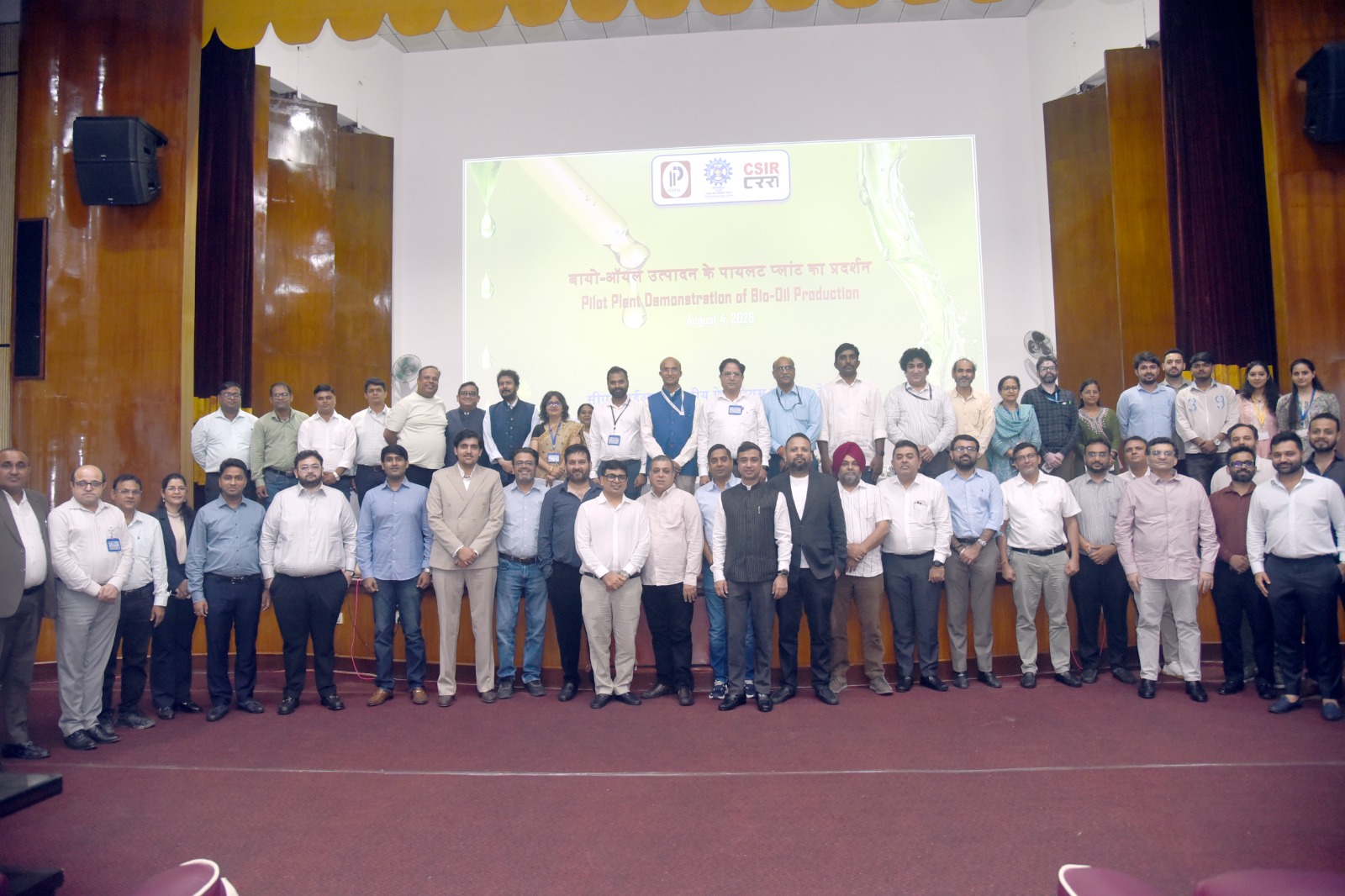
The programme was attended by Director, CSIR-IIP, Dr. Harender Singh Bisht; Director, CSIR-CRRI, Dr. C. Ravi Sekhar; Director, CSIR-AMPRI, Dr. Thallada Bhaskar; Dr. V. C. S. Palla and his team from CSIR-IIP; Dr. G. Bharath and his team from CSIR-CRRI; along with representatives from industry collaborating with CSIR-IIP and CSIR-CRRI for the commercial scale-up and deployment of Bio-Binder technology.
Addressing the gathering, Dr. Harender Singh Bisht said that Bio-Binder Technology represents a significant advancement towards sustainable road construction by converting agricultural and biomass waste into an environmentally friendly substitute for petroleum-derived bitumen. He stated that the technology reflects the collective efforts of the three CSIR laboratories to reduce dependence on imported petroleum products, promote the effective utilization of agricultural residues, create additional income opportunities for farmers and contribute to India's transition towards greener and more sustainable infrastructure.
Speaking on the occasion, Dr. C. Ravi Sekhar highlighted that India's rapidly expanding road infrastructure continues to depend heavily on imported bitumen. He said that the Bio-Binder technology provides an indigenous and sustainable alternative by converting agricultural residues, particularly rice straw and other biomass waste, through pyrolysis into valuable products such as bio-oil, bio-binder, biochar and biogas. The bio-binder produced through this process can effectively replace or supplement conventional petroleum-derived bitumen in flexible pavement construction, thereby supporting the vision of Atmanirbhar Bharat, promoting circular economy principles and reducing environmental pollution caused by agricultural residue burning.
V8A6.jpeg)
Dr. Ravi Sekhar informed that CSIR-CRRI has successfully completed the long-term evaluation of a 100-metre Bio-Binder test section constructed on National Highway-40 near Shillong. Building on these successful trials, he said that the Government of Andhra Pradesh has initiated a five-kilometre evaluation programme for Bio-Binder-based road construction. He further stated that CSIR-CRRI is working closely with the Ministry of Road Transport and Highways (MoRTH), the National Highways Authority of India (NHAI) and the Indian Roads Congress (IRC) to formulate standardized technical specifications and implementation guidelines for nationwide adoption of the technology.
He also announced that the Ministry of Road Transport and Highways has approved the establishment of a dedicated National Bio-Binder Testing Laboratory at CSIR-CRRI. The facility, expected to become operational by March 2027, will provide comprehensive testing, validation, certification and quality assurance services for commercially manufactured bio-binders to facilitate their large-scale deployment.
Dr. Thallada Bhaskar outlined a comprehensive vision for developing a zero-waste biorefinery and emphasized that the long-term success of biomass-based technologies depends on maximizing value from every product stream generated during processing. He noted that while laboratory-scale research and process development are relatively straightforward, successful commercialization requires identification of products that address market demand, support import substitution and deliver strong economic returns.
He explained that the Bio-Binder process has been designed as an integrated biorefinery in which every process stream is converted into a commercially valuable product. While the heavy organic fraction obtained through biomass pyrolysis is utilized for Bio-Binder production, the aqueous fraction has been successfully converted into a patented biological pesticide formulation. To improve storage, transportation and handling, the formulation has also been developed into a stable powdered product, which has undergone evaluation by national laboratories for potential commercialization in the agricultural sector.
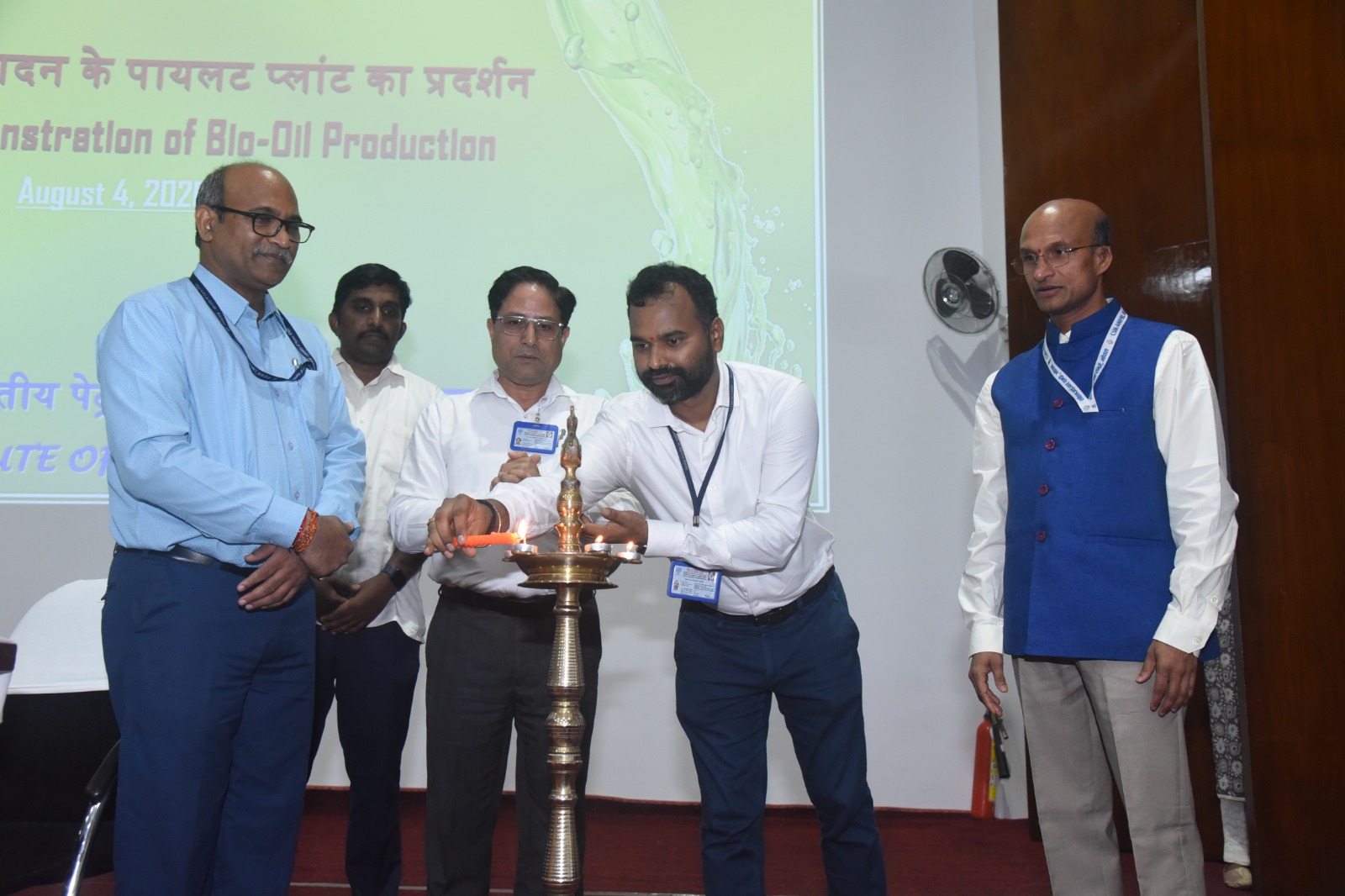
Dr. Bhaskar expressed confidence that the integrated biorefinery approach jointly developed by CSIR-AMPRI, CSIR-IIP and CSIR-CRRI would strengthen India's efforts towards import substitution while establishing a sustainable and economically viable model for biomass utilization, thereby contributing significantly to the vision of Atmanirbhar Bharat and a circular bioeconomy.
The programme was coordinated by Dr. Jyoti Porwal with support from Dr. O. P. Khatri, Head, RPPM; Dr. Atul Ranjan, Head, Business Development; Dr. Ajay Kumar, Head, MRED; and other officials of CSIR-IIP.
At the conclusion of the programme, CSIR-IIP and CSIR-CRRI expressed their appreciation to the industry partners for their active participation and collaboration in taking Bio-Binder technology from laboratory research to commercial application, reaffirming their shared commitment towards building a self-reliant and sustainable India.
(Release ID: 2294669)
Visitor Counter : 320