Ministry of Railways
Powering India’s First Bullet Train: Electrification Works Gain Pace on the Mumbai–Ahmedabad Bullet Train Project
Posted On:
22 JUL 2026 4:00PM by PIB Ahmedabad
As civil construction and track laying gather pace on the 508 km Mumbai–Ahmedabad Bullet Train corridor, the electrification works are gaining momentum.
FIRST-OF-ITS-KIND HIGH-SPEED RAILWAY ELECTRIFICATION IN INDIA
The MAHSR corridor is being equipped with an advanced 2×25 kV Overhead Traction System, one of the most sophisticated railway electrification technologies used worldwide for high-speed rail.
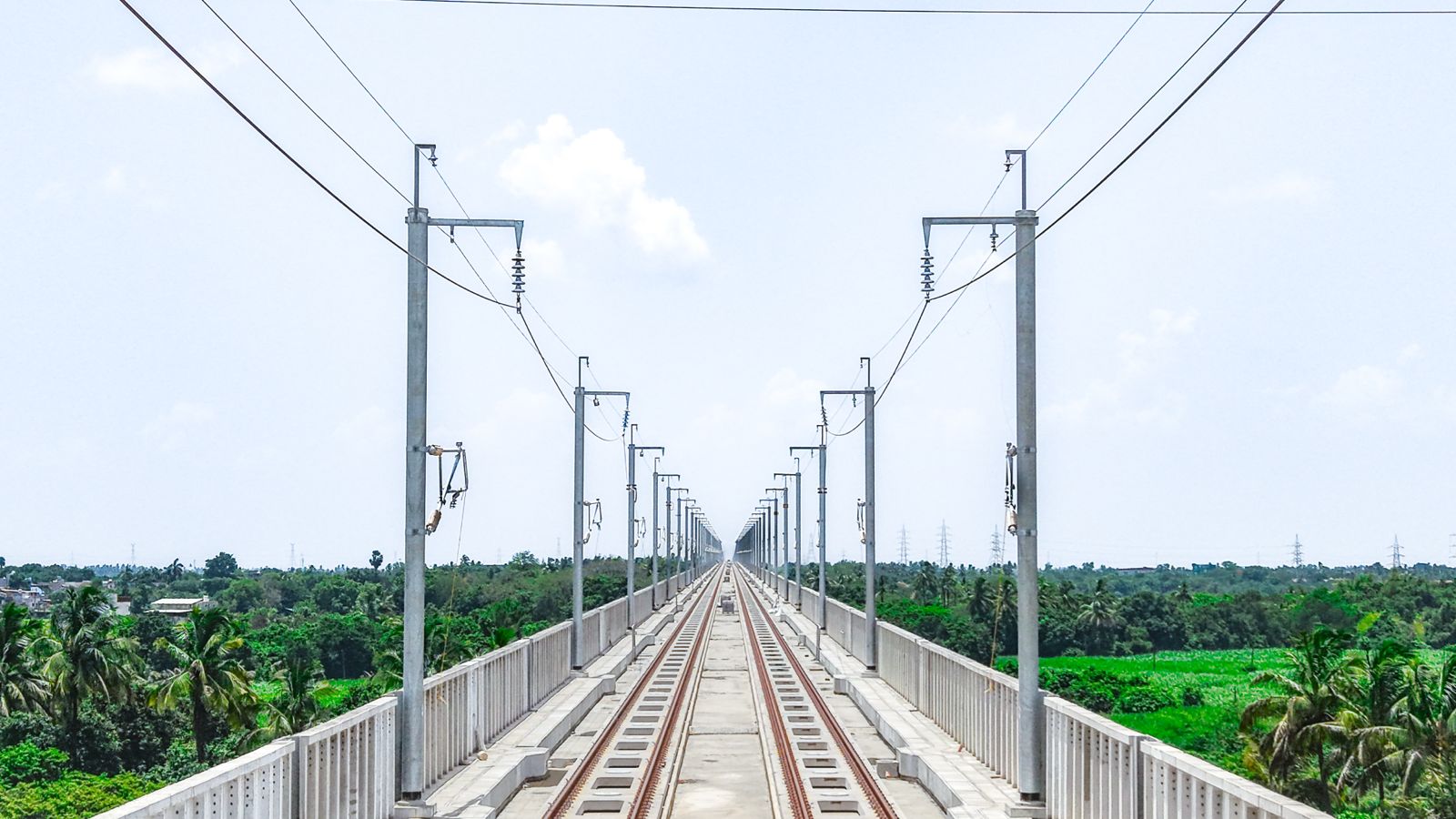
This technology is being introduced in India for the very first time and is specifically designed to provide a stable and uninterrupted power supply required for trains operating at very high speeds up to 320 km/hr.
Electricity will flow from the National Power Grid to specially designed Grid Substations and then to 14 Traction Substations strategically located along the corridor. Five (5) Traction Substations are located in Maharashtra (Mumbai, Thane, Virar, Boisar and Thane Depot), while the remaining nine (9) are located in Gujarat (Vapi, Bilimora, Surat, Bharuch, Vadodara, Anand, Mahemdabad, Ahmedabad and Sabarmati Depot).
These substations will feed power to different sections of the route, ensuring that as the Bullet Train moves from one section to another, the transition in power supply takes place seamlessly, without passengers even noticing it.
The corridor will also have 31 Switching Posts to ensure an uninterrupted power supply and enable rapid isolation of faults whenever required.
Apart from powering the Bullet Trains, 16 Distribution Substations are being constructed to provide electricity for stations, signalling systems, maintenance facilities and other operational infrastructure.
PRECISELY ENGINEERED NETWORK OF OVERHEAD ELECTRICAL WIRES
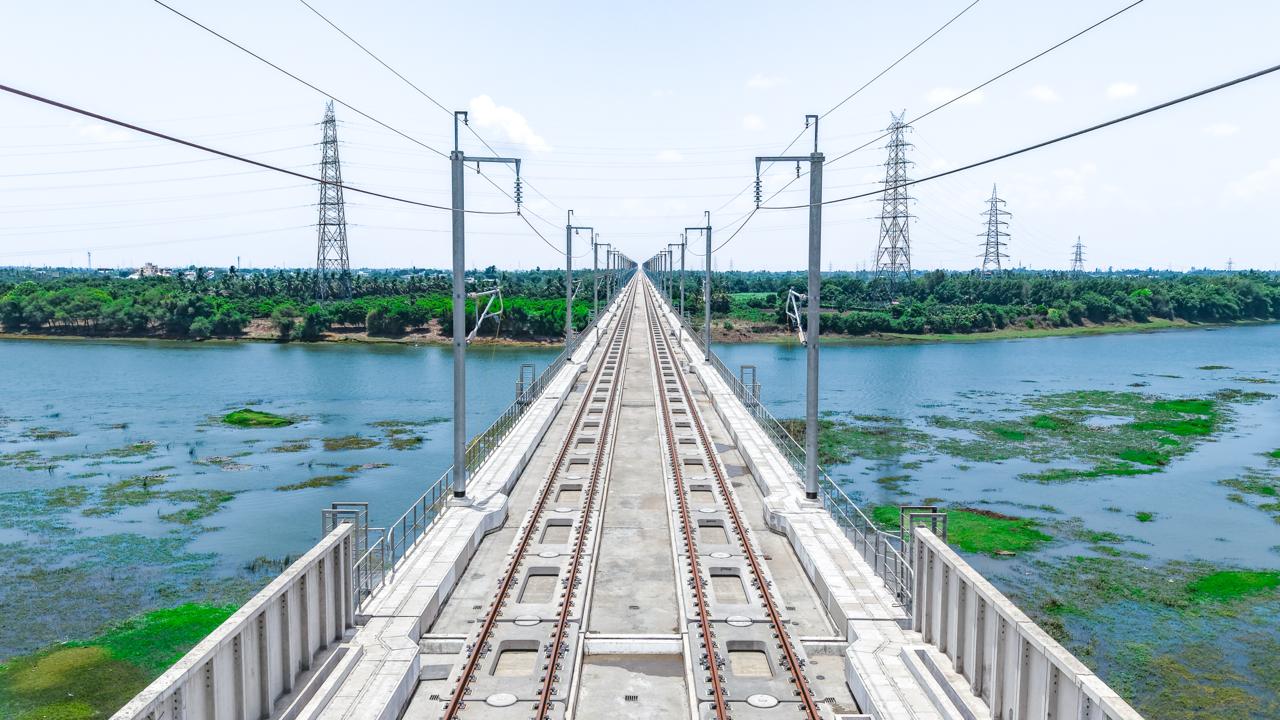
The trains will run on a precisely engineered network of overhead electrical wires, supported by nearly 22,000 steel masts and over 25,700 cantilever assemblies, spread across 1,125 track kilometres (including depots).
Standing between 10.5 and 14.5 metres high—roughly the height of a three- to four-storey building—these masts support an advanced compound catenary system, a technology being deployed in India for the first time.
To achieve the speeds up to 320 km/hr, every wire in this system is installed under precisely calculated mechanical tension, enabling the train's pantograph to collect electricity smoothly and continuously, without sparks, interruptions, or power fluctuations.
A STRONG PUSH FOR 'MAKE IN INDIA'
One of the biggest achievements of this project is the extensive indigenisation of critical electrical infrastructure.
Several major components of the high-speed electrification system are now being manufactured in India. These include all major transformers, cross arms mounted on OHE masts, as well as the Ground Wire, Protection Wire and Feeder Wire, which form the top electrical network of the overhead system.
In addition, a large number of components related to the Traction Power Supply System, other equipment of Distribution Power System and Electro-Mechanical (E&M) works are also being produced domestically.
This represents a significant transfer of advanced high-speed railway technology to Indian industry. Manufacturing these precision-engineered components within the country is strengthening India's industrial capabilities, creating specialised jobs, reducing dependence on imports, and building a robust domestic ecosystem for future high-speed rail projects.
The Mumbai–Ahmedabad Bullet Train Project is therefore not just bringing world-class technology to India—it is also enabling India to manufacture that technology at home.
EARLY EARTHQUAKE DETECTION: DESIGNED FOR SAFETY
Each of the 14 Traction Substations will be equipped with Early Earthquake Detection Seismometers, capable of detecting seismic activity and initiating protective actions within seconds, to stop the trains immediately in case of an earthquake.
In total, 28 seismometers are being installed—22 along the high-speed corridor at Traction Substations and Switching Posts, and 6 additional inland seismometers in earthquake-prone regions of Maharashtra and Gujarat.
Of the 28 seismometers, 12 will be installed in Maharashtra near Mumbai, Thane, Virar, Boisar, Kheda, Ratnagiri, Latur and Pangri, while 16 will be installed in Gujarat near Vapi, Bilimora, Surat, Bharuch, Vadodara, Anand, Mahemdabad, Ahmedabad, Adesar and Old Bhuj.
A SMART, CONTINUOUSLY MONITORED NETWORK
The entire electrical network will remain under real-time supervision from a centralised control centre. Automated protection systems will respond within fractions of a second to ensure safe and reliable operations, of the high-speed trains.
(Release ID: 2287686)
Visitor Counter : 395