Ministry of Environment, Forest and Climate Change
Union Environment Minister Shri Bhupender Yadav inaugurates Animal Taxonomy Summit 2026 on 111th Foundation Day of Zoological Survey of India
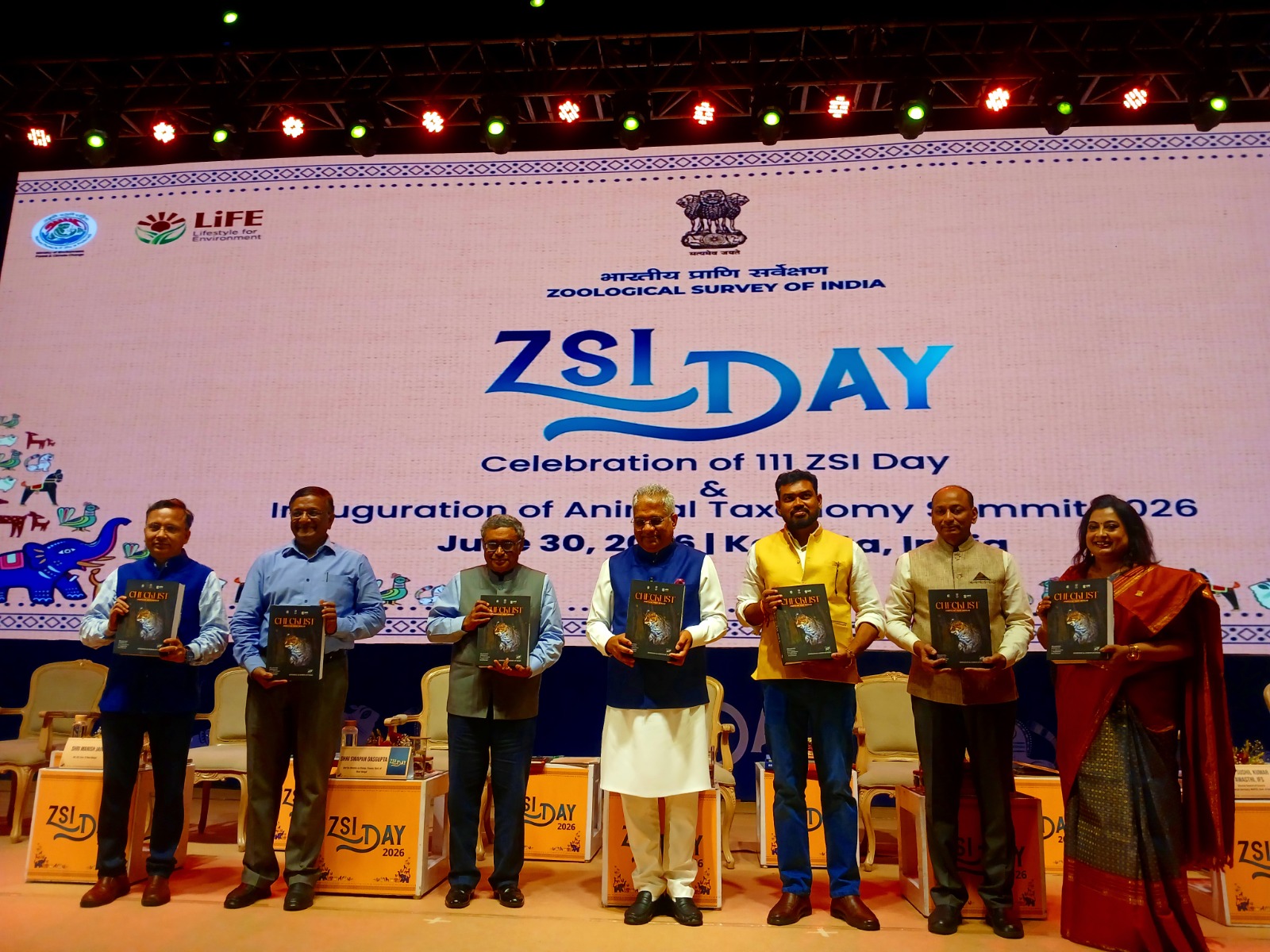
Union Minister highlights Scientific Research and Biodiversity Conservation as Pillars of Viksit Bharat; releases Animal Discoveries–2025 and Fauna of India Checklist Version 3.0
Posted On:
30 JUN 2026 12:00PM by PIB Kolkata
Kolkata, June 30, 2026
The Zoological Survey of India (ZSI) today celebrated its 111th Foundation Day with the inauguration of the Animal Taxonomy Summit (ATS) 2026, reaffirming India's commitment to biodiversity conservation, scientific research and sustainable development.
The three-day summit, being organised from 30 June to 2 July 2026, was inaugurated by Union Minister for Environment, Forest and Climate Change Shri Bhupender Yadav at a city auditorium today.
The inaugural ceremony was attended by Finance Minister, Government of West Bengal, Dr. Swapan Dasgupta as Guest of Honour, Minister for Forests and Environment, Government of West Bengal, Shri Manoj Oraon, Director, Zoological Survey of India, Dr. Dhriti Banerjee alongwith senior scientists, academicians, researchers and students from across the country.
Addressing the gathering, Shri Bhupender Yadav described Kolkata as one of India's foremost centres of scientific inquiry and noted that the ZSI has remained the cornerstone of animal taxonomy, faunal exploration and biodiversity conservation for more than a century.
The Union Minister said that documenting India's faunal diversity is fundamental to conservation, emphasizing that species cannot be protected unless they are scientifically identified and documented. He highlighted the invaluable contribution of ZSI in creating the scientific foundation necessary for evidence-based conservation and sustainable development.
He observed that although India occupies only 2.4 per cent of the world's land area, it harbours nearly 7 to 8 per cent of the world's recorded species, making it one of the world's 17 megadiverse countries. He said India's civilisational ethos has always recognised the intrinsic value of every living organism and stressed that sustainable development can only be achieved through effective biodiversity conservation.
Shri Yadav highlighted that under the leadership of Prime Minister Shri Narendra Modi, environmental governance has evolved from a regulatory framework to a proactive development model integrating conservation with economic progress. He referred to initiatives such as Mission LiFE, the Green Credit Programme, the International Solar Alliance, the Coalition for Disaster Resilient Infrastructure, the International Big Cat Alliance and the Global Biofuels Alliance as examples of India's global environmental leadership.
Sharing India's conservation achievements, the Union Minister noted that the successful tiger reintroduction programme at Sariska Tiger Reserve has increased the tiger population there from zero in 2008 to 56 tigers today. He informed that the Government is also exploring scientifically planned tiger reintroduction in suitable landscapes of West Bengal.
The Minister further highlighted that since 2014, the number of Tiger Reserves has increased from 47 to 58, the Asiatic Lion population has grown from 523 to 891, the number of Ramsar Sites has expanded from 24 to 100, while Eco-sensitive Zones have increased from about 1,865 sq km to over 68,500 sq km. These achievements, he said, reflect India's commitment to achieving ecological security while pursuing the vision of Viksit Bharat @2047.
He emphasized that the Ministry continues to work closely with State Governments, research institutions and scientific organisations to strengthen biodiversity conservation through collaborative research and innovation.
Speaking on the occasion, Dr. Swapan Dasgupta praised the remarkable scientific legacy of ZSI and acknowledged the dedicated efforts of generations of ZSI scientists in documenting India's extraordinary faunal diversity. He also appreciated the Government for preserving Kolkata as the headquarters of one of India's premier scientific institutions.
Shri Manoj Oraon highlighted the State's rich biodiversity and reaffirmed the Government's commitment towards its conservation. He also appreciated the enthusiastic participation of students and young researchers in biodiversity-related activities.
Dr. Dhriti Banerjee highlighted the institution's 111-year journey of scientific excellence and reaffirmed ZSI's commitment towards strengthening taxonomic research, biodiversity documentation and conservation through scientific innovation and collaboration.
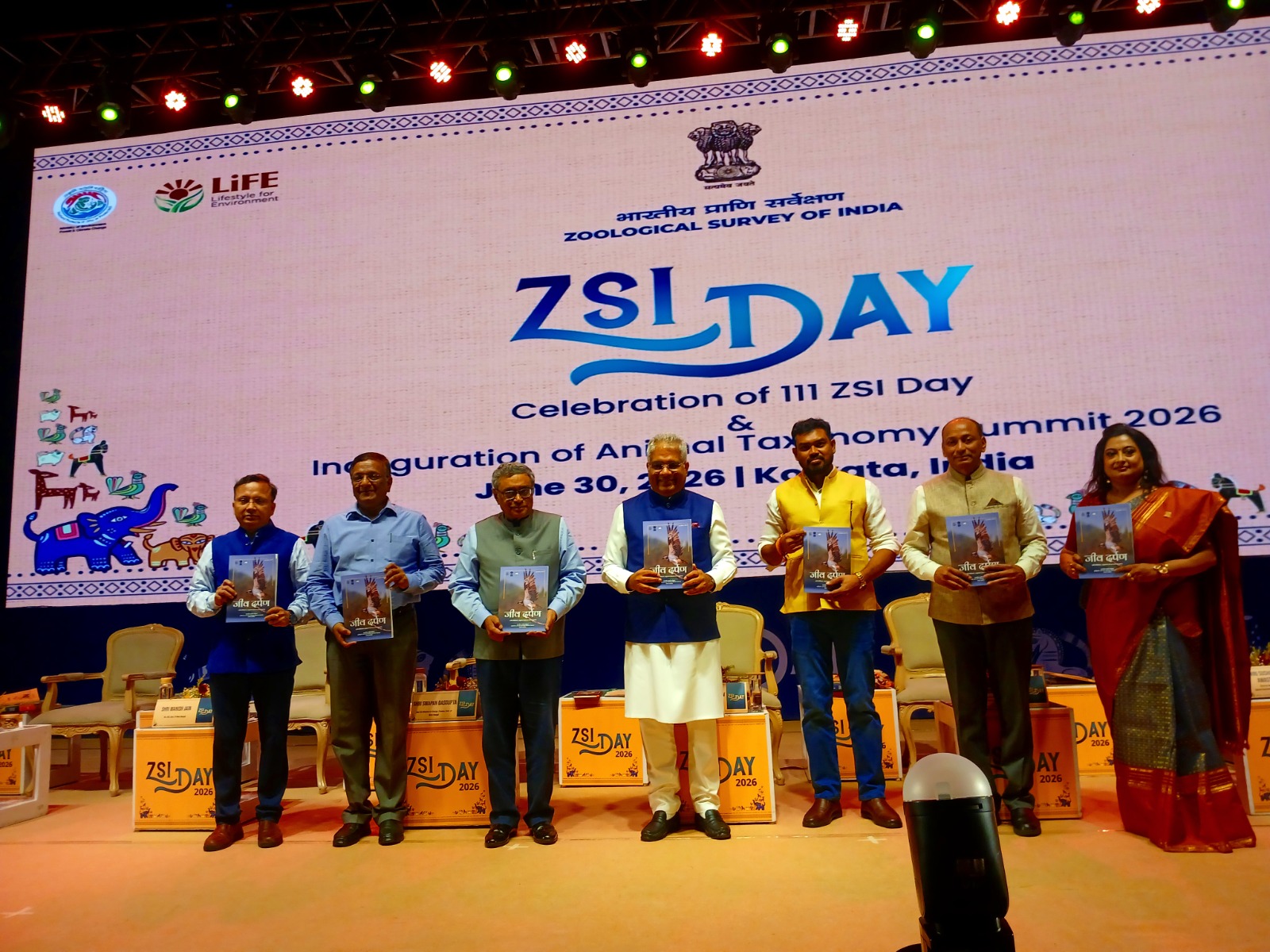
During the Foundation Day celebrations, the Union Minister released the flagship publications jointly prepared by the Zoological Survey of India and the Botanical Survey of India:
- Animal Discoveries–2025
- Plant Discoveries–2025
According to Animal Discoveries–2025, India has recorded:
- 483 species new to science
- 226 species recorded for the first time in India
- 709 new faunal records added to the national biodiversity database
With these additions, India's documented faunal diversity has reached 1,05,953 species, reaffirming its status as one of the world's leading megadiverse nations.
Among the States, Kerala recorded the highest number of new species (98), followed by West Bengal (76), Karnataka (67) and Arunachal Pradesh (65).
Several other important scientific publications were also released, including:
- Abstract Book: Animal Taxonomy Summit 2026 (English & Hindi)
- Records of the Zoological Survey of India – Special Issue on ATS 2026
- Fauna of West Bengal
- Jeev Darpan
- Faunal Diversity of Dry Deciduous Forests of West Bengal
- Faunal Diversity of Protected Areas of West Bengal, covering Bethuadahari, Ramnabagan, Ballavpur and Raiganj Wildlife Sanctuaries.
The celebrations also witnessed the release of Version 3.0 of the Fauna of India Checklist, prepared under the leadership of Dr. Dhriti Banerjee with contributions from more than 185 taxonomic experts.
The Union Minister also launched the PaleoIndia Portal, jointly developed by ZSI and the National Centre for Sustainable Coastal Management (NCSCM), Chennai, using geological datasets from the Geological Survey of India (GSI).
The digital platform documents fossil fauna across all 28 States and 8 Union Territories and currently hosts information on more than 5,000 fossil specimens spanning mammals, reptiles, birds, fishes, amphibians, molluscs, arthropods, foraminifera, echinoderms and ichnofossils. Equipped with a real-time data upload system, the portal will facilitate field-based documentation as well as citizen science participation.
As part of the 111th Foundation Day celebrations, ZSI also organised a nationwide 111-Hours Hackathon on Traditional Knowledge for Biodiversity Conservation.
The initiative brought together students, researchers and innovators to integrate indigenous ecological knowledge with modern technology for addressing conservation challenges.
A total of 360 teams registered for the competition, of which 192 teams qualified for the regional round conducted across ZSI's 16 Regional Centres. The winning teams advanced to the National Semi-Final at ZSI's Northern Regional Centre, Dehradun, while the top five teams competed in the Grand Finale held on 29 June 2026 at Dhano Dhanyo Auditorium, Kolkata.
Established in 1916 under the Ministry of Environment, Forest and Climate Change, the Zoological Survey of India continues to serve as the country's premier institution for faunal exploration, taxonomy and biodiversity research, playing a pivotal role in advancing scientific knowledge and conservation of India's rich biological heritage.
PZU4.jpeg)
*******
SSS/PK....
(Release ID: 2279277)
Visitor Counter : 998