Ministry of Commerce & Industry
National Traders’ Welfare Board Holds 10th Meeting in Hybrid Mode, Strengthening Digital Governance and Stakeholder Participation
NTWB Discusses Trade Facilitation Measures; DigiDukaan Set for Expansion Across Major Cities
Board Focuses on Enhancing Export Competitiveness and Strengthening Stakeholder Engagement Mechanisms
Posted On:
23 JUN 2026 7:54PM by PIB Delhi
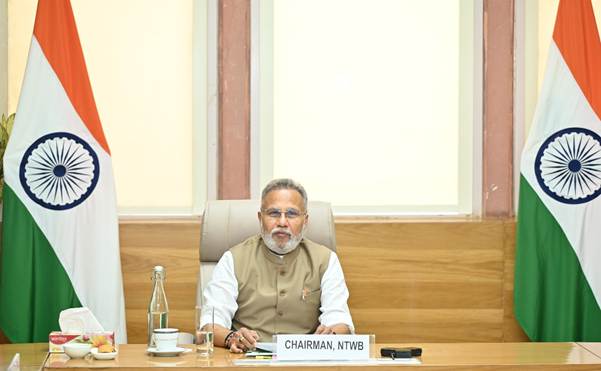
The 10th Meeting of the National Traders’ Welfare Board (NTWB) was held today in New Delhi, in hybrid mode. In line with the vision of the Government for technology-driven governance, optimum utilisation of public resources and minimisation of avoidable travel and expenditure, the meeting enabled participation of Members from across the country through both physical and virtual modes. The hybrid format ensured wider stakeholder participation and demonstrated the success of the Digital India initiative in strengthening governance through digital connectivity and citizen-centric innovation.
The Board reviewed various trader welfare and trade facilitation initiatives being implemented across the country. Members were apprised of the recently launched Rajasthan Trade Promotion Policy, which includes provisions relating to trade credit support, insurance assistance and promotion of digital commerce. The need to strengthen awareness and outreach regarding Central and State Government schemes for traders was also emphasised.
A detailed presentation was made on DigiDukaan, a digital commerce initiative aimed at enabling small retailers and kirana stores to participate effectively in the digital economy. The Board noted the successful launch of DigiDukaan in Jaipur on 19 June 2026 by Rajasthan Chief Minister Shri Bhajan Lal Sharma and appreciated the encouraging response received from traders. Plans for expansion to other major cities, including Mumbai and Bengaluru, followed by a nationwide rollout, were also discussed.
The Board was informed about ongoing efforts to strengthen coordination among trade associations, chambers of commerce and trader organisations across the country and to ensure effective representation of traders’ concerns before policy-making authorities. The Chairperson informed Members that 92 nationwide weekly virtual conferences and stakeholder interactions have been conducted so far to facilitate regular engagement between traders and officials from various Ministries and Departments.
During the deliberations, Members discussed a wide range of issues concerning traders, retailers, manufacturers, exporters and service providers. Key issues included GST rationalisation, simplification of compliance procedures, one-time settlement mechanisms for legacy business liabilities, export promotion measures, logistics and port infrastructure, plant quarantine and import facilitation, digital commerce adoption, ONDC integration, access to affordable credit, banking-related issues, merchant transaction charges, pension and social security measures for traders, and support for women entrepreneurs.
The Board also deliberated on issues relating to food safety compliance, ease of obtaining licences and registrations, strengthening of State Traders’ Welfare Boards, concerns arising from quick commerce platforms, promotion of local trade ecosystems, simplification of appellate and dispute resolution mechanisms, facilitation of MSME and service exports, and improved Centre-State coordination for effective implementation of trader welfare initiatives.
Special emphasis was laid on enhancing export participation by traders and MSMEs, increasing awareness regarding export opportunities, strengthening institutional support mechanisms and promoting India’s emergence as a globally competitive trading nation.
The Board further discussed the need for thematic committees and focused working groups to examine sector-specific issues and provide structured recommendations for policy intervention. Members agreed that continued engagement with stakeholders across sectors and regions would strengthen the effectiveness of the Board’s initiatives and facilitate timely resolution of issues affecting the trading community.
The meeting was chaired by Chairperson of NTWB Shri Sunil J. Singhi.
At the outset, the Board adopted a Resolution congratulating Prime Minister Shri Narendra Modi on becoming the longest-serving elected Prime Minister in India’s history. The Resolution acknowledged his continuous service of over twelve years as Head of Government and recognised his contribution towards good governance, inclusive development, economic reforms, national security and the vision of Viksit Bharat. The Board expressed confidence that under his leadership, India will continue its journey towards becoming a self-reliant, prosperous and developed nation.
Addressing the meeting, Chairperson Shri Sunil J. Singhi highlighted the transformative reforms undertaken during the past decade, including GST reforms, digital governance initiatives, financial inclusion through the JAM (Jan Dhan-Aadhaar-Mobile) Trinity, Direct Benefit Transfer (DBT), Ease of Doing Business measures, and initiatives aimed at empowering small businesses, traders and entrepreneurs. He noted that these reforms have significantly strengthened India’s economic ecosystem and expanded opportunities for trade and enterprise.
The meeting concluded with a reaffirmation of the Board’s commitment to creating an enabling environment for traders through policy advocacy, digital empowerment, Ease of Doing Business reforms, social security initiatives and stronger Centre-State coordination. The Board reiterated its resolve to work towards the welfare and empowerment of traders and their employees and to contribute actively to the vision of Viksit Bharat 2047.
The meeting was attended by non-official Members representing trade associations and States/UTs from across the country, along with ex-officio Members from various Ministries and Departments of the Government of India.
***
Abhijith Narayanan/ Garima Singh/ Ishita Biswas
(Release ID: 2277207)
Visitor Counter : 1031