Ministry of Environment, Forest and Climate Change
Hidden Pollinators of Gangetic Plains: Scientists from ZSI Discovers 2 New Hoverfly Species in India after a Century
Posted On:
03 JUN 2026 5:43PM by PIB Kolkata
Kolkata, June 3, 2026
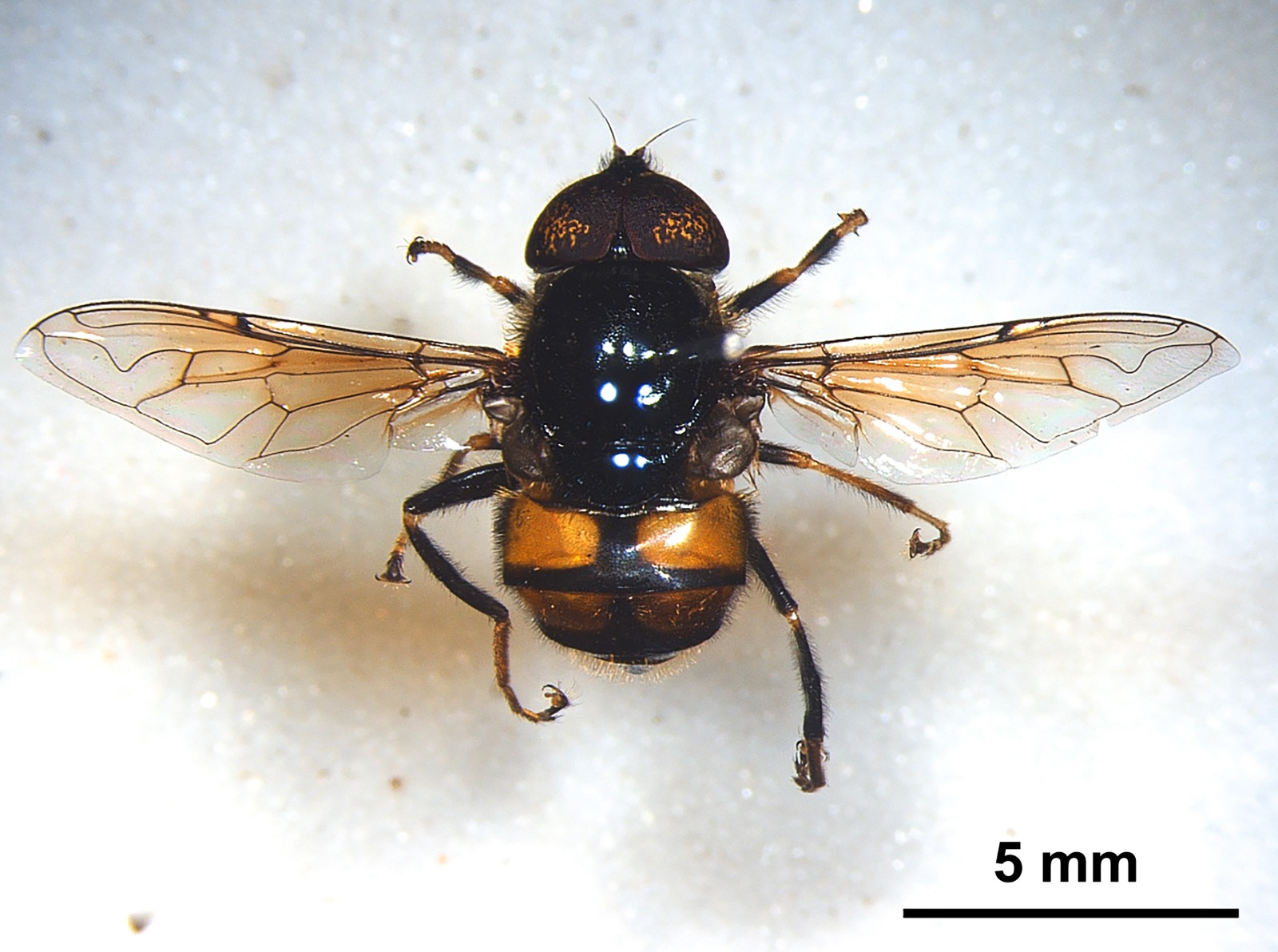
In a landmark discovery for Indian entomology, researchers from the Zoological Survey of India (ZSI) discovered two new species of hoverflies from the Gangetic Plains of West Bengal. Named Eristalinus sapphirinus and Eristalinus brunettii, these discoveries mark the first addition to India's known Eristalinus fauna in over a century, with the last major contribution dating back to 1923.
The study, published in the internationally reputed journal European Journal of Taxonomy, was conducted by researchers Smt Bristi Roy, Shri Oishik Kar, and Dr. Jayita Sengupta. The team worked under the mentorship of Dr. Dhriti Banerjee, Director of ZSI, and Dr. Atanu Naskar, Officer-in-Charge of the Diptera Section at ZSI Kolkata.
Unlocking a Century of Hidden Diversity
Hoverflies (Family: Syrphidae) are vital ecological contributors that visit flowers, aid in plant pollination, and support natural ecosystems. Despite their importance, they have largely escaped scientific attention in the region for the past 103 years.
The researchers examined specimens collected across several districts of West Bengal between 2022 and 2025. By employing an integrative taxonomic approach—combining detailed morphological investigations with mitochondrial COI DNA barcoding—the team confirmed that the flies represented two entirely distinct species previously unknown to science.
Eristalinus sapphirinus: Named for its striking, sapphire-blue metallic coloration.
Eristalinus brunettii: Named in honour of Enrico Adelelmo Brunetti, acknowledging his immense historical contributions to the study of Indian Diptera (flies).
Key Highlights of the Study
A Historic Discovery: Marks the first breakthrough in India's Eristalinus hoverfly records since 1923, expanding the known biodiversity of the region.
Cutting-Edge Methodology: The research resolved hidden diversity by analyzing COI DNA barcodes through four internationally recognized species-delimitation methods (ABGD, GMYC, ASAP, and PTP) alongside traditional morphology.
Dual Ecological Role: Members of the Eristalinus genus support ecosystems in two distinct life stages. As adults, they act as critical pollinators for wild and cultivated plants. As larvae (commonly known as "rat-tailed maggots"), they develop in aquatic habitats where they decompose organic matter and recycle essential nutrients.
Everyday Landscapes: The study proves that significant, undocumented biodiversity still thrives outside of protected reserves and deep within human-modified habitats like the Gangetic Plains.
Dr. Dhriti Banerjee, Director, ZSI said, "The discovery reminds us that biodiversity does not survive only in remote forests. Even highly human-modified landscapes like the Gangetic Plains continue to harbour unknown life forms. Nature still has countless stories waiting to be discovered,".
According to Dr Atanu Naskar, Officer-in-Charge, Diptera Section, ZSI Kolkata, "Many hoverfly species are remarkably similar in appearance, making accurate identification challenging. By integrating traditional morphological taxonomy with DNA barcoding and modern species-delimitation approaches, we were able to confidently establish the distinct identity of these two new species."
Smt Bristi Roy, the Lead Researcher said, "Pollinating insects form the foundation of healthy ecosystems, and hoverflies are among their significant yet least recognized members. The discovery of these two new species after a century highlights how much of our insect biodiversity remains undocumented, even in landscapes we encounter every day."
********
SSS...
(Release ID: 2268500)
Visitor Counter : 510