Ministry of Jal Shakti
NMCG Powers Capacity Growth and Infrastructure Milestones in FY 2025–26
Posted On:
21 APR 2026 7:38PM by PIB Delhi
The National Mission for Clean Ganga (NMCG) has made notable progress in strengthening sewage treatment infrastructure and pollution abatement measures along the Ganga and its tributaries during the financial year 2025–26. The achievements during the year reflect a focused and sustained effort toward enhancing treatment capacity, completing key projects, and addressing critical pollution hotspots across multiple states.
During FY 2025–26, a cumulative treatment capacity of 538.03 MLD was added through 18 projects across Uttar Pradesh, Uttarakhand, Jharkhand, West Bengal, and Bihar. Notably, 28 sewage treatment plants (STPs) were completed during the year, marking a significant increase compared to 22 STPs completed in the previous year. These projects represent a substantial investment of nearly ₹4700 crore, underscoring continued efforts towards strengthening sewage treatment infrastructure and reducing pollution in the Ganga basin.
Uttar Pradesh emerged as a key contributor to these achievements, with multiple projects implemented across Moradabad, Shuklaganj, Varanasi, Vrindavan, Prayagraj, and Agra, significantly strengthening sewage treatment infrastructure in the state. Among these, the project in Varanasi, focused on the Assi–BHU area, added the highest capacity of 55 MLD. In Prayagraj, a major initiative involving the interception and diversion of 13 drains along with the augmentation of the Salori STP created an additional 43 MLD capacity at a sanctioned cost of ₹331.75 crore.
|
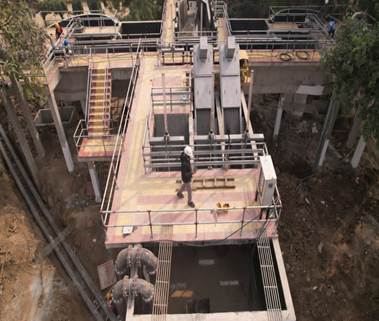
55 MLD STP at Assi BHU, Varanasi
|
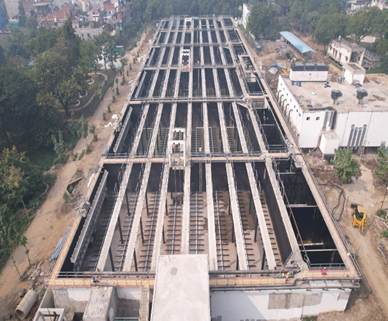
55 MLD STP at Assi BHU, Varanasi
|
Moradabad also witnessed substantial progress with pollution abatement works for the Ramganga, contributing 25 MLD capacity, while Shuklaganj in Kanpur added 5 MLD through interception, diversion, and sewage treatment works.
|
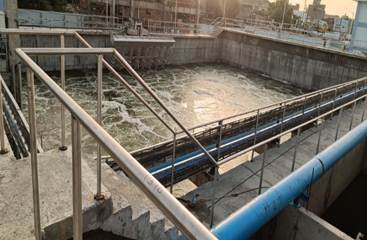
25 MLD STP at Moradabad
|
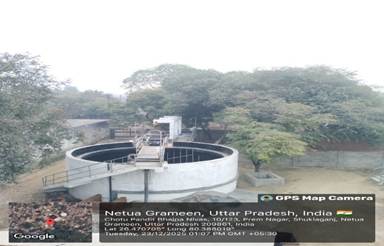
5 MLD STP at Shuklagunj
|
In Vrindavan, I&D and STP works further enhanced capacity by 13 MLD. A significant addition was also recorded in Agra, contributing 166 MLD capacity, further augmenting the state’s overall sewage treatment capability. Together, these projects, including those implemented under the Hybrid Annuity Model (HAM), reflect a comprehensive and multi-city effort to improve wastewater management and river rejuvenation across Uttar Pradesh.
|
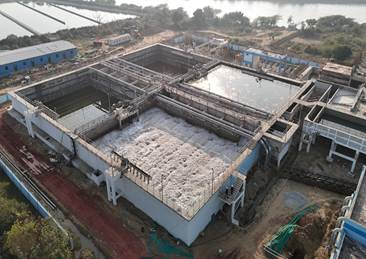 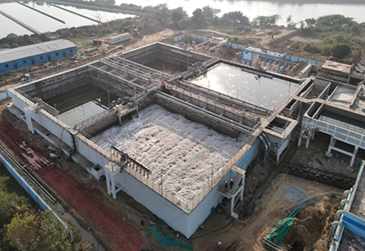
31 MLD STP at Agra 100 MLD STP at Agra
|
|
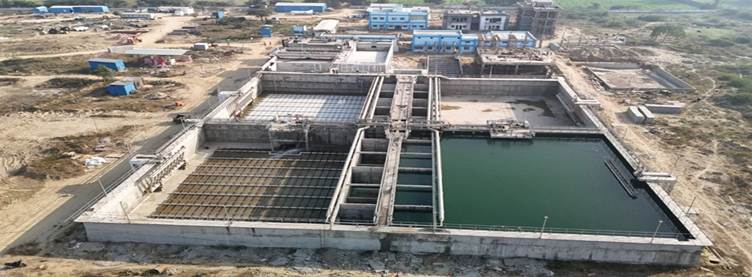
35 MLD STP at Agra
|
In Uttarakhand, key projects across Udham Singh Nagar, Haridwar, Dehradun, and Muni ki Reti contributed to improving wastewater management. The Udham Singh Nagar project addressed multiple polluted river stretches, adding 10.3 MLD capacity, while Dehradun’s Sapera Basti project added 15 MLD. Haridwar witnessed smaller but important decentralized interventions across locations such as Jagjeetpur, Sarai, Rishikesh, Srinagar, and Devprayag, collectively contributing 0.23 MLD capacity. Muni ki Reti further added 11 MLD capacity, strengthening infrastructure in the region.
|
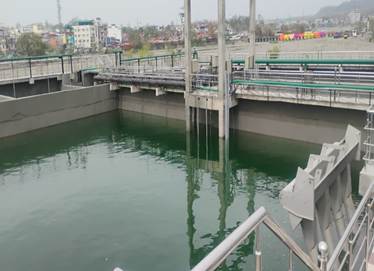 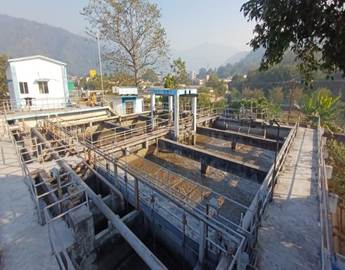
8 MLD STP at Muni ki Reti 3 MLD STP at Muni ki Reti
|
Jharkhand also registered steady progress with the completion of the I&D and STP project in Phusro, which added 14 MLD of treatment capacity at a sanctioned cost of ₹61.05 crore. This marks an important step in expanding sewage treatment infrastructure in the state and addressing pollution in critical stretches.
West Bengal demonstrated substantial progress with projects completed in Jangipur, Maheshtala, and Chakdah, significantly strengthening pollution abatement efforts in the lower Ganga basin. The Maheshtala project emerged as a major contributor, adding 35 MLD capacity at a sanctioned cost of ₹286.97 crore.
|
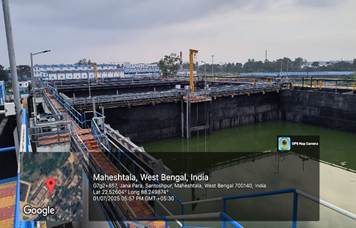 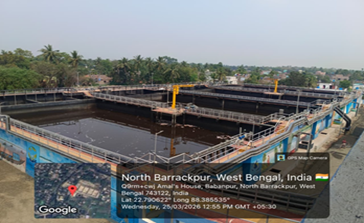
35 MLD STP at Maheshtala North Barackpore STP
|
In Jangipur, pollution abatement works added 13 MLD capacity with an investment of ₹68.47 crore, while the Chakdah project contributed an additional 15 MLD at a cost of ₹121.66 crore through interception, diversion, and STP works. North Barrackpore further added 30 MLD capacity, strengthening efforts in the lower Ganga basin. Together, these initiatives highlight a comprehensive effort to enhance sewage treatment capacity and improve river water quality in West Bengal.
In Bihar, projects in Digha, Kankarbagh, and Bhagalpur also contributed significantly to capacity creation, adding 30 MLD, 35 MLD, and 22.5 MLD respectively. These projects play a crucial role in addressing urban wastewater challenges and improving river water quality in the state.
|
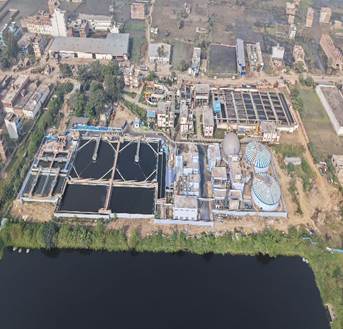 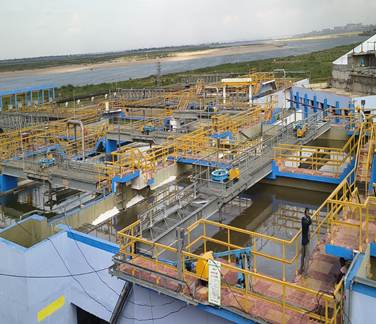
Kankarbagh Digha
|
|
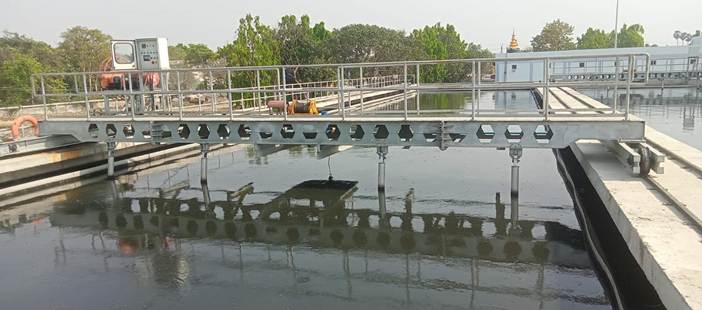
Bhagalpur STP
|
Further, to strengthen on-ground monitoring and enable timely interventions, the Namami Gange Programme has also introduced a digital tool called the Drain Dashboard to track drains discharging into the river. The dashboard allows to monitor the tapping status of drains, diversion of sewage to Sewage Treatment Plants (STPs), and related flow conditions. It helps identify pollution risks in real time while improving accountability, transparency, and responsiveness.
A Ganga Pulse Public Portal has been developed by NMCG to strengthen the monitoring framework for STP infrastructure ensuring transparency and accountability. The digital system is a monitoring platform that displays real-time data from STPs across the five Ganga basin states—Uttarakhand, Uttar Pradesh, Bihar, Jharkhand, and West Bengal. It shows each site’s basic details along with four key parameters: pH, BOD and TSS. The portal presents readings at the entry point (Inlet) and the discharge point (Outlet) to show how wastewater quality improves after treatment. This helps assess treatment efficiency and compliance, ensuring transparent and effective monitoring under the Namami Gange programme. The portal has been launched in public domain to enhance accountability and ensuring that infrastructure created is operating effectively.
Overall, the progress achieved during the year reflects a strategic and regionally balanced implementation approach. With a strong pipeline of ongoing projects and sustained emphasis on timely execution, NMCG continues to advance towards its goal of a cleaner and healthier Ganga. The substantial capacity created during this period not only addresses existing environmental challenges but also builds resilience to meet future demands arising from urban growth along the river basin.
***
AMK
(Release ID: 2254266)
Visitor Counter : 1686