Ministry of Health and Family Welfare
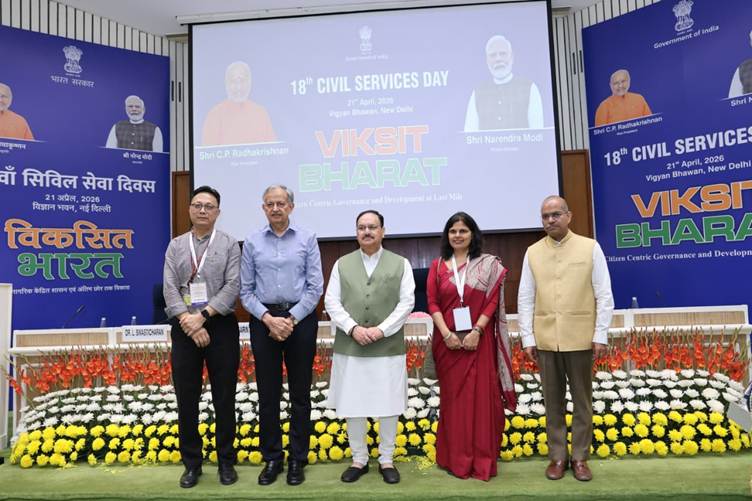
Union Health Minister Shri JP Nadda chairs session, “Addressing Non-Communicable Diseases in India: From Preventive to Care” during 18th Civil Services Day Celebrations in New Delhi
Shri Nadda Highlights India’s Shift to Holistic Health Policy to Combat Rising Non-Communicable Diseases; From Policy to Practice, Centre Accelerates NCD Control Through Expanded Infrastructure, Mass Screenings and Nationwide Lifestyle Campaigns
Through Massive Nationwide Screening Drive, 41.5 Crore Screened for Hypertension, 41.3 Crore for Diabetes, 35.3 Crore for Oral Cancer and 16.5 Crore for Breast Cancer: Shri Nadda
Shri Nadda Highlights Expansion of Secondary and Tertiary Care: 880 Medical Colleges, 23 AIIMS and ₹64,000 Crore Boost to Health Infrastructure
Shri Nadda Emphasizes 70% of NCD Risk Factors Are Lifestyle-Driven; Echoes Prime Minister’s Call for Prevention, Healthier Diets and Active Living
Union Health Secretary Highlights India’s Multi-Pronged NCD Strategy; Calls for Prevention, Behavioural Change and Collective Action
Posted On:
21 APR 2026 6:37PM by PIB Delhi
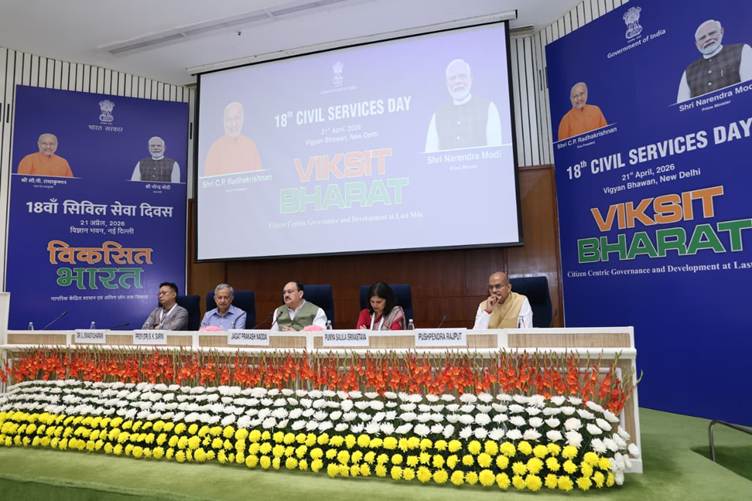
Union Health and Family Welfare Minister Shri Jagat Prakash Nadda chaired a session titled “Addressing Non-Communicable Diseases in India: From Preventive to Care” during the 18th Civil Services Day celebrations, here today. Union Health Secretary, Smt. Punya Salila Srivastava was also present.
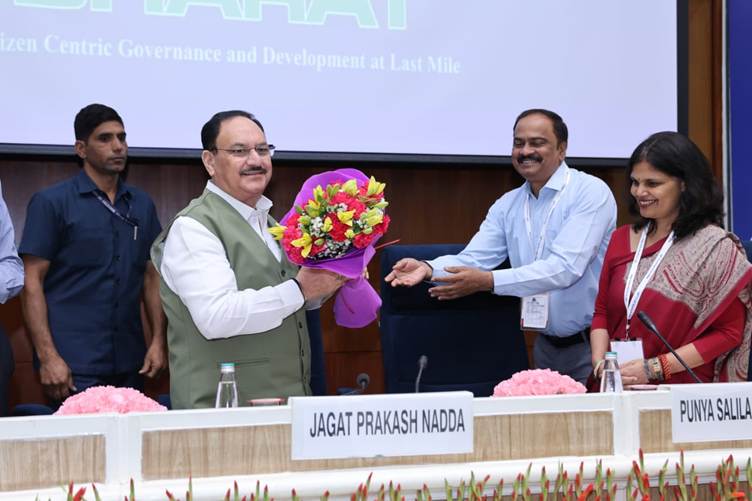
Addressing the gathering, Shri JP Nadda emphasized the importance of the theme of the session and underlined the transition in India’s healthcare approach from preventive to curative care. He stated that “in 2017 we came out with a holistic and inclusive health policy, where we focused on preventive, promotive, curative, geriatric, rehabilitative and palliative care.”
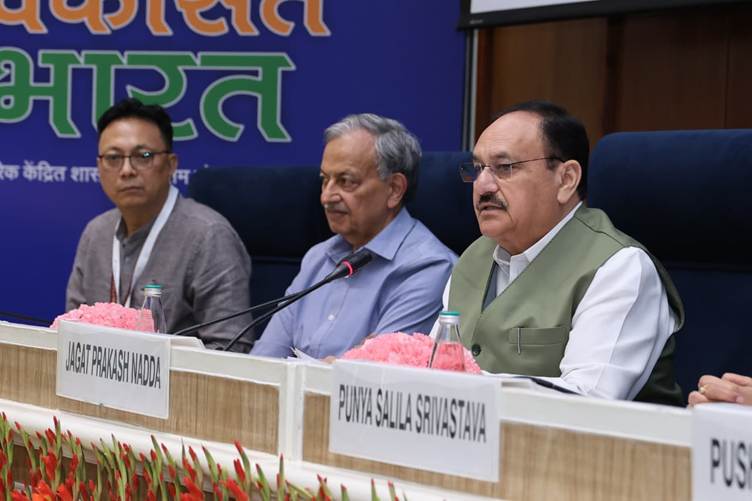
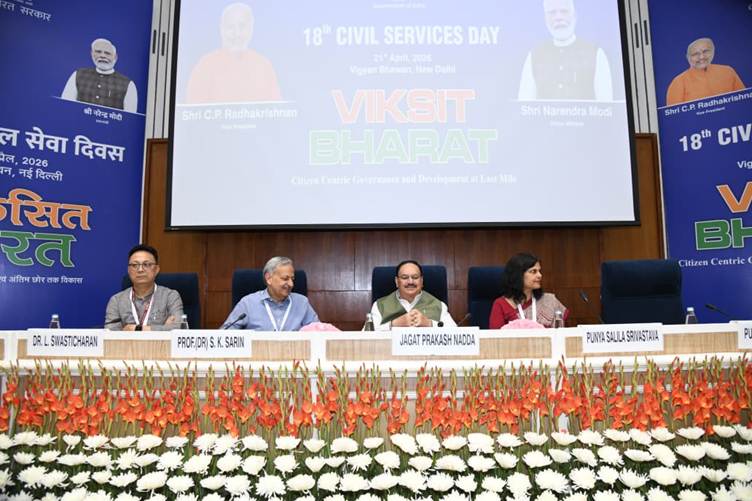
Shri Nadda highlighted that the country has performed very well on the front of the communicable diseases while non-communicable diseases (NCDs) need more focus as the outcome in NCDs takes more time and there is a knowledge gap that needs to be addressed.
Recognising the issue of NCDs in the country, Shri Nadda stated that “since 60% of total deaths in the country take place due to NCDs, the area is being focused on and prioritized.” He added that “in the National Program for Prevention and Control of NCDs, the focus has been on Strengthening of infrastructure, Early diagnosis and early detection, Health promotion and Management of the disease and timely referral.” “Health promotion is certainly one of the major areas, and management of the disease and timely referral are also very important. So these are the profile issues which we are trying to address as far as non-communicable diseases are concerned”
Underlining the government’s efforts, Shri Nadda stated that “in the past six years, we have been able to set up more than 1.85 lakh Ayushman Arogya Mandirs which are the first contact point between the 1.45 billion people and the health institutions. Each of these Ayushman centres has one ASHA worker, and wherever possible, other frontline health staff.” He further added that “in 2017, we decided that we would go for voluntary and enhanced screening.”
Shri Nadda also highlighted the positive outcomes of these efforts and stated that “we have developed around 107 non-communicable disease clinics at district-level points and 233 cardiac care units.” He also added that “in this budget itself it has been announced that every district will have a day care cancer centre.”
The Union Health Minister underscored the large-scale screening efforts to address NCDs in the country. He emphasized that “since 2017, 41.5 crore people have been screened for hypertension, out of which 7.1 crore have been diagnosed and 5.7 crore people are notified.” He added that “we have tried to ensure early detection to help make India healthy. For example, 41.3 crore people have been screened for diabetes, out of which 4.7 crore people have been found diabetic and 3.4 crore people are being treated. For oral cancer, 35.3 crore people have been screened so far and 2.3 lakh people have been detected with oral cancer and around 2 lakh people are being treated. Over 16.5 crore have been screened for breast cancer.”
Shri Nadda also added that “8.73 crore screenings have been done for cervical cancer, and 1.1 lakh women have been diagnosed with cervical cancer out of which about 97,000 are being treated. He also underlined the proactive role of the government in detecting cancer at an early stage, reducing the burden of cardiovascular diseases, renal failure, liver issues and other complications.
Shri Nadda highlighted the efforts taken in consolidating and expanding secondary and tertiary care and stated that “today we have 880 medical colleges, a number much more as compared to the past, 23 All India Institutes of Medical Sciences (AIIMS) out of which 20 are already operationalized. In these, we have full-fledged departments of cardiology and full-fledged super-speciality cancer departments. “Under the Health Infrastructure Mission, we have allocated ₹64,000 crores for filling up the gaps between primary and secondary health care”, he added.
Shri Nadda emphasized that “teleconsultation is one area where eSanjeevani has been very important. It is provided both provider-to-provider and patient-to-provider. When we say provider-to-provider, the Community Health Officer at the health and wellness centre facilitates and translates the interaction, gives photographs, and enables live interaction with the patient for the specialist. In the same way, we also see patient-to-doctor communication, where the patient interacts directly with the doctor through the platform.” “So far, over 46.4 crore patients have taken teleconsultation services and we are trying to address the disease burden of rural areas through this.”
Shri Nadda also acknowledged that “nearly 70% of NCD risk factors are related to lifestyle and by concentrating on the preventive part, we can address a very large portion of the burden that we are working on”. He underscored the different initiatives of the government to address lifestyle diseases, like “Eat Right India” and “Fit India”.
He reiterated the Hon’ble Prime Minister’s clarion call to reduce 10% of our oil consumption, and to use less salt and sugar. He also emphasized the importance of Information, Education and Communication and highlighted that significant awareness is being created in the area of tobacco and underscored that “India is one of the leaders in legislation on cigarettes and other tobacco products and in smoking, the reduction has been noticeable. But there are other types of tobacco consumption which still need to be addressed.”
Shri Nadda also talked about the importance of physical activity and Government initiatives catering to the same. He also emphasized the importance of sensitization and stated that “sensitization will start from ourselves. We must understand that our lifestyle is central, and we must sensitize ourselves, our family members, and our community for this.” He also mentioned how the government is expanding and consolidating yoga to promote physical and mental well- being.
Addressing the gathering, Smt. Punya Salila Srivastava, focused on India’s strategy to address non-communicable diseases (NCDs) and the importance of tackling obesity. She highlighted that “India is witnessing a shift from communicable to non-communicable diseases such as cardiovascular conditions, cancer, diabetes and respiratory illnesses, being addressed under the NP-NCD through a multi-pronged, whole-of-government and whole-of-society approach, including awareness, population-based screening and continuum of care.”
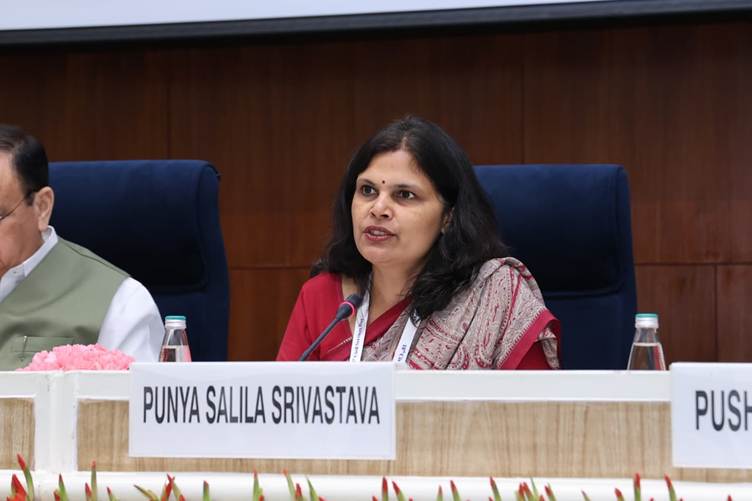
She further highlighted key initiatives such as the 75x25 initiative and Swasth Nari, Sashakt Pariwar Abhiyan, emphasizing prevention, early detection and community engagement. Identifying obesity as a major driver of NCDs, she noted that NFHS-5 data shows 24% of women and 23% of men are overweight or obese, with urban trends and rising childhood obesity being key concerns. She stated that unhealthy dietary patterns are responsible for this and cited a study by the Indian Council of Medical Research pointing to high intake of fats, oils and processed foods.
Highlighting national efforts, she noted that the “Hon’ble Prime Minister has called for collective action against obesity, including reducing edible oil consumption.” She added that the Ministry, with support from the Food Safety and Standards Authority of India, Rashtriya Bal Swasthya Karyakram and awareness campaigns, is promoting behavioural change through campaigns, outreach and school-based initiatives. In her concluding remarks, she emphasized workplace wellness, healthy lifestyles and regular screening, reiterating that small daily changes can lead to significant public health gains.
Prof. (Dr.) S. K. Sarin, Director, Institute of Liver and Biliary Sciences (ILBS), emphasized the need for early screening and preventive action to reduce disease burden and improve overall health outcomes.
Dr. L. Swasticharan, Dy. Director General, Dte.GHS, Sh. Pushpendra Rajput, Joint Secretary, MoHFW and senior officers of the Union Government were also present on the occasion.
****
SR
HFW/HFM Civil Services Day Address/21 April 2026/1
(Release ID: 2254227)
Visitor Counter : 2041