Ministry of Finance
EMI and AEO Linkage to Strengthen India’s Trade Competitiveness: Shri Yogendra Garg, Member (Customs)
CBIC - CII outreach programme on ‘EMI Scheme and its linkage with AEO’ held in Mumbai
Posted On:
17 APR 2026 7:11PM by PIB Mumbai
: Mumbai, April 17, 2026
Shri Yogendra Garg, Member (Customs) and Special Secretary, Central Board of Indirect Taxes and Customs (CBIC), Union Ministry of Finance, virtually addressed the CBIC - CII outreach programme on the EMI Scheme and its linkage with AEO, which was held in Mumbai today. Shri Garg underscored the importance of ‘trust-based customs reform’ designed to transform trade facilitation.
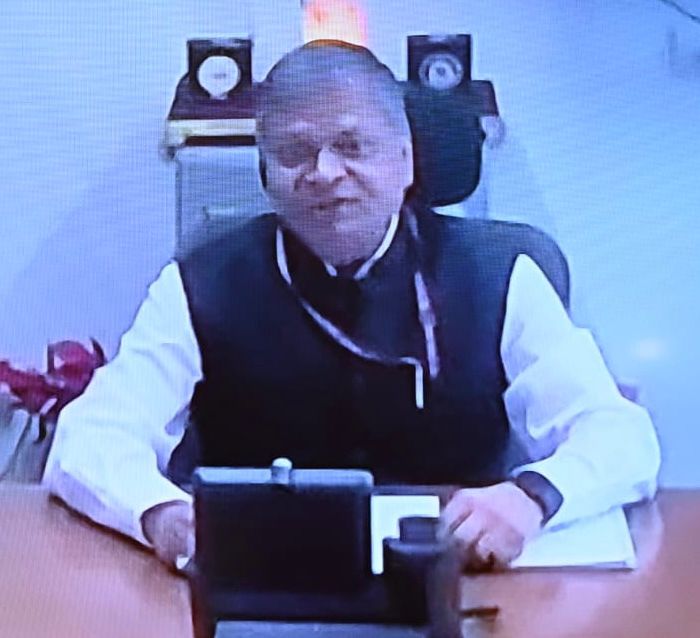
Delivering the keynote address, Shri Garg highlighted that the Eligible Manufacturer Importer (EMI) Scheme enables approved manufacturer importers to defer payment of customs duties, allowing consolidation and settlement at the end of a monthly cycle instead of transaction-wise payments. This significantly improves cash flow, reduces working capital pressures, and accelerates clearance of goods by removing delays linked to duty payments.
The Member (Customs) and CBIC’s Special Secretary noted that the EMI scheme serves as a facilitative pathway into the AEO programme, encouraging compliant businesses to evolve into globally recognized trusted trade partners, while aligning with global best practices and strengthening ease of doing business and domestic manufacturing. Shri Garg further stated that the scheme, operational from April 1, 2026 to March 31, 2028, has been designed as a transition window for manufacturers to progressively upgrade to Authorised Economic Operator (AEO) levels. Supported by a dedicated helpdesk from the Directorate of International Customs, the initiative addresses liquidity constraints while maintaining the integrity of risk-based customs systems.
Emphasizing a shift towards a more trust based engagement between customs and trade, Shri Garg encouraged industry to actively participate and move towards higher compliance standards. He added that the reform not only supports the Make in Bharat vision, including supporting the broader goal of faster clearances, with an aspiration towards achieving near real-time processing. This will also help position India as a proactive contributor to global trade facilitation through a balanced focus on liquidity, compliance, and trust, he stated.
The Chief Commissioner of Customs, Mumbai Customs Zone–II, Shri Vimal Kumar Srivastava, highlighted the EMI Scheme as a strategic measure that will support Make in India initiative, enhance Ease of Doing Business (EoDB) and reduce transaction costs for manufacturer-importers. Noting its strong linkage with the AEO programme, he described EMI as a key enabler for building compliance and guiding businesses toward globally trusted trader status, thereby enhancing the efficiency and competitiveness of India’s trade ecosystem.
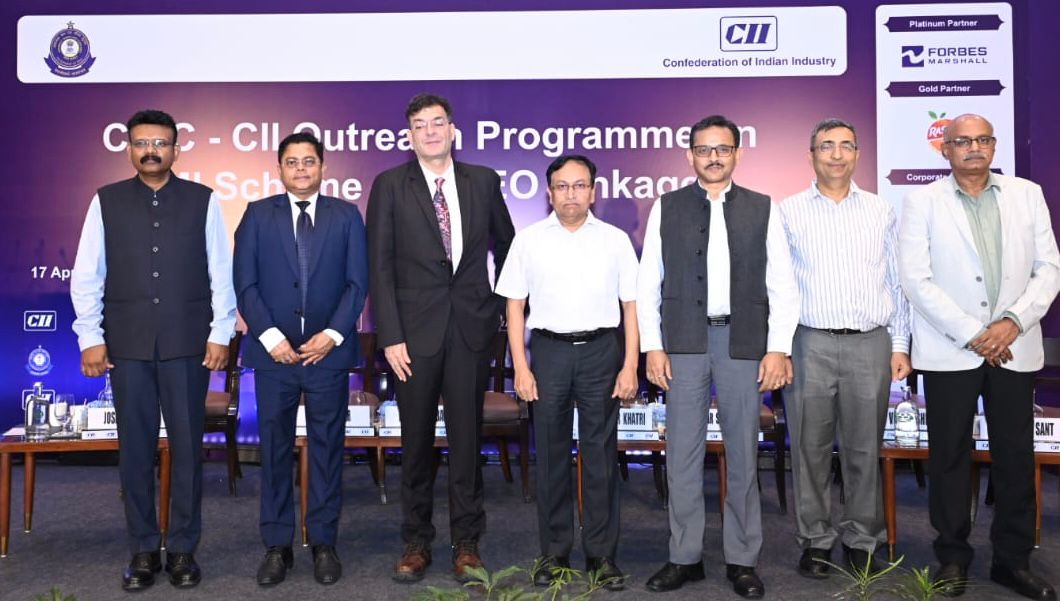
The Chief Commissioner, Directorate of International Customs, Delhi, Shri Akhil Kumar Khatri, presented a detailed briefed on the AEO programme as India’s trade facilitation framework, built on trust, transparency, and strong compliance. He said that EMI serves as a pathway, enabling businesses to progressively transition into the AEO programme and achieve higher levels of trade facilitation. He spoke in detail about the thresholds for EMI application, eligibility criteria, compliance requirements and the proactive grievance redressal mechanism.
Commissioner, Directorate of International Customs, Delhi, Shri Rajesh Kumar, highlighted that the EMI Scheme enables eligible manufacturer importers to “clear first, pay later” with up to 30 days’ duty deferment, significantly improving liquidity and EoDB. He noted that the scheme broadens access beyond AEO entities, accelerates clearances, and strengthens supply chain efficiency. Importantly, it also serves as a stepping stone for firms to transition into the AEO Programme and achieve globally recognized trusted trader status.
Shri Piruz Khambatta, Chairman, CII National Committee, delivered the welcome address and underscored that recent customs reforms, particularly the duty deferment framework and the EMI scheme, mark a shift toward a facilitative, technology-driven, and trust-based trade ecosystem. Shri Khambatta highlighted the role of CBIC, Customs, and the Ministry of Finance in advancing measures such as “clear first, pay later,” improving liquidity, easing compliance, and supporting manufacturing. He noted that EMI serves as a bridge to the AEO programme, enabling businesses to progress toward globally recognized trusted trader status, and emphasized that these reforms will strengthen India’s global trade competitiveness with active industry participation.
***
SC/PK
Follow us on social media:  @PIBMumbai
  /PIBMumbai
  /pibmumbai
  pibmumbai[at]gmail[dot]com
  /PIBMumbai
  /pibmumbai
(Release ID: 2253097)
Visitor Counter : 90