Ministry of Electronics & IT
BHASHINI Sanchalan/Seva Workshop on Pali Language Held at University of Delhi to Advance Minority Language AI Ecosystem
Posted On:
10 APR 2026 8:32PM by PIB Delhi
In a significant step towards strengthening minority language preservation through AI-led innovation, the BHASHINI Sanchalan/Seva Workshop on Pali Language Preservation and Digital AI Model Development was conducted on 10 April 2026 at the Faculty of Arts, University of Delhi. The workshop was organised by the Digital India BHASHINI Division (DIBD) under the Ministry of Electronics and Information Technology (MeitY) in collaboration with the Centre for Advanced Studies in Buddhist Studies, University of Delhi.
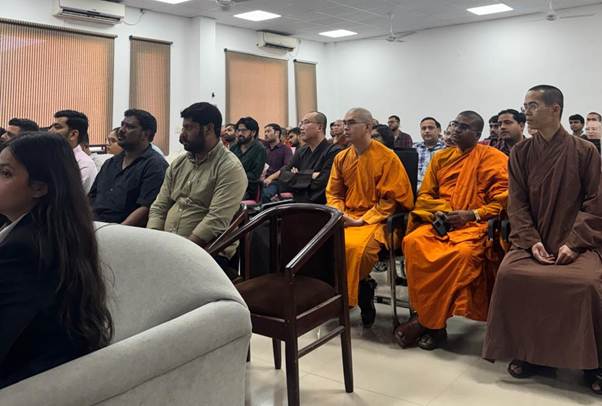
The workshop placed focused emphasis on the Pali language, an ancient Middle Indo-Aryan language that serves as the primary medium of early Buddhist texts and the Tripitaka, forming the foundation of Buddhist knowledge systems and philosophical traditions. Recognised for its historical, literary, and cultural significance, and regarded as a classical language in the academic and literary sense, Pali remains central to the preservation and understanding of India’s Buddhist heritage. As a low-resource language in the context of AI, it requires structured efforts in digitisation, dataset creation, and linguistic validation. The initiative aligns with the broader mandate of the Ministry of Minority Affairs in supporting the preservation and promotion of minority and heritage languages.The Centre for Advanced Studies in Buddhist Studies, University of Delhi, contributed as a key academic and knowledge partner, providing domain expertise and scholarly inputs essential for ensuring linguistic accuracy and cultural contextualisation in language AI initiatives. This collaboration reflects ongoing efforts to support research, knowledge development, and the broader ecosystem for low-resource and heritage languages.
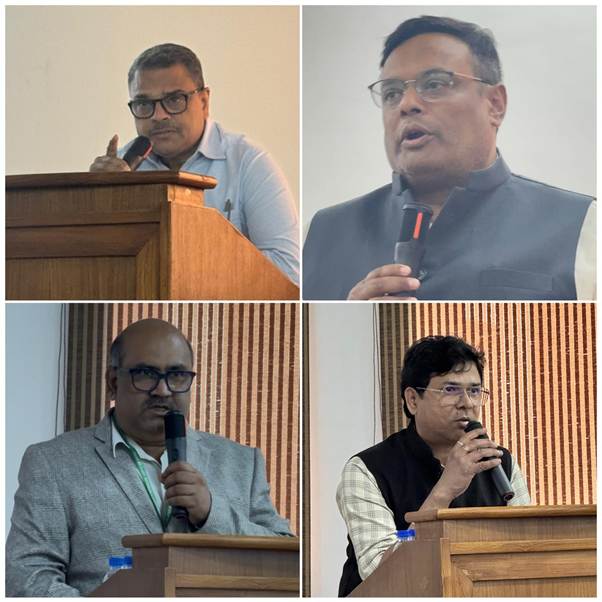
During the workshop, Shri Amitabh Nag, Chief Executive Officer, Digital India BHASHINI Division, emphasised the importance of leveraging AI to enable inclusive access to knowledge systems and digital services through Indian languages, and highlighted the need for active participation from academic institutions and language communities in building high-quality datasets and robust language models. The workshop focused on the development of AI models for the Pali language through targeted data collection, validation frameworks, and community-driven participation. The programme included sessions on the linguistic and literary relevance of Pali, along with detailed discussions on dataset requirements such as text corpora, audio recordings, and manuscript digitisation, supported by structured data quality frameworks. A comprehensive overview of the BhashaDaan platform was presented to enable structured data contribution and community-led validation by proficient speakers.
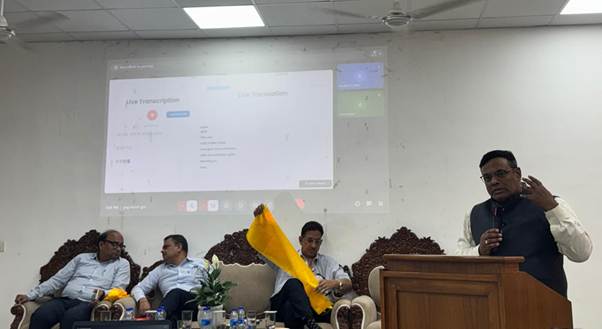
As part of the workshop, the BHASHINI team conducted extensive live demonstrations of its core language AI technologies and applications, showcasing its end-to-end multilingual capabilities across text, speech, document, and multimedia domains. Demonstrations included Anuvaad for seamless text-to-text translation across multiple Indian languages; Vaanianuvaad for real-time speech-to-speech and speech-to-text translation; Lekhaanuvaad for document translation and digitisation across languages; and Chitraanuvaad, enabling AI-based video translation and multilingual content adaptation. The BHASHINI Mobile App was demonstrated as a user-facing interface for real-time speech, understanding, and translation in Indian languages, while the BHASHINI Translation Plugin showcased multilingual enablement of websites and digital platforms through dynamic, scalable translation capabilities. Granthika was also demonstrated as an advanced platform enabling multilingual processing and accessibility of parliamentary and institutional content, reflecting the applicability of BHASHINI technologies in high-value, knowledge-intensive domains.
Use cases across digital public infrastructure, governance platforms, and education and knowledge ecosystems were also demonstrated to highlight real-world deployment, scalability, and seamless integration of BHASHINI’s technology stack across diverse domains.
These demonstrations highlighted real-time inferencing, API-based integration, and scalable deployment capabilities, reinforcing BHASHINI’s role as a national platform enabling multilingual access, inclusion, and digital empowerment across sectors, while continuing to strengthen collaborative ecosystems with academic institutions and domain communities for language data creation and AI innovation.
****
MSZ
(Release ID: 2250991)
Visitor Counter : 1202