Ministry of Science & Technology
Crop residue waste converted to bio-bitumen through indigenously developed bio-bitumen technology can save around Rs 40,000 cr import annually for India: Dr Jitendra Singh
India produces nearly 600 million tonnes of crop residue annually, which instead of being burnt causing pollution, can be converted to bio-bitumen; and bio-bitumen in turn can replace a part of annual requirement of around 88 lakh tonnes of bitumen, of which 50–58% is imported, says Dr Jitendra Singh
‘There is No Such Thing as Waste’; Waste to Wealth Emerging as India’s Growth Engine: Dr. Jitendra Singh
This is a move Towards Self-Reliance in Bitumen; Reducing Import Dependence, increasing Economic Resilience: Dr. Jitendra Singh
Breaking Silos, Strengthening Public-Private Collaboration Driving India’s Innovation Ecosystem: Dr. Jitendra Singh
Posted On:
30 MAR 2026 5:55PM by PIB Delhi
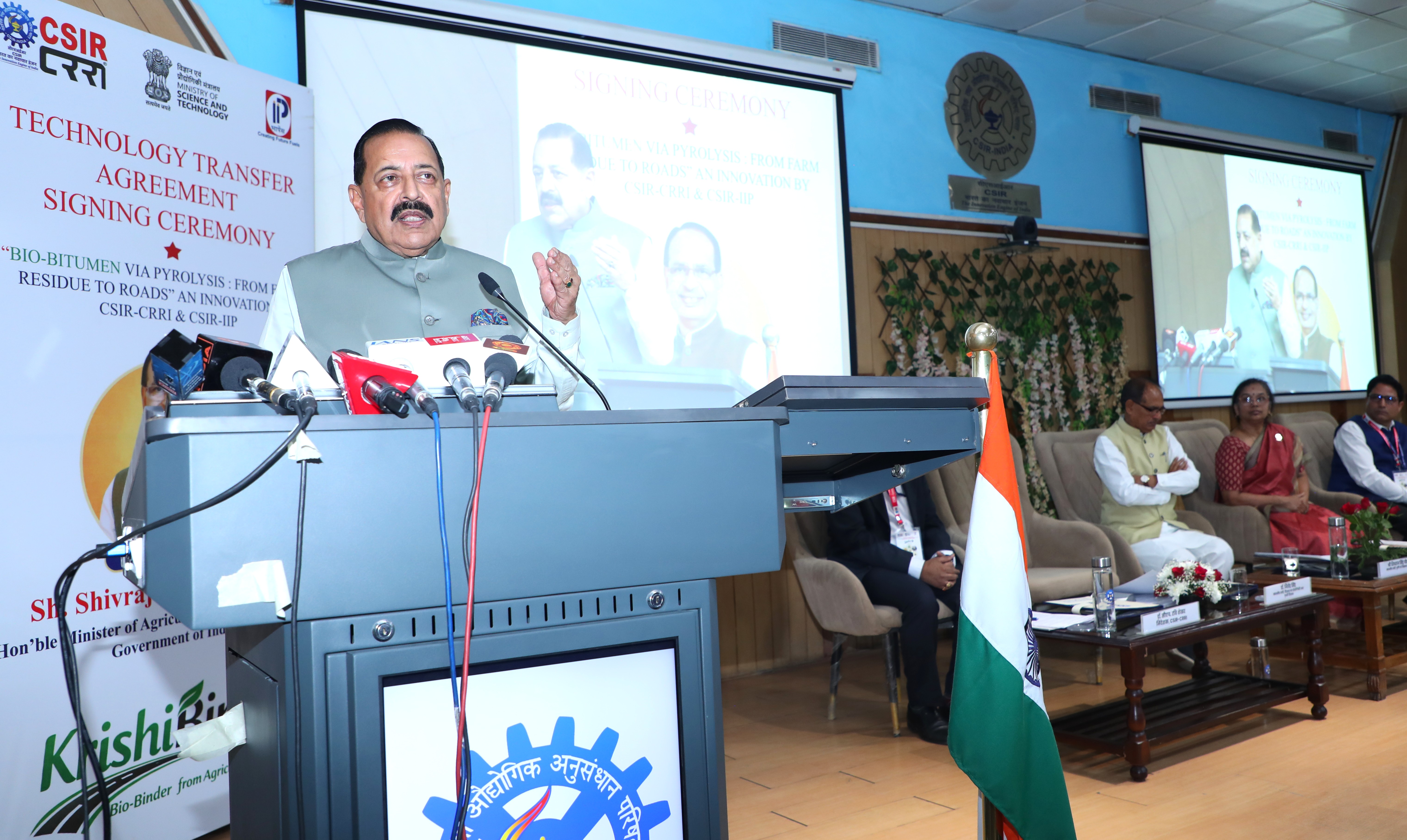
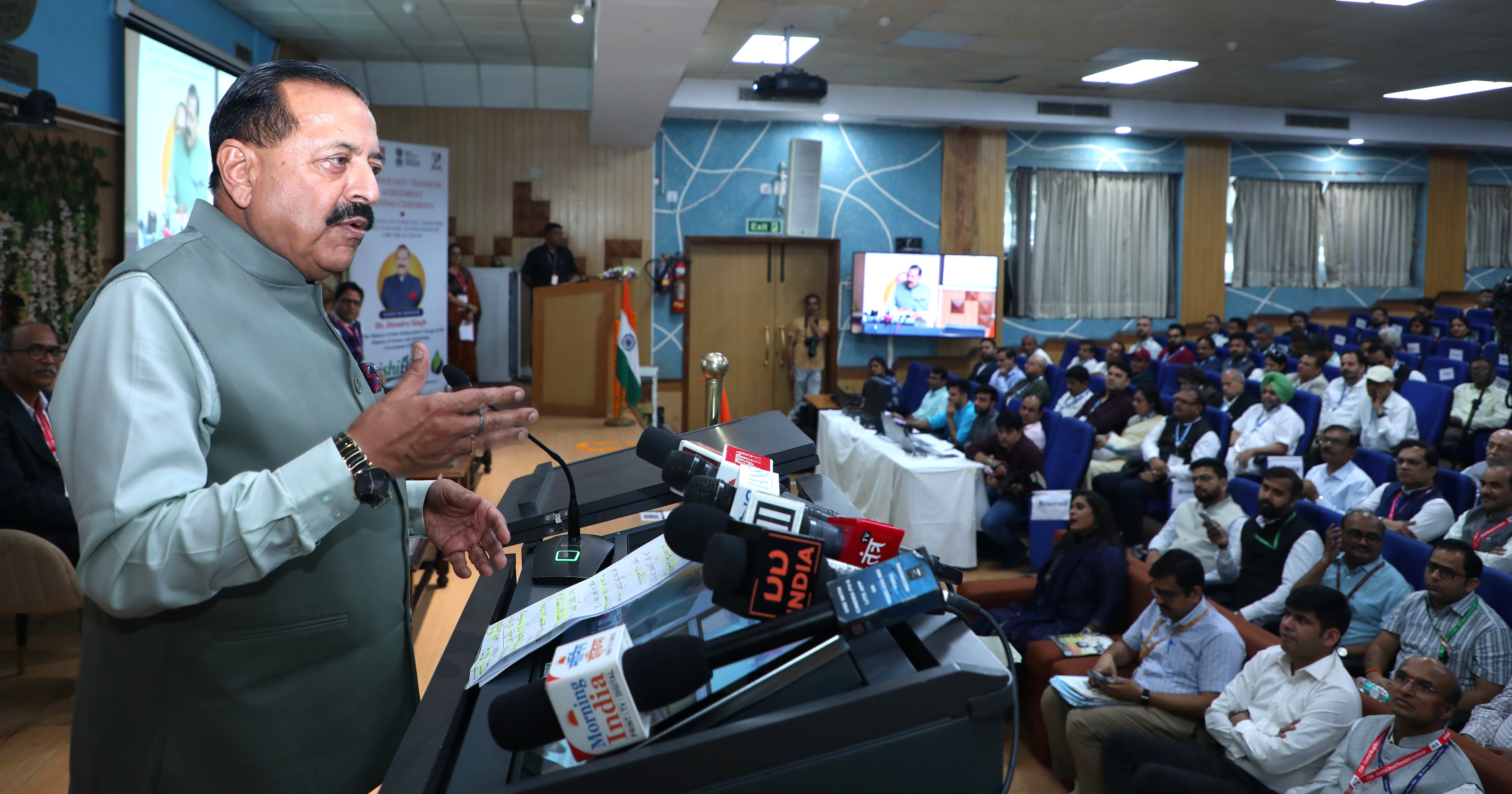
Union Minister of State (Independent Charge) for Science & Technology, Earth Sciences, and MoS PMO, Personnel, Public Grievances, Pensions, Atomic Energy and Space, Dr. Jitendra Singh today said that crop waste converted to bio-bitumen can save around Rs 40,000 cr import annually for India. This has been made possible using indigenous bio-bitumen technology developed by CSIR–Central Road Research Institute (CRRI) New Delhi and CSIR–Indian Institute of Petroleum (IIP), Dehradun, he added.
The Minister said that even partial substitution of conventional bitumen with bio-bitumen will significantly cut import dependence, strengthen economic resilience, and ensure that infrastructure development remains insulated from global supply disruptions.
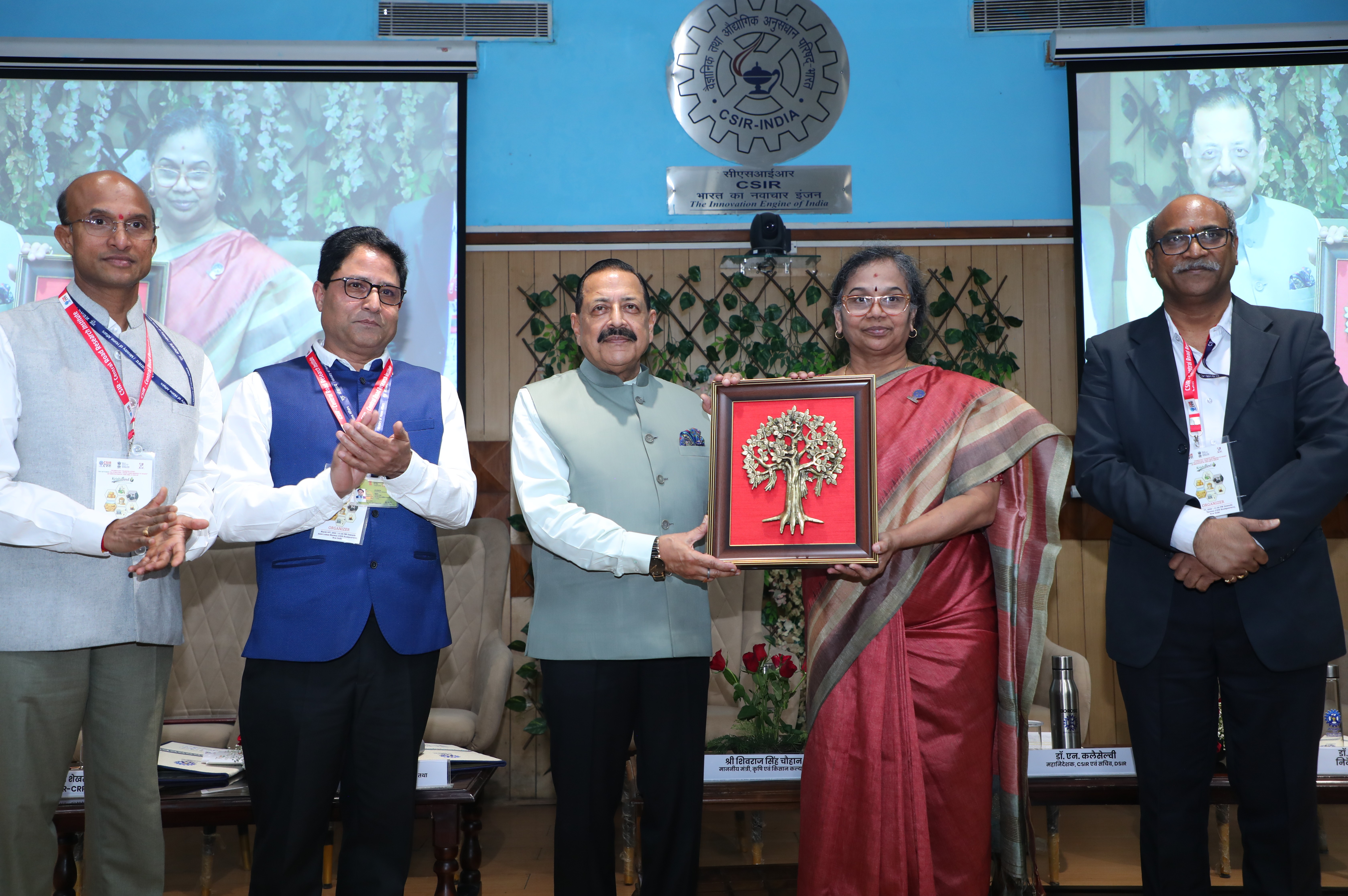
Dr Jitendra Singh was addressing a Technology Transfer event organised by the Council of Scientific and Industrial Research (CSIR) for large-scale industry adoption of the indigenously developed “Bio-Bitumen from Lignocellulosic Biomass” technology. The event was also graced by Union Minister for Agriculture & Farmers Welfare Shri Shivraj Singh Chouhan, along with Director General, CSIR & Secretary, DSIR Dr. N. Kalaiselvi, senior officials, scientists, industry representatives, and stakeholders.
Dr. Jitendra Singh described the initiative as a transformative step that converts a major environmental challenge into a national economic opportunity. He said that India produces nearly 600 million tonnes of crop residue annually, much of which is burnt, leading to severe air pollution. At the same time, India consumes about 88 lakh tonnes of bitumen every year, nearly 50–58% of which is imported at a cost of ₹25,000–30,000 crore. He said this technology bridges both challenges simultaneously by converting agricultural waste into a valuable resource for road construction.
Calling it a true example of “Waste to Wealth”, Dr. Jitendra Singh said that the concept of waste is rapidly becoming irrelevant in a modern, innovation-driven economy. “There is no such thing as waste, every resource has value if harnessed through science and technology,” he said, adding that agricultural residue like paddy straw can now become a source of income for farmers instead of a cause of pollution.
The Minister said the initiative reflects the vision of Prime Minister Narendra Modi, who had emphasised self-reliance and reduction in import dependence as early as 2014. He said India’s preparedness during the COVID pandemic, including indigenous vaccine development and seamless Direct Benefit Transfer systems, demonstrated how early policy direction translates into national strength during crises. He added that similar foresight is now driving India’s transition towards sustainable, low-carbon infrastructure.
Highlighting the multi-dimensional impact of the technology, Dr. Jitendra Singh said it delivers on multiple national priorities simultaneously, reducing pollution from stubble burning, lowering import bills, supporting farmers with additional income, promoting circular economy, and advancing India’s Net Zero commitments. He also pointed out that the success of this initiative reflects strong convergence between ministries, institutions, and industry, demonstrating the government’s approach of breaking silos and fostering public-private partnerships.
Referring to parallel innovations, the Minister cited examples such as conversion of used cooking oil into biofuel and utilisation of industrial waste like steel slag in road construction, noting that these efforts are creating a new economic ecosystem where waste materials are monetised. He added that incentivising farmers to supply crop residue instead of burning it could be a game-changing step in tackling air pollution.
Emphasising the importance of outreach, Dr. Jitendra Singh said scientific innovations must be communicated to stakeholders in formats they easily understand, particularly through digital platforms. He noted that initiatives like “One Week One Lab” have played a key role in connecting scientific institutions with industry, farmers, and the public.
Union Agriculture Minister Shri Shivraj Singh Chouhan described the initiative as a historic convergence of agriculture, science, and industry. He said the technology provides a practical and scalable solution to stubble burning while increasing farmers’ income and reducing environmental damage. He added that in the current global scenario, self-reliance in critical sectors like infrastructure is essential, and innovations like bio-bitumen will play a crucial role in achieving that goal.
Director General, CSIR & Secretary, DSIR Dr. N. Kalaiselvi highlighted the rapid pace of adoption of the technology, stating that within a short span, multiple industries have already taken it up, with production and field implementation underway. She said the technology marks a paradigm shift from petro-based binders to sustainable bio-based alternatives. She further noted that the same agricultural biomass can also be utilised for applications such as pest management, advanced carbon materials, and energy storage, demonstrating its wide industrial potential.
The bio-bitumen technology utilises agricultural biomass such as rice straw, wheat straw, and other crop residues as feedstock through a thermochemical (pyrolysis) process to produce a renewable binder. It can replace up to 30% of conventional bitumen without compromising performance and has demonstrated enhanced durability along with significantly lower carbon emissions. The technology has already seen successful trial applications, including construction of road stretches, and is now moving towards large-scale deployment.
CSIR officials said the organisation will continue to work closely with industry partners, the Ministry of Road Transport & Highways, and other stakeholders for standardisation, field validation, and capacity building to enable nationwide adoption.
Positioning India at the forefront of sustainable infrastructure innovation, the initiative is expected to transform road construction practices by making them greener, more cost-effective, and future-ready, while contributing to the larger vision of Atmanirbhar Bharat and Viksit Bharat 2047.
*****
NKR/AK/NM
(Release ID: 2246981)
Visitor Counter : 1397