Ministry of Science & Technology
India Entering Era of Personalised and Precision Medicine Driven by Genomics, AI, and Biotechnology: Dr. Jitendra Singh
Gene Therapy Breakthrough in Haemophilia Shows India’s Strength in Genetic Research, says Union Minister Dr. Jitendra Singh
India Emerging as Cost-Effective Global Healthcare Destination, says Dr. Jitendra Singh
Bio-E3 Policy to Position India as Global Leader in Biomanufacturing as Biotechnology Drives the Next Industrial Revolution: Dr. Jitendra Singh
Posted On:
13 MAR 2026 6:19PM by PIB Delhi
Union Minister of State (Independent Charge) for Science & Technology, Earth Sciences and Minister of State in PMO, Personnel, Public Grievances, Pensions, Atomic Energy and Space Dr. Jitendra Singh today said that India is entering a transformative era of personalised and precision medicine powered by genomics, artificial intelligence, and advanced biotechnology, which will enable early detection of diseases and targeted treatment even before symptoms appear.
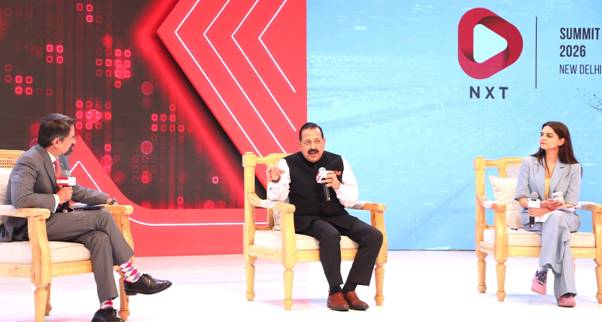
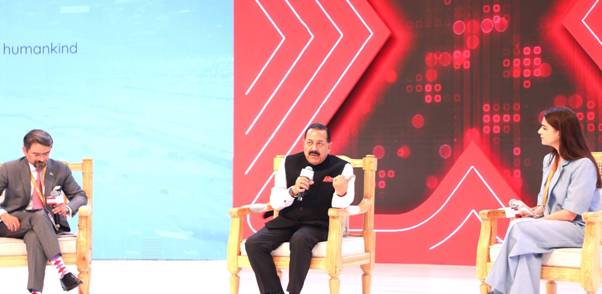
Addressing the NXT Summit 2026- “For All Humankind”, the Minister said that India’s vast genetic diversity and rapidly expanding genomic databases are creating unprecedented opportunities for predictive healthcare, precision diagnostics, and customised treatment protocols.
Dr. Jitendra Singh said that with over 4,000–5,000 distinct communities and one of the largest genetic pools in the world, India has a unique advantage in advancing genomic research. Highlighting the Genome India initiative, he informed that genome sequencing of 10,000 Indian individuals has already been completed, with the long-term goal of sequencing one million genomes to strengthen preventive healthcare and disease prediction.
The Minister said that the future of medicine will be shaped by multi-omics technologies, genomics, transcriptomics, and proteomics- integrated with artificial intelligence, enabling doctors to design personalised prescriptions based on a patient’s genetic profile, lifestyle, and environmental factors.“Tomorrow’s medicine will be personalised medicine, precision medicine and prescription tailored specifically for the individual patient,” he said.
Dr. Jitendra Singh credited Prime Minister Narendra Modi for giving strong impetus to biotechnology and life sciences through progressive policy initiatives. He highlighted the Bio-E3 Policy, Biotechnology for Economy, Employment and Environment, which aims to accelerate innovation in biomanufacturing and position India among global leaders in the sector.
The Minister said that India has already emerged as a major bio-manufacturing hub, ranking third in the Asia-Pacific region and among the top global players, supported by initiatives such as bio-foundries, bio-manufacturing clusters and Bio-NEST incubators to nurture start-ups and scale biotechnology innovations.
Dr. Jitendra Singh further stated that biotechnology is widely expected to drive the next industrial revolution, like the transformative role played by information technology in the past.
The Minister also highlighted India’s progress in genetically driven vaccines and therapies, recalling that India developed the world’s first DNA vaccine for COVID-19 and an indigenously developed vaccine against Human Papillomavirus (HPV) for cervical cancer prevention.
Referring to cutting-edge research breakthroughs, he noted that Indian scientists have successfully conducted gene-therapy based treatment trials for haemophilia, a major bleeding disorder, and are advancing research in several other genetic diseases.
Dr. Jitendra Singh also highlighted the importance of AI-enabled diagnostics, particularly in improving early detection of diseases such as breast cancer. He appreciated large-scale screening initiatives using AI-based thermal imaging technologies, which can take diagnostic services to remote villages through mobile health units.
He further noted that early detection is transforming cancer outcomes, with certain cancers, including breast cancer, now increasingly considered curable when diagnosed in early stages.
Highlighting emerging areas of scientific research, the Minister said India is also advancing space-medicine collaborations, including joint initiatives between the Department of Space and AIIMS to study biological responses in microgravity and their implications for healthcare on Earth.
Dr. Jitendra Singh also spoke about the recently introduced SHANTI Act, which opens India’s nuclear sector to private participation for the first time. He said the reform will accelerate investments in small modular reactors, nuclear technologies, and nuclear medicine research, enabling new breakthroughs in the treatment of diseases such as acute lymphoid leukemia and fatty liver disease.
He emphasised that opening the nuclear sector will not only benefit large corporations but will also create opportunities for start-ups, entrepreneurs, and smaller companies to participate in emerging nuclear technologies.
The Minister also highlighted the creation of a ₹1 lakh crore Research, Development, and Innovation (RDI) Fund to boost private sector participation in advanced technologies including biotechnology, nuclear science, and emerging healthcare solutions.
Dr. Jitendra Singh noted that India is increasingly being recognised globally as a cost-effective and high-quality healthcare destination, supported by strong scientific research and large-scale health data systems.
He also underlined the growing global interest in collaboration with India in life sciences and biotechnology, expressing confidence that initiatives such as the Parliamentarians’ Forum on Life Sciences will help strengthen international cooperation and knowledge exchange.
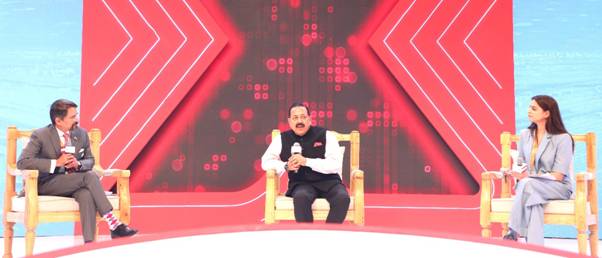
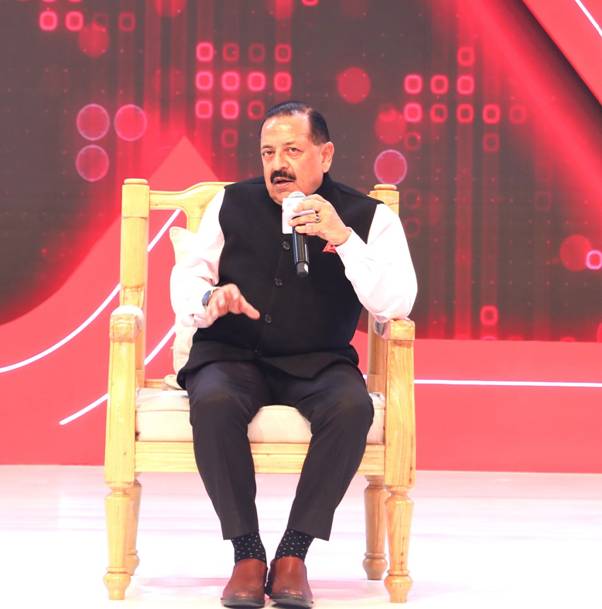
PHOTO: Union Minister Dr Jitendra Singh at the "NXT Summit 2026" exclusive session on "Future of Medicine" at Bharat Mandapam, New Delhi on Friday.
*****
NKR/AK/AV
(Release ID: 2239775)
Visitor Counter : 1443