Ministry of Environment, Forest and Climate Change
Integrated Environmental Capacity Building Workshop to be Held in Dehradun After IIM Kashipur
* Under the Integrated Environmental Capacity Building Workshop, entrepreneurs, academicians and policy makers will come together on one platform in Dehradun
* Important initiative launched by the Regional Office, Dehradun of the Ministry of Environment, Forest and Climate Change
* Objective of the workshop: To bring industry, academia and policy makers together on one platform so that complete environmental capacity can be developed and proper environmental management can be linked with sustainable industrial development
* A pilot workshop was organized on 27 February 2026 at Indian Institute of Management, Kashipur
* More than 210 participants (physically and virtually) attended the state-level environmental capacity building workshop held at IIM Kashipur
Posted On:
03 MAR 2026 4:05PM by PIB Dehradun
The Regional Office, Dehradun of the Ministry of Environment, Forest and Climate Change has started an important initiative to conduct Capacity Building Workshops on extant environmental regulations for developmental projects in India. This model will be replicated in Dehradun in April, where industries, academia and policy makers will be brought together on a common platform to develop complete environmental capacity and link proper environmental management with industrial development.
As a pilot effort, a capacity development workshop was organized at Indian Institute of Management, Kashipur on compliance ofrules and regulations mandated industries and other developmental projects to protect the environment and achieve the goal of sustainable development in the country. The workshop was conducted in collaboration with major industrial stakeholders of Uttarakhand. The aim of this Capacity Building Workshop is to bring industry, academia, consultants and policy makers together on one shared platform so that proper environmental management can be connected with industrial growth.
Dr. Ashish Kumar, Additional Director, Regional Office Dehradun, Ministry of Environment, Forest and Climate Change, said that this model of integrated environmental capacity building will be organized at a larger scale in Dehradun in April and thereafter scale up this across the country. He appealed to all industry partners for their cooperation in making the workshop successful.
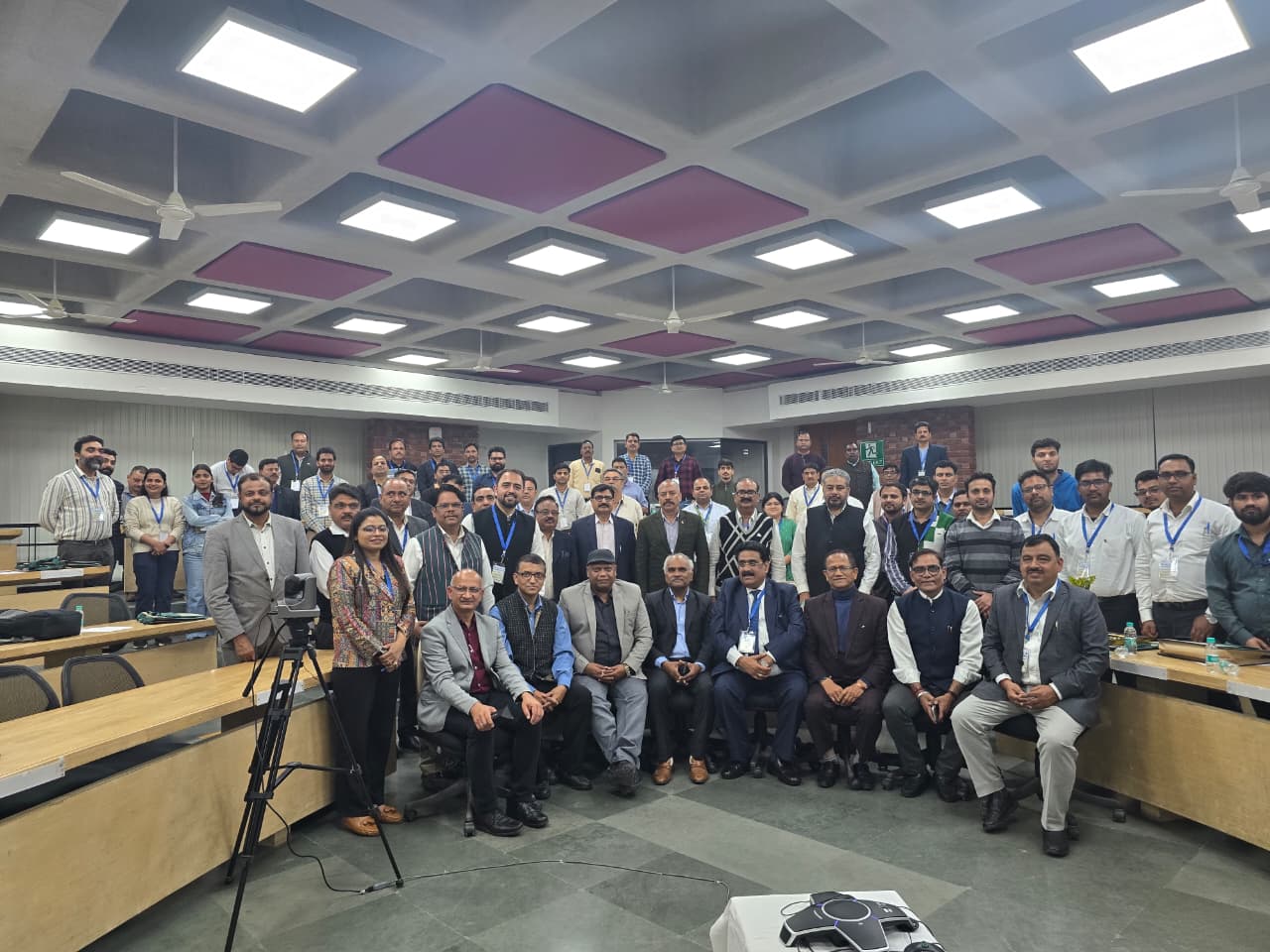
The theme of the Capacity Building Workshop held on 27 February 2026 was: “Navigating Environmental Regulations for Sustainability: A Practical Guide to EIA, PARIVESH 2.0, Consent Mechanism and Compliance for Atmanirbhar Uttarakhand.”
More than 210 participants attended the workshop at IIM Kashipur. The workshop received important support from industry partners including- Indian Glycols Limited, Naini Papers Limited, Century Pulp & Paper, Polyplex Corporation Limited.
Knowledge partners included- Grass Roots Research and Creation India Private Limited, Applinka Solutions and Technology Private Limited.
Other supporting organizations included- Himalayan Wine Company Private Limited, Orchidpanel, Maa Sheetla Ventures Limited, Kone Polymers, GN Pal Molecules ASEA, Himadri.
Industries and stakeholders who attended the workshop said that the Capacity Building Workshop will prove to be an important milestone in creating a compliance-oriented ecosystem in Uttarakhand and in promoting responsible, strong and sustainable development towards the vision of Atmanirbhar Uttarakhand.
KEY HILIGHTS OF THE PILOT WORKSHOP- Prof. Kunal K. Ganguly, Dean (Development) and Professor of Operations Management and Decision Sciences at IIM Kashipur, emphasized the importance of a continuous knowledge-sharing platform and stressed the need to institutionalize industry–academia–regulator engagement to promote sustainable industrial growth in the region.
Mr. Pawan Agarwal, Chairman and Managing Director of Naini Papers Limited, spoke about the major shift in industry thinking over the past decade — from limited engagement on environmental issues to proactive environmental management. He said compliance is now seen as essential for long-term sustainability, investor confidence and organizational resilience.
The technical session on the EIA and EC journey was delivered by Dr. Manoranjan Hota and Dr. Chakresh Pathak. Dr. Hota explained the background and policy objectives of the EIA Notification, 2006, and how it institutionalizes environmental safeguards at the project planning stage. The session covered screening, scoping, public hearing, appraisal by Expert Appraisal Committees at Central and State levels, grant of Environmental Clearance, and post-clearance monitoring responsibilities.
Prof. R. K. Srivastava explained the importance of accuracy in environmental sampling and baseline data collection for preparing strong EIA/EMP reports. He emphasized that the scientific integrity of environmental assessment depends largely on reliable sampling methods. As a step towards capacity building, he announced that the Department of Environmental Sciences at Govind Ballabh Pant University of Agriculture and Technology will provide free training to industry representatives or individuals seeking guidance in this domain.
One of the most appreciated sessions was the live online demonstration of PARIVESH 2.0 by Dr. Mohit Saxena (Joint Director, MoEF&CC) and Mr. Naveen Karn (Director). Members of the Ministry’s NIC team, Mr. Dhrub Jyoti Sarma and Ms. Garima Bhandari, were also present. The demonstration covered the menu-driven application process, integrated site analysis tools, GIS-based mapping, measurement of distance from eco-sensitive areas, facility layout positioning, KYA (Know Your Approval) and KYAA (Know Your Approval and Authorities) modules, and smooth data exchange with other government departments. Participants described the session as practical and transformative in understanding digital filing and regulatory transparency.
Mr. Chandan Singh Rawat (Former Chief Environment Officer, Uttarakhand Pollution Control Board) explained in detail the online process of Consent to Establish (CTE) and Consent to Operate (CTO) through the OCMMS portal, including procedural workflow, documentation requirements and compliance responsibilities under the Water and Air Acts.
The final technical session was delivered by Prof. Ashwini Kumar (Former Member, Expert Appraisal Committee, MoEF&CC), who informed participants about the upcoming Unified Consent and Authorization Management System (UCAMS) being developed by the Central Pollution Control Board. UCAMS, expected to integrate with all State Pollution Control Boards by May 2026, aims to bring consent, authorization and compliance processes under a single digital framework. Three states have already adopted the system, and nationwide implementation is expected to improve transparency, efficiency and regulatory uniformity.
The management session focused on how organizations can ensure regulatory compliance while identifying profit opportunities. Prof. Vaibhav Bhamoria, Sustainability Faculty at IIM Kashipur, emphasized that organizations should now view compliance costs as investments that can create green business opportunities.
The panel discussion, moderated by Dr. Ashutosh Gautam, covered several important issues including handling violation cases in the context of increasing judicial scrutiny. Panelists Dr. S.S. Negi (Former Director General of Forests, Government of India), Mr. Naresh Chandra (Vice President, Century Pulp & Paper, Lalkuan) and Prof. Santoshkumar Hampannavar (Director, Bipin Tripathi Kumaon Institute of Technology) emphasized that environmental compliance can be achieved through innovation, technological upgrades, process optimization and, where necessary, re-engineering of production systems. Industries were encouraged to move beyond reactive compliance and adopt proactive environmental management strategies that improve efficiency and reduce long-term risks.
Industry partners appreciated the Capacity Building Workshop and described it as a timely and practical initiative. There was strong demand for regular capacity building programs to address evolving regulatory frameworks and digital governance reforms. Industry representatives also expressed interest in structured training programs for their technical and compliance staff to be conducted by experts and officers of MoEF&CC, ensuring institutional strengthening of environmental governance within organizations.
It was clearly highlighted that environmental compliance should no longer be seen as a regulatory burden, but as a strategic domain that can create business value, strengthen ESG positioning, enhance competitiveness and contribute to sustainable profitability.
(Release ID: 2235010)
Visitor Counter : 157