Ministry of Jal Shakti
ICDS 2026 Inaugural Session Marks Release of Key Guidelines and Digital Platforms Strengthening India’s Dam Safety Framework
Launches include an AI-powered chat platform and a data management platform, with the release of guidelines on Design Flood Estimation
These Measures Are Expected to Enable Uniform Design Flood Estimation and Risk-Informed Decision Making
Posted On:
14 FEB 2026 10:32AM by PIB Delhi
The International Conference on Dam Safety (ICDS) 2026 is a premier global forum dedicated to advancing knowledge, policy, and practice in the field of dam safety and water infrastructure management. The conference brings together regulators, dam owners, engineers, researchers, policymakers, and industry professionals from India and across the world to exchange insights on emerging challenges, regulatory frameworks, technological innovations, and risk-informed approaches to dam safety. ICDS 2026 serves as a platform for informed dialogue, capacity building, and collaboration, supporting the continued strengthening of dam safety systems and water governance in an evolving climatic and developmental context.
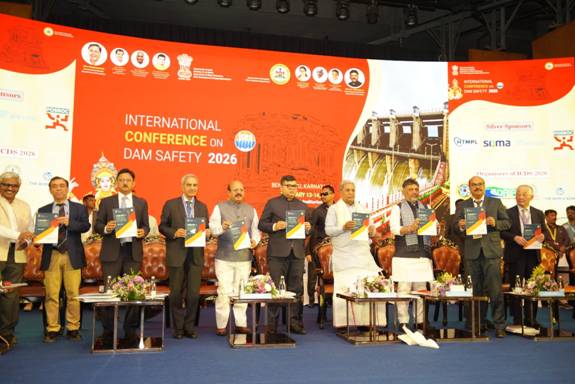
The inaugural session of the International Conference on Dam Safety (ICDS) 2026 witnessed the release and launch of several important guidelines and digital platforms aimed at strengthening dam safety governance, improving technical consistency, and enhancing access to critical water and infrastructure data across the country.
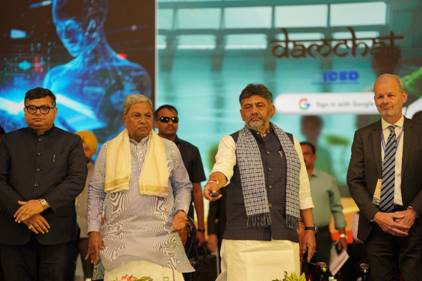
Launch of DAMCHAT – An AI-Powered Dam Safety Knowledge Platform
Among the key launches at the inaugural session was DAMCHAT, an AI-powered digital platform developed by the International Centre of Excellence for Dams (ICED), IIT Roorkee launched by Shri D.K. Shivakumar, Deputy Chief Minister of Karnataka. In recent years, India’s dam safety framework has been substantially strengthened through the enactment of the Dam Safety Act, 2021, and the formulation of detailed regulations and technical guidelines. However, the effective implementation of these frameworks depends on the ability of dam owners, engineers, and practitioners to access, interpret, and apply regulatory information in real time.
As the volume of technical literature and regulatory documentation grows, effective implementation often depends on how quickly and accurately practitioners can access and interpret this information. DAMCHAT bridges this gap by enabling dam owners, engineers, and field officials to query complex regulatory frameworks in real time and receive reliable, source-cited responses. More than just a digital tool, DAMCHAT aims to bridge the gap between regulatory knowledge and on-ground implementation, supporting informed decision-making and improved compliance across the sector.
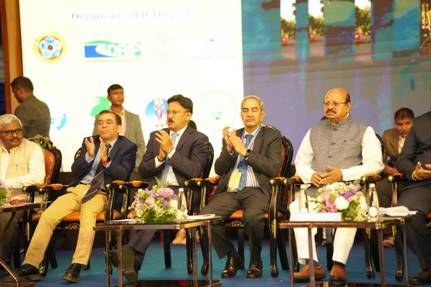
Jal Shakti – Data Management and Decision Support Platform
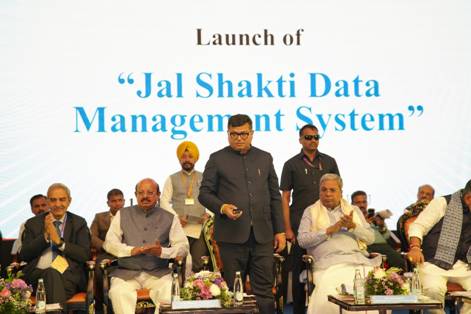
The second key launch was the ‘Jal Shakti – Data Management platform, developed by the National Water Informatics Centre (NWIC) with technical support from BISAG-N. The platform was launched by Shri Raj Bhushan Choudary, Union Minister of State for Ministry of Jal Shakti.
The platform enables visualisation and analysis of water-related data received from multiple National and State agencies, offering policymakers, researchers, administrators, and the public user-friendly tools to explore and analyse critical water-related issues. Currently, 59 use cases have been developed and hosted across data groups including Water Quantity, Water Quality, Water Planning, Ecosystem & Wildlife, Infrastructure, Climate, and Utilities/Studies/Surveys.
Publications of the Advanced Centre for Integrated Water Resources Management (ACIWRM), Karnataka and Guidelines for Design Flood Estimation for Mini and Micro Catchment Areas
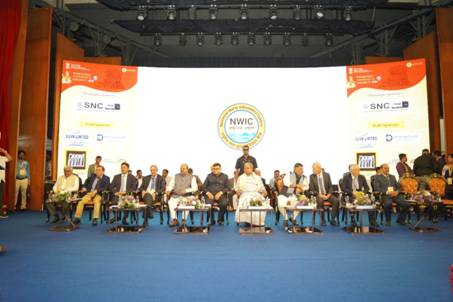
The inaugural session also witnessed the release of Publications of the Advanced Centre for Integrated Water Resources Management (ACIWRM), Karnataka and Guidelines for Design Flood Estimation for Dams with Mini and Micro Catchment Areas, developed by the Central Water Commission (CWC), Department of Water Resources, in the context of the Dam Safety Act, 2021, by Shri Siddaramaiah, Chief Minister of Karnataka.
The Act mandates the periodical review of design floods, along with dam break analysis and flood inundation mapping, to assess and manage potential risks. However, prevailing practices for design flood estimation in mini and micro catchments primarily focus on peak flood estimation, without providing procedures for deriving a complete flood hydrograph—a critical requirement for dam break and downstream impact studies.
Recognising this gap, the newly released guidelines provide a uniform, transparent, practical, and technically sound framework for estimating design flood hydrographs for dams with mini and micro catchments. The new guidelines, developed by CWC under the Department of Water Resources, Ministry of Jal Shakti, establish a uniform, transparent, and technically robust framework for estimating design flood hydrographs. They are expected to significantly improve ease of doing business by enabling State Governments, dam designers, consultants, and appraisal agencies to carry out flood studies in a consistent and scientifically sound manner.
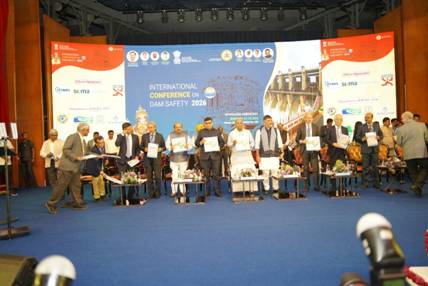
Together, the launch of these digital platforms and the release of the technical guidelines reflect a coordinated effort to strengthen dam safety governance, technical consistency, and data-driven decision-making in line with the objectives of the Dam Safety Act, 2021. Through focused deliberations in plenary and technical sessions, ICDS 2026 is expected to facilitate knowledge exchange, capacity building, and collaboration among key stakeholders, contributing to improved safety, resilience, and sustainability of dam infrastructure across the country.
***
ND
(Release ID: 2227911)
Visitor Counter : 993