Ministry of Science & Technology
CSIR-NIScPR organised International Symposium on Human-Centred AI and Energy Security
Posted On:
10 FEB 2026 2:10PM by PIB Delhi
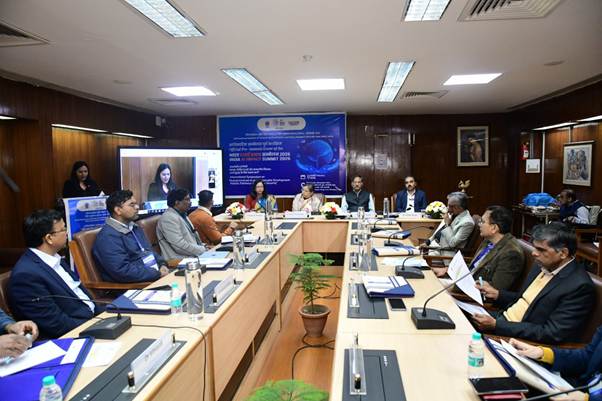
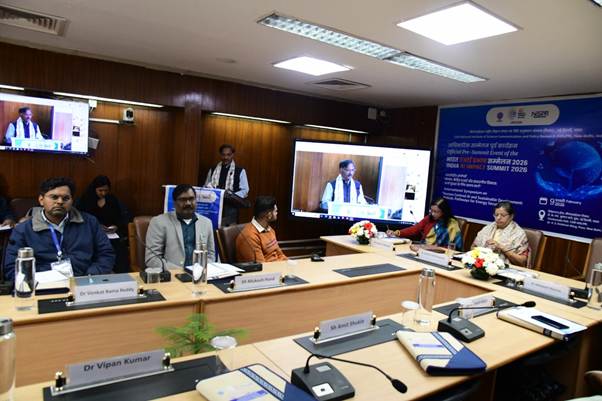
CSIR-National Institute of Science Communication and Policy Research (CSIR-NIScPR), New Delhi, organised an International Symposium on “Human-Centred AI and Sustainable Development: Holistic Pathways for Energy Security” as an official pre-summit event of the India-AI Impact Summit 2026 at Vivekananda Hall, CSIR-NIScPR, Pusa. The day-long symposium brought together leading experts from India and abroad to deliberate on people-centric artificial intelligence approaches for securing sustainable and inclusive energy futures.
The inaugural session featured a welcome address and opening remarks by Dr. Geetha Vani Rayasam, Director, CSIR-NIScPR, who set the context for the symposium. Emphasising the need for safe and trusted AI, Director, CSIR-NIScPR, said that India AI Impact Summit 2026 will be organised by the Government later this month and this international symposium is part of the official pre-summit events leading up to that conclave. She added that the aim of this symposium is to enable wide-ranging consultation and bring forth concrete ideas and solutions that may help the Government shape human-centred, safe and trusted AI frameworks for sustainable development and energy security.
The Chief Guest, Dr. Ashutosh Sharma, Former President, Indian National Science Academy (INSA) and Institute Chair Professor, Indian Institute of Technology Kanpur, delivered the inaugural address, remarked that there are both ‘lights and shadows’ of AI technologies and that society urgently needs informed discussions on human-centred AI. He emphasised that AI must be an enabler, not a replacement, creating new opportunities to serve those objectives which we were unable to serve earlier.
Dr. Nadia Asheulova, Director, Institute for the History of Science and Technology, Russian Academy of Sciences, observed that the Indian philosophical tradition has always been remarkably open to the multiplicity of forms of consciousness and intelligence, offering a rich backdrop for thinking about human-centred AI today. She underlined that both India and Russia face complex challenges in transitioning to renewable energy systems—challenges that are not merely technical, but deeply social and institutional. The real task, she noted, is not simply to develop more powerful AI systems, but to ensure that these systems serve the democratization of intelligence, expanding opportunities for creative and intellectual participation across the entire population.
Dr. Vivek Singh, Senior Adviser, NITI Aayog, addressed the gathering as Guests of Honor, noted that the rise of deep learning models underpinning large language models is a welcome development, as these technologies are rapidly becoming ubiquitous. He emphasised that India-centric data is unique and must be effectively integrated into these systems, adding that India has consciously chosen a balanced approach towards AI—one that embraces innovation while safeguarding societal interests. He reassured that reskilling and up-skilling will enable people to work alongside AI and unlock new forms of productive and meaningful employment. The session concluded with a formal vote of thanks by Dr. Kasturi Mandal of CSIR-NIScPR.
The Keynote Session on “AI-Driven Pathways to Energy Security and Sustainable Development” focused on ethical, inclusive and people-centric AI paradigms and global perspectives on AI-enabled energy transitions. Chaired by Prof. Indranil Manna, Vice Chancellor, BIT Mesra, the session included keynote interventions from Prof. Uday B. Desai, Vice-President, Indian National Academy of Engineering; Dr. K. Ramesha, Director, CSIR-CECRI, Karaikudi; and Prof. Andrey V. Rezaev, Tashkent State University of Economics, Uzbekistan, who discussed technology frontiers, systems-level challenges and collaborative opportunities in AI for energy systems.
The afternoon Technical Session on “Artificial Intelligence: Equity, Integrity, and Inclusivity”, chaired by Prof. Anirban Chakaraborti, JNU emphasised interdisciplinary research, data-driven decision-making, and responsible innovation frameworks to ensure AI technologies contribute meaningfully to society and sustainable development. Dr. Vipan Kumar, CSIR-NIScPR spoke about the opportunities and challenges of AI for energy security, highlighting the need for reliable data ecosystems and policy-aligned innovation. Dr. Lidia Borrell, Science Europe highlighted research ecosystems, international collaboration, and open science practices for AI-driven sustainability. Mr. Amit Shukla, EasyGov discussed AI in governance and public-service delivery for inclusive development. Anastasia A. Ivanova (St. Petersburg State University, Russia) on democratization of medical expertise in the age of AI, and Prof. Reeta Sony (JNU) on the legal and IPR framework for AI.
In Technical Session II on “Human-Centred AI and Sustainable Development”, chaired by Prof. Andrey V. Rezaev (Tashkent State University of Economics, Uzbekistan), the discussions turned to ethical dilemmas, energy transition and systemic risks.he also talked about human-centred approach. Dr. Natalia Tregubova (St. Petersburg State University) spoke on key considerations and ethical dilemmas of human-centred AI in promoting sustainable development, Prof. Ramesh Narayanan (IIT Delhi) addressed energy transition in the emerging paradigm of technology, Dr. Avinash Kshitij, CSIR-NIScPR analysed AI’s dual impact on energy security, outlining both opportunities for optimisation and innovation, and risks related to energy demand, infrastructure and policy readiness. Mr. Mukesh Pund, CSIR-NIScPR presented emerging AI paradigms, discussing how next-generation technologies, research ecosystems and data-driven innovation are shaping the future of artificial intelligence.
A high-level Panel Discussion on “AI pathways towards Energy Security – Opportunities and Challenges” was chaired by Dr. Akhilesh Gupta (INSA), with Dr. Naresh Kumar (CSIR-NIScPR) as Co-Chair and Dr. Alexander M. Stepanov (St. Petersburg State University) as Moderator. Panellists Dr. Charu Verma (CSIR-NIScPR), Dr. Amit Kumar (RIS), Sh. Ashutosh Maurya (NIC), Dr. Venkat Rama Reddy Kuntala (IIT Jodhpur), Dr. Valentin S. Starikov and Dr. Pavel P. Lisitsyn (both from St. Petersburg State University), Prof. Anirban Chakaraborti (JNU) and Dr. Vinayak (CSIR-NIScPR) shared multidisciplinary insights on policy, technology, institutional readiness and international cooperation to harness AI for secure and sustainable energy systems. The discussion highlighted the opportunities and challenges of integrating AI into energy systems, emphasising responsible deployment, cross-disciplinary research, and multi-stakeholder cooperation for sustainable energy transitions.The panel concluded that AI-powered solutions, supported by robust research ecosystems and aligned policies, will play a pivotal role in shaping a secure and sustainable energy future.
The Valedictory Session, chaired by Dr. Natalia Tregubova, captured the key takeaways of the day’s deliberations. Dr. Kasturi Mandal presented a succinct “Summary of Key Insights and Recommendations”, followed by Concluding Remarks by the Director, CSIR-NIScPR, emphasizing the institute’s continued commitment to advancing human-centred AI and science-informed policy for sustainable development and energy security.
*****
NKR/AK
(Release ID: 2225776)
Visitor Counter : 961