PIB Backgrounder
Swachh Aadat se Swachh Bharat: Sustaining a National Effort
Posted On:
09 FEB 2026 2:12PM by PIB Delhi
Cleanliness and sanitation are foundational to public health, dignity, and the quality of life. From the way waste is handled in neighbourhoods to how shared spaces are respected, these practices influence how communities function and grow. Over the years, the Swachh Bharat Mission has played a key role in bringing sanitation to the forefront of national priorities, strengthening systems, expanding toilet access, and encouraging public participation in waste management. This collective effort helped reframe sanitation from an individual matter to a shared civic responsibility.
While infrastructure enables change, it is everyday behaviour that sustains it. Long-term progress depends on habits that are practised consistently. Swachh Aadat se Swachh Bharat reflects this shift. Refusing single-use plastic, avoiding littering and spitting, practising waste segregation through green for wet waste and blue for dry waste, maintaining hand hygiene, using toilets responsibly, and reducing, reusing, recycling wherever possible are actions that, when repeated daily, shape cleaner surroundings.
Together, these habits form a practical framework for sustained cleanliness. They demonstrate that a cleaner India is built not through one-time efforts, but through steady participation, where responsible behaviour becomes part of everyday life, and progress continues through collective practice.
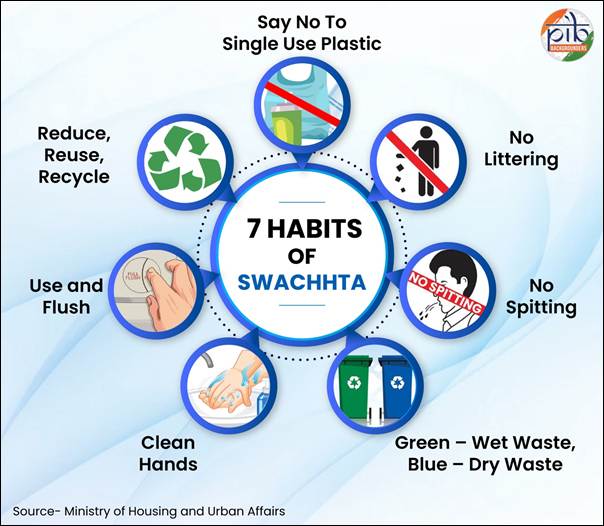
Everyday Actions, Lasting Change
Beyond policy and planning, the real impact of sanitation efforts is reflected in local action. From residential streets to city spaces, these examples show how regular engagement and ownership can steadily improve shared environments.
Transforming Waste into Public Art
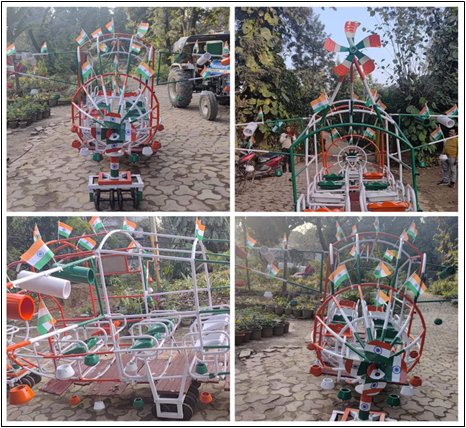
At the MCD South Zonal Office in Delhi, discarded materials have found a new purpose through a creative waste-to-art initiative. Old pipes from condemned children’s play equipment and wheels salvaged from unusable dustbins were repurposed to create an installation that now welcomes visitors to the office premises.
Unveiled on Republic Day 2026, the initiative demonstrates how materials typically treated as waste can be reintegrated into public spaces through thoughtful reuse. By turning disposal into design, the project highlights the value of extending the life of materials while also creating visual engagement in civic spaces.
The installation reflects how resource-conscious choices, when integrated into routine planning, can support broader waste reduction efforts. It stands as an example of how Swachh Aadat se Swachh Bharat can take form through everyday decisions that prioritise reuse, responsibility and innovation.
Showcasing Swachh Practices in Uttar Pradesh
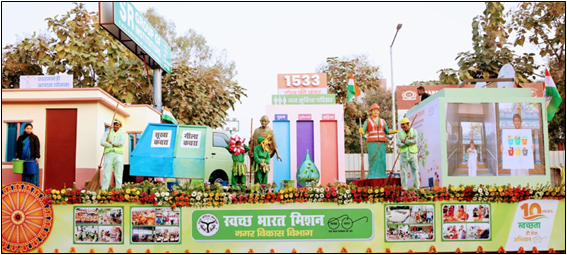
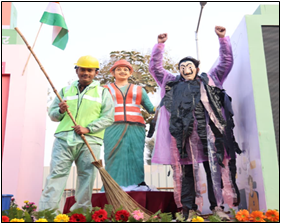
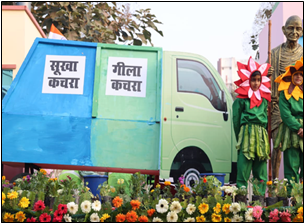
In Uttar Pradesh, the Swachh Bharat Mission tableau at the Parade Ground highlighted how everyday sanitation practices are being strengthened through integrated systems and citizen participation. The display showcased door-to-door waste collection, segregation at source, the role of Swachh Sarthi Clubs, the no-plastic initiative, the 1533 toll-free helpline, and the maintenance of clean public toilets. The showcase offered a clear picture of how Swachh Aadat se Swachh Bharat is reflected in routine practices that shape cleaner public spaces.
Urban Responses to Waste Management Challenges
In Bengaluru, a different challenge brought people together. The growing problem of discarded sofa waste prompted a group of professionals to collaborate and address the issue through practical, community-driven solutions. By focusing on the responsible handling of bulky waste, the initiative demonstrated how targeted efforts can respond effectively to specific urban sanitation challenges.
In Chennai, teams working in the area of landfill waste recycling have shown how process-oriented efforts can reduce the long-term burden on dumping grounds. Their work highlights the importance of regular engagement and system-level thinking in addressing waste management concerns.
Reviving the Tamsa River in Azamgarh
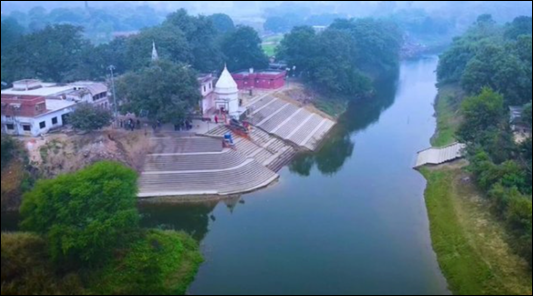
In Azamgarh, Uttar Pradesh, a community-led effort has brought new life to the Tamsa River, a water body deeply embedded in the region’s cultural and spiritual fabric. Flowing from Ayodhya and merging into the Ganga, the Tamsa was once central to the daily lives of local residents. Over time, however, pollution, silt, waste accumulation, and neglect disrupted its natural flow, diminishing both its ecological health and its role in the community.
Recognising the river’s significance, local residents came together with a shared sense of responsibility to restore it. The initiative focused on cleaning the riverbed, removing waste, and rejuvenating its banks. Shaded and fruit-bearing trees were planted along the riverbanks, helping stabilise the area while also improving its environmental quality.
Driven by collective effort and a sense of civic duty, the restoration work gradually revived the river’s flow. The revival of the Tamsa shows how consistent action, rooted in habit and local ownership, contributes to a cleaner and healthier environment.
Community Voices for Cleanliness in Jammu & Kashmir
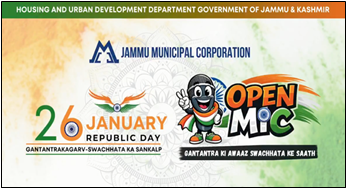
At Bahu Plaza in Jammu & Kashmir, Gantantra Ki Awaaz – Swachhata Ke Saath created a space where civic responsibility found expression through art and dialogue. The open-mic platform brought together poetry, music, and spoken word, allowing citizens to voice their views on cleanliness alongside themes of patriotism and community pride.
The event demonstrated how public engagement can extend beyond formal campaigns, using cultural expression to reinforce civic values. By encouraging participation and shared ownership, it showed how the message of Swachh Aadat se Swachh Bharat can resonate deeply when carried by community voices.
Youth-Led Clean-Up Efforts in Northeast India
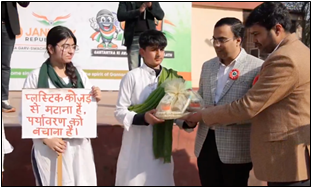
In Arunachal Pradesh, young volunteers have stepped forward to take responsibility for the upkeep of public spaces. Beginning in Itanagar, groups of youth identified areas that required regular attention and came together to clean them. Their efforts reflected a growing sense of ownership over shared surroundings and a commitment to improving them through collective action.
What started in Itanagar soon extended to other towns, including Naharlagun, Doimukh, Seppa, Palin, and Pasighat. Through repeated clean-up drives and sustained participation, these young volunteers have so far removed more than 11 lakh kilograms of waste from public areas. The scale and continuity of the effort underline how consistent action can translate into visible, lasting change.
In Assam’s Nagaon town, residents share a strong emotional connection with their neighbourhood lanes. Recognising the need to preserve these familiar spaces, a group of citizens came together with a shared resolve to clean them. As the initiative gained momentum, more people joined in, forming a dedicated team that succeeded in clearing large quantities of accumulated waste from the streets.
Together, these examples show how Swachh Aadat se Swachh Bharat takes shape through everyday action — where cleanliness is sustained not by isolated drives, but by habits formed through repetition, shared responsibility, and local ownership.
When Habit Carries the Mission Forward
The experiences highlighted across regions point to a simple but powerful truth: lasting change is built through what people do every day. Whether it is citizens reclaiming public spaces, young volunteers returning repeatedly to the same streets, or communities restoring natural resources they value, progress endures when responsibility becomes routine rather than exceptional.
As these stories show, the strength of Swachh Aadat se Swachh Bharat lies not in singular intervention, but in continuity. When care for surroundings is woven into daily life, outcomes sustain themselves without constant oversight. This quiet shift from action as an event to action as a norm offers a pathway for maintaining gains already made and ensuring that improvements continue to grow across communities, cities, and generations.
Prime Minister’s Office
https://www.pmindia.gov.in/en/major_initiatives/swachh-bharat-abhiyan/
https://x.com/mannkibaat/status/2015298688718094590?s=20
Ministry of Housing and Urban Affairs
https://x.com/SwachhBharatGov/status/2015304683552911533?s=20
https://x.com/SwachhBharatGov/status/2015324308542017671?s=20
https://x.com/SwachhBharatGov/status/2015723377202434493?s=20
https://x.com/SwachhBharatGov/status/2015683083845198289?s=20
Click here to see pdf
***
PIB Research
(Release ID: 2225353)
Visitor Counter : 1531