Ministry of Personnel, Public Grievances & Pensions
Dr P. K. Mishra inaugurates 2nd Batch of DAKSH Leadership Programme
DAKSH is a joint initiative of Capacity Building Commission and SCOPE
Public Sector remains Strategic Pillar of India’s Growth in a Volatile World: Dr. P. K. Mishra, Principal Secretary to the Prime Minister
Mission Karmayogi is Creating a Culture of Lifelong Learning in Public Sector: Alka Mittal, CBC
Posted On:
06 FEB 2026 4:40PM by PIB Delhi
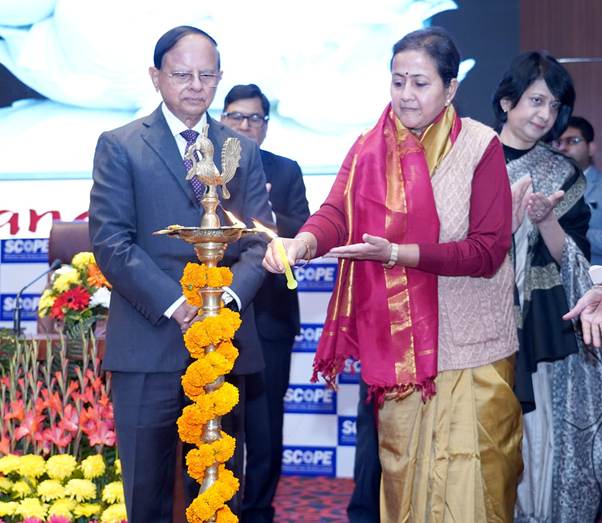
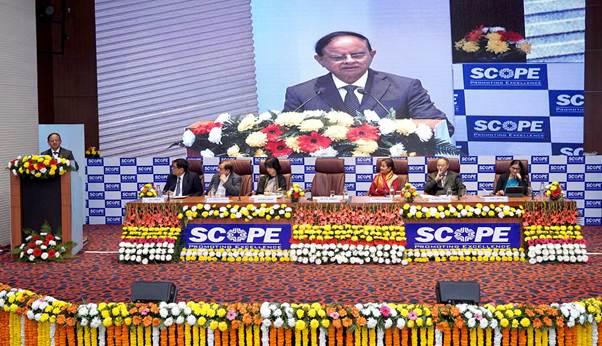
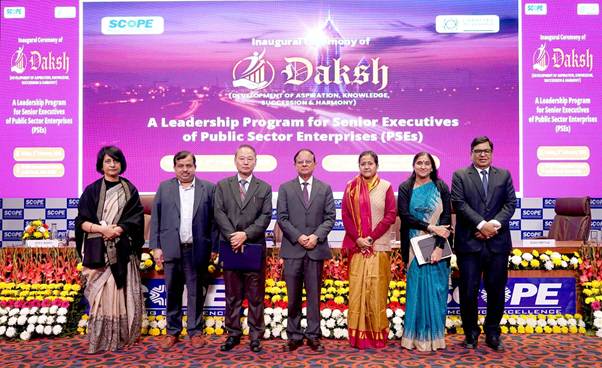
The Inaugural Session of the second batch of DAKSH (Development of Aspiration, Knowledge, Succession and Harmony), a flagship leadership development programme for senior executives of Central Public Sector Enterprises (CPSEs), was held today at the SCOPE Convention Centre, New Delhi. The programme is jointly organised by the Capacity Building Commission (CBC) and the Standing Conference of Public Enterprises (SCOPE) as part of the larger Mission Karmayogi framework.
The inaugural event was attended by senior leadership from the Government of India and the public sector. Dignitaries present included Dr. P. K. Mishra, Principal Secretary to the Prime Minister; Shri K. Moses Chalai, Secretary, Department of Public Enterprises; and Smt. Rachna Shah, Secretary, Department of Personnel and Training, Smt. S. Radha Chauhan, Chairperson, Capacity Building Commission; Shri K. P. Mahadevaswamy, Chairman, SCOPE; Shri Atul Sobti, Director General, SCOPE and Smt. Alka Mittal, Member (Administration), Capacity Building Commission.
Welcoming the participants, Shri Atul Sobti, DG, SCOPE, said that DAKSH will help the leaders to reflect, prepare and transform themselves. He added that this programme will give an opportunity for leadership emergence, strategic development and international exposure.
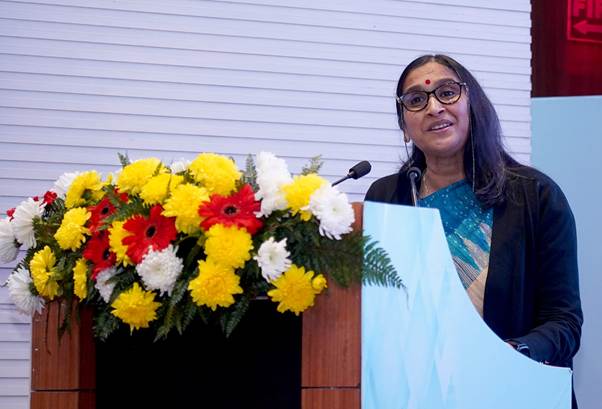
Setting the context of the programme, Smt. Alka Mittal, Member, Capacity Building Commission, gave a detailed presentation on the design and objectives of DAKSH. She said that the programme is structured as a 12-month transformative leadership journey, combining digital learning, classroom engagement at leading institutions, executive coaching, live action learning projects, and international exposure. She shared that the first batch of DAKSH trained 73 senior CPSE officials, while the second batch comprises 72 participants drawn from diverse sectors including energy, space and defence, transport and logistics, mining and minerals, manufacturing, and construction.
She also highlighted key achievements under Mission Karmayogi, including large-scale onboarding of officials on the iGOT digital platform, institutionalisation of lifelong learning through initiatives such as Karmayogi Saptah, development of the Karmayogi Competency Model, accreditation of training institutions and the creation of Amrit Gyaan Kosh, a national repository of India-focused case studies. Emphasis was laid on leadership development, competency-based growth, talent mobility, and technology-enabled learning as priority reform areas for CPSEs.
Delivering the address, Dr. P. K. Mishra, Principal Secretary to the Prime Minister, spoke on the evolving role of public sector enterprises in India’s development journey. He recalled that CPSEs played a foundational role in building the country’s industrial and infrastructure base after Independence, laying the groundwork for economic growth, financial stability, and national self-reliance. He said that for several decades, public sector enterprises formed the backbone of India’s development strategy.
Dr. P. K. Mishra said that over time, globalisation, technological change, and economic reforms transformed the global and domestic economic landscape. He observed that debates around public versus private sector dominance have given way to a more integrated approach, where competitiveness, efficiency and innovation have become central. In this changing context, expectations from CPSEs have also evolved, requiring them to operate with greater agility while continuing to serve national priorities.
Dr Mishra said that as India deepens its integration with the global economy through free trade agreements and strategic partnerships, CPSEs must be prepared to compete not only domestically but also internationally. He noted that public sector enterprises in several major economies continue to play a strategic role in economic development, particularly in times of uncertainty.
Dr. Mishra also referred to the Public Sector Enterprise Policy of 2021, which classified CPSEs into strategic and non-strategic sectors. He said that while private enterprises have an expanding role, public sector enterprises continue to remain essential in strategic areas such as energy, defence, infrastructure, and finance, where long-term national interests, stability and resilience are critical. He added that public sector enterprises also play a balancing role in markets that are not always perfect and where public goods and national security considerations are involved.
Highlighting the growing importance of technology and innovation, Dr. P. K. Mishra said that CPSEs must remain technology-oriented and innovation-driven. He referred to India’s globally recognised digital public infrastructure (DPI) and examples such as UPI, improved technology adoption in public sector banking and advancements in areas like clean energy. He said that public sector enterprises are well positioned to lead in areas such as cybersecurity, data governance, and energy transition, where national trust and long-term commitment are vital.
Emphasising leadership and human capital, Dr. Mishra said that institutions ultimately depend on the quality of their leadership. He stressed the importance of continuous learning, adaptability, and strategic thinking, especially in an era of rapid technological change. He encouraged participants to use the DAKSH programme to broaden their perspective beyond organisational boundaries, strengthen decision-making, work collaboratively, and build teams aligned with shared national objectives.
Earlier, Shri K. Moses Chalai, Secretary, Department of Public Enterprises, briefly spoke about the scale and economic contribution of CPSEs, noting their significant role in GDP generation and contribution to the Central Exchequer. He said that preparing future-ready leadership is essential for sustaining this contribution amid global and domestic transitions, and described DAKSH as a timely initiative in that direction.
Shri Jagdeep Gupta, Secretary, Capacity Building Commission gave the vote of thanks. He reiterated the commitment of the Commission to take forward the vision of Mission Karmayogi.
DAKSH leadership programme has been conceptualised to prepare senior executives for higher leadership roles while enabling them to respond effectively to national priorities and global challenges.
*****
NKR/AK
(Release ID: 2224473)
Visitor Counter : 1099