National Human Rights Commission
NHRC, India hosts 40 Sri Lankan senior civil services officers on their exposure visit to the Commission as part of NCGG capacity building initiative under ITEC programme of MEA
Chairperson, Justice V. Ramasubramanian highlighted civil servants' role as a pivot between the legislature and judiciary in shaping the laws and systems of governance in a democratic country
Secretary General, Shri Bharat Lal spoke about institutional framework for protecting human rights in India emphasises country’s civilisational values of empathy, compassion and non-violence as the ethical base of governance
प्रविष्टि तिथि:
29 JAN 2026 8:30PM by PIB Delhi
The National Human Rights Commission (NHRC), India hosted 40 senior civil servants from Sri Lanka on their exposure visit to the Commission. They visited the Commission as part of the 14th Capacity Building Programme being organised by the National Centre for Good Governance (NCGG), an apex level governance and public policy institution of Government of India, under the International Technical and Economic Cooperation (ITEC) Programme of the Ministry of External Affairs (MEA).
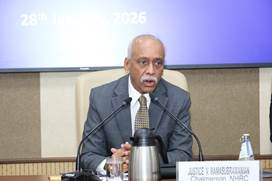
Addressing them, the NHRC Chairperson, Justice V. Ramasubramanian said that in every democracy, legislature, judiciary and executive are the three important pillars for good governance and strengthening their country’s growth. He said that India and Sri Lanka share many similarities, including a common law system inherited from British rule and courts that function in similar ways. The laws and governance are also often shaped by economic and geopolitical factors which actually determine what happens in a country.
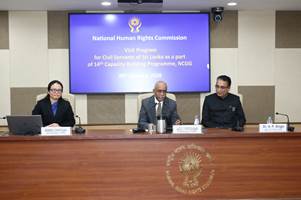
Justice Ramasubramanian said that the civil services officers also play an important role in shaping the laws and the systems of governance in a democratic country by acting as a pivot between the legislature and the judiciary. For this, they need to be alert to the external and internal factors which may impact their country’s interests. He said that it is the responsibility of civil servants to ensure that the resources of the country reach the common man without discrimination to avoid unrest. Going by some recent past incidents in several countries, he said that the civil servants also need to be alert to the social media triggers to act in time to take effective pre-emptive actions to save their country from possible turmoil.
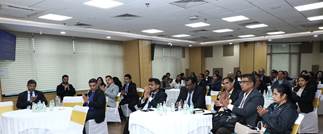
Before this, Shri Bharat Lal, Secretary General, NHRC, addressing the officers on the theme ‘Institutional Framework for Promotion and Protection of Human Rights in India’, highlighted India’s civilisational values of empathy, compassion and non-violence as the ethical base of governance. He noted that India’s pluralistic traditions, freedom fighters and social reformers shaped a human rights discourse centred on the most vulnerable. Referring to the Constitutional framework, the Protection of Human Rights Act and the judiciary, he emphasised that dignity and pride are integral to good governance. Warning that corruption and weak governance can erode institutions and social stability, he said that strong institutions, transparency and accountability directly improve citizens’ quality of life and ease of living.
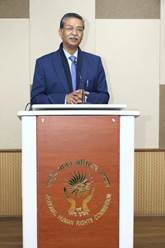
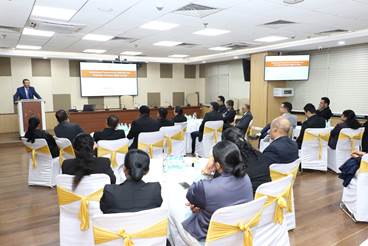
Shri Lal stressed that capacity-building must focus on learning, reflection and internalisation of institutional values. Referring to India’s governance experience in last few decades and cooperation with Sri Lanka, he underlined shared democratic values and India’s continued support. He explained NHRC’s role in international human rights mechanisms, monitoring violations and issuing advisories, citing the high volume of complaints received. Emphasising Global South solidarity, justice delivery and institutional credibility, he highlighted India’s global contributions to human rights, women’s leadership and reforms such as e-marketplace procurement. He said that independent institutions including the judiciary, human rights bodies and anti-corruption agencies have a significant role in ensuring democratic stability.
Dr. A. P. Singh, Associate Professor and in-charge Administration, NCGG also addressed the visiting Sri Lankan civil servants. He said that NCGG has been training senior civil servants of various countries with the aim to share India’s governance experiences and best practices so that they can learn, adapt and possibly replicate successful approaches in their own countries. This also helps strengthen bilateral cooperation and administrative ties between India and partner countries.
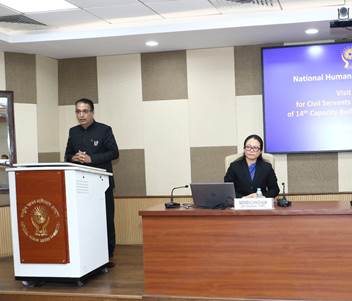
Earlier, Smt Saidingpuii Chhakchhuak, Joint Secretary, NHRC welcomed the Sri Lankan delegation and other dignitaries present.
***
NSK
(रिलीज़ आईडी: 2220620)
आगंतुक पटल : 90
इस विज्ञप्ति को इन भाषाओं में पढ़ें:
हिन्दी