National Human Rights Commission
NHRC, India's Core Group on Disabilities deliberates upon ‘Human rights violations emerging from re-verification and re-assessment of certificates of government employees with disabilities’
Chairperson, Justice Shri V. Ramasubramanian citing legal implications suggests scrutiny only to cases of a specific suspicion instead of mass re-verification of all employees with disability
Importance of streamlining the process of issuing disability certificates among other suggestions highlighted in the meeting attended by the NHRC Members, senior officers, Govt representatives and various stakeholders
Posted On:
28 JAN 2026 5:24PM by PIB Delhi
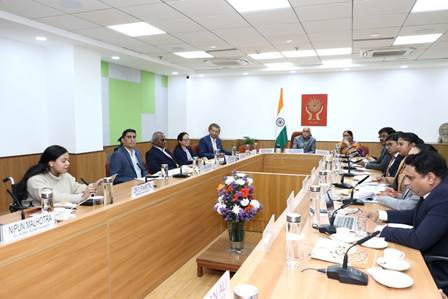
The National Human Rights Commission (NHRC), India organised a core group meeting in hybrid mode on ‘Human rights violations emerging from re-verification and re-assessment of certificates of government employees with disabilities’ in New Delhi. It was chaired by NHRC, India Chairperson, Justice V. Ramasubramanian. Justice (Dr) Bidyut Ranjan Sarangi and Smt Vijaya Bharathi Sayani Members; Secretary General, Shri Bharat Lal, Core Group members, special invitees, other senior officers, government representatives and domain experts participated in the meeting.
Justice Ramasubramanian said that understandably Centre’s 15th October 2025 revised advisory and SOP for handling disability verification in government jobs/ education is meant for applying prospectively only for the new applicants and not retrospectively to reassess all existing beneficiaries. He observed that applying the SOP retrospectively for all of them may have legal implications. Therefore, instead of mass verification, the scrutiny should be limited to cases where there is a specific suspicion.
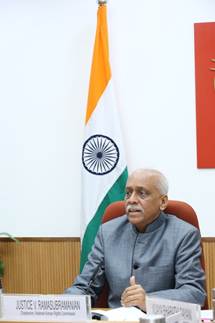
He said that there are strong laws to protect the rights of PwDs, but their implementation remains a concern. There may be instances wherein some deserving persons with disabilities (PwDs) do not get the benefits of schemes. It may also not be denied that there could be instances of misuse of beneficiary legislation.
Justice Ramasubramanian said that at times, approaching authorities is challenging and only well-connected or educated families can access the system effectively. He urged the participants to suggest measures to protect rights of PwDs and ensure their dignity by addressing systemic gaps in the legal framework and the implementation thereof.
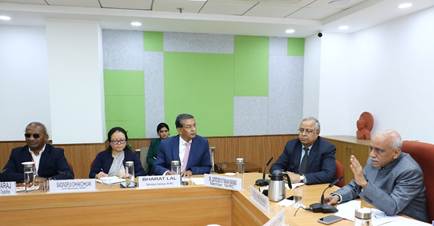
NHRC, India Member, Justice (Dr) Bidyut Ranjan Sarangi said that children born with disabilities must receive proper medical care and accurate certification to ensure access to legal benefits. Expressing concern over incorrect or fake disability certificates, he noted that under-assessment often deprives individuals of entitlements, calling for stricter verification by medical boards. He also emphasised the need for rehabilitation and livelihood support to PwDs through Social Justice Department. He also called for a coordinated, compassionate approach to ensure that persons with disabilities live with dignity. He emphasised the importance of streamlining the process of issuing disability certificates.
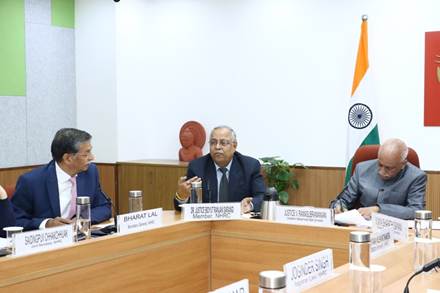
NHRC, India Member, Smt Vijaya Bharathi Sayani said that disability is not something that should be repeatedly proven. Repeated re-verification of PwDs is causing anxiety, fear and insecurity, particularly about job continuity. She highlighted poor access to medical boards and said that repeated checks should not apply to irreversible disabilities. She called for functional, accommodation-based assessment, doorstep verification and services, time-bound procedures, disability rights training for officials, online accessibility and dedicated grievance cells.
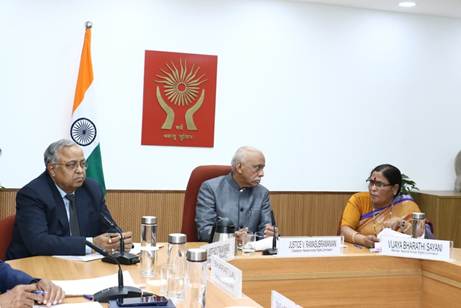
Before this, setting the agenda of the meeting, NHRC, India Secretary General, Shri Bharat Lal said that persons with disabilities must be treated with respect and dignity, while ensuring safeguards against misuse of legal provisions. He stressed strict implementation of the October 2025 SOP, which covers digital verification of disability certificates, assessment of disability type, percentage and functional suitability and an appellate mechanism. However, re-assessment of disability can be intrusive and people feel that their dignity is compromised. He noted that although the 2016 Act increased reservation from 3% to 4%, misuse and weak social values result in genuine persons with disabilities facing hardships. He expressed the hope that through collective deliberations and active participation of government officials and experts, recommendations and suggestions would emerge to address this issue.
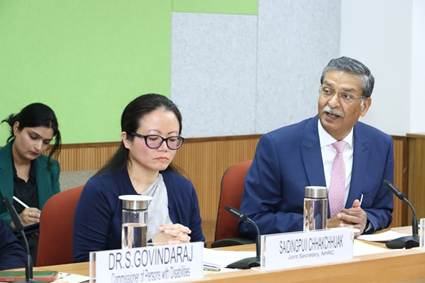
Earlier, NHRC, India Joint Secretary, Smt Saidingpuii Chhakchhuak gave an overview of the three technical sessions of the meeting. These were ‘Harmonising administrative oversight with the RPwD Act, 2016’, ‘Ensuring dignity and non-discrimination in verification processes’ and ‘Strengthening digital verification through the UDID framework.’
Shri Rajeev Sharma, Joint Secretary, Department of Empowerment of Persons with Disabilities, MoSJE highlighted concerns regarding the conduct of disability assessments in camp mode. He acknowledged reports from departments, media and society regarding fraudulent disability certificates. On the issue of reassessment, he clarified that the primary intent of the Department was to ensure due diligence at the stage of admission to higher educational institutions and recruitment to government jobs. He referred to Section 91 of the RPwD Act, 2016, which prescribes penalties for fraudulent claims, including imprisonment and fines. He stated that the Department’s intent was high-resolution scrutiny of disability certification at the entry stage. However, he acknowledged that fraud could sometimes surface later, citing instances where individuals were detected long after induction into service. He clarified that action taken in such cases was legally justified under the Act.
Dr. S. Govindaraj, Commissioner of Persons with Disabilities said that verification mechanisms must remain targeted and proportional to ensure that genuine persons with disabilities are not unnecessarily inconvenienced. He said that the existing guidelines emphasised validation rather than mass reassessment.
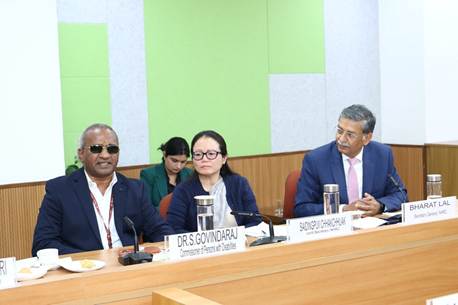
The participants included senior NHRC officers, Smt Anupama Nilekar Chandra, DG (I); Shri Joginder Singh, Registrar (Law); Shri Samir Kumar, Joint Secretary; Dr. Purva Mittal, Assistant Professor, University of Delhi and NHRC’s Special Monitor (Women and Disability Issues); Prof. (Dr.) Amita Dhanda, Dr. Satendra Singh, Director-Professor of Physiology, University College of Medical Sciences & GTB Hospital; Dr. Vaibhav Bhandari, Founder, Swavlamban Foundation; Shri Muralidharan Vishwanath, General Secretary, National Platform for Rights of the Disabled; Shri Rajive Raturi, Consultant, Shri Arman Ali, Executive Director, National Centre for Promotion of Employment for Disabled People (NCPEDP); Shri Akhil S. Paul, Director, Sense International (India); Shri Nipun Malhotra, Co-Founder, Nipman Foundation, among others.
Some of the other suggestions which emanated from the discussions were as follows:
• Prohibit blanket or mass medical reassessment of all government employees with disabilities;
• Adopt UDID-based digital verification as the default mechanism, with medical reassessment only as an exception, based on clearly defined and evidence-based suspicion;
• Incorporate safeguards in any verification exercise, including written reasons, opportunity to respond, time-bound decisions and a clear right to appeal along with protection from adverse service action during the process;
• Adopt dignity-centred protocols during verification, including providing a reasonable accommodation, improved accessibility, digital options and exemptions from redundant testing for permanent and irreversible disabilities;
• Strengthen accountability mechanisms to ensure deviations from SOP intent and statutory safeguards are documented, reviewed and corrected in a time-bound manner; and
• Eliminate the need to re-issue certificates to the employees living with irreversible disabilities.
The Commission will further deliberate upon the suggestions and inputs from different stakeholders to finalise its recommendations to the government for ensuring the protection of the rights of persons with disabilities.
***
NSK
(Release ID: 2219665)
Visitor Counter : 1394