Posted On:
22 JAN 2026 8:48PM by PIB Delhi
The Department of School Education & Literacy (DoSEL), Ministry of Education, continued the deliberations on strengthening inclusive education for Children with Special Needs (CwSN) on the second day of the Inclusive Education Summit 2026, being held from 21–23 January 2026 at The Lalit, New Delhi. The Summit is being organised in alignment with the National Education Policy (NEP) 2020 and the Rights of Persons with Disabilities (RPwD) Act, 2016, with an objective of fostering equitable, accessible and learner-centric education systems across the country.
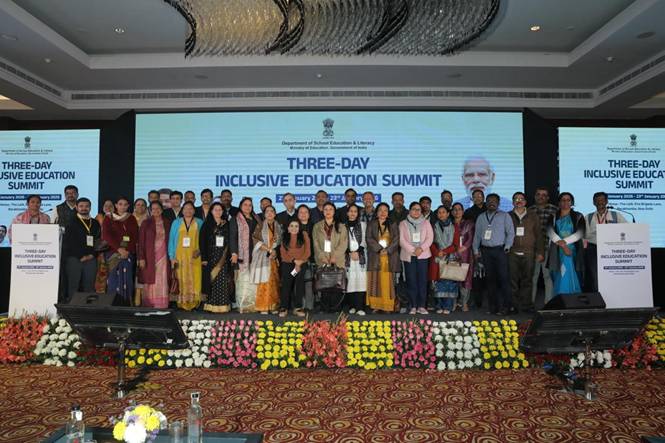
The 2nd day of the Summit focused on “Inclusive Education Pathways”, highlighting key national initiatives, digital tools, teacher capacity-building frameworks and inter-sectoral collaboration to strengthen inclusive education ecosystems. The proceedings were attended by Shri Sanjay Kumar, Secretary, DoSEL; Ms. A. Srija, Economic Advisor, DoSEL and senior officials from DoSEL, Ministry of Education, along with representatives from national institutions, States/UTs and partner organisations.
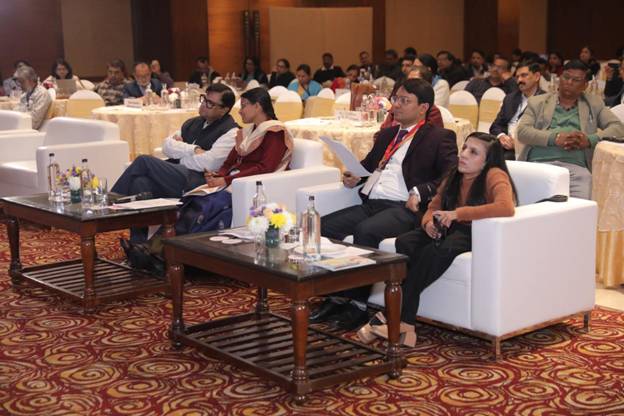
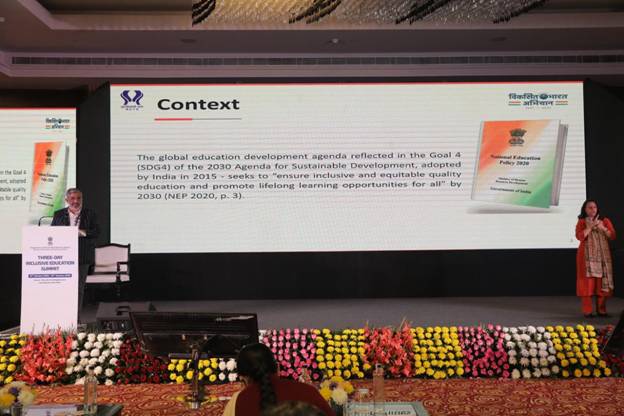
The day commenced with a contextual overview by Ms. Ira Singhal, Deputy Secretary, DoSEL, who introduced PRASHAST 2.0, the revamped disability screening tool. She emphasized that PRASHAST 2.0 marks a significant step towards early identification, systematic screening and timely support for CwSN, enabling evidence-based planning and targeted interventions at the school level. Mr. Ram Singh, Joint Director, DoSEL, presented key data on enrolment of CwSN across schools, underscoring the importance of data-driven decision-making in strengthening inclusive education policies and practices. Mr. Prabhat Mishra, Joint Director, National Informatics Centre (NIC), DoSEL, provided a live demonstration of PRASHAST 2.0, showcasing its digital features, integration with UDISE+ and functionalities for efficient screening, data capture, tracking and monitoring of CwSN.
State-level initiatives were presented by representatives from Andhra Pradesh and West Bengal, highlighting context-specific and scalable models of inclusive education. Dr. Sandhya Rai, Director, SCERT and Mr. Sukanto Goswami, Inclusive Education Coordinator, West Bengal, shared practices focusing on early identification through PRASHAST and child-centric interventions delivered through strengthened resource room support systems. Mr. Srinivas Rao, State Project Director, Samagra Shiksha, Andhra Pradesh, showcased the establishment of 125 Autism Support Centres, describing them as a transformative step towards empowering children with autism through inclusive education.
The session on special education reforms was addressed by Mr. Ashish Thakare, Member Secretary, Rehabilitation Council of India (RCI), who highlighted RCI’s ongoing initiatives to strengthen professional standards, training and regulatory frameworks in special education, reaffirming RCI’s commitment to inclusive and accessible education for all learners.
Teacher education and pedagogy formed a key focus area during the day. Dr. Sharad Sinha, Professor & Head, Department of Teacher Education, NCERT, presented a structured 8-module framework aimed at mainstreaming inclusive pedagogy in teacher education programmes, stressing the shift from access to achievement for all learners. Prof. Akhilesh Mishra, Chairperson, NIOS, highlighted NIOS initiatives towards universalisation of school education through accessible e-content, flexible admission and examination systems and the Inclusive Education Policy for Open Schooling (2022). Prof. Pankaj Arora, Chairman, NCTE, emphasized the integration of inclusive education into the foundational curricular framework of teacher education and the role of the National Mentoring Mission in supporting inclusive practices.
Ms. Richa Chauhan and Ms. Kalash Kaushal, Special Olympics Bharat, highlighted initiatives promoting sports for children with intellectual and developmental disabilities, underscoring the organisation’s role as India’s national sports federation advancing inclusion through nationwide programmes. Mr. David Abalsom, Honorary General Secretary, Indian Blind Sports Association, spoke on sports for children with visual impairment, emphasizing sports as a means to build confidence, independence, mobility and equal opportunities for visually impaired children.
Dr. Shilpa Manogna, Associate Professor, DEGSN, NCERT, highlighted the strengthening of inclusive education through the development of existing resource centres and the establishment of new resource centres and resource rooms, which will better support learners with diverse needs. Ms. Amita Tandon, Education Specialist, UNICEF, emphasized the importance of disability-inclusive language, noting that inclusive communication plays a critical role in shaping attitudes, reducing stigma and enabling meaningful inclusion. Prof. Bharti Kaushik, CIET, NCERT, highlighted the role of PM e-Vidya ISL Channel 31 in building an inclusive learning community and showcased “Kitaab Ek, Padhe Anek”, developed using Universal Design for Learning (UDL), enabling a single textbook to offer multiple, accessible learning pathways.
The day concluded with an Open House discussion with States and Union Territories, enabling experience-sharing and collaborative problem-solving. The deliberations during the second day of Inclusive Education Summit reinforced the objectives of strengthening policy and practice, promoting assistive technologies and digital innovations, building institutional readiness and identifying future pathways linking education, sports and employment for children with special needs.
*****
AK