Ministry of Earth Sciences
Indian Institute of Tropical Meteorology (IITM), Pune 3rd Indian Quaternary Congress (IQC-2026)
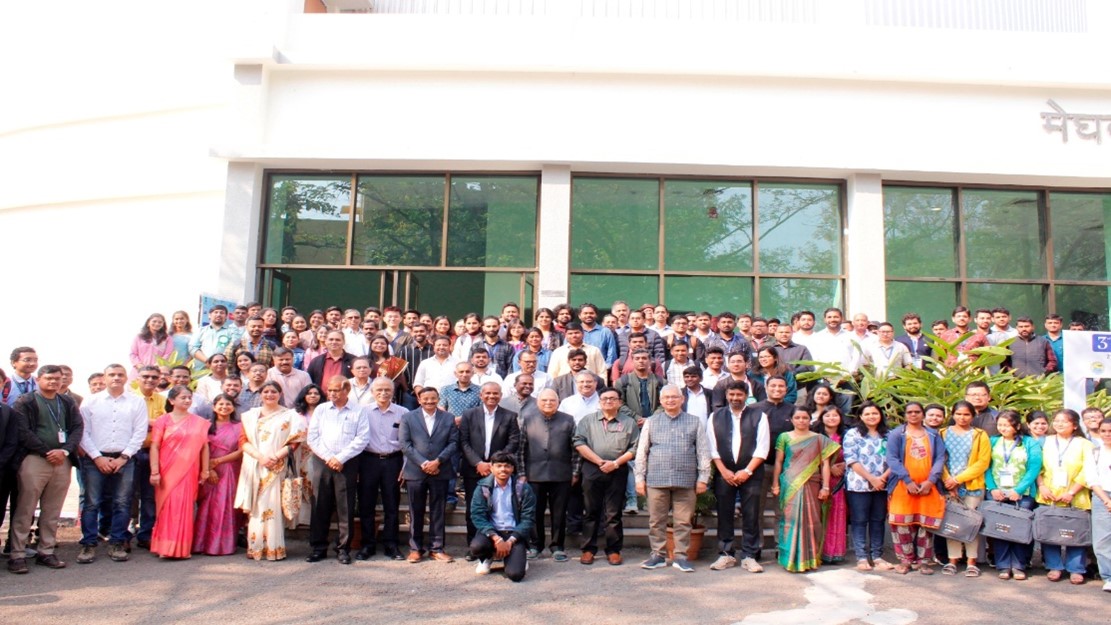
Theme on “Tracing Earth System Dynamics and Human–Environment Interactions through the Quaternary”, Around 200 participants attended the event
Posted On:
21 JAN 2026 8:32PM by PIB Mumbai
Pune, 21 January 2026
The 3rd Indian Quaternary Congress (IQC-2026), a premier national scientific conference on Earth’s environmental and climate history, was inaugurated on 21 January 2026 at the Indian Institute of Tropical Meteorology (IITM), Pune. The three-day congress, being held from 21 to 23 January 2026, is organized on the theme “Tracing Earth System Dynamics and Human–Environment Interactions through the Quaternary.”
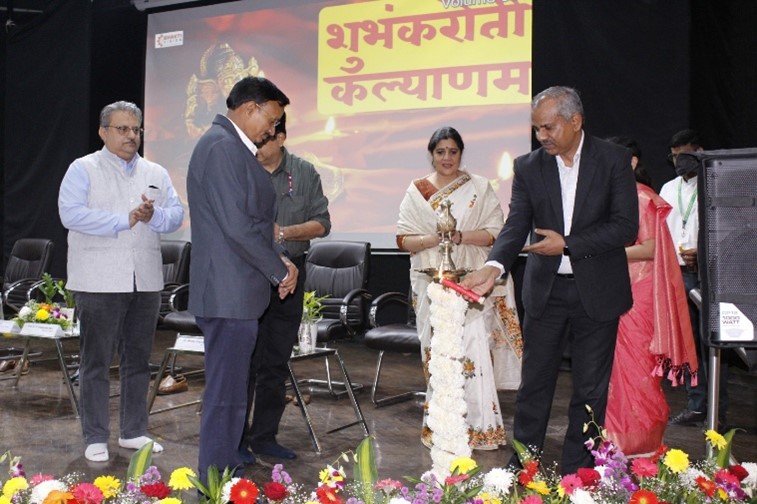
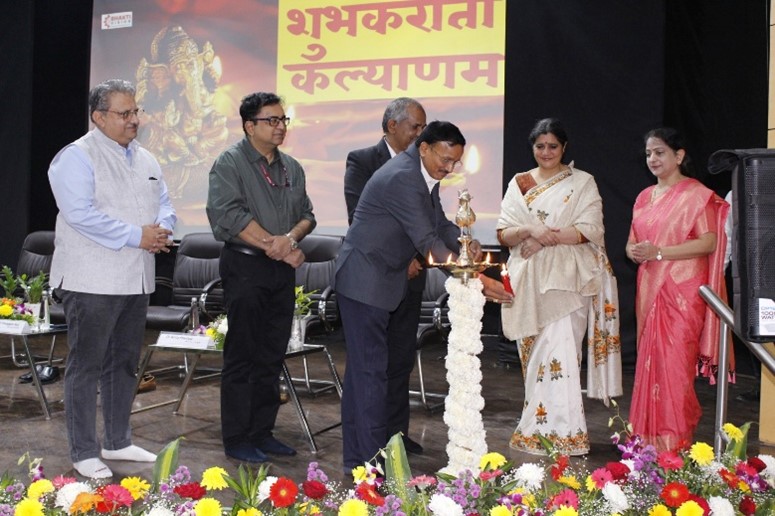
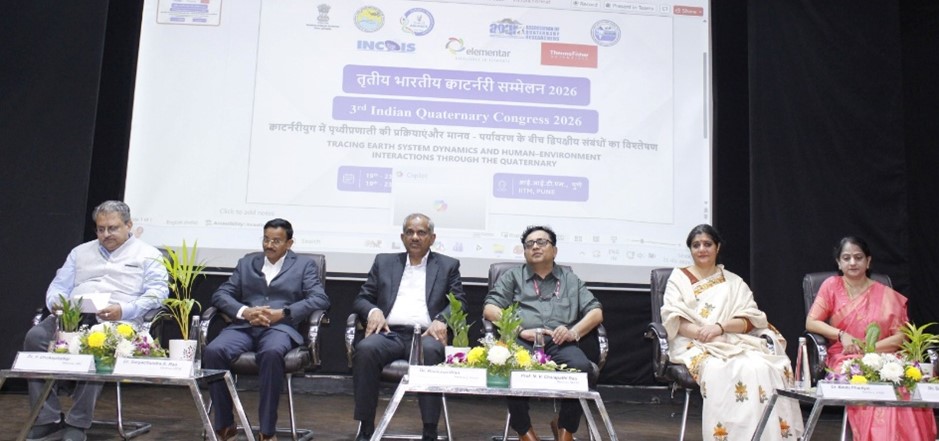
The Conference was inaugurated by Dr. M. Ravichandran, Secretary, Ministry of Earth Sciences (MoES), as the Chief Guest. Prof. N. V. Chalapathi Rao, Director, National Centre for Earth Science Studies (NCESS) as Guest of Honour, in the presence of Dr. Suryachandra A. Rao, Director, IITM and other dignitaries on the dais included Dr. P. Dhakephalkar, Director, Agharkar Research Institute (ARI), Dr. Binita Phartiyal, Secretary, Association of Quaternary Researchers (AOQR) and Dr. Suvarna Fadnavis, Project Director, Centre for Climate Change Research (CCCR at IITM).
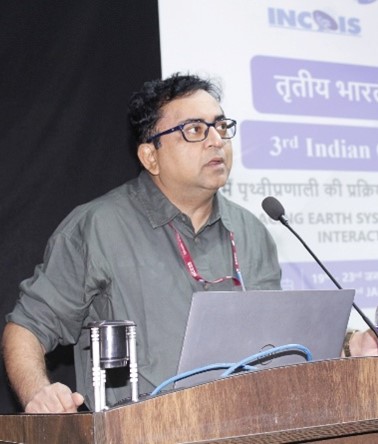
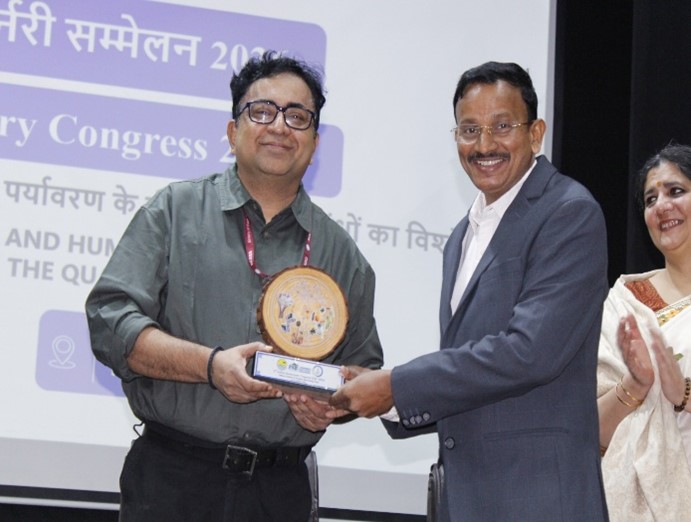
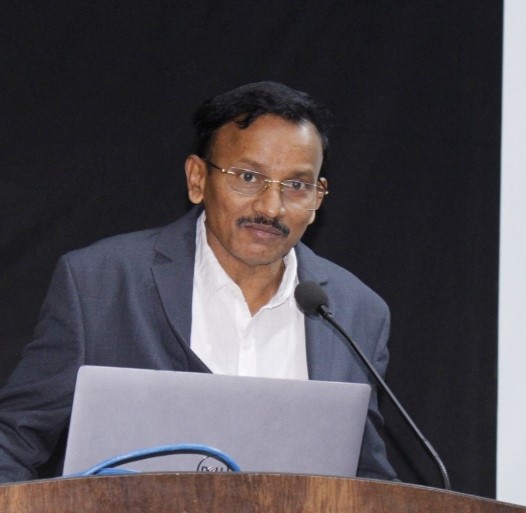
Addressing the gathering, Dr. M. Ravichandran emphasized the importance of translating Quaternary research into actionable scientific outcomes. He encouraged the scientists participating in the congress to work collaboratively and strongly suggested that, by the end of the workshop, a cumulative project proposal be submitted to the Ministry of Earth Sciences, representing the collective efforts and insights of all researchers involved.
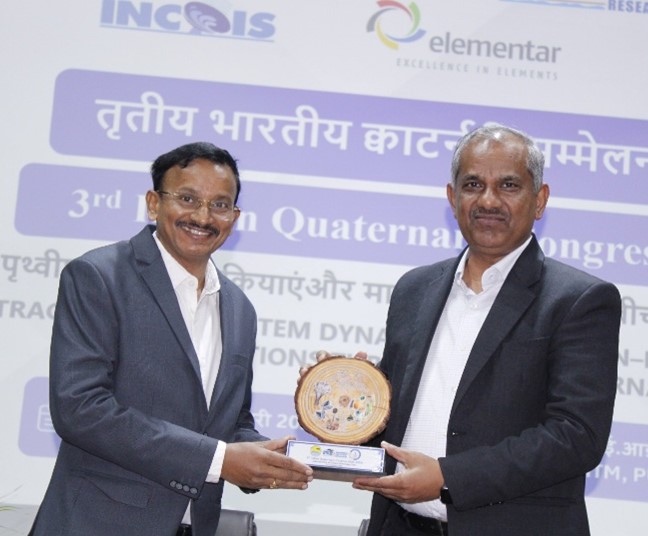
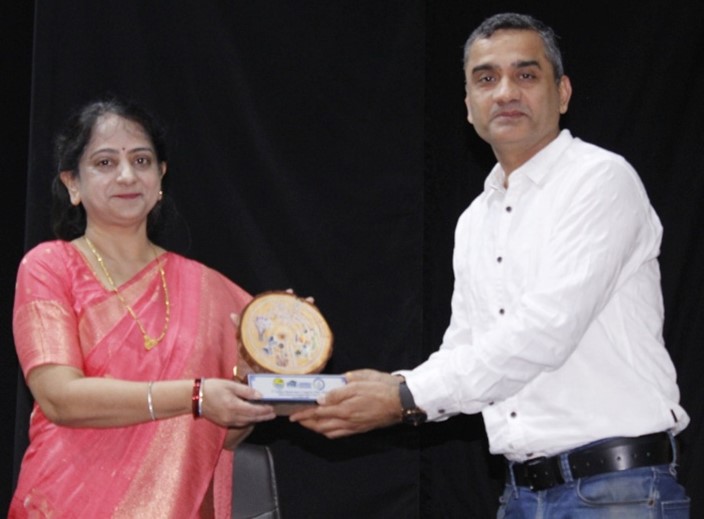
In his address, Dr. Suryachandra A. Rao highlighted that both past and future climate variability can be effectively represented through advanced climate models. He noted that IITM is uniquely positioned to integrate climate modellers and paleoclimate researchers, enabling the generation of meaningful insights into future climate change scenarios. He also underscored IITM’s long-standing legacy in paleoclimate research, recalling that Prof. G. P. Pant laid the foundation for paleoclimate studies in India at IITM, which was later strengthened by the contributions of Dr. K. Rupa Kumar and Dr. H.P. Borgaonkar.
Dr. Rao further informed that over three petaflops of climate data generated at IITM have already been made publicly accessible and announced that paleoclimatic datasets will also be made available for public access, enabling interested researchers to undertake advanced interdisciplinary studies. He encouraged participants to derive maximum scientific value from the deliberations and collaborations fostered during the conference.
Dr. Suvarna Fadnavis delivered the vote of thanks.
The congress features a series of plenary lectures by eminent scientists, focusing on recent advances and emerging perspectives in Quaternary science. On the opening day, plenary talks included “Retracing Sarasvati: The Lost River of the Harappan Civilization” by Prof. J. S. Ray, PRL, Ahmedabad and “Cretaceous–Paleogene Mass Extinction: A Magmatic Perspective” by Prof. N. V. Chalapathi Rao, Director, NCESS.
Plenary sessions over the subsequent days cover a wide range of themes, including earthquakes and climate interactions in the Kachchh Basin, Quaternary deformation and Himalayan natural hazards, archaeological perspectives on the Indian landscape, and abrupt climate events such as the 8.2 ka event and their implications for the future.
The Indian Quaternary Congress (IQC) is a biennial national scientific platform launched in 2022 to advance understanding of Earth’s environmental and climate history over the last 2.6 million years. The 3rd IQC-2026 is being jointly organized by IITM Pune and the Agharkar Research Institute, in collaboration with the Association of Quaternary Researchers (AOQR), with co-sponsorship from INCOIS, the National Centre for Polar and Ocean Research, Thermo Fisher Scientific, and Elementar.
The scientific programme includes plenary and keynote lectures by leading scientists, oral and poster presentations, thematic sessions, panel discussions on interdisciplinary research, and optional field visits to nearby Quaternary archives or geological sites. Special rapid-talk sessions are planned to highlight research by PhD scholars and postgraduate students. The conference will cover all aspects of the Quaternary period, encompassing the terrestrial, marine, and polar realms.
The scientific programme is structured around the following themes:
THEME 1: Terrestrial Processes and Paleoclimate Dynamics during the Quaternary
THEME 2: Ocean, Polar and Cryospheric Systems, including the Himalayas
THEME 3: Human-Climate Interactions and Societal Evolution
THEME 4: Methods, Modelling, and Applications
THEME 5: Biodiversity, Biogeography, and Evolutionary Responses through the quaternary
The conference has attracted participants from across India, along with students and early-career researchers from international universities in Taiwan, Australia, and Belgium, highlighting the growing national and international engagement in Quaternary and paleoclimate research.
Prior to the said workshop, A two days- National Training Workshop on “Stable Isotopes in Palaeoclimatology” was also conducted by the DESK- IITM (MoES) during 19-20 January 2026 as a pre-Conference which offered a compelling view of how subtle isotope variations help reconstruct past climates and their influence on human societies. Building on the fundamentals of isotope geochemistry, advanced isotope systems and their broader Earth and planetary science applications were explored under the eminent Experts, Prof. J. S. Ray (PRL), Prof. Anindya Sarkar (IIT Kharagpur), Dr. Shreyas Managave (IISER Pune), Dr. Amzad H. Laskar (PRL), Dr. Waliur Rahaman (NCPOR, Goa), Prof. Prosenjit Ghosh (IISc Bengaluru). The workshop participants were taken to the interactive laboratory visits, where they were engaged directly with scientists, reinforcing how isotope science connects climate change, river dynamics, and human responses across deep time. The certificates were distributed to the workshop participants by the Director of the Institute.
PIB Pune | Harshal Akude / Priti Malandkar
Follow us on social media: @PIBMumbai
  /PIBMumbai
  /pibmumbai
  pibmumbai[at]gmail[dot]com
  /PIBMumbai
  /pibmumbai
(Release ID: 2217079)
Visitor Counter : 141