Ministry of Home Affairs
RRU AND IICA LAUNCH THE SECOND COHORT OF THE MASTER’S IN FINANCIAL AND ECONOMIC SECURITY
A specialised program for working professionals to strengthen India’s financial integrity and economic sovereignty
प्रविष्टि तिथि:
31 OCT 2026 4:36PM by PIB Ahmedabad
Rashtriya Raksha University (RRU), an Institution of National Importance, Ministry of Home Affairs, Government of India, with the Indian Institute of Corporate Affairs (IICA), has commenced the second cohort of the Masters in Financial and Economic Security (MFES). Building on the experience and outcomes of its first cohort, the second batch has begun with participation from professionals representing regulatory bodies, law-enforcement agencies, police organisations, financial institutions, the legal profession, entrepreneurship and other relevant sectors.
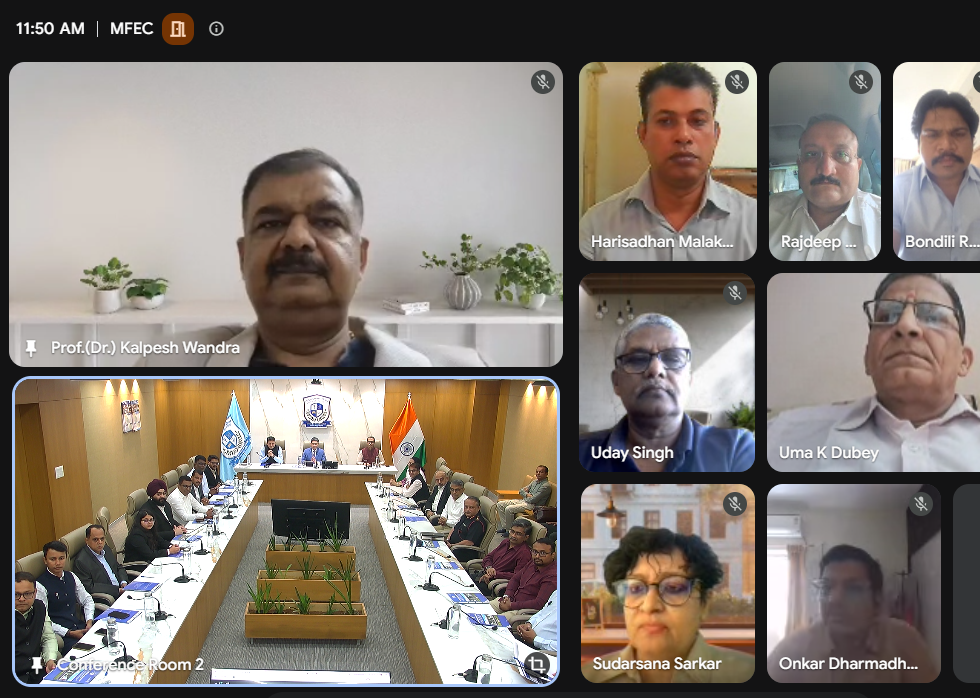
Designed especially for working professionals, MFES is delivered in a hybrid format that enables participants to pursue advanced learning alongside their professional responsibilities. The program seeks to develop a specialised cadre of practitioners equipped with the knowledge and practical capabilities required to safeguard India’s financial integrity, economic security and sovereignty.
Financial security has become an essential pillar of national security and sustainable economic development. The integrity of financial systems supports public confidence, responsible investment, stable markets and the effective delivery of economic policy. Illicit financial flows, money laundering, terrorist financing, sanctions evasion, financial fraud and the misuse of corporate structures can weaken institutions, distort markets and undermine national interests. Strengthening financial and economic security therefore requires coordinated action across regulators, law-enforcement agencies, financial institutions, industry and academia.

Rapid technological change is also reshaping the financial-security landscape. Digital payments, virtual digital assets, decentralised finance and cross-border platforms can be exploited for fraud, concealment of proceeds and movement of illicit funds. Artificial intelligence can enable sophisticated impersonation, deepfake-enabled scams, automated cyberattacks and the manipulation of financial information, while also creating new opportunities for risk detection and investigation. These developments call for professionals who understand both the technology and the legal, regulatory and operational frameworks needed to respond effectively.
The MFES program addresses these emerging challenges through an applied, practice-oriented approach. Alongside academic instruction, it places emphasis on practical learning, case studies, expert interactions and campus-immersion activities. Participants are provided opportunities to engage with institutions and organisations that form important pillars of India’s financial and economic architecture, including regulators, investigative and enforcement agencies, financial-sector bodies and other stakeholders. The program also incorporates global perspectives, including international standards, cross-border cooperation, comparative regulatory approaches and developments in anti-money laundering and counter-terrorist financing. Its engagement with artificial intelligence and emerging financial technologies is intended to help participants assess evolving risks and understand the responsible use of technology in financial supervision, compliance and enforcement.
Addressing the inaugural ceremony, Prof. (Dr.) Kalpesh H. Wankhade, Pro Vice-Chancellor, RRU, highlighted that financial security is a key pillar of a strong and self-reliant India. He emphasised the importance of building a specialised professional cadre with a sound understanding of the practical dimensions of financial and economic security, and of strengthening cooperation among institutions working in this field.
Mr. Sunil Kavishwar, Director, School of Criminal Law and Military Law (SCLML), RRU, spoke about the challenges emerging from rapid technological advancements and their implications for financial crime, supervision and enforcement. He underlined the need for professionals to remain equipped to understand and respond to technology-enabled threats.
Prof. (Dr.) Naveen Sirohi, Head, School of Finance and Management, and Director, Forum of Indian Regulators (FOIR) Centre, IICA, highlighted the relevance of specialised capacity-building programs like MFES to create a new cadre of economic security professionals. He stressed that the Viksit Bharat Vision requires not just the economic growth but also its protection from the emerging threats like illicit fund flows, supply chain disruptions, tech driven threats and geoeconomics tensions.
The MFES program also contributes to the broader national vision of Viksit Bharat @2047 articulated by the Hon’ble Prime Minister of India, Shri Narendra Modi. A secure and trustworthy financial ecosystem is fundamental to this vision: financial integrity helps protect public resources, promotes investor confidence, supports inclusive growth, strengthens institutions and enables sustainable economic development. By building professional capacity to prevent, detect and respond to financial threats, MFES seeks to contribute to a resilient financial system and a secure, prosperous India.
The second cohort brings together participants from diverse professional backgrounds, creating an interdisciplinary learning environment in which experience from regulation, law enforcement, policing, finance, law and business can inform collective problem-solving. Through this collaborative approach, RRU and IICA aim to strengthen institutional capacity and promote a deeper understanding of the changing dimensions of financial and economic security.
(रिलीज़ आईडी: 2330881)
आगंतुक पटल : 77
इस विज्ञप्ति को इन भाषाओं में पढ़ें:
Gujarati