Ministry of Labour & Employment
Ministry of Labour & Employment expands “Shram Samvad” outreach across industrial clusters
District-level programmes held in Bhiwadi, East Delhi, Dehradun, Chhatrapati Sambhajinagar and Bhilwara to strengthen awareness on Labour Codes, compliance and social security
प्रविष्टि तिथि:
01 OCT 2026 3:47PM by PIB Delhi
The Ministry of Labour & Employment, Government of India, conducted district-level Capacity Building and Awareness Programmes under “Shram Samvad” across five industrial clusters — Bhiwadi and Bhilwara in Rajasthan, East Delhi, Dehradun in Uttarakhand and Chhatrapati Sambhajinagar in Maharashtra — on September 30, 2026. The programmes brought together senior government officials, State Labour Departments, industry associations, employers, HR and legal professionals and other stakeholders to facilitate a better understanding of the four Labour Codes, employer compliance requirements and key employment and social-security initiatives of the Government.
The Shram Samvad campaign, launched nationwide on September 28, 2026, is a 90-day outreach initiative under which the Ministry is undertaking district-level engagement across 316 districts in all 36 States and Union Territories, with a focus on industrial clusters. The initiative seeks to bridge the gap between the legislative framework and its implementation on the ground by providing employers and other stakeholders with greater clarity on the provisions, applicability and compliance requirements under the new Labour Codes.
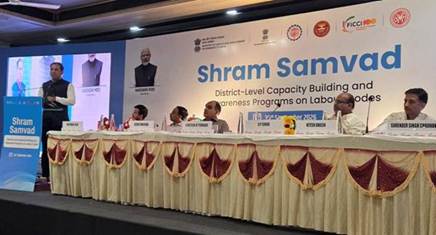
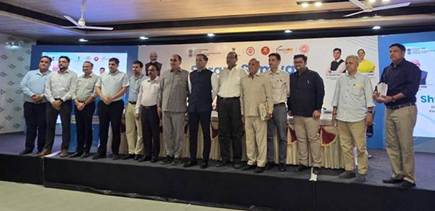
At Bhiwadi, Rajasthan, Shri Ashutosh A.T. Pednekar, Joint Secretary, Ministry of Labour & Employment, delivered the keynote address, outlining the key provisions of the Labour Codes and the Ministry’s vision for district-level capacity building. The programme, organised in collaboration with FICCI and the Bhiwadi Manufacturers Association (BMA), was attended by more than 100 participants. Sessions covered the broad framework of the Labour Codes, employer compliance requirements, Pradhan Mantri Viksit Bharat Rozgar Yojana (PMVBRY) and Pradhan Mantri Shram Yogi Maandhan (PM-SYM), along with interactive discussions on field-level implementation and stakeholder concerns.
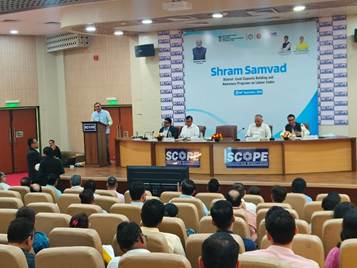
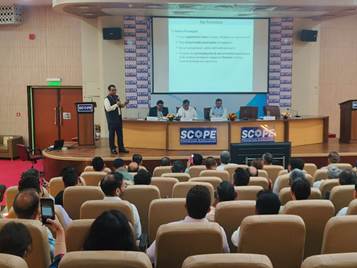
In East Delhi, the programme at SCOPE Minar, Laxmi Nagar, was addressed by Dr. Mahendra Kumar, Joint Secretary, Ministry of Labour & Employment, and Shri Pandurang Pole, Secretary-cum-Commissioner (Labour), Government of NCT of Delhi. More than 100 participants from industry and the labour ecosystem attended the programme. Technical sessions focused on the new Labour Codes, their objectives and major provisions, employer compliance requirements, PMVBRY and PM-SYM.
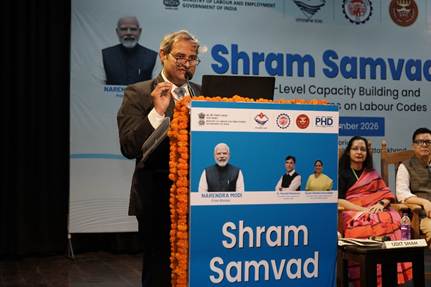
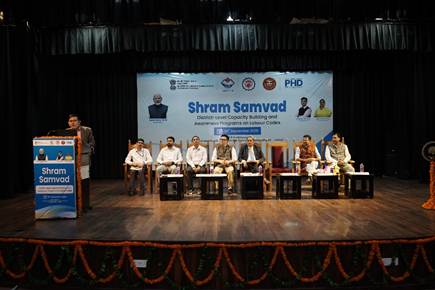
The programme at Dehradun was organised in partnership with PHDCCI, and attended by around 90 participants, including representatives of industry associations and business establishments, employers, industrialists and professionals. Shri Govind Ram, Deputy Secretary, Ministry of Labour & Employment, provided an overview of the four Labour Codes and the employer compliance chain. Shri Venkanna Banothu, Director of Mines Safety, DGMS, and senior representatives of the Uttarakhand Labour Department also participated.
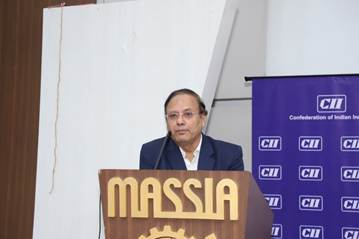
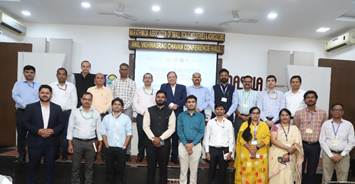
At Chhatrapati Sambhajinagar, Maharashtra, the programme was organised in collaboration with the Labour Department, Government of Maharashtra, and witnessed participation of around 200 stakeholders, including representatives of the Confederation of Indian Industry (CII). Shri Chaman Lal Guleria, Director, Ministry of Labour & Employment, delivered the keynote address and provided an overview of the programme. Technical sessions covered the Labour Codes and employer compliance requirements, followed by dedicated sessions on PMVBRY and PM-SYM.
At Bhilwara, Rajasthan, the Ministry, in collaboration with the Labour Department, Government of Rajasthan, organised the Shram Samvad programme with around 100 participants representing employers, industry, HR, legal and finance professionals and other stakeholders. Dr. Arvind, Director General, V.V. Giri National Labour Institute (VVGNLI), addressed the inaugural session, which focused on the importance of awareness, preparedness and compliance for effective implementation of the new labour law framework. The first technical session, conducted by Shri Sanjay Rawat, Deputy Secretary, Ministry of Labour & Employment, provided an overview of the four Labour Codes, their objectives and major reforms.
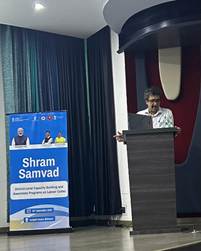
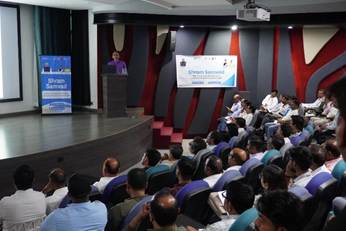
Across the five programmes, technical discussions covered the Code on Wages, 2019; Industrial Relations Code, 2020; Code on Social Security, 2020; and Occupational Safety, Health and Working Conditions Code, 2020. Sessions focused on the objectives and major provisions of the Codes, applicability thresholds and employer obligations, including wages, appointment letters, working hours, overtime, social-security coverage, workplace safety, contract labour and industrial relations mechanisms.
A key component across the programmes was the interactive Question-and-Answer sessions, enabling participants to raise practical issues relating to applicability, statutory thresholds, records and returns, employee benefits and other compliance requirements.
Senior officials and representatives of EPFO, ESIC and the Central Labour Commissioner’s office participated in the programmes across the locations, enabling stakeholders to engage directly with different arms of the labour administration on implementation and compliance-related matters.
***
Rini Choudhury/Anjelina Alexander
(रिलीज़ आईडी: 2317614)
आगंतुक पटल : 106
इस विज्ञप्ति को इन भाषाओं में पढ़ें:
Marathi