PIB Backgrounder
From AI to EVs: How Technology Is Transforming Urban Swachhata
प्रविष्टि तिथि:
01 OCT 2026 1:01PM by PIB Delhi
On October 2, 2014, the Swachh Bharat Mission began with a simple idea: keep our surroundings clean. Avoid littering public spaces and make cleanliness a shared responsibility. What began with brooms, bins and citizen participation soon became a mass movement. Today, that movement is embracing a new generation of technology. Urban sanitation is becoming digital, sensor-enabled and electrified. Digital dashboards are making services easier to track. AI-powered robots are entering spaces too hazardous for workers. Electric vehicles are bringing cleaner mobility to waste collection. From the broom to the bot, technology is giving Swachhata a smarter edge — creating cleaner cities, safer workplaces and more responsive services.
Raipur’s Digital Leap: Dashboard Replaces a Queue
Earlier, Raipur residents had to visit the municipal office for septic tank cleaning services. The new digital system lets residents request desludging services online, reducing the need for an in-person visit and cutting wait times.
Raipur Municipal Corporation has introduced a digital Faecal Sludge Management (FSM) dashboard prototype based on the UPYOG (Urban Platform for DeliverY of Online Governance) platform. Residents can use the system to book desludging services, make payments and track the process digitally. The platform is associated with the Ministry of Housing and Urban Affairs (MoHUA), the National Institute of Urban Affairs (NIUA) and the National Urban Digital Mission (NUDM).
The process is designed to be simple. A resident enters a mobile number or property ID, and the system automatically locates the address. A single-page form enables desludging to be booked. But the real change happens behind the screen.
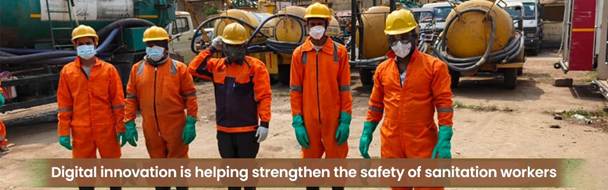
Once a request is placed, the system helps track the service in real time. The “one application, one trip” approach supports better planning. Drivers upload photographs after completing the work, enabling the service to be verified digitally. The dashboard also helps the city monitor vehicles and plan resources more efficiently. For sanitation workers, technology is also changing how hazardous work is approached. Digital monitoring supports the shift from manual sewer cleaning towards mechanised cleaning. This reduces human risk and supports safer work practices.
What looks like a simple dashboard is therefore doing more than replacing paperwork. It connects the citizen, the service provider and the municipal system on one digital platform. In Raipur, the journey from “request” to “service” is becoming a trackable digital process.
G-SPIDER: Inside the Canal, a Robot Takes Over
In the heart of Thiruvananthapuram, the Amayizhanchan Canal disappears beneath the Thampanoor railway premises. The covered stretch has restricted vertical clearance, continuous water flow and no safe entry points for workers. Conventional cleaning methods therefore become extremely difficult in this confined space.
Thiruvananthapuram Municipal Corporation has brought a robot to clean this difficult space. The city has deployed G-SPIDER, an AI-powered canal-cleaning system developed by Technopark-based Genrobotic Innovations, the makers of the robotic scavenger Bandicoot.
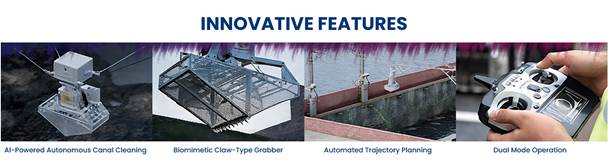
The robot uses machine vision and sensor intelligence to detect, assess, and remove accumulated waste. It adapts to different waste types, flow conditions and structural challenges in real time. Its five-degrees-of-freedom mechanism uses a biomimetic claw to pick up mixed and irregular debris. The extracted waste is then transferred directly into designated collection vehicles.
The significance goes beyond automation. G-SPIDER enhances worker safety by minimising direct exposure to toxic gases, contaminated water and hazardous waste. It can also operate during high water levels and continuous-flow conditions, supporting scheduled and systematic canal cleaning.
That makes G-SPIDER more than a cleaning machine. The deployment demonstrates how technology can enable sanitation work in environments where human entry poses significant safety risks. The model also points to wider possibilities. The Thiruvananthapuram deployment showcases a scalable and replicable approach for other high-risk canals and drainage networks.
Garbage Trucks Get an Electric Upgrade
The daily garbage collection vehicle is also becoming part of the clean-city transition. Across Guntur (in Andhra Pradesh), Chennai and Indore cities, electric vehicles are being integrated into door-to-door waste collection, combining cleaner mobility with smarter waste management.
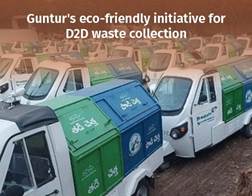
In Guntur city, more than 200 electric autos have brought cleaner mobility to door-to-door waste collection across the city. Each vehicle is equipped with GPS tracking, allowing real-time monitoring of collection operations. The initiative eliminates the need for more than 71,000 litres of diesel annually and is estimated to reduce greenhouse gas emissions by 21,000 tonnes over a decade.
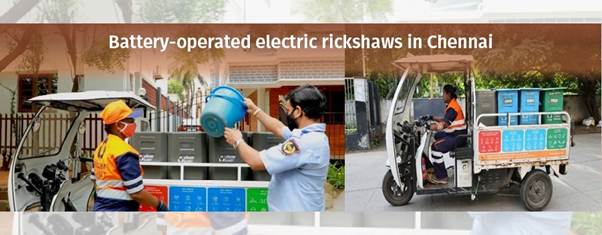
Tamil Nadu’s Chennai has brought electric mobility directly into its daily waste collection system. The Greater Chennai Corporation has deployed 5,478 battery-operated e-rickshaws across all 15 zones for door-to-door collection. The vehicles travel around 40 km a day, replacing diesel-powered collection vehicles with e-rickshaws and helping reduce pollution. The fleet reduces around 41 tonnes of carbon emissions each day, amounting to an annual reduction of 15,160 tonnes.
But the change is not limited to cleaner vehicles. Each e-rickshaw has separate bins for wet, dry and hazardous waste, bringing segregation into the collection process itself. The fleet now covers 24,621 streets and more than 2.1 million households, while audio systems on the vehicles carry waste-segregation messages through neighbourhoods. The initiative also supports employment for more than 6,000 people.
Indore city in Madhya Pradesh has taken the electric transition a step further by linking waste collection with renewable energy. The city has deployed 100 electric vehicles for door-to-door collection in core areas. Real-time GPS tracking through the Integrated Command and Control Centre (ICCC) supports monitoring and service transparency. The initiative is expected to reduce annual carbon emissions by about 24,918 tonnes and save around ₹5.97 crore each year in fuel and maintenance costs.
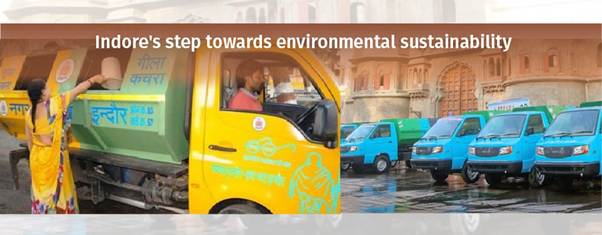
The city has also established 20 solar charging stations, each equipped with 10 kW solar panels. Together, they can generate 800–1,000 units of green energy daily and charge 80–100 vehicles a day. Across these cities, the garbage collection vehicle is becoming more than a means of transport. It is becoming a cleaner, connected and increasingly efficient part of urban sanitation.
The Next Chapter: Smarter, Safer Swachhata
Technology is giving urban sanitation new tools to clean smarter, work safer and respond faster. From digital dashboards and AI-powered robots to electric waste collection, these innovations are bringing technology closer to everyday Swachhata. The next chapter is about taking these innovations to more cities, adopting them in daily life, making urban sanitation cleaner, safer and more responsive.
Reference
Ministry of Housing and Urban Affairs
Click here to see pdf
****
PIB Research
(रिलीज़ आईडी: 2317507)
आगंतुक पटल : 177
इस विज्ञप्ति को इन भाषाओं में पढ़ें:
हिन्दी