Ministry of Health and Family Welfare
Union Minister for Health and Family Welfare Shri J.P. Nadda Addresses World Congress of Gastroenterology 2026 in New Delhi
India Advancing Towards Holistic and Inclusive Healthcare with Greater Emphasis on Prevention and Health Promotion: Union Health Minister Shri J.P. Nadda
More Than 600 million Beneficiaries Covered Under AB-PMJAY, Providing ₹5 Lakh Health Cover Per Family: Union Health Minister Shri J.P. Nadda
India Recorded 86% Decline in Maternal Mortality Between 1990 and 2023: Union Health Minister Shri J.P. Nadda
Union Health Minister Shri J.P. Nadda Highlights Government’s Comprehensive Approach to Healthcare at WCOG 2026
प्रविष्टि तिथि:
30 SEP 2026 9:07PM by PIB Delhi
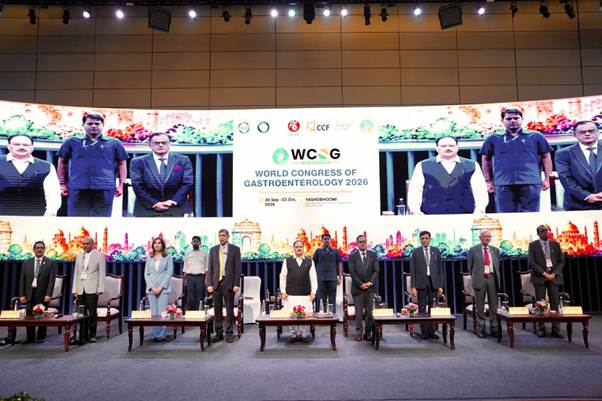
Union Minister for Health & Family Welfare, Shri J.P. Nadda, today addressed the World Congress of Gastroenterology (WCOG 2026) in New Delhi. Being held in India for the first time, the four-day international Congress commenced today and will continue till 3 October 2026, bringing together leading experts, clinicians, researchers and healthcare professionals from India and across the world.
With the theme “Transforming Gastrointestinal Health, Preserving Nature,” WCOG 2026 is jointly hosted by the Indian Society of Gastroenterology (ISG) and the World Gastroenterology Organisation (WGO), in collaboration with the Indian National Association for Study of the Liver (INASL), Crohn’s and Colitis Foundation India (CCFI), Indian Pancreas Club (IPC) and Indian Neurogastroenterology and Motility Association (INMA). The Congress focuses on advances in gastrointestinal health through cutting-edge science, clinical practice, research, innovation and multidisciplinary exchange.
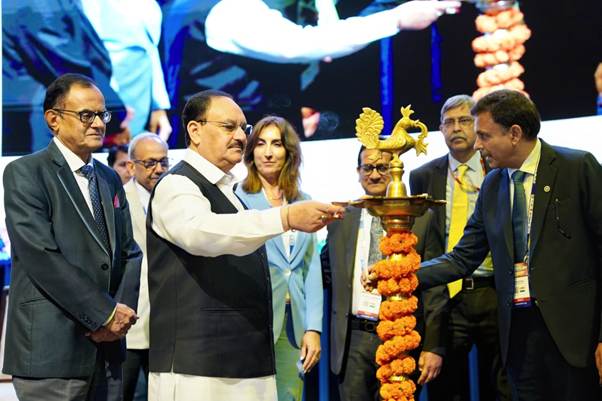
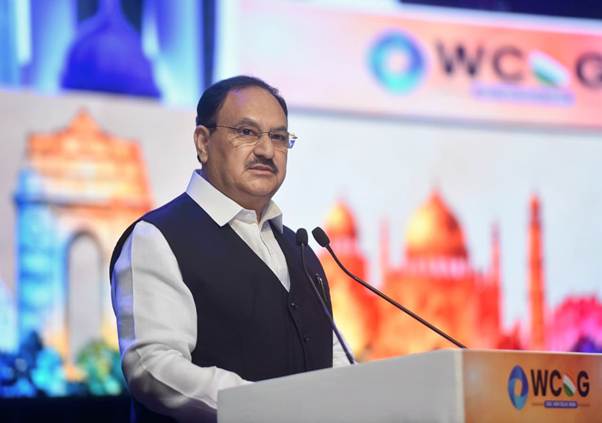
Addressing the inaugural session, Union Health Minister Shri J.P. Nadda highlighted the Government’s efforts towards bringing about a comprehensive and holistic approach to healthcare, with greater emphasis on preventive and promotive healthcare alongside curative, rehabilitative and palliative care.
Shri Nadda said that, ‘Under leadership of Prime Minister Shri Narendra Modi, the National Health Policy of 2017 marked an important shift towards a comprehensive, holistic and inclusive approach to healthcare, encompassing preventive, promotive, curative and rehabilitative dimensions. Under the policy framework, the Government is strengthening health systems across all levels of care, with emphasis on achieving an optimal balance between primary, secondary and tertiary healthcare and strengthening linkages between different levels of care.
Furthermore, He also highlighted the role of Ayushman Arogya Mandirs in strengthening primary healthcare and promoting preventive and promotive health services. He said that the network of around 1.86 lakh Ayushman Arogya Mandirs is serving as an important point of contact for people and is helping bring comprehensive primary healthcare closer to communities.
Shri Nadda underlined that screening for non-communicable diseases (NCDs) is an important pillar of preventive healthcare. Through Ayushman Arogya Mandirs, population-based screening is being undertaken for people aged 30 years and above for hypertension, diabetes and common cancers, including oral, breast and cervical cancers.
He informed that more than 420 million screenings for hypertension, 420 million for diabetes, 360 million for oral cancer, 170 million for breast cancer and 90 million for cervical cancer have been conducted so far.
The Union Health Minister also highlighted the Government’s efforts to promote healthy dietary practices and active lifestyles. He referred to initiatives such as the Eat Right India campaign of FSSAI and Poshan Maah, which seek to create greater awareness about healthy eating habits and physical activity. He also recalled the Prime Minister’s call to citizens to reduce oil consumption as part of efforts to address obesity and promote healthier lifestyles.
Highlighting the progress made in maternal and child health, Shri Nadda noted that institutional deliveries have increased from 79 per cent in 2015-16 to around 90 per cent, as reflected in the National Family Health Survey. He also referred to improvements in maternal and child health outcomes, noting that between 1990 and 2023, India recorded an 86 per cent decline in maternal mortality, while under-five mortality declined by 79 per cent and neonatal mortality by 70 per cent over the respective period.
Shri Nadda further highlighted the Government’s efforts to ensure that financial constraints do not prevent people, particularly those belonging to economically vulnerable and marginalised sections, from accessing quality healthcare. He said that Ayushman Bharat–Pradhan Mantri Jan Arogya Yojana (AB-PMJAY) was launched in September 2018 with the objective of providing financial protection against hospitalisation and ensuring access to necessary healthcare.
Shri Nadda stated that AB-PMJAY provides health coverage of ₹5 lakh per family per year and has expanded its coverage to more than 600 million beneficiaries, while the scheme has also been extended to around 60 million senior citizens aged 70 years and above, irrespective of their economic status.
He noted that more than 13 crore treatments have been provided under the scheme, involving healthcare expenditure of over ₹2 lakh crore. He said these achievements reflect the scale of the Government’s efforts to make quality healthcare more accessible to citizens.
He also highlighted measures to improve the affordability of medicines and medical devices. Under the Pradhan Mantri Bhartiya Janaushadhi Pariyojana, quality generic medicines are being made available at substantially lower prices compared to branded medicines. He informed that more than 20,149 Jan Aushadhi Kendras are currently serving people across the country and that citizens have collectively saved around ₹45,000 crore on their medicine expenditure through the initiative.
Shri Nadda said that these measures have contributed to reducing the financial burden of healthcare on households. He noted that out-of-pocket expenditure as a proportion of total health expenditure declined from 62 per cent in 2014-15 to 43.4 per cent in 2021-22, reflecting progress towards greater financial protection in healthcare.
He also emphasised that while these achievements provide a strong foundation, continued research and innovation remain essential to address emerging health challenges. He expressed confidence that doctors and researchers working in the field of gastroenterology would contribute innovative solutions to control major gastrointestinal infections and address the evolving burden of gastrointestinal and liver diseases.
Referring to the theme of the Congress, “Transforming Gastrointestinal Health, Preserving Nature,” the Union Health Minister said that the theme is highly relevant in the present context. He expressed confidence that deliberations among leading experts from across the world would contribute to identifying new approaches and solutions for addressing digestive and liver diseases.
Shri Nadda said that international scientific forums such as WCOG provide valuable opportunities for sharing knowledge, learning from different healthcare systems and strengthening international collaboration. He also highlighted the importance of such platforms for young doctors, who would carry forward the next generation of research, clinical practice and innovation in gastroenterology.
Concluding his address, Shri Nadda wished all delegates a successful and productive Congress and invited national and international participants to make full use of the opportunity to exchange knowledge, experiences and ideas during the four-day event.
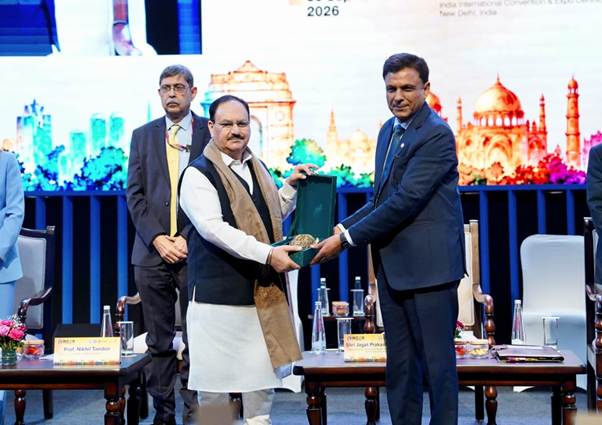
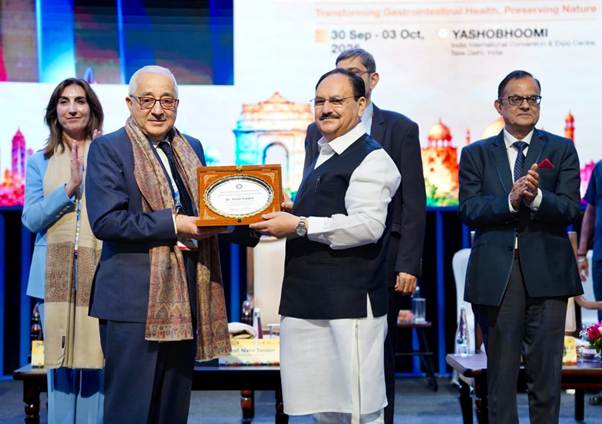
On the occasion, Shri J.P. Nadda presented Lifetime Achievement Awards to distinguished veterans of the field, recognising their significant contributions to gastroenterology and advancing patient care, research and medical practice.
WCOG 2026 brings together a diverse group of healthcare professionals, including gastroenterologists, hepatologists, pancreatologists, endoscopists, gastrointestinal surgeons, dieticians, nurses, technologists and allied healthcare professionals from across the world. The participation of professionals from different specialties provides an opportunity for exchange of knowledge, experience and best practices.
The Congress also highlights India’s growing contribution to global gastrointestinal research, including in the areas of epidemiology, guidelines and translational medicine. The platform enables Indian and international experts to share research findings, clinical experiences and emerging approaches in gastrointestinal healthcare.
The scientific programme features participation from international and national experts and includes scientific sessions, lectures, debates, workshops, live demonstrations and abstract presentations. The programme also provides opportunities for interaction with industry and technology partners, facilitating discussions on emerging technologies and innovations in gastrointestinal healthcare.
The Congress provides a global platform for knowledge exchange, collaboration and innovation in gastroenterology and allied disciplines. It also offers an opportunity for Indian healthcare professionals, researchers and institutions to engage with the international medical community and contribute to global scientific discussions in the field.
The first-time hosting of the World Congress of Gastroenterology in India marks an important milestone in the country’s engagement with the global gastroenterology community and provides an opportunity to further strengthen international scientific partnerships and multidisciplinary collaboration in healthcare.
Prof. Nikhil Tandon, Director, AIIMS, Prof. Ajay Kumar Sood, Principal Scientific Adviser to the Government of India; Dr. Carolina Olano, President, WGO; Dr. Govind Makharia, Chairman, Local Organising Committee (LOC), WCOG; Dr. Mathew Philip, Secretary General, ISG were also present at the Event.
*****
SR
(रिलीज़ आईडी: 2317346)
आगंतुक पटल : 91