PIB Backgrounder
Swachhata Hi Seva
Making Cleanliness a Collective Responsibility
प्रविष्टि तिथि:
18 SEP 2026 7:28PM by PIB Delhi
Swachh Bharat Mission (SBM), launched in 2014, has evolved from toilet construction into a broader sanitation movement covering waste management, behaviour change and citizen participation. Swachhata Hi Seva (SHS), launched in 2017, is a dedicated campaign that provides an annual platform for citizens and institutions to undertake collective cleanliness action. Over the years, SHS has evolved with changing cleanliness priorities, bringing greater focus to plastic waste management, visual cleanliness and garbage-free public spaces. The 2023 and 2024 editions further expanded the campaign through large-scale shramdaan, public-space transformation, youth participation, SafaiMitra welfare, and community engagement. SHS 2025 brought Swachhata into community celebrations through Swachhotsav, clean public spaces, SafaiMitra initiatives, and eco-friendly festivities. SHS 2026 carries this evolution forward with the theme “Swachhata Mein Sahbhag,” emphasising collective ownership, youth engagement, waste-management responsibilities, and sustained cleanliness practices.
Swachh Bharat Mission: Building a Clean India
Image 1: Logo of Swachh Bharat Mission
|
The Swachh Bharat Mission (SBM), launched on 2 October 2014, is one of the largest sanitation movements led by the government. The logo of SBM represents the spectacles of Mahatma Gandhi, who envisioned Swachhata as the principle that "Cleanliness is next to godliness." The logo helped in creating the brand value and representing the emotion for cleanliness worldwide. It also helped people associate themselves easily and quickly with the SBM.
The Mission has two components: Swachh Bharat Mission-Grameen (SBM-G) and Swachh Bharat Mission-Urban (SBM-U). SBM-G focuses on rural sanitation, toilet access and usage, and solid and liquid waste management. SBM-U focuses on urban sanitation, waste management, public spaces, and cleanliness infrastructure.
The impact of this mission is now visible across India’s villages and cities. Rural India was declared Open Defecation Free (ODF) in 2019. Further, as of 17 September 2026, India has attained over 5.69 lakh ODF Plus villages and more than 5.25 lakh have achieved ODF Plus Model status. More than 5.38 lakh villages have established solid waste management arrangements, and over 5.65 lakh villages have established liquid waste management systems. A total of 1,314 GOBARdhan biogas plants is currently operational in 585 districts. At the village household level, 12.22 crore individual toilets and 98,273 biogas plants have been constructed.
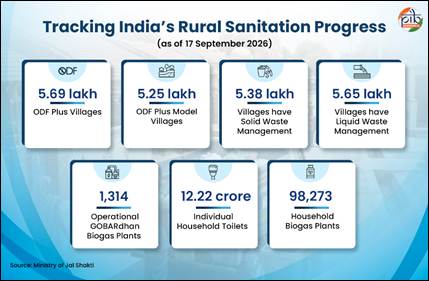
ODF Plus and ODF Plus Model Villages
An ODF Plus village not only sustains ODF status but also effectively manages solid and liquid waste, while maintaining visual cleanliness. Along with sustaining ODF Plus village status, these villages are classified into three progressive stages: Aspiring, Rising, and Model. Aspiring villages manage either solid or liquid waste. Rising villages manage both solid and liquid waste. Model villages, in addition to both waste streams, also demonstrate visual cleanliness and display ODF Plus messaging.
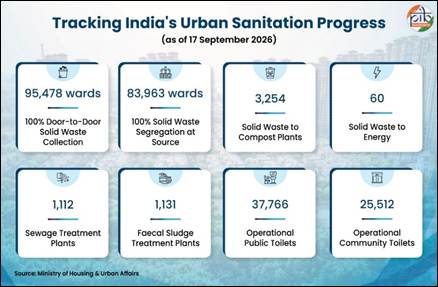
In urban areas, 95,478 wards have 100% door-to-door solid-waste collection, and 83,963 wards have 100% solid waste segregation at source. India has 3,254 solid waste-to-compost plants, processing 1.39 lakh tonnes and 60 solid waste-to-energy plants, processing 25,759.50 tonnes of waste every day. Further, 1,112 sewage treatment plants are processing 41,020.63 megalitres and 1,131 faecal sludge treatment plants are processing 95,371 kilolitres of liquid waste per day. Urban areas have 68,339 public sanitation facilities, comprising 37,766 public toilets and 25,512 community toilets, and 5,061 urinals.
Thus, the SBM has evolved from mere toilet construction towards holistic sustainable sanitation systems. Behaviour change, waste management and citizen participation now form important parts of this transformation. Behaviour change at such a mass scale has been made possible through several national-level campaigns, most prominent of them being the ‘Swachhata Hi Seva’ campaign.
Swachhata Hi Seva: Making Cleanliness a People’s Movement
Image 2: The Logo of SHS Campaign
|
Swachhata Hi Seva (SHS) has been observed annually since 2017. The campaign precedes Swachh Bharat Diwas, which is organised every year on 2 October. It mobilises citizens towards voluntary action and collective ownership of Swachhata. The campaign emerged from the broader Jan Bhagidari approach of the SBM. It provides a dedicated period for citizens, institutions and governments to undertake collective cleanliness actions. Recently, SHS 2026 was launched on 17 September 2026.
Swachhata Hi Seva 2026: Swachhata Mein Sahbhag
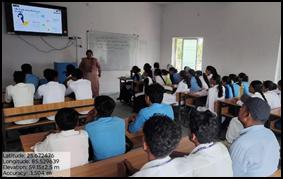
Image 3: Students being educated on SWM Rules 2026
|
SHS 2026 is currently running from17 September to 2 October. Its theme is “Swachhata Mein Sahbhag; Swachh Bharat, Viksit Bharat.” The campaign follows a ‘Whole of Government’ and ‘Whole of Society’ approach. It gives greater emphasis to youth, stakeholder responsibilities, and collective ownership. The campaign is also creating awareness about the Solid Waste Management Rules, 2026. It seeks to strengthen understanding of responsibilities across stakeholders. As part of SHS 2026, the following five core activity pillars are being undertaken by local bodies, governmental institutions, and people:
1. Transformation of Cleanliness Target Units (CTUs) and Clean Public Places
The campaign targets neglected garbage points and difficult-to-clean locations. These sites will undergo waste removal, beautification, and sustained maintenance. The Swachhata App can be used for reporting sanitation and garbage-related grievances. Identified locations can subsequently be mapped on the SHS 2026 portal. The campaign also covers markets, schools, hospitals, transport hubs, parks and water bodies. Public and community toilets will be assessed using FACES (Functional, Accessible, Clean, Eco-friendly and Safe) parameters.
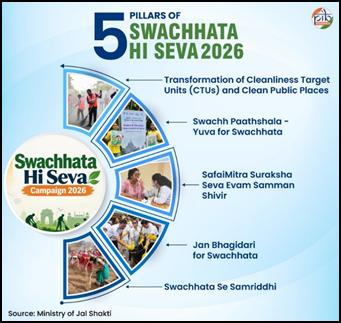
2. Swachh Paathshala - Yuva for Swachhata
Students and youth have a dedicated role in SHS 2026. The focus is on sustained behaviour change. Students from Classes 6 to 12 will be participating in Swachhata Gyan Yatras. These visits will expose students to waste management and sanitation facilities. Schools are also encouraged to organise discussions on sanitation and water conservation. These discussions can cover hygiene, handwashing, menstrual hygiene, and safe drinking water.
3. SafaiMitra Suraksha Seva Evam Samman Shivirs
The campaign continues its focus on sanitation workers and their families. Camps will provide health services, safety equipment, and welfare linkages.
4. Jan Bhagidari for Swachhata
Jan Bhagidari is central to SHS 2026. Citizens and institutions are encouraged to take ownership of everyday cleanliness. Planned activities include awareness of the Solid Waste Management (SWM) Rules, 2026, demonstrations on four-way source segregation, home composting awareness, campaigns against littering and single-use plastics, swachhata rallies and human chains, public Swachhata pledges and collection drives for reusable household items.
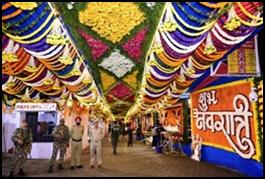
Image 4: Planning of Eco-Friendly Festivals
|
The campaign also promotes Swachh Parv, Harit Parv. Festivals during the campaign period are encouraged to adopt eco-friendly and plastic-free practices. 5. Swachhata Se Samriddhi
The campaign links cleanliness with resource recovery and circularity. It promotes Reduce, Reuse, and Recycle practices. Kabaad Se Jugaad will promote useful products from discarded materials. Kabaad Se Kala will promote artistic creations from waste. These initiatives connect waste management with creativity and resource recovery.
Further, on 1 October, 2026, simultaneous cleanliness activities will be undertaken under Ek Din, Ek Ghanta, Ek Saath. Citizens, youth groups, NGOs and institutions are encouraged to participate in these programmes. On 2 October, Special Gram Sabhas will discuss SHS activities and the SWM Rules, 2026. Urban local bodies will also organise Special Council Meetings. Thus, SHS 2026 combines cleanliness, behavioural change, youth engagement and waste management. It also strengthens attention towards sanitation workers and public sanitation infrastructure. This approach reflects the broader transition from Swachhata as an activity to Swachhata as a collective habit and responsibility.
To place the 2026 campaign in perspective, it is important to trace the evolution of SHS over the years. Its focus areas and themes show a gradual movement towards sustained sanitation behaviour.
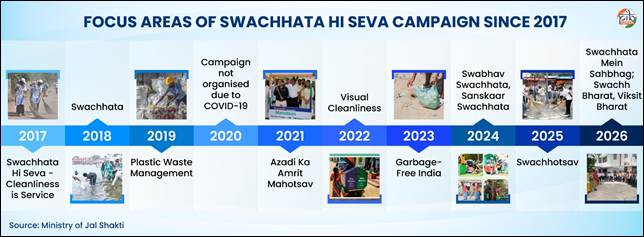
Since its inception in 2017, the campaign has evolved its focus areas, scale and areas of intervention, responding to emerging sanitation and cleanliness priorities.
Swachhata Hi Seva 2017: The Beginning of a People-Led Movement
The first SHS campaign was launched on 15 September 2017. The launch featured the Swachhata Hi Seva pledge and a call for nationwide participation. The campaign positioned cleanliness as a shared national responsibility. Citizens were encouraged to participate directly through shramdaan. Shramdaan (selfless service) refers to community service or voluntary contribution towards community welfare. Under SBM, shramdaan is focused on cleanliness activities. The first SHS campaign was linked closely with the wider sanitation transformation under SBM. By 2017, 4.82 crore toilets had been constructed since 2014. The number of ODF villages had reached 2.38 lakh. Individual toilet coverage had increased from 42% in 2014 to 64% in 2017. Hence, the SHS campaign emerged alongside the rapid expansion of sanitation infrastructure, complementing this progress with a strong emphasis on citizen mobilisation and community participation.
The SHS 2017 saw widespread public participation. A total of 2.46 crore children participated in the Swachh Sankalp Swachh Siddhi painting competition. The competition focused on building awareness among children about cleanliness. The campaign also saw social media mobilisation. #SwachhataHiSeva became a leading trend on the day of its launch. Citizens subsequently used the hashtag to share their shramdaan and cleanliness activities online.
Other initiatives included cleanliness drives, sanitation activities and action around open-defecation vulnerable locations. Self-help groups (SHGs), NGOs and local communities participated in several such activities.
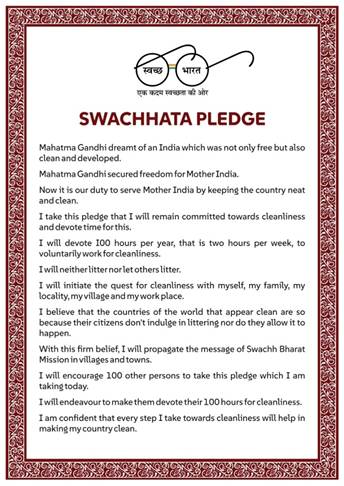
Image 5: The Swachhata Pledge
|
Swachhata Hi Seva 2018: Strengthening the Jan Andolan for Swachhata
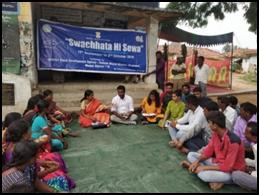
Image 6: Swachhata Sabha in Process
|
SHS 2018 was organised from 15 September to 2 October. SHS 2018 strengthened the jan bhagidari approach and reinforced the concept that ‘sanitation is everyone’s business’. It brought together students, Swachhagrahis (dedicated, trained and properly incentivized sanitation workers at the gram panchayat level), Nigrani Samitis (who work to persuade villagers not to defecate in the open), women leaders, youth groups, famous personalities and community organisations. The campaign expanded activities across Gram Sabhas, railways, iconic places and educational institutions.
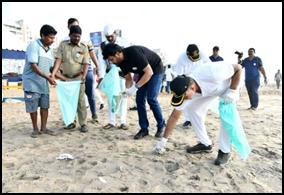
Image 7: Shramdaan for Visual Cleanliness
|
The campaign gave special importance to children and young people. Students from Classes 3 to 5 participated in handwashing campaigns. Students from Classes 6 to 12 participated in outdoor Swachhata activities. On 16 September, Swachhata Sabhas were organised. Special Gram Sabhas were organised in villages to review local cleanliness. They also prepared action plans for future sanitation activities. 17 September was observed as Seva Diwas. Union and State Ministries organised Swachhata activities across the country. Government employees participated in these activities under ministerial leadership. Antyodaya Divas on 25 September added another layer of community mobilisation. Each Swachhagrahi was encouraged to create a wider network of Swachhagrahis. This approach sought to expand sanitation participation beyond individual volunteers. It connected local leadership with sustained sanitation action.
One Mission, Many Voices: India Comes Together for Swachhata
Swachhata Hi Seva 2018 brought together people from across India for one collective effort towards cleanliness. School children from Dibrugarh, women Swachhagrahis from Dantewada and Salem, and volunteers cleaning the Ganga in Bijnor shared their grassroots efforts. Celebrity endorsements like Mr. Amitabh Bachchan spoke about cleaning a Mumbai beach, while Mr. Ratan Tata highlighted the honour of contributing to a movement for every citizen. Indo-Tibetan Border Police jawans participated from Pangong Lake, while media houses like Dainik Jagran, cooperatives, railway employees and citizens added their efforts. Together, these voices reflected the government’s message that Swachh Bharat was not a government movement, but a movement of the entire nation.
Swachhata Hi Seva 2019: Turning the Focus Towards Plastic Waste
SHS 2019 was organised from 11 September to 2 October. The campaign focused specifically on plastic waste awareness and management. Citizens were encouraged to reduce single-use plastics. The campaign promoted alternatives such as cloth and jute bags. A nationwide shramdaan for plastic waste collection and segregation was organised on 2 October. Plastic collected through shramdaan was subsequently planned for recycling or appropriate disposal. The campaign therefore extended beyond collection to address the subsequent management of plastic waste. Moreover, during this campaign, all states were advised to discourage the use of single-use plastic products. Consequently, six states and 171 districts banned single-use plastic.
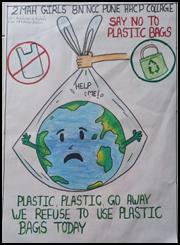
Image 8: Plastic Use Awareness IEC Material
|
SHS was not organised in 2020 due to the COVID-19 pandemic.
Swachhata Hi Seva 2021: Building a Culture of Visual Cleanliness
SHS 2021 was organised from 15 September to 2 October. It sought to accelerate ODF Plus activities and sustain ODF achievements in villages. The campaign combined awareness with community mobilisation. During SHS 2021, more than 60 lakh people participated in over 1.5 lakh shramdaan activities. More than 43,000 Gram Sabhas passed resolutions against single-use plastics, till 1st October, 2021.
A major feature of SHS 2021 was the Satyagraha Se Swachhagraha Rath Yatra. More than 783 Swachhata Raths travelled across districts, blocks and gram panchayats to spread sanitation awareness. The campaign combined awareness with direct community action through Swachhata Shramdaan and 37,507 Swachhata Jagriti Yatras. On Swachh Bharat Diwas alone, approximately 6.4 lakh people participated in over 2.4 lakh shramdaan activities.
SHS 2021 used communication tools to make sanitation messages visible across rural communities. 9,401 wall paintings, rallies, and several slogan writings carried ODF Plus messages into villages. The campaign also recognised and awarded Swachhata Champions and encouraged community participation.
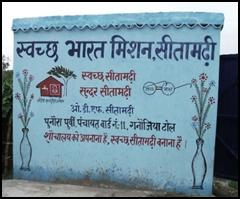
SHS 2021 also addressed the less visible dimensions of sanitation. The Sthayitva Evam Sujalam Abhiyan focused on liquid waste management. 15,951 household-level and 7,216 community-level soak pits were constructed during this campaign. Therefore, SHS 2021 strengthened the jan bhagidari for comprehensive cleanliness, or Sampoorna Swachhata. This created an important foundation for the stronger visual cleanliness focus of SHS 2022.
Swachhata Hi Seva 2022: Focusing on Visual Cleanliness
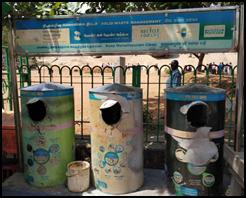
Image 10: Solid Waste Segregation Dustbins
|
SHS 2022 was organised from 15 September to 2 October. The campaign focused on the visual cleanliness of villages and targeted garbage and waste dumped around villages. SHS 2022 sought to strengthen the jan bhagidari for ODF Plus villages. It also promoted the idea of a “sampoorn swachh” village. The campaign reinforced the principle of ‘sanitation as everyone’s business.’ The campaign connected visible cleanliness with broader sanitation practices, like waste segregation, plastic management and cleanliness around water bodies. The approach supported the transition towards sustainable rural sanitation under SBM-G Phase II.
The campaign also included United India for Swachhata activities across nine states. The campaign promoted the 4R principle for plastic waste management: Refuse, Reduce, Reuse, and Recycle. SHS 2022 used multiple communication channels to promote sanitation awareness. Activities included wall paintings, nukkad nataks, swachhata raths and social media content. Citizens were encouraged to take “No Littering” pledges. These activities connected village leadership with community-level sanitation action.
The campaign recorded substantial participation across rural India. More than 9.81 crore people participated in shramdaan for sanitation activities. The campaign also recorded over 1.59 lakh Gram Panchayats passing resolutions against single-use plastics. Around 1.68 lakh Sarpanches participated in Sarpanch Samvads on ODF Plus components. The campaign, thus, connected cleaner surroundings with community ownership and sustainable waste management.
Swachhata Hi Seva 2023: Towards a Garbage-Free India
SHS 2023, conducted between 15 September to 2 October, adopted the theme “Garbage-Free India.” The campaign focused on volunteerism, shramdaan, visible cleanliness, and Safai Mitra welfare. For this, SafaiMitra Suraksha Shivirs were organised from 17 September onwards. The objective of these shivirs was to improve the well-being and quality of life of all sanitation workers engaged in solid waste management and used water management.
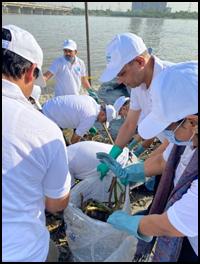
Image 11: Riverbank being Revitalised
|
During the 18-day campaign, over 109 crore participations were recorded. Around 53 crore people participated in Shramdaan for Swachhata. This averaged nearly three crore shramdaan participants each day. The campaign culminated in “Ek Tareekh Ek Ghanta Ek Saath” on 1 October. Around 8.75 crore people participated in nearly 9.2 lakh events nationwide. Rural areas recorded 6.8 crore participants, while urban areas recorded 1.95 crore participants.
The campaign produced visible improvements across public spaces. Nearly 7,611 beaches were cleaned. 6,371 riverbanks and waterfronts were revitalised. Over 15,576 legacy waste sites were reclaimed. 3,620 tourist and iconic destinations were improved. Over 1.23 lakh public spaces were restored. More than 16,000 water bodies were cleaned. Nearly 66,779 garbage-vulnerable sites were cleaned.
The Indian Swachhata League 2.0 also brought youth into the campaign. More than 4,000 city teams were prepared for participation. These teams rallied to clean beaches, hills, and tourist places. The initiative sought to build sustained youth ownership of Swachhata.
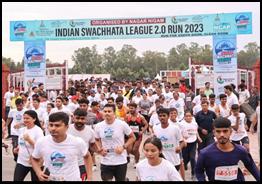
Image 12: Indian Swachhata League Run 2023
|
SHS 2023 brought together the SBM's rural and urban components. 71 ministries and departments contributed to the campaign in their own unique ways. Their initiatives extended Swachhata efforts across different sectors and public spaces. For example, the Ministry of Tourism launched the Travel for LiFE for Cleanliness Campaign at 108 selected sites. The Ministry of Information and Broadcasting played the SHS video across cinema screens. The Department of Telecommunications played the SHS ringtone across mobile networks.
This campaign demonstrated the scale possible through coordinated government and community action. Its outcomes also showed the expanding scope of Swachhata beyond toilets towards waste management and behavioural change.
Swachhata Hi Seva 2024: From Swachhata to Swabhav
SHS 2024, conducted from 17 September to 2 October, marked a major shift towards behaviour and social values. Its theme was “Swabhav Swachhata, Sanskaar Swachhata.” The campaign focused on the following broad areas:
- Transformation of Cleanliness Target Units (neglected and dirty areas)
- Swachhata Mein Jan Bhaagidari: Public participation in cleanliness
- Safai Mitra Suraksha Shivirs: Welfare of sanitation workers
Cleanliness Target Units (CTUs) were the identified severely neglected areas posing environmental and health risks. These areas, like garbage points or dumpsites, were often overlooked during routine cleanliness drives in various regions. The campaign sought to transform these locations through time-bound interventions. The campaign transformed 3.10 lakh residential areas. It also revitalised 2.11 lakh roadside areas and 56,526 market locations. Over 61 lakh trees were planted during the campaign.
Interestingly, SHS 2024 expanded participation beyond conventional cleanliness drives. Swachh Bharat Cultural Fests connected cleanliness with local art and culture. These events also highlighted community participation and SafaiMitras' contributions. The campaign recorded 76,837 Swachh Bharat Cultural Fests. Around 15,710 Swachh Food Streets were established. The initiative also promoted Waste-to-Art activities and eco-friendly products. Cultural participation therefore became another channel for communicating Swachhata.
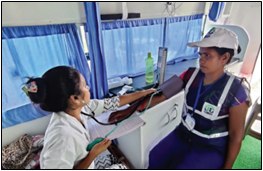
Image 13: SafaiMitra Suraksha Shivir
|
Safai Mitra Suraksha Shivirs provided preventive healthcare and welfare linkages. This widened the meaning of Swachhata. The campaign addressed both cleaner surroundings and the wellbeing of workers supporting sanitation systems.
During this event, by 1 October, 2024, 29.21 lakh events were planned. Of these, 26.44 lakh events were completed. Public participation reached 26.25 crore individuals. Citizens also made 3.04 lakh Swachhata pledges. SHS 2024, therefore, connected cleanliness with habits, values, participation and dignity.
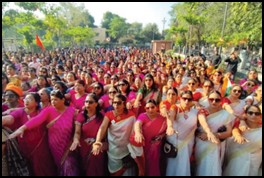
Image 14: Women taking Swachhata Pledge
|
Swachhata Hi Seva 2025: Taking Swachhata to Community Celebrations
SHS 2025 built upon the behavioural focus of 2024. Its central focus was “Swachhotsav” and the spirit of clean festivities. The campaign ran from 17 September to 2 October. At the heart of Swachhotsav laid its five key pillars. These were the focused initiatives that turned the vision of a cleaner, greener India into on-ground action by uniting people, places, and purpose.
The Five Pillars of SHS 2025 were:
- Transformation of Cleanliness Target Units
- Clean Public Spaces
- SafaiMitra Suraksha Shivir
- Clean Green Festivities
- Advocacy for Swachhata
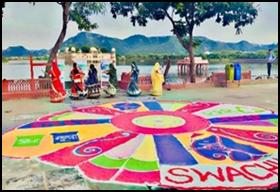
Image 15: Swachhata Rangoli
|
The campaign cleaned 15.75 lakh CTUs. These activities recorded 7.74 crore participants. The campaign also led to the cleaning of 5.89 lakh public spaces with the participation of 6.22 crore citizens. SHS 2025 also connected cleanliness with cultural celebrations. Communities were encouraged to adopt sustainable practices during festivals. Hence, the campaign recorded over 4.31 lakh eco-friendly pandals, over 3.18 lakh post-festival cleanliness activities, and more than 2.81 lakh Swachhata Rangolis. This approach brought Swachhata into community celebrations.
The campaign continued the SafaiMitra Suraksha Shivir initiative. More than 2.71 lakh shivirs were organised during the campaign, recognising 5.12 lakh sanitation workers. 1.63 lakh preventive health checkup camps were organised for the workers, and 4.55 lakh PPE kits were distributed. Overall, these shivirs benefitted 81.51 lakh beneficiaries.
Several advocacy activities expanded the campaign's community reach. A total of 29.02 lakh events were organised, with 3.27 crore participants. Following are some of the activities organised:
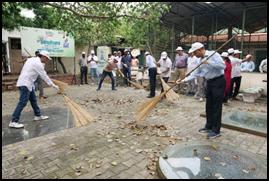
Image 16: Government Officials in Cleanliness Drive
|
n total, SHS 2025 saw the participation of 18.06 crore people across the country. SHS 2025, thus, extended Swachhata from cleanliness activities into community celebration and sustainable practices.
Beyond Cleanliness: Shaping Everyday Behaviour
The SHS journey shows a gradual expansion in the meaning of cleanliness. The early editions focused on cleanliness action and volunteerism. Later editions brought plastic waste, visual cleanliness, and garbage management into focus. The shift became clearer from 2023 onwards. “Garbage-Free India” expanded attention towards public spaces and waste management. The 2024 theme then connected cleanliness with Swabhav and Sanskaar. In 2025, Swachhotsav brought cleanliness into festivals and community celebrations.
In 2026, Swachhata Mein Sahbhag places collective action and cooperation at the centre. The campaign has evolved from cleaning physical spaces to fostering sustained behavioural change, embedding Swachhata in everyday practices and strengthening a sense of shared community responsibility.
References
Ministry of Jal Shakti
https://gobardhan.sbm.gov.in/
https://swachhatahiseva.gov.in/
https://sbmurban.org/campaign
https://swachhatahiseva.gov.in/daily-bulletin
https://swachhbharatmission.ddws.gov.in/about-us
https://sbm.gov.in/SBMGDashboard/StatesDashboard.aspx
https://sansad.in/getFile/loksabhaquestions/annex/16/AU2540.pdf?source=pqals
https://sansad.in/getFile/loksabhaquestions/annex/173/AU777.pdf?source=pqals
https://www.pib.gov.in/PressReleasePage.aspx?PRID=1964179®=48&lang=2
https://www.pib.gov.in/PressReleasePage.aspx?PRID=1881827®=48&lang=2
https://www.pib.gov.in/PressReleasePage.aspx?PRID=1859823®=48&lang=2
https://www.pib.gov.in/PressReleasePage.aspx?PRID=1755220®=48&lang=2
https://www.pib.gov.in/PressReleaseDetail.aspx?PRID=1503113®=6&lang=1
https://www.pib.gov.in/PressReleaseDetail.aspx?PRID=2311628®=48&lang=2
https://www.pib.gov.in/PressReleasePage.aspx?PRID=2191618®=3&lang=2
https://www.pib.gov.in/PressReleaseIframePage.aspx?PRID=1545203®=48&lang=2
https://www.pib.gov.in/PressReleaseIframePage.aspx?PRID=1584758®=48&lang=2
https://www.pib.gov.in/PressReleaseIframePage.aspx?PRID=1760608®=48&lang=2
https://www.pib.gov.in/PressReleaseIframePage.aspx?PRID=1760427®=48&lang=2
https://www.pib.gov.in/FeaturesDeatils.aspx?NoteId=150274&ModuleId=2®=48&lang=2
https://cdnbbsr.s3waas.gov.in/s3kv02c60549ede842a11ec07346b8928d/uploads/2024/09/2024092083-1.pdf
Ministry of Housing & Urban Affairs
https://sbmurban.org/swachh-bharat-mission-progress
https://www.pib.gov.in/PressReleasePage.aspx?PRID=1957683®=48&lang=2
https://www.pib.gov.in/PressReleaseIframePage.aspx?PRID=1960088®=48&lang=2
Ministry of Commerce & Industry
https://www.ibef.org/blogs/swachh-bharat-mission-s-urban-and-gramin-success-what-s-driving-the-progress
Prime Minister’s Office
https://www.pib.gov.in/PressReleasePage.aspx?PRID=1546223®=48&lang=2
Government of Nagaland
https://ipr.nagaland.gov.in/swachhata-hi-seva-campaign-phek-district
PIB Backgrounder
https://www.pib.gov.in/PressReleasePage.aspx?PRID=2191618®=3&lang=2
https://www.pib.gov.in/PressReleasePage.aspx?PRID=2170998®=48&lang=2
https://www.pib.gov.in/PressNoteDetails.aspx?NoteId=153227&ModuleId=3®=48&lang=2
President's Secretariat
https://www.pib.gov.in/PressReleasePage.aspx?PRID=2145459®=48&lang=2
United Nations
https://www.unv.org/Success-stories/together-we-can-celebrating-shramdaan-spirit-volunteerism-india
Click here to see pdf
PIB Research
(रिलीज़ आईडी: 2312209)
आगंतुक पटल : 284
इस विज्ञप्ति को इन भाषाओं में पढ़ें:
Urdu