Ministry of Health and Family Welfare
Union Health Minister J.P. Nadda Addresses World Patient Safety Day 2026 Event at Dr. RML Hospital
Ayushman Bharat Has Enabled 11.5 Crore Beneficiaries to Access Treatment Worth Around ₹1.6 Lakh Crore: Union Health Minister
Jan Aushadhi Has Enabled Citizens to Save Around ₹45,000 Crore on Medicines: Shri Nadda
A Clean Hospital is Also a Safer Hospital: Union Health Minister J.P. Nadda on World Patient Safety Day
Quality & Safety Handbook Released at RML Hospital to Strengthen Patient Safety Practices
प्रविष्टि तिथि:
17 SEP 2026 9:34PM by PIB Delhi
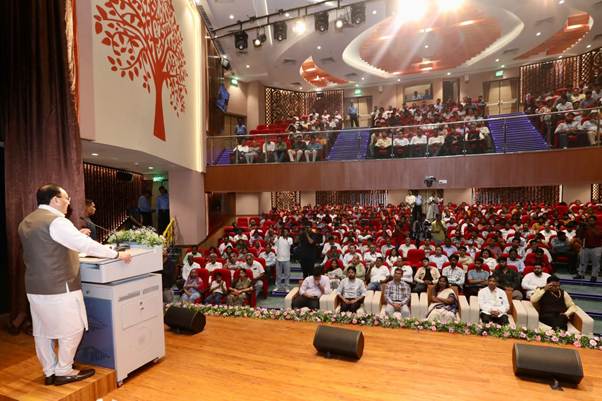
On the occasion of World Patient Safety Day 2026, Union Minister for Health & Family Welfare Shri J.P. Nadda addressed an event organised at Atal Bihari Vajpayee Institute of Medical Sciences (ABVIMS) & Dr. Ram Manohar Lohia Hospital, New Delhi, today. The event highlighted the Government’s continued efforts towards strengthening patient safety as an integral component of quality healthcare and health-system strengthening.
The theme for World Patient Safety Day 2026, “Safe care for noncommunicable diseases”, with the slogan “Safe care for life!”, highlights the importance of safe, coordinated and continuous care for people living with noncommunicable diseases (NCDs).
Addressing the gathering, Union Minister for Health & Family Welfare Shri J.P. Nadda said that 17 September is a significant day as it brings together the themes of public service, patient safety and cleanliness. He also conveyed his greetings and best wishes to Hon’ble Prime Minister Shri Narendra Modi on his birthday, noting that the occasion is an opportunity to acknowledge his contribution to public service and his continued commitment to the service of the nation. He expressed his wishes for the Prime Minister’s long, healthy life and continued service to the country.
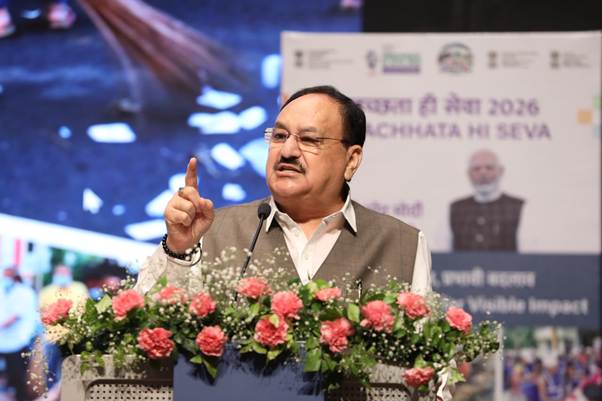
Speaking on World Patient Safety Day, Shri Nadda said that patient safety is an extremely important component of healthcare and that the objective of healthcare delivery must extend beyond treatment to ensuring that every patient receives safe, high-quality, dignified and patient-centric care. He appreciated ABVIMS & Dr. RML Hospital for organising the programme and particularly commended the institution for bringing out the Quality & Safety Handbook, which provides a practical framework for strengthening quality and safety practices.
The Union Minister emphasised that patient safety requires the collective efforts of doctors, nurses, paramedical professionals, technicians, administrative personnel and other healthcare workers, along with patients and their attendants. He noted that safety and security of patients must remain central to healthcare delivery and that necessary precautions and protocols should not be compromised in the interest of speed. He stressed the importance of correct diagnosis, appropriate treatment, adherence to infection-prevention protocols and continuous attention to infection control.
Shri Nadda said that patient safety is closely linked with cleanliness and hygiene in healthcare facilities. Referring to the Swachhata movement, he highlighted the transformation of cleanliness into a people’s movement and emphasised that cleanliness should become a part of everyday habits and working practices. He noted that the creation of around 11 crore toilets over the past decade has significantly strengthened the country’s sanitation infrastructure and also contributed to dignity and improved living conditions.
The Union Minister said that the improvement in sanitation has also had an important bearing on public health outcomes, including a significant decline in diarrhoeal disease. He stressed that in hospitals, cleanliness has a direct connection with infection prevention and patient safety. He called for collective responsibility towards hand hygiene, proper waste disposal, adherence to infection-control protocols and maintaining hospital premises and facilities responsibly. He emphasised that a clean hospital is not merely a well-maintained hospital, but also a safer hospital.
Highlighting the importance of institutional quality assurance, Shri Nadda said that the National Quality Assurance Standards (NQAS) certification was introduced in 2015 to establish nationally recognised standards for assessing the quality of healthcare institutions. He noted that 60,000 government health facilities are now NQAS-certified and said that efforts are underway to further increase the number of certified institutions, with a target of taking the coverage to around 2 lakh institutions. He emphasised that the expansion of quality standards and certification reflects the continued focus on institutionalising quality, safety and patient-centric care across the public health system.
Shri Nadda also highlighted the role of Ayushman Bharat in strengthening financial protection and access to healthcare. He said that under the scheme, eligible beneficiaries are provided health coverage of up to ₹5 lakh per family per year for secondary and tertiary care. He said that Ayushman Bharat has emerged as one of the world’s largest health coverage programmes and has enabled millions of people to access treatment without facing the burden of catastrophic healthcare expenditure.
The Union Minister stated that approximately 11.5 crore beneficiaries have received treatment under Ayushman Bharat, with treatment worth of around ₹1.6 lakh crore. He said that the programme has enabled families, including elderly citizens, to access procedures and treatments that might otherwise have imposed a substantial financial burden on them.
Highlighting the role of the Pradhan Mantri Bhartiya Janaushadhi Pariyojana (PMBJP), Shri Nadda said that the initiative has expanded access to quality generic medicines at affordable prices. He noted that more than 20,000 Jan Aushadhi Kendras have been established across the country and that efforts are underway to expand this network further to around 25,000 outlets, while also increasing the range of medicines and ensuring their timely availability and quality. He also highlighted the substantial savings available on certain cancer medicines and said that the cumulative savings to citizens through Jan Aushadhi have been estimated at around ₹45,000 crore.
Shri Nadda further highlighted the importance of reducing out-of-pocket expenditure on healthcare. He noted that the share of out-of-pocket expenditure in total health expenditure has declined from around 62 per cent in 2014 to around 43 per cent, and emphasised that continued efforts are being made to reduce the financial burden on families.
The Union Minister also highlighted the importance of preventive healthcare, early detection and continuity of care. He referred to the strengthening of vaccination, maternal and child health services and screening for noncommunicable diseases. He noted that vaccination is being digitally tracked from childhood and that mechanisms are in place to ensure follow-up with beneficiaries and families so that due vaccinations are completed.
Shri Nadda said that screening and early detection of noncommunicable diseases are also being strengthened through the public health system. He highlighted screening for conditions including diabetes, hypertension and various cancers, including oral, cervical and breast cancer, and said that tens of crores of people have been screened under the ongoing efforts.
Emphasising the broader meaning of patient safety, Shri Nadda said that patients entering a hospital bring not only an illness but also anxiety, hope and expectations. He noted that the conduct of healthcare personnel—including timely information, appropriate guidance, reassurance and support—is an integral part of the patient experience.
Shri Nadda congratulated ABVIMS & Dr. RML Hospital for its initiatives on World Patient Safety Day and appreciated its efforts towards strengthening quality and safety through systematic audits, training, continuous monitoring and institutional learning. He said that such efforts contribute to building a healthcare system in which safety, quality, affordability and dignity remain central to every patient’s experience.
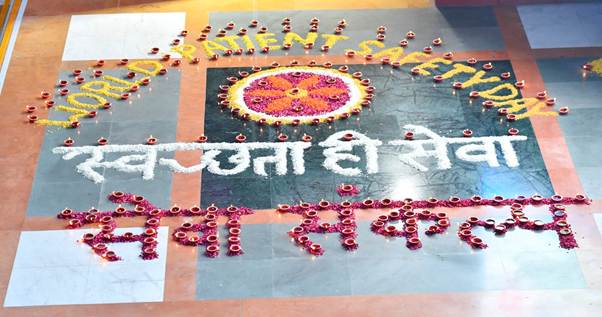
Speaking at the Occasion, Smt. Punya Salila Srivastava, said that maintaining a clean hospital environment is essential for ensuring safe and quality care. She highlighted that ABVIMS & Dr. Ram Manohar Lohia Hospital has achieved NABH accreditation, reflecting its adherence to established standards of patient safety and quality of treatment. She stressed that cleanliness in hospitals cannot be the responsibility of healthcare workers alone and requires active participation from patients, visitors and attendants as well. She said that the convergence of ‘Swachhata Hi Seva’ and World Patient Safety Day provides an opportunity to reinforce collective responsibility towards hygiene, infection prevention and safe healthcare.
Smt. Srivastava highlighted the Government’s continued efforts to make healthcare accessible, affordable and of high quality for every citizen. Referring to the Swasth Nari, Sashakt Parivar campaign launched last year, she noted that more than 17 lakh health camps were organised across the country, with participation of over 11 crore people. She also highlighted key initiatives including Ayushman Arogya Mandirs, the Pradhan Mantri National Dialysis Programme, expansion of vaccination services, PM-ABHIM, eSanjeevani, PM-JAY and Ayushman Vay Vandana, which are strengthening access to preventive and curative healthcare. She further emphasised the importance of affordable medicines in reducing the overall cost of treatment and highlighted the role of Pradhan Mantri Bhartiya Janaushadhi Kendras and AMRIT Pharmacies, including the AMRIT Pharmacy at RML Hospital, in improving access to affordable medicines and implants.
Emphasising the importance of patient-centric healthcare, Secretary, Department of Pharmaceuticals, Shri Manoj Joshi said that sustained efforts over the past 10–12 years have focused on improving patient satisfaction and making quality healthcare more accessible, particularly for economically vulnerable sections of society. He highlighted the crucial role of initiatives such as Ayushman Bharat–Pradhan Mantri Jan Arogya Yojana (AB-PMJAY) and Pradhan Mantri Bhartiya Janaushadhi Pariyojana (PMBJP) in making quality treatment more accessible and affordable by strengthening financial protection and improving access to affordable medicines. He also underlined that maintaining cleanliness in hospitals remains a significant challenge and called for sustained and collective efforts to strengthen hygiene, cleanliness and infection-control practices, which are integral to ensuring safe and patient-centric care.
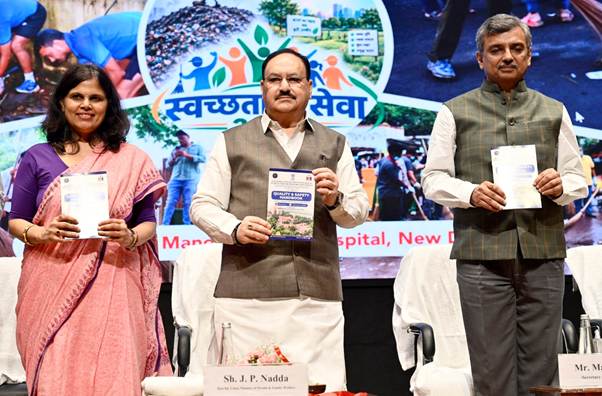
Furthermore, A Quality & Safety Handbook of ABVIMS & Dr. Ram Manohar Lohia Hospital was also released during the programme. The Handbook provides healthcare staff with practical and standardised operational guidance to support best practices, augment quality of care and strengthen adherence to patient-safety protocols across different operational areas of the hospital.
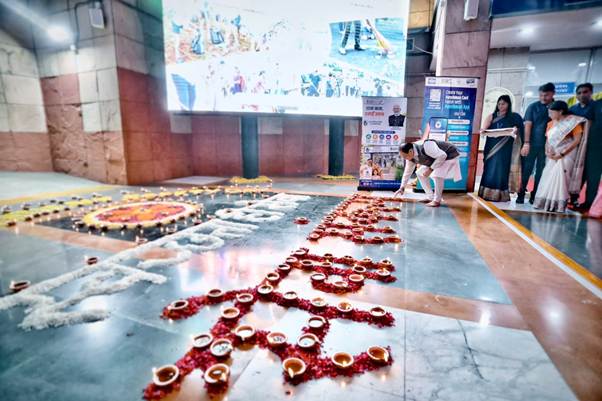
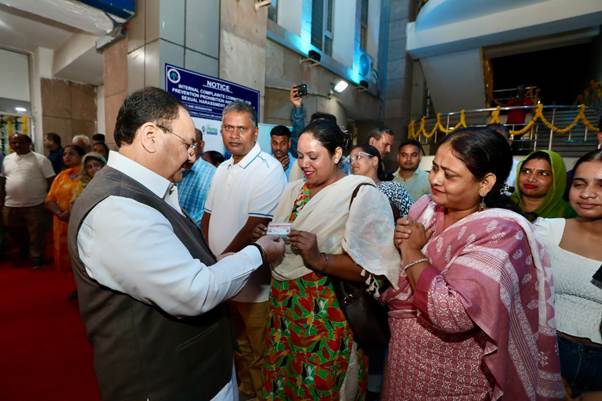
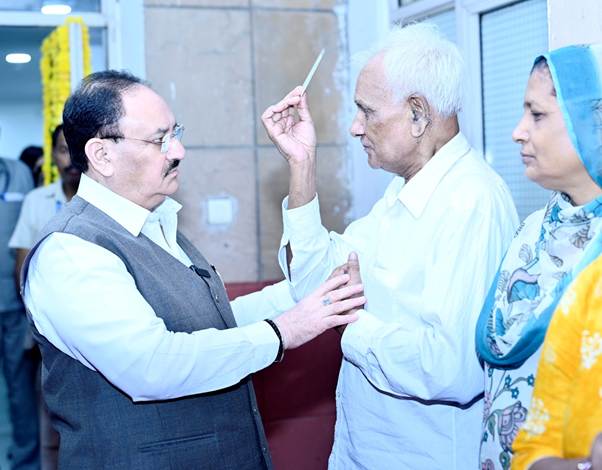
During the event, Shri Nadda also interacted with the beneficiaries of Pradhan Mantri Jan Arogya Yojana (PMJAY) and Jan Ayushadhi Pariyojana.
About Government Efforts for Patient Safety
The Government has been strengthening patient safety through a coordinated approach focused on institutional strengthening, capacity building, knowledge sharing, peer learning and continuous quality improvement. The National Patient Safety Secretariat (NPSS) under the Directorate General of Health Services, Ministry of Health and Family Welfare, is facilitating these efforts, including through the India Patient Safety Network (IPSN) comprising 20 AIIMS and 5 Institutes of National Importance (INIs). The Network provides a platform for healthcare institutions to share experiences, identify and disseminate good practices and strengthen patient-safety systems through evidence-based solutions and cross-learning.
The emphasis on learning from institutional experiences and translating them into action was also reflected in the National Conference on Patient Safety 2026, held on 11–12 September 2026 at AIIMS Nagpur. Organised by AIIMS Nagpur in collaboration with NPSS, DGHS and MoHFW, the two-day Conference brought together more than 100 faculty experts and over 450 delegates from medical colleges and healthcare institutions across the country. Senior representatives from various AIIMS and other institutions, along with experts from ICMR, NABH, NABL, AYUSH, National Health Programmes and the Pharmacovigilance Programme of India (PvPI), participated in scientific deliberations and shared institutional innovations and good practices.
The national focus on strengthening patient safety is also being advanced through the National Action Plan for Patient Safety (NAPPS) 2030, being developed through NPSS. Building upon the National Patient Safety Implementation Framework (NPSIF) 2018–25, the proposed framework seeks to strengthen patient safety across healthcare settings, with priority areas including medication, surgical, blood, medical device, laboratory and diagnostic, infection, vaccine and injection, facility and AYUSH patient safety, along with operational research and patient, family and caregiver engagement.
Reflecting this broader approach at the institutional level, ABVIMS & Dr. Ram Manohar Lohia Hospital marked World Patient Safety Day by undertaking a month-long, hospital-wide closed-loop audit campaign under the theme, “Measure, Master, Maintain: Elevate Patient Safety at Every Level.” The initiative brought together clinical and operational departments in a structured three-stage process of Baseline Audit, Rapid Corrective Implementation through Training and Verification Audit, with the objective of identifying gaps, undertaking corrective measures and verifying improvements in patient-safety practices.
The focus on patient safety is also complemented by activities undertaken under the Swachhata Hi Seva Abhiyaan, reinforcing the importance of cleanliness, hygiene and well-maintained healthcare environments in creating safe and patient-friendly spaces for patients, families and healthcare workers.
Regular capacity-building initiatives, including master training programmes, orientation of healthcare professionals and patient-safety nodal teams, webinars, institutional sensitisation and technical engagements, are being undertaken to strengthen competencies, promote a culture of safety and support learning from patient-safety incidents.
The Government’s approach is to embed patient safety within routine healthcare delivery, institutional quality improvement and healthcare governance. On World Patient Safety Day, the Ministry reaffirms its commitment to working with States and Union Territories, healthcare institutions, healthcare professionals, patients, families and other stakeholders to strengthen a coordinated and learning-oriented patient-safety ecosystem and ensure safe, timely, coordinated and quality care throughout every patient’s healthcare journey.
*****
SR
HFW/ HFM addresses on World Patient Safety Day /17 September 2026/3
(रिलीज़ आईडी: 2311705)
आगंतुक पटल : 162