PIB Backgrounder
Jute: India’s Golden Fibre
Sustaining livelihoods through innovative policy interventions
प्रविष्टि तिथि:
07 SEP 2026 6:00PM by PIB Delhi
India leads global raw jute production, supporting millions of livelihoods while advancing sustainable industrial growth. India produced 76 lakh bales of raw jute and 12.80 lakh MT of jute goods in FY 2025-26. During the same year, India exported 22,700 MT of raw jute worth ₹225.11 crore and 1,71,300 MT of jute goods worth ₹3,155.27 crore. Government interventions have strengthened farmer incomes, modernised the value chain, and promoted product diversification. Jute's biodegradable nature and expanding applications make it a key alternative to synthetic materials. Innovation, market expansion, and digital technologies are positioning India's Golden Fibre as a globally competitive and environmentally responsible industry.
India’s Golden Fibre Industry
Jute is one of the most significant natural fibres in India, valued for its wide range of applications and environmental sustainability. In the trade and industrial context, jute and mesta are collectively classified as raw jute due to their comparable end uses. Mesta is a bast fibre crop cultivated as a cost-effective alternative to jute, particularly in drier agro-climatic regions. Owing to its characteristic golden colour and silky lustre, jute is commonly referred to as the “Golden Fibre”.
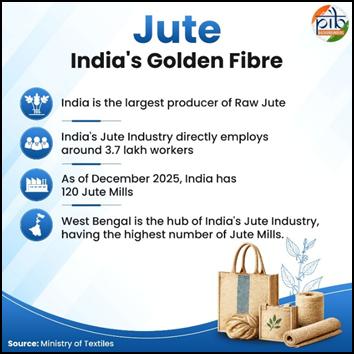
India is the world’s largest producer of raw jute. The Third Advance Estimate of Production of Food Grains (2025-26) highlights the growth of jute and mesta production from 88.02 lakh bales in 2024-25 to 94.03 lakh bales in 2025-26. India is also the leading jute goods-producing country globally, accounting for about 75% of estimated world production, as of July 2026. The jute industry has a heavy industrial base in India’s eastern region, especially West Bengal. This industry provides direct employment to approximately 3.70 lakh workers in organized mills and diversified jute units. It also sustains the livelihoods of nearly 40 lakh farm families engaged in jute cultivation. As of December 2025, India has 120 composite jute mills, and West Bengal alone houses 89 of them, the highest among all states.
India continues to be fully Atmanirbhar in the production of jute goods, with domestic output adequately meeting national demand. In FY 2025-26, the domestic consumption of jute goods was 12.05 lakh MT. This accounts for 94% of the total production of jute goods, which was 12.80 lakh MT. Further, India exported 1.71 lakh MT of jute goods valued at ₹3,155.27 crore in FY 2025-26. In terms of raw jute, India exported 22,700 MT worth ₹225.11 crore in FY 2025-26.
Tracing the History of Jute Production in India
The history of jute in India can be traced back to the third century BC. However, it emerged as a significant commercial commodity during the British Colonial period owing to its strategic military applications. The East India Company established numerous jute mills in Bengal, positioning the region as a centre for jute cultivation and processing.
India’s independence in 1947 and the subsequent partition significantly disrupted the integrated jute economy of Bengal. Nearly 80 percent of the jute-growing areas became part of East Pakistan (now Bangladesh). But most jute mills remained in India, resulting in an acute shortage of raw material for processing in these mills. To address this imbalance, the government launched the "Grow More Jute" campaign in September 1949. The farmers were encouraged to shift from paddy cultivation to jute. Consequently, India’s raw jute production more than doubled from 6.7 lakh tonnes (1951-52) to 14.56 lakh tonnes (1961-62). The Jute Packaging Act, 1987, further strengthened the sector by mandating the use of jute sacks for packaging essential commodities. This move ensured a stable market for Indian jute farmers. Over time, jute emerged as a strategic green fibre, contributing to rural livelihoods and environmentally sustainable industrial development.
Presently, West Bengal contributes the largest share of raw jute cultivation in the country, followed by Bihar, Assam, Odisha, and Jharkhand. Jute is generally sown during March-April and harvested within 100–110 days. It thrives under hot and humid conditions with rainfall between 700–1,500 mm during the crop-growing period. Given these agro-climatic requirements, its cultivation is concentrated mainly in eastern and northeastern India and is predominantly rainfed. The crop is primarily grown by small and marginal farmers.
Why is Jute an Important Natural Fibre?
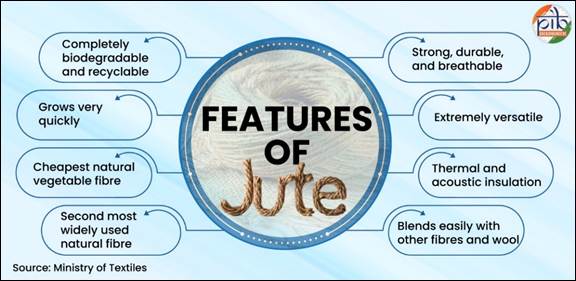
Jute is a biodegradable and recyclable natural fibre characterised by its rapid growth, cost-effectiveness, and wide availability. It is strong, durable, breathable, and highly versatile, with applications spanning packaging, construction, agriculture, and industrial textiles. Jute also possesses favourable functional attributes, including thermal and acoustic insulation, high moisture absorption, and low static generation. It blends well with both natural and synthetic fibres, facilitating a wide range of value-added and textile applications.
Can Jute be Eaten as Food?
Jute leaves have long been consumed as a vegetable in regions such as Africa, the Middle East, and Southeast Asia. In Japan, jute leaves are widely recognized and consumed as a health food. Nutritionally, jute leaves are rich in vitamins, carotenoids, calcium, potassium, and dietary fiber, underscoring their value as a functional food source. Proven technologies have also been developed for anti-oxidant herbal drink and health care products from jute leaf.
Jute Geotextile: The Fabric of Sustainable Infrastructure
Jute Geotextile (JGT) is a versatile, diversified jute product belonging to a class of technical textiles. It can be applied in many fields like civil engineering, soil erosion control, road pavement construction and protection of river banks. JGT can be made from jute fibers through special treatment and weaving processes.
It is increasingly gaining acceptance due to its functional effectiveness, environmental compatibility, favourable techno-physical properties, and price competitiveness. From an ecological standpoint, JGT is fully biodegradable, thereby improving soil structure and fertility. Moreover, JGT is globally recognized as an effective natural solution for soil stabilization, erosion control, and ecological restoration in degraded landscapes. This is because it helps in regulating the micro-environment by maintaining lower soil temperatures and reducing surface disturbance. Hence, it supports seed germination and early plant establishment.
Applications of Jute Geotextile
Jute Geotextile has gained recognition as an effective natural material for diverse applications in civil engineering, soil conservation, and infrastructure development:
- It is widely utilized for slope protection in earthen embankments, hill cuttings, riverbanks, canals, and rainwater harvesting structures. This is because of its high initial tensile strength, and surface roughness enhances soil stabilization and mitigates erosion.
- In road and haul road construction, as well as in railway track formation, JGT improves load distribution and control settlement. This reduces maintenance requirements and lifecycle costs.
- Its use in concealed drainage systems, particularly in hilly regions, enables regulated water flow while preventing soil migration. JGT is also used to stabilize soft soils through prefabricated vertical drains, accelerating consolidation and enhancing bearing capacity.
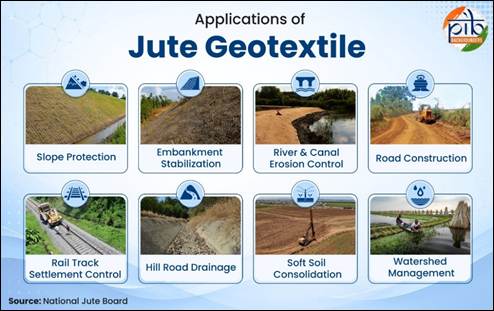
In recent years, the National Jute Board has been actively engaged in developing and promoting jute geotextiles as an engineering material. The Board provides technical support to end users, including guidance on design specifications, procurement processes, testing protocols, and installation practices.
Indian Contingent Showcases Jute Apparel at Commonwealth Games 2026
Jute-viscose-blended apparel was worn by the Indian athletes and team members at the 2026 Commonwealth Games. The clothing has been developed by the National Jute Board. The apparel was designed by the National Institute of Fashion Technology (NIFT), New Delhi. This initiative highlights the potential of 100 percent biodegradable jute-viscose blended fabric as a sustainable and innovative textile solution. This initiative has provided global visibility to India's jute industry while highlighting the craftsmanship of Indian manufacturers.
From Farm to Market: Government Interventions for the Jute Industry
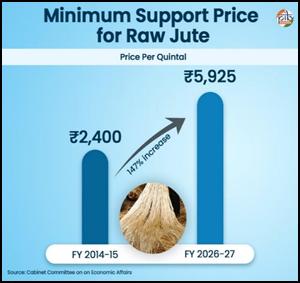
The government has undertaken a series of policy measures reflecting a sustained commitment to strengthening India’s jute sector. These include upward revisions of the Minimum Support Price (MSP) for raw jute. The MSP of raw jute has been fixed at ₹5,925 per quintal for FY 2026-27. This would ensure a 61.8 percent return over the all-India weighted average cost of production. This marks an increase of around 147% from the MSP of raw jute in FY 2014-15 (₹2,400per quintal). The MSP amount paid to jute farmers has also increased over time. For the period of FY 2004-05 to FY 2013-14, the amount paid was ₹441 crores. It has increased to ₹1,342 crores from FY 2014-15 to FY 2025-26.
The government has also implemented the Jute Packaging Materials (Compulsory Use in Packing Commodities) Act. It specifies the commodities and the extent to which they are mandatorily required to be packed in jute packaging material. The government mandated jute packaging for 100% food grains and 20% sugar in jute bags.
Jute Corporation of India
The Jute Corporation of India Ltd. (JCI) is the sole nodal agency for implementing the MSP policy for raw jute. It safeguards jute farmers’ interests by procuring directly from farmers when market prices fall below the MSP. JCI’s Departmental Purchase Centers (DPCs), which are situated in rural areas, purchases raw jute directly from the farmers. JCI has around 110 DPC’s in states of West Bengal, Assam, Bihar, Andhra Pradesh, Odisha and Tripura.
The government has integrated its efforts for supporting jute cultivation and processing under the National Jute Development Programme.
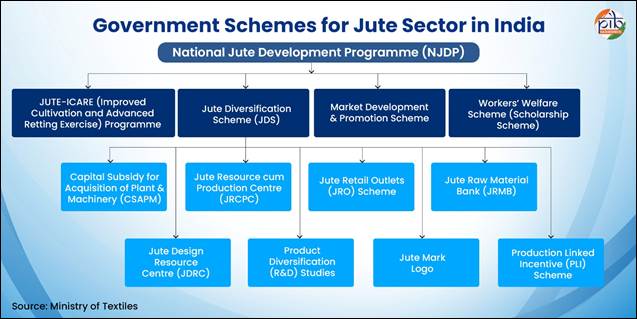
National Jute Development Programme (NJDP)
The National Jute Development Programme (NJDP) is the umbrella scheme for the development and promotion of the jute sector. It is being implemented by the National Jute Board with an outlay of ₹485.58 crore from FY 2021–22 to FY 2025–26. It focuses on enhancing farm productivity and farmer incomes, as well as diversification through two key components: JUTE-ICARE and the Jute Diversification Scheme. The programme also supports seminars, exhibitions, and awareness campaigns to promote jute as an alternative to plastics.
National Jute Board (NJB)
The National Jute Board (NJB)serves as the nodal agency for the development, promotion, and diversification of the jute sector across the value chain. Its key functions include:

- improving cultivation and fibre quality,
- enhancing productivity and standardisation,
- promoting domestic and export markets,
- supporting research and value-added product diversification, and
- strengthening MSMEs and artisans through capacity building and market development.
JUTE-ICARE (Improved Cultivation and Advanced Retting Exercise) Scheme
The JUTE-ICARE scheme, launched in FY 2015–16, aims to enhance jute productivity and fibre quality. This is being achieved through scientific cultivation, mechanisation, and improved retting techniques. It supports small and marginal farmers through subsidised certified seeds, field demonstrations, and mechanized interventions. It is being implemented in collaboration with the Central Research Institute for Jute and Allied Fibers (CRIJAF) and the Jute Corporation of India. The scheme also facilitates the construction of retting ponds through convergence with the Pradhan Mantri Krishi Sinchayee Yojana and Rashtriya Krishi Vikas Yojana.
Jute Diversification Scheme
The Jute Diversification scheme includes schemes supporting jute processing, marketing, sales.
Intervention for Supporting Jute Processing: Jute Raw Material Bank (JRMB)
The Jute Raw Material Bank facilitates the availability of raw jute materials for the unorganized sector and small production units for manufacturing of jute diversified products. This is done by supplying raw jute materials at the economic rate of mill-gate price plus actual transportation costs. The scheme supports artisans, women SHGs, and MSMEs engaged in jute-diversified products by providing regular access to quality raw materials. This further promotes rural livelihoods.
Interventions for Manufacturing, Marketing, and Sales
The Jute Diversification Scheme promotes value addition, modernisation, and market expansion through multiple sub-schemes:
- Capital Subsidy for Acquisition of Plant & Machinery: Offers a 30% subsidy on machinery costs for jute mills and MSMEs producing JDPs.
- Jute Resource-cum-Production Centres: Cluster-based training and production centres for artisans, women SHGs, entrepreneurs, NGOs, members of cooperative societies etc.
- Jute Retail Outlets: Support retail and showroom sales of JDPs with 25% sales assistance (up to ₹9 lakh per unit).
- Production Linked Incentive for JDP Exports: Provides exporters with incentives linked to raw material usage in jute diversified products exported and its value realisation on exports.
Interventions for Branding, Quality Assurance, and Market Promotion
Jute Mark India Logo
The Jute Mark India logo symbolises authenticity, quality assurance, and sustainability in jute and jute-blended products. The stylised sheaves of jute within a structured framework represent natural fibre strength, craftsmanship, and standardisation across the value chain. The Jute Mark India logo certifies compliance with quality standards and verifies jute content in blended products. This enhances consumer confidence and strengthens brand recognition.

Domestic Marketing Initiatives
The government organised over 57 regional jute fairs across major cities in FY 2025-26, such as the India International Trade Fair, Surajkund Mela, and Bharat Tex.
Jute Handloom Enterprise: From SHG to Export Markets
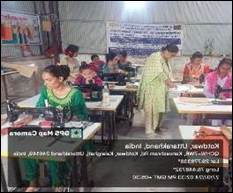
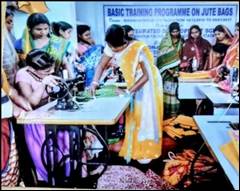
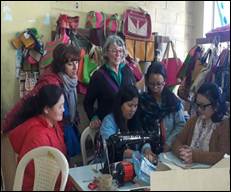
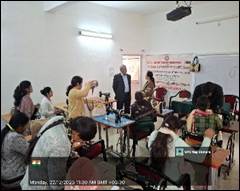
Branding, exhibition-based promotion, and structured market access have boosted field-level outcomes for jute enterprises. Such are the stories of Bharatiya Gramothan Sanstha, Rishikesh (Uttarakhand), Hayden Hall Institute, Darjeeling (West Bengal), Jute Artisans Guild Association, Lucknow (Uttar Pradesh) and Rural Organisation for Social Action, Cuttack (Odisha). Trained under the National Jute Board programmes, they leveraged mentoring and market linkages to enter organised jute handloom production. They started participating in major trade fairs such as IITF New Delhi, Tex-Trends India, New Delhi and GiftTex Show, Mumbai. This enabled direct buyer interactions for them, secured bulk export orders, and strengthened their marketing skills. As a result, their members individually started earning more, with notable improvements production capacity and social recognition.
Digital and Technological Interventions Across the Supply Chain
JUTE-SMART
Since 2016, the entire operations of procurement and supply of jute sacking (food grain) bags is
being managed by the Office of Jute Commissioner. To facilitate these operations, an end-to-end e-governance software portal, viz. JUTE-SMART has been developed and implemented by the Office of Jute Commissioner in November 2016. Till August 2026, 303 lakh bales of B.Twill Jute Bags (@500 pieces of bags/bale) worth more than ₹1.00,000 crores (approx.) have been procured by more than 20 State Procurement Agencies incl uding Punjab, Haryana, Odisha, Telangana, West Bengal, Bihar, Andhra Pradesh and FCI etc., through this portal.
In 2026, JUTE-SMART has been further upgraded for digitizing various processes in the supply chain. Various stakeholders have been onboarded, like transporters, raw jute traders, and importers. Registration of raw jute traders, importers and jute mills has been completely digitized. The required returns are also completely online for improving the ease of compliance.
Jute Crop Information System
The Indian Space Research Organization (ISRO), through the National Remote Sensing Centre (NRSC), has developed the Jute Crop Information System. It has been developed in collaboration with Jute Corporation of India and National Jute Board. The system functions to monitor jute cultivation using remote sensing and field data. As part of this initiative, two key tools have been developed:
- BHUVAN JUMP: a mobile app for on-field jute monitoring, and
- PATSAN (Prospective Assessment of Jute Using Mobile App-Based Field Observations): a web-based platform that provides near-real-time jute surveillance and analytics to support informed decision-making by officials and stakeholders.
Market Development & Promotion Scheme
The government, under the National Jute Development Programme, has been implementing the Market Development & Promotion Scheme. This scheme supports the Jute Diversified Product (JDP) entrepreneurs/exporters in promotion and sale of JDPs in the domestic/export market.
Workers’ Welfare Scheme (Scholarship Scheme)
National Jute Board Act, 2008 provides to “secure better working conditions and provisions and improvement of amenities and incentives for workers engaged in the jute industry”. In line with the same, NJB provides scholarship/incentive support to the girl children of the workers of Jute Mills/JDP-MSME units on passing out Secondary and Higher Secondary examinations.
A Sustainable Future with Jute
India's jute sector has evolved into a key driver of sustainable and inclusive development. It supports millions of farmers, workers, artisans, and entrepreneurs across the value chain. Policy support, innovation, and improved production have strengthened the sector's competitiveness. Jute contributes to rural livelihoods, environmental sustainability, and industrial growth. Its growing relevance reflects India's transition towards greener and sustainable materials. Continued investment, innovation, and community participation will unlock the sector's full potential.
References
National Jute Board
https://jute.com/jute/
https://jute.com/jute/njb/21
https://jute.dac.gov.in/pdf/StatusPaper.pdf
https://www.nitiforstates.gov.in/public-assets/Policy/policy_files/SNC504A000660.pdf
Ministry of Agriculture and Farmers Welfare
https://www.ncfc.gov.in/change-jute-area.html
https://agriwelfare.gov.in/Documents/Time_Series_3rdAE_2025_26_En.pdf
Ministry of Commerce & Industry
https://www.pib.gov.in/PressReleasePage.aspx?PRID=2122016
https://www.pib.gov.in/PressReleasePage.aspx?PRID=2117470
https://www.ibef.org/exports/jute-industry-india
Ministry of Textiles
https://www.texmin.gov.in/static/uploads/2025/12/c865d599cae0c357c02d247a8a82d24e.pdf
https://www.texmin.gov.in/static/uploads/2026/05/5c48e80d2180ca3194b9e9b01340696d.pdf
https://sansad.in/getFile/loksabhaquestions/annex/182/AU2512_P6JQIu.pdf?source=pqals
https://www.pib.gov.in/PressReleasePage.aspx?PRID=2222478®=48&lang=2
https://www.pib.gov.in/PressReleasePage.aspx?PRID=2282076®=1&lang=1
https://www.pib.gov.in/PressReleasePage.aspx?PRID=2200812®=3&lang=1
https://sansad.in/getFile/loksabhaquestions/annex/171/AU4409.pdf?source=pqals
https://sansad.in/getFile/annex/259/AU2191.pdf?source=pqars
https://sansad.in/getFile/annex/255/AU2392.pdf?source=pqars
https://www.jutecorp.in/jute-i-care/
Cabinet Committee on Economic Affairs
https://www.pib.gov.in/PressReleasePage.aspx?PRID=2232106®=3&lang=1
World Bank
https://thedocs.worldbank.org/en/doc/088011224509316922-0560011976/original/WorldBankGroupArchivesfolder30124862.pdf
Click here for pdf file
*****
PIB Research
(रिलीज़ आईडी: 2307586)
आगंतुक पटल : 5275