Ministry of Tribal Affairs
Union Minister Shri Jual Oram and Dr. R. Balasubramaniam, Member, NITI Aayog, Jointly Release National Framework and Operational Guidelines for Strengthening of ITDAs and ITDPs
Twin publications, translate a nationwide consultative exercise covering 217 ITDAs/ITDPs across 19 States/UTs into an actionable reform roadmap for last-mile tribal development delivery
प्रविष्टि तिथि:
15 AUG 2026 9:55PM by PIB Delhi
The Union Minister for Tribal Affairs, Shri Jual Oram, and Dr. R. Balasubramaniam, Member, NITI Aayog, today jointly released two important publications of the Ministry of Tribal Affairs — the “National Framework for Strengthening of ITDAs and ITDPs” and the “Operational Guidelines for Strengthening of ITDAs and ITDPs.” The two documents mark the culmination of a comprehensive, consultative and evidence-based national exercise aimed at strengthening Integrated Tribal Development Agencies and Projects (ITDAs/ITDPs), the principal field-level institutions driving tribal development across the country.
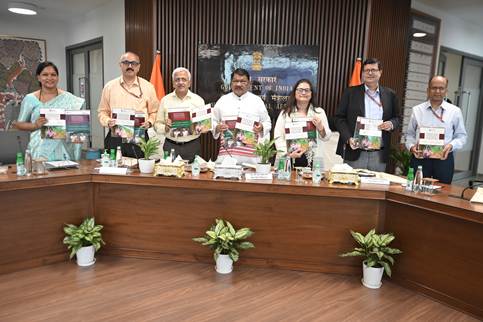
The publications were released in the presence of Smt. Ranjana Chopra, Secretary, Tribal Affairs, Shri Manish Thakur, Additional Secretary, Ministry of Tribal Affairs, and other senior officers of the Ministry.
Speaking on the occasion, the Minister noted that ITDAs/ITDPs have historically served as a critical bridge between government programmes and tribal communities, and that their role has grown even more significant with the scale of interventions under the Dharti Aaba Janjatiya Gram Utkarsh Abhiyan (DAJGUA) and PM-JANMAN.
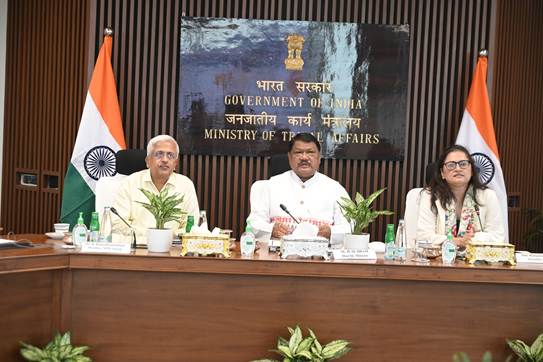
Dr. Balasubramaniam noted that the principles of ranking, real-time data-driven monitoring and convergence that delivered saturation of outcomes in under-developed districts and blocks now stand embedded in the ITDA/ITDP reform architecture. He observed that evidence-based administrative attention can transform lagging regions, these publications seek to replicate that model within the tribal development ecosystem, using ITDAs as the delivery vehicle for saturation of entitlements at the last mile.
The exercise was undertaken under the overall guidance and vision of Secretary, Tribal Affairs, Smt. Ranjana Chopra, whose emphasis on evidence-based, field-driven institutional reform shaped the design of the entire consultative process. Smt. Chopra’s consistent direction to move beyond a one-size-fits-all approach and build context-specific, accountable
field institutions provided the strategic anchor for the Ministry’s roadmap for strengthening ITDAs and ITDPs across the country.
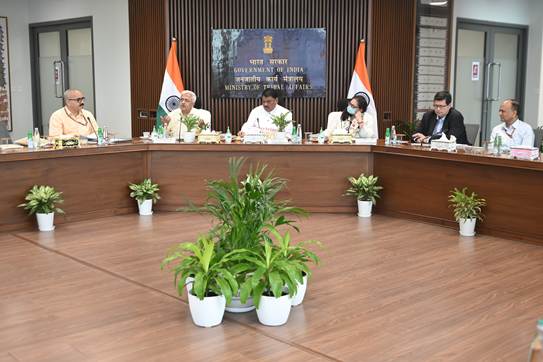
The Ministry had initiated this exercise in April 2026, covering 214 ITDAs/ITDPs across 17 States/UTs, through a standardised assessment involving Project Officers, State Tribal Welfare Departments and Tribal Research Institutes. Designed as a bottom-up, consultative exercise rather than a desk-based study, it included State-level workshops, field visits and direct consultations, allowing ground-level challenges and successful practices to shape the national roadmap. The exercise culminated in the Evidence-Weighted ITDA Diagnostic Scoring Framework, assessing institutions across 15 parameters spanning five institutional domains.
To operationalize this exercise on the ground, structured consultative workshops were conducted across States/UTs in April and May 2026, led by Dr. Varnali Deka, Director, DAJGUA Division and Shri Jafar Malik, Deputy Secretary, EMRS. The officers engaged directly with all ITDA/ITDP Project Officers and State Tribal Research Institutes to understand institutional status, collate ground-level data, followed by detailed validation exercise to ensure that the diagnostic exercise remained firmly rooted in field realities. These findings were then analyzed to create a national framework, roadmap and a set of operational guidelines.
This exercise reached a major milestone on 3rd June 2026, when the Ministry convened the National Conclave on Strengthening of ITDAs and ITDPs at Vigyan Bhawan, New Delhi, graced by the Hon’ble President of India, Smt. Droupadi Murmu.
The National Framework provides the assessment methodology and strategic direction, while the Operational Guidelines translate these recommendations into practical measures relating to institutional restructuring, convergence, evidence-based planning, digital governance, outcome-based monitoring and capacity building. For the first time, a common institutional assessment methodology has been made available to States, enabling each ITDA to identify its gaps and prepare a Performance Improvement Roadmap suited to its own context.
Shri Jual Oram said the objective is not merely to rank institutions but to build a culture of continuous institutional improvement, and urged States to undertake State-level reviews with all ITDA/ITDP Project Officers, prepare institution-specific action plans and establish quarterly monitoring of institutional performance, on the lines of the district and block-level monitoring cadence followed under ADP and ABP.
The Minister recommended strengthening the ITDA/ITDP ecosystem through a more efficient fund-flow mechanism, including exploring direct transfer of funds to ITDAs; augmenting technical manpower for better project execution; and institutionalizing regular Governing Council meetings with active participation of PRI representatives and senior State leadership to improve convergence, accountability and implementation.
Both dignitaries congratulated the States, Project Officers, Tribal Research Institutes and Ministry officials whose field experience shaped the two publications.
****
RN/
(रिलीज़ आईडी: 2300052)
आगंतुक पटल : 953