Ministry of Skill Development and Entrepreneurship
BRICS-TCA Symposium and JMC Meeting Convenes under the Guidance of MSDE, Government of India
Two-day BRICS-TCA meeting examined digital, green and demographic shifts affecting skills and workforce needs
India placed proposals for a BRICS International Skill Gap Study, BRICS Skills Competition and Compendium of Good Practices before the JMC
प्रविष्टि तिथि:
04 AUG 2026 7:10PM by PIB Delhi
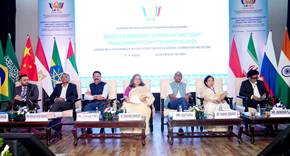
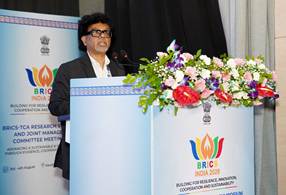
The BRICS Technical and Vocational Education and Training Cooperation Alliance (BRICS-TCA) Research Symposium and Joint Management Committee (JMC) Meeting was held during August 3 - 4, 2026, at Kaushal Bhawan, New Delhi.
The event was held under the theme "Sustainable and Digitally Enabled TVET: The BRICS Perspective", the two-day meeting brought together representatives from BRICS countries, international organisations, academia, industry and training institutions. The event was convened by National Skill Development Corporation (NSDC), under the guidance of the Ministry of Skill Development and Entrepreneurship (MSDE), Government of India.
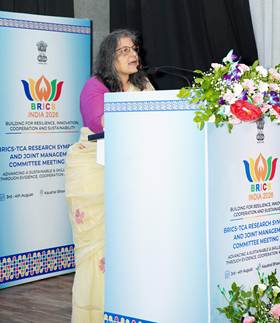
Smt. Debashree Mukherjee, Secretary, MSDE, said, “Skills are no longer merely a social intervention; they are critical economic infrastructure that shapes productivity, industrial competitiveness and workforce resilience. As BRICS nations, representing over 40 per cent of the world’s population, we have both the opportunity and the responsibility to build agile, inclusive and future-ready skilling systems. Through deeper cooperation in labour-market intelligence, institutional strengthening, joint research and emerging areas such as AI and green technologies, BRICS-TCA can help translate our collective demographic strength into shared prosperity and a more resilient global workforce.”
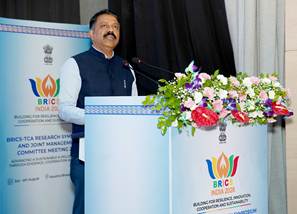
Shri. Anandrao V. Patil, Additional Secretary, Ministry of Education, emphasised lifelong learning, stating, “A degree can no longer mark the end of learning. Education systems must allow learners to move flexibly between classrooms, workplaces and digital platforms throughout their lives. India’s National Education Policy 2020 supports this through multidisciplinary education, credit portability and the integration of vocational and higher education. BRICS cooperation can carry this forward through joint curricula, institutional exchanges and wider recognition of qualifications and micro-credentials.”
Shri. Rajiv Bodwade, Joint Secretary (MER-III), Ministry of External Affairs, underscored the importance of skill diplomacy, stating, “Under India’s BRICS Chairship, skills cooperation must translate our shared demographic and economic strengths into practical, people-centric outcomes. A stronger focus on skills diplomacy can support orderly mobility, credible certification and closer institutional coordination across member countries. India remains ready to share its experience in migration partnerships, digital skilling platforms and transparent mobility systems to advance secure and mutually beneficial workforce pathways across the Global South.”
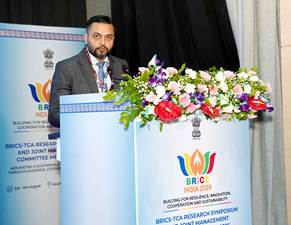
Shri. Arunkumar Pillai, Chief Executive Officer, NSDC, and Rotating Chair, BRICS-TCA, highlighted the need for practical cooperation, stating, “BRICS is navigating three transitions at once: digital, green and demographic. By 2030, 86 per cent of employers expect AI and information-processing technologies to transform business, while 39 per cent of workers’ core skills are likely to change. Renewable energy already supports 16.6 million jobs globally. At the same time, some member countries have expanding young workforces, while others face structural labour shortages. The opportunity is significant, but the real challenge is trust and recognition across skills systems. Comparable qualifications, verifiable digital credentials and common standards can turn this demographic strength into mobility, opportunity and shared growth.”
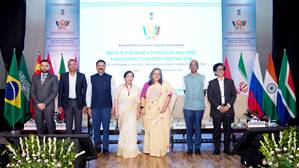
The inaugural session was chaired by Smt. Debashree Mukherjee, Secretary, Ministry of Skill Development and Entrepreneurship; Shri. Dilip Kumar, Director General, Directorate General of Training; Shri. Anandrao V. Patil, Additional Secretary, Ministry of Education; Shri. Niranjan Kumar Sudhansu, Additional Secretary, Ministry of Skill Development and Entrepreneurship; Smt. Manisha Sensarma, Senior Economic Advisor, Ministry of Skill Development and Entrepreneurship; Shri. Rajiv Bodwade, Joint Secretary (MER-III), Ministry of External Affairs; and Shri. Arunkumar Pillai, Rotating Chair, BRICS-TCA and Chief Executive Officer, National Skill Development Corporation.
The inaugural session was followed by a plenary session where the BRICS member countries such as Brazil, Russia, China, UAE, Iran and India presented their country's flagship initiatives on vocational education and skill development. After the plenary session, there were two panel discussions, on ‘Green Skills Development and Financing Mechanisms for Sustainability Initiatives’ and ‘Digital Transformation and AI, VR and AR for TVET’.
The Joint Management Committee (JMC) meeting on August 4 considered the synopsis of deliberations of the Research Symposium and received input from member countries on future priorities. Under India’s Chairship, three proposals were discussed. First, a framework of international skill gap study for BRICS was discussed to identify the gaps in emerging occupations and workforce shortages; second, a BRICS skills competition will be conducted to promote vocational excellence and a shared understanding of competence; and third, a compendium of good practices in TVET will be developed covering industry partnerships, digital learning, qualifications, and financing mechanism.
Representatives from the Ministry of New and Renewable Energy, the World Bank, International Labour Organization, UNESCO, Universities and industry including Sector Skill Councils (SSCs), also participated in the deliberations.
***
SH
(रिलीज़ आईडी: 2294515)
आगंतुक पटल : 790