India AI Impact Summit 2026 Session on “Partnering on American AI Exports” Highlights Framework for Trusted and Sovereign Global AI Adoption
Sovereign AI Capability Essential for Strategic Autonomy in Era of Global Transformation, Says Panel
US Delegation Highlight Need for Simplified, Accessible Frameworks to Accelerate International AI Trade and Adoption
The session “Partnering on American AI Exports” at the India AI Impact Summit 2026 focused on expanding global collaboration around US-developed artificial intelligence technologies, with senior White House and Commerce Department leaders outlining a framework to enable trusted, sovereign AI adoption worldwide. The discussion was moderated by Sriram Krishnan, Tech Executive and White House Official, and featured opening remarks by Michael Kratsios, President Donald J. Trump’s Chief Science and Technology Policy Advisor, followed by a panel with William Kimmitt, Under Secretary of Commerce for International Trade, and Brandon Remington, Deputy Under Secretary for Policy.
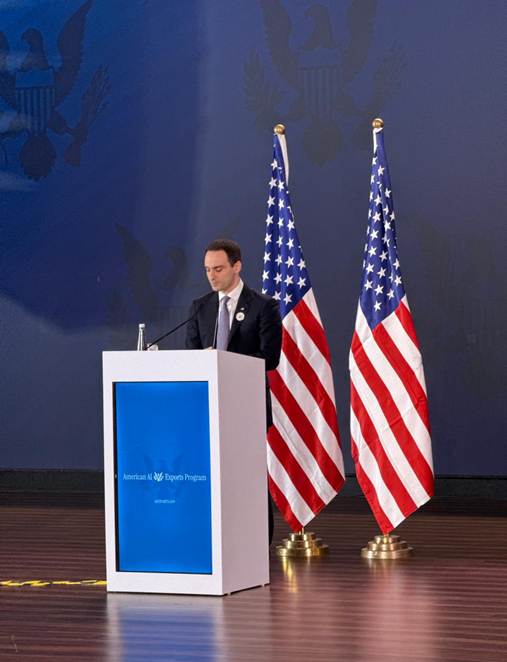
In his address, Kratsios urged nations to view AI as central to strategic autonomy. “Prioritizing AI for your people means pursuing a sovereign AI capability for your country,” he said, defining real sovereignty as “owning and using best-in-class technology for the benefits of your people and charting your destiny in the midst of global transformations.” Emphasising partnership, he added, “Strategic autonomy alongside rapid AI adoption is achievable and it is necessary for independent nations. And America wants to help.”
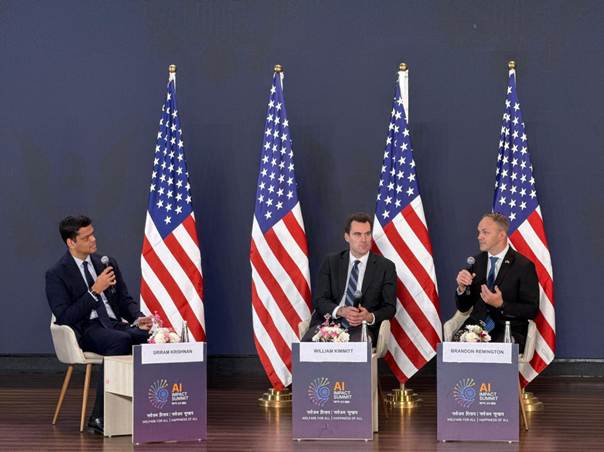
Highlighting the newly announced AI Exports Program, Kimmitt said the initiative aims to support US companies while extending benefits globally. “Through the AI Exports Program, we’re calling for industry-led consortia to offer full-stack solutions globally,” he noted, adding that a public call for proposals would be issued soon. He underscored the broader impact, pointing to opportunities “from transforming healthcare systems abroad to leveraging the U.S. tech stack more effectively within our own government.”
Remington emphasised the need to simplify international AI commerce. “We’ve really heard two things: how do we help companies go outbound and find buyers, and on the other side, how do we make it easier for foreign buyers?” he said. Stressing usability and accessibility, he added that the goal is “to create elegant, simple solutions that make it easy for both buyers and companies, from large enterprises to early-stage startups.”
The session underscored a clear message: the future of AI exports will hinge on trusted partnerships, simplified frameworks, and enabling nations to build sovereign AI capabilities while remaining connected to global technology ecosystems.
****
Mahesh Kumar / Pawan Faujdar/ Navin Sreejith/ Kanishk Sharma
(Release ID :284637)