Posted On:
04 NOV 2026 5:37PM by PIB Bhubaneswar
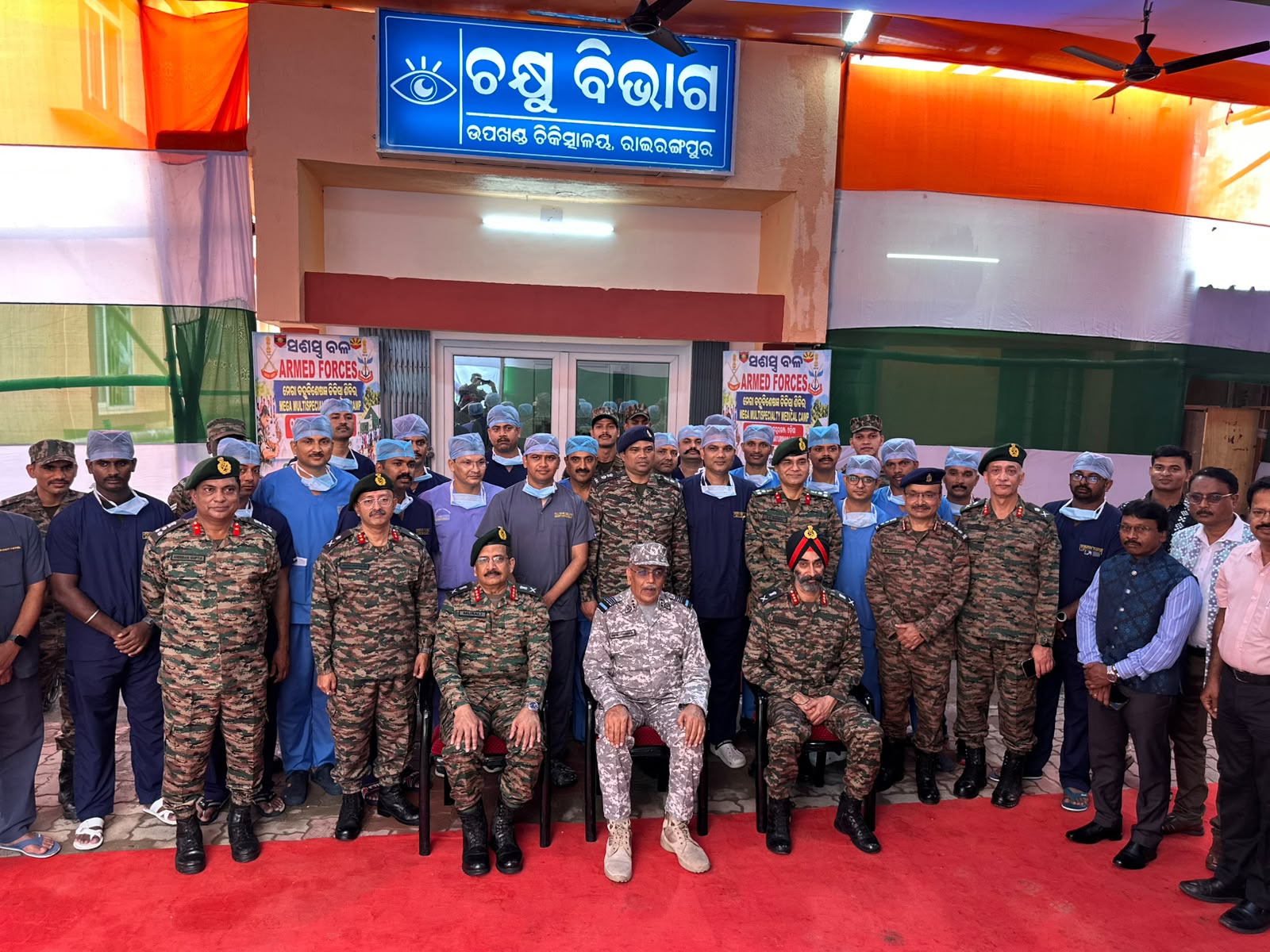
Doctors, dental surgeons and paramedics of the Armed Forces Medical Services have attended over 4000 patients in the Mega Multi-Speciality Medical Camp at Rairangpur, the 12th edition of Operation DRISHTI. Every patient who reported was managed on site, free of cost.
Why Rairangpur Matters
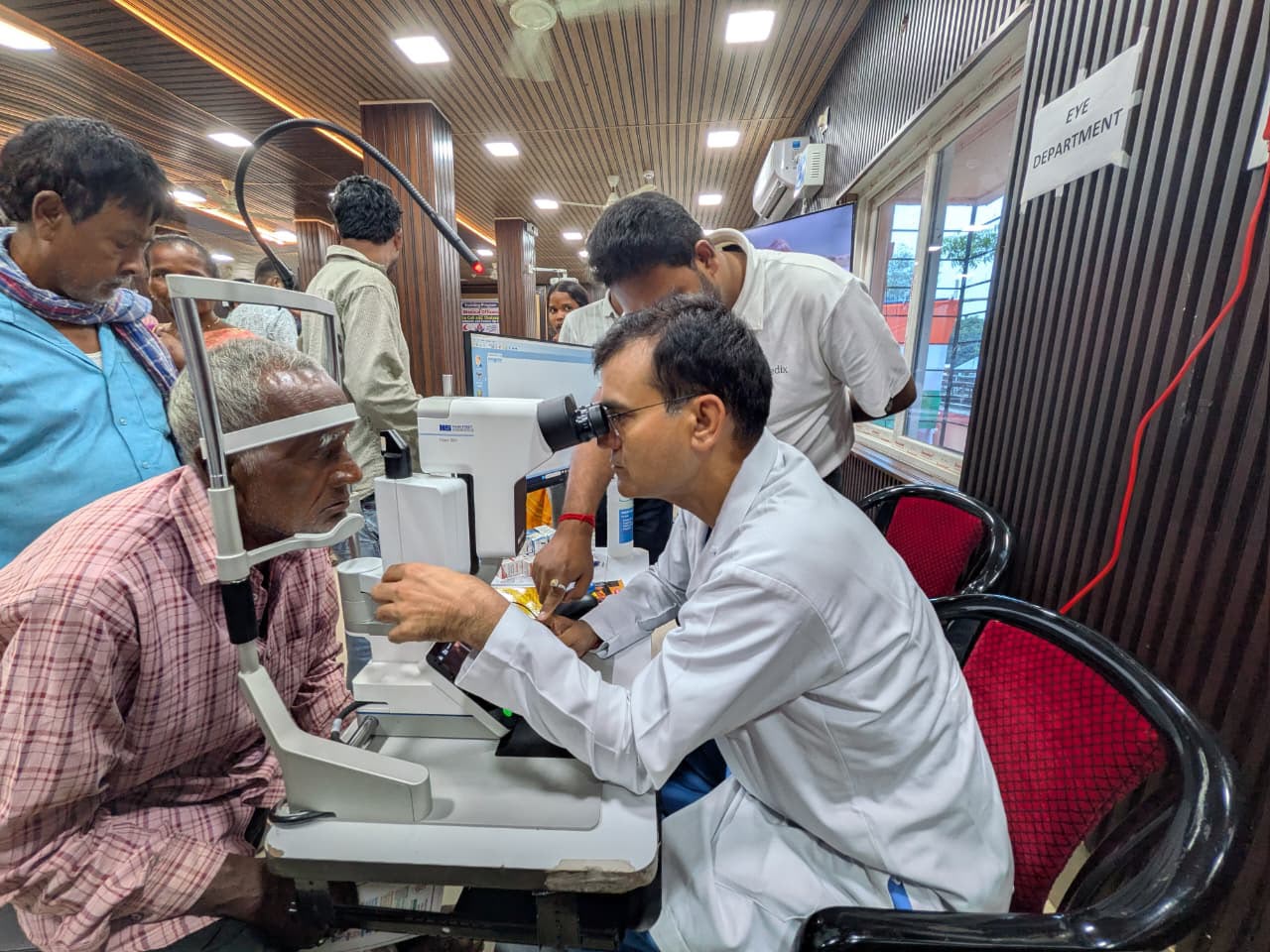
In the region of honorable president of India Smt. Droupadi Murmu, For many families in the villages of Mayurbhanj, a specialist is a long and costly journey away, and a visit to a distant city often means lost wages and postponed treatment. Through Operation Drishti, the Armed Forces Medical Services brought that specialist care to the doorstep of the people. At Rairangpur, the series of mega surgical eye camps was extended into a multi-speciality format, bringing Ophthalmology, Cardiology, Nephrology, Dermatology, Dental and General Medicine together under one roof. A patient could be screened, investigated, treated and, where needed, referred onward within the same campus, with Army personnel guiding each of them with patience, dignity and warmth.
Cardiology, Nephrology, Dermatology, Dental and General Medicine
The other departments together treated over 4000 patients. Cardiology attended to over 400 patients and carried out 298 ECGs and 406 echocardiograms; 29 patients needing advanced care were identified and referred for angiography, CT angiography, valve surgery, device implantation and balloon pulmonary valvotomy. Nephrology treated over 400 patients with 341 ultrasound examinations. Dermatology treated over 500 patients, the Dental team treated 221 patients with 198 procedures, and General Medicine treated 339 patients.
Visit of the Director General Armed Forces Medical Services
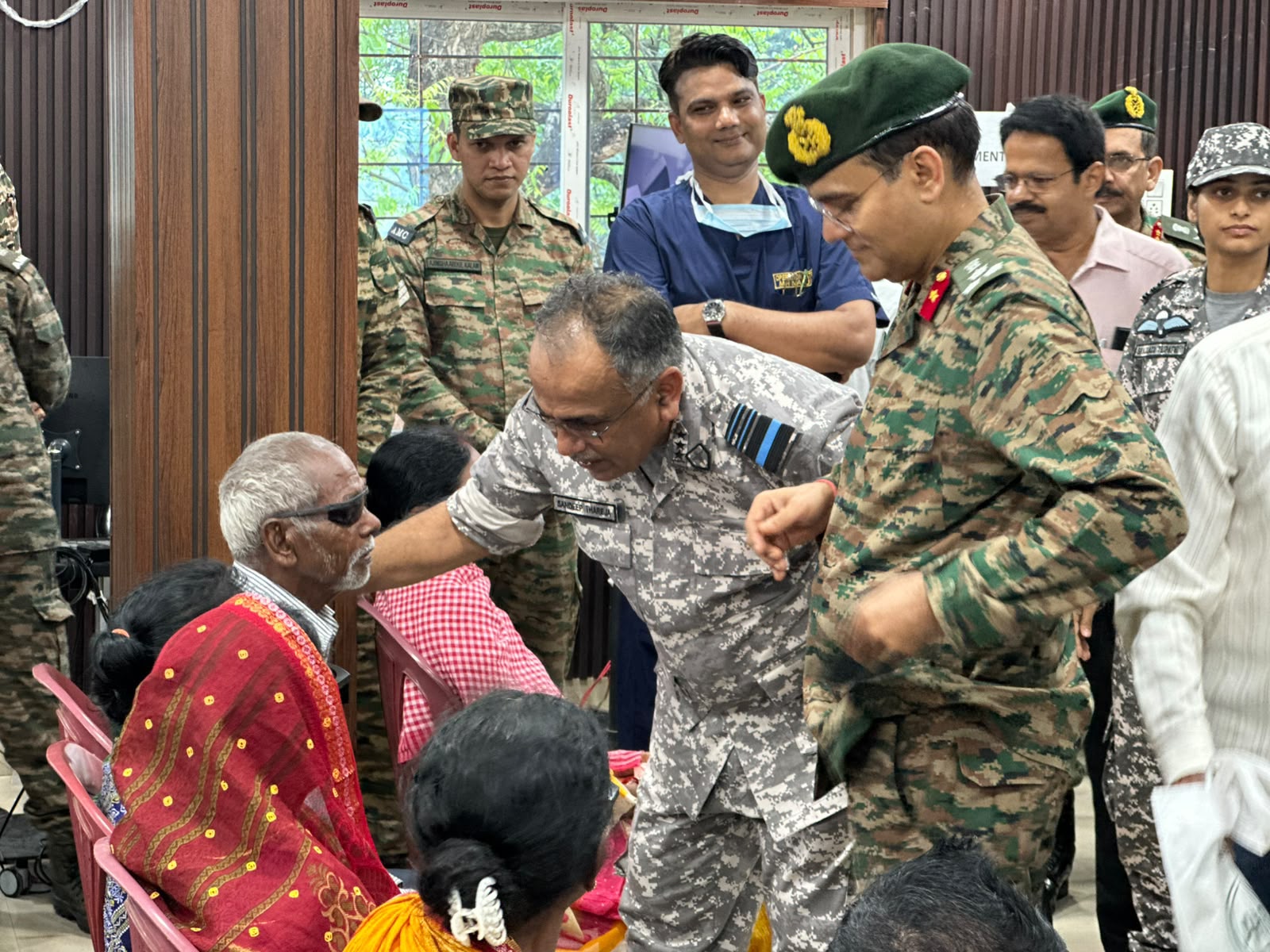
On 04 November 2026, Air Marshal Sandeep Thareja, Director General Armed Forces Medical Services (DGAFMS), visited the Mega Multi-Speciality Medical Camp at Rairangpur. He met patients waiting for consultation and interacted with patients. In the post-operative ward, he spoke to patients who had undergone eye surgery and presented them with medicine kits. He appreciated the efforts of the entire team, who had carried on with their work under weather conditions threatened by a cyclone and had executed their task with utmost perfection. The visit was a recognition of the dedication of every doctor, dental surgeon, nurse and paramedic who kept the camp running without a break for the patients of Mayurbhanj.
Human Stories That Define the Mission
Behind the figure of 365 surgeries are faces, and each face carries a story. Two of them show what the Rairangpur camp meant for those who had run out of options.
75yr Old, Biswanath
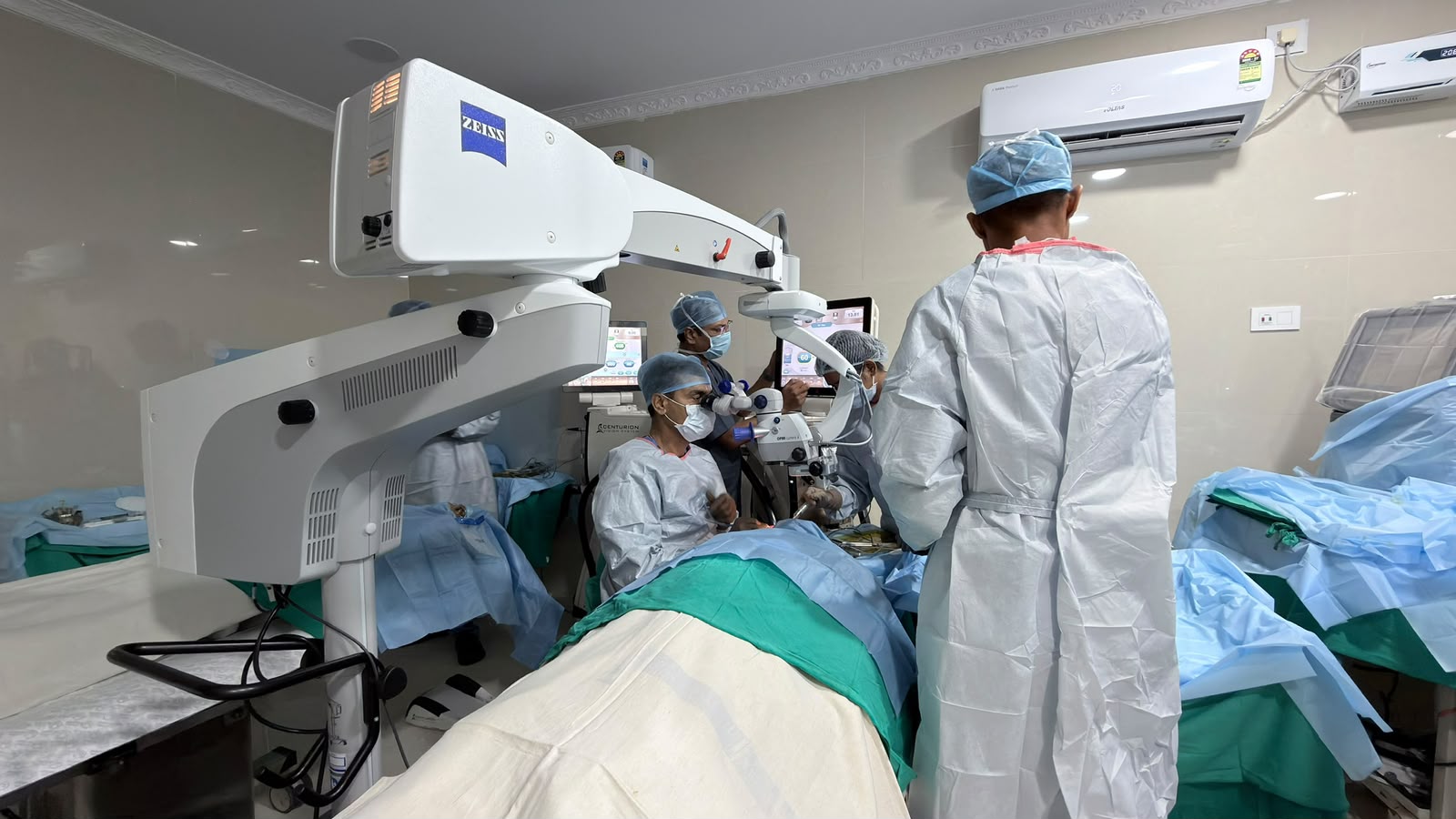
For many years, a man went from centre to centre carrying a cataract that was slowly taking away his sight. It was the result of an old injury, and in the lower part of his eye the fine fibres that hold the natural lens in place had given way, leaving the lens without its anchor. Every doctor who saw him examined him, noted the findings and, for good reason, held back: the lens was too unstable for routine surgery and too risky for a standard implant. No one touched it, and he kept waiting. At Rairangpur, the surgical team chose a plan that was not fancy but honest: manual small-incision cataract surgery with a scleral-fixated intraocular lens, which secures the new lens to the wall of the eye instead of the damaged support. The surgery was completed successfully. A lens that had lost its anchor was given a new one, and a man whom the system had deferred for two years was finally treated.
A 60-year-old woman, Sombari Gope had watched the vision in her right eye quietly fade for years. She is short in stature, and her eye told the same story: a small, short eyeball with a shallow front chamber, tight surgical spaces and a dense brown cataract. The intraocular lens power she needed, 29.5 dioptres, confirmed just how short the eye was. In so cramped an eye, every millimetre counts and the clear tissue of the cornea is easily put at risk. The surgeons therefore chose manual small-incision cataract surgery with a posterior chamber lens, delivering the dense lens by hand to give the cornea maximum protection. For the team, the real victory was not only removing the brown lens, but doing so without making the cornea pay for it. She stood for her photograph with the team afterwards, her eye covered with a pad and a new lens in place.
The Rairangpur camp is the latest milestone in Operation DRISHTI, the Armed Forces Medical Services’ series of mega surgical eye camps that has carried advanced eye care from the Himalayan foothills of Dehradun to the plains of Jaipur, the greenery of Bagdogra and the borderlands of Jammu and Kashmir, and now to the forests and villages of Mayurbhanj. Over these days at Rairangpur, many people arrived with a need and went home with care. The Armed Forces Medical Services did not merely hold a camp; it brought healing, and sight, to the doorstep of Mayurbhanj.